BookBrief
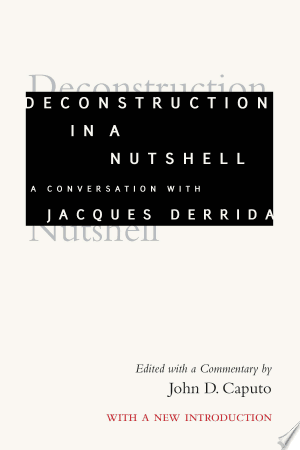
Deconstruction in a Nutshell cover
Archivist's Choice

Deconstruction in a Nutshell

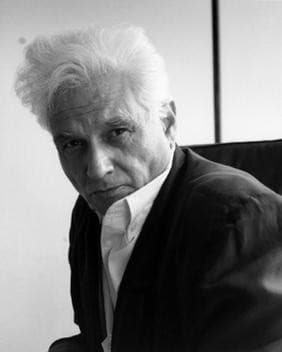
Jacques Derrida (2020)

Genre

Spirituality / Philosophy

Reading Time

90 min

Key Themes

See below

Track Your Reading

Sign in to track this book

Derrida's own words dismantle Western thought, showing deconstruction's pursuit of justice and responsibility, not relativism.

Core Idea

Jacques Derrida's "Deconstruction in a Nutshell" argues that deconstruction is not destructive or relativist. Instead, it is an ethical approach that questions foundational assumptions in philosophy, ethics, and politics. Deconstruction unsettles established concepts and hierarchies, revealing the instability and undecidability within language and thought. This process does not negate meaning but creates opportunities for genuine justice, unique responsibility, and a new understanding of community and the gift. It aims for an 'impossible' and 'incalculable' ideal that resists rigid reasoning and exchange. It is an ongoing way of reading and engaging with texts and the world, always questioning and affirming an openness to the future, which keeps it relevant.
Reading time
90 min
Difficulty
Hard
✓ Read this if...
You are seeking a concise and accessible introduction to the core tenets of Derridean deconstruction, its ethical implications, and its contemporary relevance, moving beyond common misconceptions.
✗ Skip this if...
You prefer practical self-help or highly structured, linear arguments without engaging with complex philosophical concepts and nuanced linguistic analysis.

Core idea

The central argument and framework that powers the entire book.

Jacques Derrida's "Deconstruction in a Nutshell" argues that deconstruction is not destructive or relativist. Instead, it is an ethical approach that questions foundational assumptions in philosophy, ethics, and politics. Deconstruction unsettles established concepts and hierarchies, revealing the instability and undecidability within language and thought. This process does not negate meaning but creates opportunities for genuine justice, unique responsibility, and a new understanding of community and the gift. It aims for an 'impossible' and 'incalculable' ideal that resists rigid reasoning and exchange. It is an ongoing way of reading and engaging with texts and the world, always questioning and affirming an openness to the future, which keeps it relevant.

At a glance

Reading time

90 min

Difficulty

Hard

Read this if...

You are seeking a concise and accessible introduction to the core tenets of Derridean deconstruction, its ethical implications, and its contemporary relevance, moving beyond common misconceptions.

Skip this if...

You prefer practical self-help or highly structured, linear arguments without engaging with complex philosophical concepts and nuanced linguistic analysis.

Key Takeaways

1

Deconstruction as Affirmation

Beyond mere negation, deconstruction is a profoundly affirmative and ethico-political project.

Quote

Deconstruction is not destruction. It is not a negative operation. It is an affirmation.

Many critics mistakenly see deconstruction as destructive or relativist, aiming to dismantle meaning without offering anything in return. Derrida rejects this, stating that deconstruction is an affirmative act. It rigorously questions foundational assumptions and binary oppositions, not to negate them, but to open new possibilities for thought, justice, and responsibility. This affirmation is not a simple 'yes' to what is, but a 'yes' to the 'to come'—an openness to the unpredictable, the messianic, and a future where ethical demands ...

Supporting evidence

Derrida's direct refutation of relativism charges during the Villanova roundtable, where he explicitly states the 'affirmative and ethico-political thrust' of his work.

Apply this

Approach critical analysis not as an act of destruction, but as an act of opening and affirmation. When questioning an established idea or system, seek to understand its underlying assumptions and how dismantling them might lead to more just or expansive alternatives, rather than simply dismissing it.

affirmationethico-politicalmessianic
2

The Task of Philosophy: Unsettling Foundations

Philosophy's true calling is to interrogate its own origins and the self-evidence of its concepts.

Quote

The task of philosophy is to question the very possibility of its own task, to interrogate the conditions of its emergence.

Derrida argues that philosophy should not just work within established conceptual frameworks. Instead, it must examine the unspoken assumptions and historical conditions that create its own categories and problems. This involves a critical engagement with the 'Greeks'—the foundational figures and texts of Western thought—not to dismiss them, but to understand how their initial ideas shaped later philosophical discourse. These ideas often established binary oppositions and hierarchies that still influence thought. By unsettling these f...

Supporting evidence

Derrida's discussion at Villanova regarding the 'task of philosophy' and his engagement with the legacy of 'the Greeks' as the origin point of Western philosophical thought.

Apply this

When studying any philosophical or theoretical concept, don't just learn its definition; inquire into its historical origins, the specific conditions under which it emerged, and what other possibilities it might have excluded. Question the 'naturalness' of any given concept.

foundationalismoriginsmetaphysics
3

Justice Beyond Calculation

True justice resides in an undecidable moment, demanding a response to the other that transcends law and calculation.

Quote

Justice, if there is such a thing, is incalculable. It demands a decision in the undecidable.

Derrida distinguishes between law (droit) and justice. Law is a system of rules, norms, and calculations, and it is deconstructible because it relies on interpretation and application within a specific context. Justice, however, is an experience of the impossible, an infinite demand that always exceeds any given law or system. It requires an immediate, singular response to the other, a decision made in an 'undecidable' moment where no pre-existing rule can fully dictate the ethical choice. This does not mean justice is arbitrary, but ...

Supporting evidence

Derrida's extended discussion at Villanova on the distinction between 'justice' and 'law,' emphasizing the incalculable and undecidable nature of justice.

Apply this

When confronted with an ethical dilemma, consider not only what the rules or laws dictate, but also the unique, singular demand of the situation and the 'other' involved. Be open to the possibility that true justice might require transcending established norms, even if it feels 'undecidable' or risky.

undecidabilitylaw-and-justiceresponsibility
4

Responsibility to the Singular

Ethical responsibility is not generic adherence to rules, but a unique, singular response to the other.

Quote

Responsibility is always to the singular, to the unique individual, and it cannot be simply deduced from a general rule.

For Derrida, responsibility is not about applying universal moral principles to specific situations. Instead, it is a basic obligation to the unique, singular other. This means that true ethical action cannot be fully programmed or pre-determined by a code of conduct. Each encounter with another person, each demand for justice, presents an 'absolute singularity' that requires a unique and often improvised response. This singular responsibility makes ethical life challenging and profound, as it compels us to constantly re-evaluate our ...

Supporting evidence

Derrida's articulation of responsibility at Villanova, linking it to the singular and the 'undecidable' nature of ethical decisions, especially in relation to justice.

Apply this

In your interactions, strive to see each person or situation as unique, rather than categorizing them and applying pre-set responses. Practice active listening and empathy to discern the specific needs and demands of the 'singular other' before formulating a response, even if it means deviating from standard protocols.

singularityothernessethics
5

The Gift: Beyond Economy

A true gift, if possible, must break the cycle of reciprocity and recognition.

Quote

For there to be a gift, there must be no return, no recognition, no debt. It must be forgotten.

Derrida explores the paradox of the gift. In conventional understanding, a 'gift' often implies an expectation of return, gratitude, or recognition, thereby entering into an 'economy' of exchange. For Derrida, a 'pure' gift—if such a thing could ever exist—would have to transcend this economy entirely. It would be given without any expectation of return, without the giver even being conscious of giving, and without the recipient being able to acknowledge it as such. This theoretical impossibility highlights how deeply embedded our soc...

Supporting evidence

Derrida's philosophical exploration of 'the gift' at the roundtable, drawing on the concept of 'the impossible' to define its theoretical purity.

Apply this

When performing an act of kindness or generosity, consciously try to detach from any expectation of gratitude, recognition, or return. Consider anonymous giving or acts that truly benefit others without any personal gain, however small.

gift-economyreciprocityimpossibility
6

Community and the Messianic

Community is an ongoing, fragile project, always open to the 'to come' and the arrival of the unexpected.

Quote

The messianic is an experience of the to-come, the opening to an event that cannot be anticipated.

Derrida's understanding of community is not based on shared identity, common ground, or pre-established contracts. Instead, it is linked to the 'messianic'—not in a religious sense, but as an openness to the 'to come,' to an event or arrival that cannot be predicted or fully controlled. This 'messianic' structure means that true community is always forming, open to the arrival of the other, the unexpected, and the demand for justice that transcends existing structures. It is a fragile, ongoing project that resists closure and fixed de...

Supporting evidence

Derrida's discussion of 'community' and 'the messianic' at Villanova, emphasizing the openness and unpredictability inherent in both concepts.

Apply this

Approach community building not as a static project of defining shared traits, but as an ongoing, dynamic process of welcoming the new, the unexpected, and the different. Be open to how new arrivals or unforeseen events might reshape the community's identity and purpose.

messianic-without-messianismcommunitythe-to-come
7

Beyond Relativism: The Unconditional

Deconstruction reveals the conditional nature of all systems, yet paradoxically affirms an unconditional ethical demand.

Quote

Deconstruction is not relativism. It is a radicalization of the demand for the unconditional.

One of the most persistent criticisms against deconstruction is that it leads to relativism, where all meaning is arbitrary and no truth can be established. Derrida rejects this. While deconstruction uncovers the conditional, historical, and linguistic underpinnings of all concepts, it also reveals an unconditional ethical demand. This unconditional element is not a fixed truth or principle, but rather the insistent call for justice, responsibility, and hospitality that precedes and exceeds any particular system. It is the persistent ...

Supporting evidence

Derrida's direct engagement with and refutation of the 'charges of relativism' at Villanova, where he explicitly links deconstruction to an 'unconditional' ethical thrust.

Apply this

When you deconstruct an idea or system, don't stop at merely showing its contingency. Always seek to identify the underlying ethical stakes or the 'unconditional' demand for justice/fairness that motivated the critique. Use deconstruction as a tool for ethical progress, not just intellectual skepticism.

relativismunconditionalcritique
8

The 'Incalculable' and the 'Impossible'

Deconstruction operates at the limits of what is calculable and possible, revealing the necessity of engaging the 'impossible.'

Quote

True ethical decision, true justice, true hospitality, are always experiences of the impossible.

A recurring theme in Derrida's work is the engagement with the 'incalculable' and the 'impossible.' He argues that truly ethical and transformative experiences—such as pure justice, unconditional hospitality, or the absolute gift—transcend what can be calculated, predicted, or fully realized within existing frameworks. These 'impossible' demands are not meant to stop action, but rather to highlight the infinite nature of ethical aspiration and the inherent limitations of any finite system. By confronting the impossible, deconstruction...

Supporting evidence

Derrida's repeated use of terms like 'incalculable' and 'impossible' when discussing concepts such as justice, the gift, and responsibility at the Villanova roundtable.

Apply this

Don't be deterred by seemingly 'impossible' ethical or social challenges. Recognize that the pursuit of true justice or profound change often requires striving for goals that appear beyond current capabilities or logical calculation. Embrace the 'impossible' as a horizon that continually pulls you forward.

impossibleincalculablelimits
9

Deconstruction as a Way of Reading

It's a rigorous interpretive practice that uncovers hidden hierarchies and contradictions within texts.

Quote

Deconstruction is first and foremost a way of reading, a careful attention to the text itself.

At its core, deconstruction is a method of textual analysis. It involves a meticulous, close reading that aims to expose the internal contradictions, implicit hierarchies, and unacknowledged assumptions within a text or concept. This is achieved by identifying binary oppositions (e.g., speech/writing, presence/absence, male/female) and showing how one term is typically favored over the other, often suppressing or marginalizing the 'lesser' term. Deconstruction then seeks to 'reverse' or 'displace' this hierarchy, demonstrating its ins...

Supporting evidence

Derrida's consistent emphasis on deconstruction as a 'reading' practice, as well as John D. Caputo's elaboration on this aspect in the second part of the book.

Apply this

When analyzing any text, argument, or cultural phenomenon, look for underlying binary oppositions. Identify which term is privileged and how that privilege is maintained. Then, try to reverse or destabilize that hierarchy to reveal hidden meanings or power dynamics.

textual-analysisbinary-oppositionsreading
10

The Continuing Relevance of Deconstruction

Deconstruction's insights remain vital for understanding contemporary shifts in philosophy and culture.

Quote

Deconstruction's project continues to resonate, even in new materialisms and the return to religion, by questioning their own foundational premises.

As John D. Caputo explains, deconstruction is not a historical relic but a dynamic framework that continues to inform and challenge contemporary thought. Even after Derrida's passing, its principles are important for engaging with emerging philosophical trends, such as new materialisms or renewed interests in religion. Deconstruction provides the critical tools to interrogate the foundational assumptions of these new movements themselves, preventing them from becoming new dogmatisms. By persistently asking 'how is this constructed?' a...

Supporting evidence

Caputo's 'substantial new Introduction' to the book, which traces the development of deconstruction since Derrida's death, specifically mentioning its relevance to 'new materialisms' and the 'return to religion.'

Apply this

When encountering new theories, social movements, or cultural phenomena, apply deconstructive questions: What are its foundational concepts? What binaries does it establish? What does it privilege or exclude? How might its own logic be open to critique from within?

new-materialismpost-Derridacontemporary-philosophy

Critical analysis

Notable Quotes

There is nothing outside the text.

Often misinterpreted, this refers to the idea that meaning is always contextual and relational within a system of signs, not that empirical reality doesn't exist.

The trace is not a presence but the simulacrum of a presence that dislocates itself, displaces itself, refers itself, and goes beyond this reference.

Discussing the concept of 'trace' as fundamental to understanding how meaning is deferred and never fully present.

Every sign, linguistic or nonlinguistic, spoken or written, in a small unit or a large one, can be cited, put in quotation marks; thereby it can break with every given context, engendering an infinity of new contexts in a an absolutely non-saturable fashion.

Explaining the iterability of signs and how they can be detached from their original context and reinterpreted.

Writing is the name for the difference itself.

Highlighting how writing, in its broadest sense, embodies the play of difference that constitutes meaning.

Deconstruction is not a dismantling of structures but rather a demonstration of how they have been put together.

Clarifying that deconstruction aims to analyze the construction of meaning and power, rather than simply destroy.

There is no pure origin, no pure presence, no pure self-identity.

Challenging foundationalist metaphysics and the idea of absolute beginnings or fixed identities.

Justice, in its very idea, is an experience of the impossible.

Exploring the elusive and perpetually deferred nature of perfect justice, which remains an ideal beyond full realization.

The supplement is not something added to a plenitude, but rather something that makes up for a lack in the original.

Explaining the concept of the 'supplement' as something seemingly external but inherently necessary for what it supplements.

The book is not a totality. It is a system of relations.

Emphasizing that a text's meaning is derived from its internal and external relations, not as a self-contained, complete entity.

To deconstruct is to make explicit the conditions of possibility and the limits of a given concept or system.

Defining the practical application of deconstruction as revealing the underlying assumptions and boundaries of thought.

The meaning of a text is not exhausted by its author's intention.

Underscoring the independence of a text from its author once it is released into the world, allowing for multiple interpretations.

Difference is not a concept but the possibility of conceptuality, of a conceptual system and process in general.

Elaborating on 'différance' as the foundational condition for meaning and language, preceding any specific concept.

Hospitality is the unconditional welcoming of the other, without condition, without asking for anything in return.

Discussing ethical dimensions, particularly the radical and often impossible demand of true hospitality towards the absolute other.

Every reading is a rereading, every interpretation an over-interpretation.

Suggesting that no reading is ever final or definitive, and that interpretation is an ongoing, cumulative process.

Quiz

Test Your Knowledge

Ready to see how well you understood this book? Take our interactive quiz with 10 questions.

10
Questions
~5
Minutes
?
Best Score

Key Questions (FAQ)

Deconstruction, as discussed by Derrida, is a philosophical approach that critically examines the underlying assumptions and hierarchies within texts and concepts. It's not about destruction, but rather about uncovering the complex layers of meaning and the inherent instability of language and thought.

About the author