BookBrief
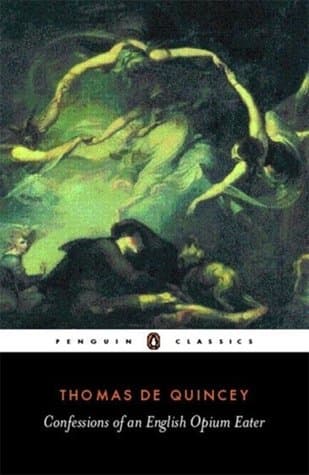
Confessions of an English Opium Eater cover
Archivist's Choice

Confessions of an English Opium Eater

Thomas De Quincey (1822)

Genre

Biography / Memoir / History

Reading Time

350 min

Key Themes

See below

Track Your Reading

Sign in to track this book

An English intellectual chronicles the joys and torments of his daily laudanum addiction, blurring the lines between dream, memory, and the opium-fueled subconscious.

Core Idea

Thomas De Quincey's 'Confessions of an English Opium-Eater' is an early addiction memoir and a key text in Romanticism. It gives an introspective account of his 20-year opium addiction. De Quincey details how laudanum first helped his physical pain and opened up intellectual and imaginative states, describing the dreamscapes it created in vivid, often hallucinatory prose. The story then shows his decline from euphoria into a tormented life of paranoia, nightmares, physical decay, and social isolation. The book is both a public confession and a literary look at consciousness, memory, and the human condition under the influence of a powerful psychoactive substance. It portrays addiction as a complex, consuming struggle that changes reality and self.
Reading time
350 min
Difficulty
Hard
✓ Read this if...
You are interested in the historical context of drug use, the Romantic literary movement, or a deeply introspective and highly stylized account of addiction and its psychological impact.
✗ Skip this if...
You prefer modern, straightforward narratives, or find highly ornate, tangential prose challenging to engage with.

Core idea

The central argument and framework that powers the entire book.

Thomas De Quincey's 'Confessions of an English Opium-Eater' is an early addiction memoir and a key text in Romanticism. It gives an introspective account of his 20-year opium addiction. De Quincey details how laudanum first helped his physical pain and opened up intellectual and imaginative states, describing the dreamscapes it created in vivid, often hallucinatory prose. The story then shows his decline from euphoria into a tormented life of paranoia, nightmares, physical decay, and social isolation. The book is both a public confession and a literary look at consciousness, memory, and the human condition under the influence of a powerful psychoactive substance. It portrays addiction as a complex, consuming struggle that changes reality and self.

At a glance

Reading time

350 min

Difficulty

Hard

Read this if...

You are interested in the historical context of drug use, the Romantic literary movement, or a deeply introspective and highly stylized account of addiction and its psychological impact.

Skip this if...

You prefer modern, straightforward narratives, or find highly ornate, tangential prose challenging to engage with.

Key Takeaways

1

The Allure of Laudanum: A Legalized Escape

Opium, in its laudanum form, offered a readily accessible, socially tolerated, and initially perceived benevolent escape from the harsh realities of 19th-century life.

Quote

Among the innumerable solutions for misery, I found opium to be the panacea, a remedy for all distresses.

De Quincey first used laudanum not for thrills, but for genuine pain relief, especially from a severe stomach problem. Opium, in different forms, was a common household remedy then and available without a prescription. Its first effects seemed very positive—it eased physical pain, calmed anxiety, and created a state of calm euphoria. This early, seemingly harmless relationship with the drug shows how easily one could become dependent. Society accepted it and didn't understand its addictive qualities, blurring the line between medical ...

Supporting evidence

De Quincey recounts his first experience with laudanum to alleviate a debilitating 'gnawing pain' in his stomach, describing it as 'a relief so sudden, so profound, so comprehensive, as to be almost miraculous.'

Apply this

Reflect on modern societal acceptance of certain substances or behaviors that, while initially beneficial or innocuous, carry hidden risks of dependence. Consider how easily convenience and relief can mask potential long-term harm.

laudanum-history19th-century-medicineaddiction-origins
2

The Opium Dreamscape: A Journey Into the Subconscious

Opium didn't merely dull pain; it unlocked an intensely vivid and often terrifying internal world, anticipating psychoanalytic insights into the subconscious.

Quote

The opium-eater, of all human beings, is the one to whom the human brain most profoundly unfolds its own mysteries.

De Quincey's most important contribution is his detailed description of the opium-induced dreamscape. These were not simple hallucinations but complex, story-driven experiences that mixed waking and sleeping, reality and fantasy. His dreams were not random; they often magnified existing anxieties, memories, and cultural impressions, especially those about vastness, eternity, and orientalism. This exploration anticipates Freudian psychoanalysis, showing how the mind, under the drug's influence, could bring up suppressed thoughts and fe...

Supporting evidence

He describes recurring dreams of 'Oriental dreams,' where he is overwhelmed by 'vast architectural dreams,' 'pagodas and mosques,' and 'interminable avenues of sphinxes,' often accompanied by a sense of oppressive antiquity and infinite duration.

Apply this

Consider how personal anxieties or preoccupations might manifest in your own dreams or subconscious thoughts. Pay attention to recurring themes or symbols as potential insights into your inner world.

dream-analysissubconscious-explorationromantic-imagination
3

The Price of Pleasure: From Euphoria to Paranoia

The initial euphoria of opium inevitably gave way to a relentless cycle of anxiety, paranoia, and existential despair, revealing the drug's true, insidious cost.

Quote

The opium-eater has a private hell, a pandemonium of his own, and it is peopled by the phantoms of his own creation.

De Quincey directly describes the shift from opium's initial 'paradisaical' effects to its psychological cost. The vivid dreams turned into nightmarish persecutions, heightened intellect into obsessive thoughts, and a sense of control into helplessness. He describes widespread paranoia, a feeling of being hunted or watched, and deep isolation. This clear difference between the drug's promise and its eventual harm is a strong warning. It shows that artificial highs often lead to deeper lows, and temporary escape from reality eventually...

Supporting evidence

He recounts suffering from 'nightmares of the most appalling character,' where 'vast labyrinths and interminable avenues' become traps, and he is pursued by 'Oriental faces' or 'female forms' whose eyes convey 'unspeakable anguish.'

Apply this

Be wary of quick fixes or escapist tendencies that promise immediate relief but may lead to greater long-term suffering. Prioritize sustainable coping mechanisms over temporary numbing.

addiction-cyclepsychological-effects-of-drugsparanoia-and-hallucinations
4

Memory's Treacherous Landscape

Opium profoundly altered De Quincey's perception of time and memory, blurring their boundaries and revealing their subjective and reconstructive nature.

Quote

The opium-eater's memory becomes an abyss, into which the past descends without hope of return, or from which it rises with spectral vividness.

One of the most unsettling parts of De Quincey's story is how opium changed his experience of memory. Past events would resurface with clear, painful detail and emotional intensity, but the timeline and connection to reality were often lost. He describes how childhood memories, especially his sister Elizabeth's death, were amplified and replayed with haunting vividness, becoming central to his opium visions. This shows memory not as a fixed record, but as something fluid and changeable, especially vulnerable to altered states. The dru...

Supporting evidence

His 'Suspiria de Profundis' sequel delves deeply into the 'pains of memory,' describing how the 'Opium-Eater' is haunted by 'past sorrows,' particularly the death of his sister, which becomes a recurring motif in his visions, imbued with 'an awful symbolic power.'

Apply this

Recognize the subjective nature of memory and how emotions, current states, or even substances can profoundly reshape our recollections. Practice mindfulness to anchor yourself in the present rather than getting lost in past narratives.

memory-distortiontrauma-and-memorysubjectivity-of-time
5

The Romantic Figure of the Addict

De Quincey's work inadvertently romanticized the addict as a tortured, visionary artist, forging a problematic link between suffering, altered states, and creative genius.

Quote

I was a discoverer, a pioneer, an explorer of the dark continent of the human mind, under the influence of opium.

De Quincey's 'Confessions' is a cautionary tale, but its literary impact and vivid descriptions of heightened perception contributed to the Romantic era's interest in the 'suffering artist.' His portrayal of the opium-eater as a solitary figure exploring the depths of consciousness, experiencing visions and intellectual insights, fit the Romantic idea of genius born from struggle and unusual experience. This created a lasting, though dangerous, image of the literary addict—a figure who sacrifices personal well-being for artistic trans...

Supporting evidence

The initial reception and subsequent influence of the book on authors like Baudelaire and Poe, who were drawn to its exploration of altered consciousness and the 'sublime' in suffering, attest to this romanticization. The very title 'Confessions' implies a profound, almost sacred, unveiling of a unique experience.

Apply this

Critically examine narratives that link suffering or altered states to artistic genius. Distinguish between genuine insight gained through struggle and the potentially destructive glorification of self-harm for creative output.

romanticism-and-addictionartist-as-outcastliterary-addiction
6

The Social Isolation of Addiction

The pursuit of opium, while initially offering an escape, ultimately led to profound social isolation, severing ties and deepening the addict's solitary suffering.

Quote

The opium-eater is a solitary being, who lives in a world of his own creation, and in which he is the sole inhabitant.

As De Quincey's addiction grew, he interacted less with the outside world. His night walks through London became solitary journeys, and his interactions with others became more strained or superficial. The deep subjective experience of opium created a gap between him and those who couldn't understand his inner world. This isolation was not just physical; it was an existential loneliness, where the drug became his main companion, replacing real human connection. This part of the story shows how addiction, no matter its initial reasons,...

Supporting evidence

He describes his 'nocturnal rambles' through London, often alone, and his increasing difficulty in maintaining social graces or even engaging in meaningful conversation, preferring the company of his own thoughts and visions.

Apply this

Recognize that isolation is a common symptom and exacerbating factor in many struggles. Actively cultivate and maintain genuine social connections, seeking support when feeling withdrawn.

addiction-and-lonelinesssocial-withdrawalsolitary-suffering
7

The Body Betrayed: Physical Manifestations of Addiction

Beyond the mental anguish, De Quincey's account implicitly reveals the physical decay and neglect that accompany prolonged opium dependence.

Quote

My health, my spirits, my intellect, all were bending under the yoke of my 'opium-tyranny'.

While much of De Quincey's story focuses on the psychological and visionary aspects of opium, he does hint at the physical cost. Though less detailed than the mental torment, the reader can infer a steady decline in his physical health. He mentions periods of illness, neglecting his appearance, and a general decrease in his ability to function in daily life. This subtle but constant undercurrent reminds us that addiction is never purely mental; it affects the body, often leading to physical problems that further fuel the need for the ...

Supporting evidence

He often refers to a state of 'languor' and 'debility' when attempting to reduce his dosage, and describes his overall physical state as 'ruined' and 'shattered' during his deepest periods of addiction.

Apply this

Pay attention to the holistic impact of choices on both mental and physical health. Understand that these two aspects are deeply interconnected, and neglect of one often affects the other.

physical-effects-of-addictionmind-body-connectionhealth-deterioration
8

Confession as Redemption: The Act of Writing as Therapy

The very act of writing and confessing his experiences served as a crucial, albeit incomplete, step towards understanding and potentially overcoming his addiction.

Quote

My purpose in these 'Confessions' is not to extenuate my own errors, but to lay open the secret springs of a human mind.

De Quincey's choice to publicly admit his opium use was new for his time. This 'confession' was more than just telling all; it was an attempt to understand his experiences, to bring order to chaos, and perhaps, to find a path to redemption or self-understanding. By putting his visions, pains, and struggles into words, he had to face them directly. In this way, the book itself can be seen as a form of self-therapy, a way for the author to process trauma and addiction through intellectual study and literary expression. It shows how narr...

Supporting evidence

The detailed, analytical, and often philosophical tone De Quincey employs throughout the 'Confessions' suggests a deliberate attempt to intellectualize and dissect his experience, rather than merely recount it, implying a search for meaning and understanding.

Apply this

Consider the power of journaling, storytelling, or talking therapy to process difficult experiences and gain perspective. The act of externalizing internal struggles can be profoundly healing.

narrative-therapyautobiographical-writingself-reflection
9

The Unattainable 'Cure': A Lifelong Struggle

De Quincey's 'confessions' don't offer a simple cure, but rather portray addiction as a complex, lifelong struggle with periods of relapse and tenuous recovery.

Quote

The chains of opium are not easily broken, nor are its enchantments easily forgotten.

Unlike many simple stories of addiction, De Quincey's account is honest about how hard it is to stay abstinent. He describes periods of reducing his dose and getting temporary relief from opium, but the 'Confessions' and its follow-ups show that the struggle continued and included relapses. There is no clear 'cure' presented, but rather a realistic portrayal of addiction as a chronic condition needing constant watchfulness and effort. This nuanced view anticipates modern understandings of addiction as a complex disease rather than a m...

Supporting evidence

The inclusion of 'Suspiria de Profundis' and 'The English Mail-Coach,' written years after the original 'Confessions,' demonstrates De Quincey's continued engagement with and struggles related to opium, indicating that his 'cure' was not a simple, one-time event.

Apply this

Understand that recovery from deep-seated habits or addictions is often a continuous process, not a singular event. Embrace patience, self-compassion, and a long-term perspective in personal growth.

addiction-recoveryrelapse-preventionchronic-illness-model-of-addiction

Critical analysis

Notable Quotes

If a man 'whose talk is of oxen' should become an Opium-eater, the probability is, that (if he is not too dull to dream at all) he will dream about oxen.

De Quincey discusses how opium dreams reflect one's personal preoccupations and experiences.

Thou hast the keys of Paradise, oh just, subtle, and mighty opium!

A famous exclamation praising opium's power to unlock sublime experiences and relief from pain.

I was necessarily ignorant of the whole art and mystery of opium-taking.

De Quincey reflects on his initial naivety about opium use before becoming addicted.

For opium, like the eagle, restored me to the enjoyment of the air.

Describing how opium alleviated his physical sufferings and mental anguish.

The sense of space, and in the end, the sense of time, were both powerfully affected.

Explaining the distortions in perception caused by opium intoxication.

I seemed every night to descend, not metaphorically, but literally to descend, into chasms and sunless abysses, depths below depths.

A vivid description of the terrifying, nightmarish aspects of opium dreams.

Pleasures are the shadows of pains; and as the pain is, so is the pleasure.

Philosophizing on the interconnectedness of pleasure and suffering, especially in the context of opium use.

The opium-eater loses none of his moral sensibilities, or aspirations: he wishes and longs, as much as ever, to realize what he believes possible.

Arguing that opium addiction does not necessarily corrupt one's moral character or ambitions.

I have thus described and illustrated my intellectual torpor, in terms that apply, more or less, to every part of the four years during which I was under the Circean spells of opium.

Reflecting on the mental stagnation and lethargy induced by long-term opium use.

It is notorious that opium-eaters are not subject to any particular diseases.

A controversial claim about the physical health effects of opium, reflecting 19th-century misconceptions.

The minutest incidents of childhood, or forgotten scenes of later years, were often revived.

Describing how opium could bring back long-lost memories with intense clarity.

I sometimes seemed to have lived for 70 or 100 years in one night.

Illustrating the extreme dilation of time experienced in opium dreams.

Opium gives and takes away. It defeats the steady habit of exertion, but it creates spasms of irregular exertion.

Analyzing the paradoxical effects of opium on productivity and motivation.

To this hour, I have never heard a single person charge me with having been a sensualist.

Defending himself against accusations of hedonism, emphasizing his intellectual rather than sensual use of opium.

Quiz

Test Your Knowledge

Ready to see how well you understood this book? Take our interactive quiz with 10 questions.

10
Questions
~5
Minutes
?
Best Score

Key Questions (FAQ)

It is Thomas De Quincey's autobiographical account of his opium addiction, detailing both the pleasurable visions and the painful nightmares, despair, and paranoia that resulted from his daily use of laudanum. The work explores the effects of drugs on dreams, memory, and imagination, blending personal confession with literary and psychological insights.

About the author