BookBrief
Concerning the Spiritual in Art cover
Archivist's Choice

Concerning the Spiritual in Art

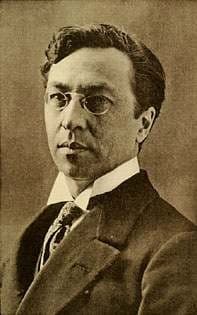
Wassily Kandinsky (1912)

Genre

Spirituality / Creativity / Philosophy

Reading Time

90 min

Key Themes

See below

Track Your Reading

Sign in to track this book

Kandinsky's important book says art should be free from material things. It asks artists to start a spiritual change using abstract shapes and color psychology in their paintings.

Core Idea

Wassily Kandinsky states that real art comes from an 'inner necessity' within the artist, from a spiritual drive that goes beyond just material things or copying. He says art, especially abstract art, is a strong way to wake people up spiritually, like 'spiritual food' for the soul. Kandinsky explains how specific colors and shapes have 'inner sounds' and psychological effects. When artists combine these according to their inner necessity, they can show spiritual truths and improve human awareness. He thinks art is a guiding force, moving society away from a materialistic 'nightmare' to a more spiritual future. The artist acts as a sensitive guide at the top of a 'great spiritual triangle' of human progress.
Reading time
90 min
Difficulty
Medium
✓ Read this if...
You are an artist, art historian, or anyone interested in the philosophical underpinnings of abstract art, the relationship between spirituality and creativity, or Kandinsky's personal manifesto on the purpose of art.
✗ Skip this if...
You prefer practical art instruction, are solely interested in representational art, or find philosophical discussions on spirituality and art too abstract or esoteric.

Core idea

The central argument and framework that powers the entire book.

Wassily Kandinsky states that real art comes from an 'inner necessity' within the artist, from a spiritual drive that goes beyond just material things or copying. He says art, especially abstract art, is a strong way to wake people up spiritually, like 'spiritual food' for the soul. Kandinsky explains how specific colors and shapes have 'inner sounds' and psychological effects. When artists combine these according to their inner necessity, they can show spiritual truths and improve human awareness. He thinks art is a guiding force, moving society away from a materialistic 'nightmare' to a more spiritual future. The artist acts as a sensitive guide at the top of a 'great spiritual triangle' of human progress.

At a glance

Reading time

90 min

Difficulty

Medium

Read this if...

You are an artist, art historian, or anyone interested in the philosophical underpinnings of abstract art, the relationship between spirituality and creativity, or Kandinsky's personal manifesto on the purpose of art.

Skip this if...

You prefer practical art instruction, are solely interested in representational art, or find philosophical discussions on spirituality and art too abstract or esoteric.

Key Takeaways

1

The Spiritual Awakening in Art

Art must transcend material reality to express inner spiritual truths.

Quote

Every work of art is the child of its age and, in many cases, the mother of our emotions.

Kandinsky says real art does not just copy the outside world. It is a deep expression of the artist's inner spirit and the general 'spiritual atmosphere' of their time. He wants art to move away from materialism, which he calls a 'nightmare of the purely material,' towards a spiritual rebirth. This spiritual awakening is important for art to meet its highest goal: to improve humanity and help it understand itself better. Just as music does not need to show real objects, painting should also be free from showing things as they look. Th...

Supporting evidence

Kandinsky likens the spiritual evolution of humanity to a 'large, upward-pointing triangle,' with the artist at its apex, guiding the masses. He criticizes the 'art for art's sake' movement as a product of spiritual emptiness and a misunderstanding of art's true function.

Apply this

Artists should cultivate introspection and sensitivity to the 'inner necessity' that compels them to create. Viewers should approach art with an open mind, seeking emotional and spiritual resonance rather than mere recognition of depicted objects. Engage with art that challenges your perception of reality.
spiritual-revolutioninner-necessityabstract-expression
2

The Principle of Inner Necessity

Authentic art arises from an irresistible internal drive, not external imitation.

Quote

The artist must have something to say, for mastery is not an end in itself.

The 'principle of inner necessity' is the main idea of Kandinsky's art theory. It means that every art element – color, shape, line – must come from an inner drive, a spiritual feeling within the artist. It should not come from a wish to just copy what is real. This inner necessity has three parts: it shows the artist's personal feelings, the feelings of their time, and the feelings of universal, lasting art. When an artist creates from this deep, real place, their work has a truth and power that goes beyond just skill. This principle...

Supporting evidence

Kandinsky argues that 'beautiful' is that which arises from inner spiritual necessity. He contrasts this with artists who paint 'for the sake of painting,' lacking a deeper message, which he considers 'art for art's sake' and spiritually bankrupt.

Apply this

Artists should constantly question their motivations and ensure their creative choices are driven by genuine internal impulse. Patrons should seek art that resonates deeply, feeling the 'spiritual vibration' rather than judging solely on realistic portrayal or popular trends. Practice mindfulness to connect with your own inner voice.

inner-necessityspiritual-vibrationauthentic-expression
3

The Psychology of Color

Colors possess inherent spiritual vibrations and psychological effects, independent of representation.

Quote

Color is a power which directly influences the soul. Color is the keyboard, the eyes are the hammers, the soul is the piano with many strings. The artist is the hand that plays, touching one key or another, to cause vibrations in the soul.

Kandinsky's careful look at color psychology is new. He states that colors are not just things we see, but direct paths to the human soul. He explains the spiritual and emotional qualities of each color: yellow is earthly, strong, and sometimes wild; blue is heavenly, deep, and calm; red is lively, powerful, and passionate; green is calm, peaceful, and content; white is the quiet before creation, black the quiet after. These natural 'feelings' of color, when artists combine and arrange them, make a deep symphony. This symphony connect...

Supporting evidence

He contrasts yellow (earthly, aggressive) with blue (heavenly, peaceful). He also discusses the 'coldness' or 'warmth' of colors, and their movement towards or away from the viewer, such as yellow appearing to 'leap out' and blue to 'recede'.

Apply this

Artists should study and experiment with the emotional impact of colors, using them intentionally to evoke specific feelings rather than merely depicting objects. When observing art, try to feel the intrinsic 'vibration' of colors before identifying what they represent. Consider the colors you surround yourself with and their psychological impact.

color-psychologyspiritual-vibrationsynesthesia
4

Form as Inner Sound

Geometrical forms carry spiritual weight and contribute to a painting's overall 'inner sound'.

Quote

The artist is not a slave of form, but its master.

Beyond color, Kandinsky looks at the spiritual meaning of shape. He says that shapes, whether geometric or natural, are not just empty spaces. They are active parts of a painting's 'inner sound.' A sharp corner, a curved line, a square, or a circle all have distinct spiritual feelings and psychological effects. How these shapes interact, how they are placed, and how they relate to colors make a complex visual harmony or clash that speaks directly to the soul. He stresses that artists must pick shapes not for how accurately they show t...

Supporting evidence

Kandinsky discusses the 'inner sound' of a triangle (sharp, aggressive), a square (calm, stable), and a circle (eternal, spiritual). He also notes how lines can create a sense of movement or stillness.

Apply this

Artists should experiment with pure forms, understanding their inherent emotional and spiritual qualities before integrating them into compositions. Viewers should observe the structural elements of abstract art, noticing how lines and shapes evoke feelings or a sense of balance/tension. Pay attention to the 'geometry' of your surroundings and its subtle impact on your mood.

form-languageinner-soundgeometric-abstraction
5

The Artist as Prophet

The artist has a sacred duty to lead humanity towards spiritual enlightenment.

Quote

Every artist, as a child of his time, must say what is his own, and not what is expected of him.

Kandinsky sees the artist as a spiritual guide, someone who understands the deeper trends of the time and leads humanity to a higher awareness. He believes the artist, at the 'top of the triangle' of spiritual growth, has a special sensitivity to the 'inner necessity.' They also have a duty to show these insights through their art. This is not a passive role but an active, almost messianic one. The artist's works become lights in a spiritually dark, materialistic world. This view demands deep self-awareness, bravery, and a firm dedica...

Supporting evidence

He likens the artist's role to that of a 'prophet,' guiding the 'spiritual pyramid' upwards. He criticizes artists who succumb to materialism or 'art for art's sake,' seeing them as failing in their spiritual duty.

Apply this

Artists should embrace their role as cultural and spiritual leaders, creating work that challenges and inspires rather than merely entertains. Viewers should seek out art that offers new perspectives and encourages introspection, supporting artists who dare to break conventions. Cultivate a sense of purpose and responsibility in your own creative endeavors.

artist-as-prophetspiritual-leadershipcultural-guide
6

The 'Great Spiritual Triangle'

Humanity's spiritual evolution progresses upwards, guided by artists and thinkers.

Quote

The life of the spirit may be graphically represented as a large acute-angled triangle, divided horizontally into unequal sections, with the narrowest and sharpest of these at the top.

Kandinsky shows humanity's spiritual progress as a 'great spiritual triangle.' The wide base is the general public, and the narrow top is where new artists and thinkers are. This structure shows his belief that spiritual growth is not the same for everyone. It is led by a few who are sensitive enough to see the 'coming spiritual time.' As these people create and express new truths, they slowly bring the rest of humanity up. This expands the spiritual understanding of more people. This idea shows that spiritual awakening happens in cyc...

Supporting evidence

Kandinsky uses the metaphor of the 'great spiritual triangle' to illustrate the progression of spiritual understanding, with artists and avant-garde thinkers at its apex, pulling the base (the masses) upwards.

Apply this

Recognize that societal change often begins with a few visionary individuals. Support and engage with unconventional ideas and art that push boundaries. Aspire to be at the 'apex' in your own field, contributing to progress rather than merely following trends. Seek out and champion new ideas.

spiritual-evolutioncultural-progressavant-garde
7

The Dangers of Materialism

Materialism stifles spiritual growth and leads to 'art for art's sake,' devoid of meaning.

Quote

The nightmare of the purely material, which has turned the life of the universe into an evil, useless game, is not yet past.

Kandinsky strongly criticizes the materialism of his time. He sees it as a spiritual 'nightmare' that harms both art and people. He says that when art only focuses on showing the outside world or making money, it loses its soul. It becomes a shallow exercise in 'art for art's sake.' This materialist way of thinking takes away art's deep ability to connect with inner life and improve the spirit. It traps artists in a cycle of copying and showing off skill, stopping them from showing deeper truths. This criticism is not just about art s...

Supporting evidence

Kandinsky criticizes 'art for art's sake' as a symptom of spiritual decline, where artists focus on technique without inner content. He also mentions the 'dark period' of materialism that humanity is struggling through.

Apply this

As artists, resist the pressure to create solely for commercial gain or superficial trends. As viewers, question art that seems to lack deeper meaning or spiritual resonance. Reflect on areas in your own life where materialism might be hindering your personal or spiritual growth. Prioritize purpose over profit.

materialismart-for-arts-sakespiritual-stagnation
8

The Language of Abstract Art

Abstract art speaks directly to the soul through pure color and form, bypassing the intellect.

Quote

The true work of art is born from the 'inner necessity' and works on the soul directly.

For Kandinsky, abstract art is not just a style choice. It is a necessary step forward, the purest way to show spiritual truths. By separating art from the need to show outside objects, abstract shapes and colors can connect directly with the viewer's soul, like music. This direct connection skips the mental filters that often hide deeper meaning in art that shows real things. How the spiritual feelings of colors and the inner sounds of shapes work together creates a deep connection. This awakens emotions and spiritual understanding w...

Supporting evidence

Kandinsky explicitly states that abstract art, like music, can directly influence the soul without relying on the depiction of objects. He envisions a 'new language' that can express inner realities.

Apply this

Approach abstract art with an open mind and a willingness to feel rather than simply understand. Allow yourself to be moved by the colors, lines, and forms without searching for a literal interpretation. Experiment with creating abstract work to express non-verbal emotions or ideas. Embrace the non-literal.

abstract-languagenon-objectivismdirect-communication
9

The Synesthetic Experience

Art should evoke a multi-sensory experience, blurring the lines between sight and sound.

Quote

Color is the keyboard, the eyes are the hammers, the soul is the piano with many strings. The artist is the hand that plays, touching one key or another, to cause vibrations in the soul.

Kandinsky's comparison of color to a piano keyboard shows his belief that art should be experienced in a way that mixes senses. He felt that colors and shapes had an 'inner sound' that the soul could 'hear.' This created a multi-sensory feeling like music. This blending of senses lets art connect on a deeper, more complete level. It uses not just the eyes but the whole inner self. He imagined paintings as 'visual music,' works where colors and shapes create harmonies and clashes that directly bring out emotional and spiritual states. ...

Supporting evidence

His 'color is the keyboard' quote is the most direct evidence. He also describes how certain colors 'resonate' or 'vibrate' in the soul, and how forms can have 'inner sounds,' linking visual and auditory sensations.

Apply this

When viewing art, try to perceive the 'sound' or 'feeling' of colors and forms. As an artist, consider how your visual choices might evoke sensations beyond sight, such as temperature, texture, or even sound. Explore cross-sensory experiences in your daily life, noticing how music affects your visual perception or how colors influence your mood.

synesthesiavisual-musicmulti-sensory-art

Critical analysis

Notable Quotes

The artist must train not only his eye but also his soul.

Kandinsky emphasizes the need for inner development in art.

Color is a power which directly influences the soul.

Discussing the emotional and spiritual impact of color in painting.

The more abstract is form, the more clear and direct its appeal.

Arguing for abstraction as a means to convey spiritual truths.

Every work of art is the child of its time, often it is the mother of our emotions.

Reflecting on art's role in reflecting and shaping human experience.

The artist must have something to say, for mastery over form is not his goal but rather the adapting of form to its inner meaning.

Stressing that technique should serve spiritual expression.

The life of the spirit may be fairly represented in diagram as a large acute-angled triangle divided horizontally into unequal parts.

Using a geometric metaphor to describe spiritual evolution in society.

The observer must learn to look at the picture as a graphic representation of a mood and not as a representation of objects.

Encouraging viewers to engage with art on an emotional rather than literal level.

The harmony of the soul and the senses is a condition of art.

Discussing the balance between inner vision and sensory expression.

Form alone, even though abstract and geometrical, has a power of inner suggestion.

Explaining how abstract forms can evoke spiritual responses.

The artist is not a 'Sunday child' for whom everything immediately succeeds. He has no right to live without duty.

Highlighting the discipline and responsibility required in artistic creation.

The spiritual life, to which art belongs and of which she is one of the mightiest agents, is a complicated but definite and easily definable movement forwards and upwards.

Describing art's role in the progression of human spirituality.

The artist must be blind to 'recognized' and 'unrecognized' form, deaf to the teachings and desires of his time.

Advocating for artistic independence from societal conventions.

The work of art is born of the artist in a mysterious and secret way. From him it gains life and being.

Reflecting on the intangible, spiritual origins of creative work.

Quiz

Test Your Knowledge

Ready to see how well you understood this book? Take our interactive quiz with 10 questions.

10
Questions
~5
Minutes
?
Best Score

Key Questions (FAQ)

It's Wassily Kandinsky's pioneering 1911 treatise arguing that art should transcend material reality to express inner spiritual truths through abstraction, similar to how music operates. The book outlines his theory of painting, psychology of colors, and calls for a spiritual revolution in art.

About the author