BookBrief
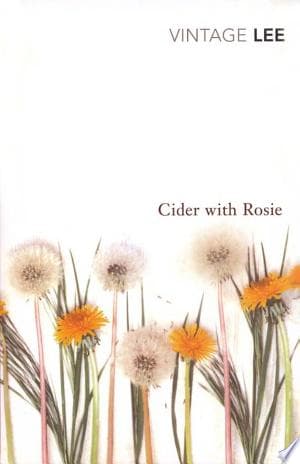
Cider With Rosie cover
Archivist's Choice

Cider With Rosie

Laurie Lee (2011)

Genre

Biography / Memoir / History

Reading Time

240 min

Key Themes

See below

Track Your Reading

Sign in to track this book

In a sun-drenched Cotswold valley, a boy's idyllic childhood unfolds amidst the last whispers of a timeless, pre-industrial England, where cider flows and the natural world reigns supreme.

Core Idea

Laurie Lee's "Cider With Rosie" is a memoir that reconstructs the author's childhood in a remote Cotswold village immediately following World War I. Through sensory detail and poetic prose, Lee shows how an untamed natural world and a close-knit community shaped him. The book suggests that this mix of nature, tradition, and isolation created a unique period of innocence and freedom. This period ended with modernity, mechanization, and the decline of village life. It is an act of memory that preserves a vanishing way of life and the journey from childhood wonder to self-awareness.
Reading time
240 min
Difficulty
Medium
✓ Read this if...
You appreciate evocative, poetic prose and desire to be transported to a bygone era of English village life, or if you are interested in the themes of childhood innocence, the power of nature, and the impact of societal change.
✗ Skip this if...
You prefer fast-paced narratives, plot-driven stories, or non-fiction that relies heavily on empirical data and direct argument rather than atmospheric description and personal reflection.

Core idea

The central argument and framework that powers the entire book.

Laurie Lee's "Cider With Rosie" is a memoir that reconstructs the author's childhood in a remote Cotswold village immediately following World War I. Through sensory detail and poetic prose, Lee shows how an untamed natural world and a close-knit community shaped him. The book suggests that this mix of nature, tradition, and isolation created a unique period of innocence and freedom. This period ended with modernity, mechanization, and the decline of village life. It is an act of memory that preserves a vanishing way of life and the journey from childhood wonder to self-awareness.

At a glance

Reading time

240 min

Difficulty

Medium

Read this if...

You appreciate evocative, poetic prose and desire to be transported to a bygone era of English village life, or if you are interested in the themes of childhood innocence, the power of nature, and the impact of societal change.

Skip this if...

You prefer fast-paced narratives, plot-driven stories, or non-fiction that relies heavily on empirical data and direct argument rather than atmospheric description and personal reflection.

Key Takeaways

1

A Vanishing Eden

The magic and fragility of a pre-modern rural existence.

Quote

This was the time of the great bread-baking, butter-churning, pig-killing, hay-making, sheep-shearing, apple-gathering, honey-taking, and all the other rich rituals of the seasons.

Lee's memoir is an elegy to a specific time and place: a remote Cotswold village at the turn of the 20th century, before modernity. He recreates a world where life followed the rhythms of nature, community, and old traditions. This pre-industrial world, with its self-sufficiency, close relationships, and mythical feel, is shown so clearly that its eventual disappearance feels like a loss. The book describes a childhood and preserves a cultural moment. It shows the beauty and simplicity of a life tied to the land, a strong contrast to ...

Supporting evidence

Lee vividly describes the seasonal rituals: the slaughtering of pigs, hay-making, the annual village fêtes, and the importance of the local pub as the social hub. He details the lack of electricity, cars, and running water, emphasizing the self-contained nature of the village.

Apply this

Reflect on how modern conveniences have altered our relationship with nature and community. Consider seeking out or preserving aspects of traditional, localized living, even in small ways, to recapture a sense of rootedness.
rural-lifepre-industrial-eracultural-preservation
2

Sensory Immersion

Childhood experienced through the unfiltered lens of scent, sound, and touch.

Quote

Everything was raw and immediate, the smells of woodsmoke and cow-dung, the taste of wild berries, the feel of rough wool and cold water.

Lee's prose uses sensory writing, putting the reader into his childhood experiences. He evokes, painting a picture with the smells of damp earth and woodsmoke, the taste of wild fruit, the feel of rough tweed and sun-baked stone, and the sounds of bird calls and distant church bells. This focus on sensory detail lets us understand the purity and immediacy of his early life. It suggests that a child's perception, without adult cynicism, offers the best way to understand a world, especially one connected to its physical environment. Thi...

Supporting evidence

He describes the 'smell of frost' in winter, the 'taste of raw cider,' the 'feel of the hot sun on the back of his neck' during summer days, and the 'sound of the wind in the trees' as a constant companion.

Apply this

Practice mindful observation in your daily life, paying deliberate attention to the sensory details of your surroundings. Engage your senses more fully when experiencing nature or new environments to deepen your connection and memory.

sensory-languagememoir-writingchildhood-perception
3

The Wild Child's Freedom

Unfettered exploration as a cornerstone of development.

Quote

We were not so much children as small animals, let loose in a landscape that was entirely ours.

Lee's childhood had great freedom and unsupervised exploration. The village, especially the countryside, was a playground where children roamed without adult involvement. They learned through direct experience and interaction with nature. This freedom built resilience, creativity, and a deep understanding of their environment, away from structured learning. It questions current ideas of childhood, where play is often supervised and confined. Lee suggests that this wild freedom, though perhaps seeming risky now, was key to his developm...

Supporting evidence

He recounts adventures like 'blackberrying' for entire days, swimming naked in the local pond, building dens in the woods, and exploring derelict barns, all without adult supervision or scheduled activities.

Apply this

Consider how to safely introduce more unstructured play and outdoor exploration into children's lives. For adults, seek out opportunities for 'wild' recreation and solitary time in nature to reconnect with a sense of freedom and discovery.

unstructured-playnature-connectionchild-development
4

Community's Embrace and Eccentricity

The vibrant tapestry of characters in a self-contained world.

Quote

Each inhabitant was a character, a piece of the landscape, and the village was a stage where they played out their lives.

The village itself is a character in Lee's memoir, with many memorable people. These unique figures—the grandmothers, gossiping women, quiet farmers, 'mad' old men—make up a close-knit community. Their lives, linked by shared traditions, gossip, and mutual help, create a rich social system. Lee shows these characters with affection and sharp observation, showing their quirks, superstitions, and simple wisdom. This communal life, though sometimes isolated, gave young Lee a strong sense of belonging and a social education. It shows the ...

Supporting evidence

Lee introduces us to characters like Granny Wallon, the formidable matriarch; Miss Fly, the eccentric schoolteacher; and various villagers with their distinct habits, superstitions, and roles in the community, often described through their unique speech patterns and physical appearance.

Apply this

Actively engage with your local community. Seek out and appreciate the unique personalities and stories of your neighbors and local figures. Support local businesses and initiatives to foster a stronger sense of place.

village-lifecommunity-buildingsocial-fabric
5

The Awakening of Senses and Self

Early experiences shaping identity and perception.

Quote

The world was still new, still raw, and every discovery was a personal revelation.

Lee's childhood is a continuous awakening to the beauty of nature, the complexities of human relationships, and the beginnings of his own sexuality. His first meeting with Rosie, the girl in the title, marks a significant moment of sensory and emotional discovery. These early experiences, from the joy of flying a kite to the intensity of first love, are shown with freshness and innocence. The book functions as a coming-of-age story, charting the protagonist's journey from an unselfconscious 'small animal' to a more aware individual. I...

Supporting evidence

The famous scene with Rosie under the hayrick, the first taste of cider, his observations of adult relationships, and his growing awareness of his own body and desires all contribute to this theme of awakening.

Apply this

Reflect on your own formative experiences and how they shaped your current self. Be open to new experiences and sensations, treating them with a sense of wonder and curiosity, regardless of age.

coming-of-ageemotional-developmentfirst-love
6

The School of Life and Nature

Learning through direct experience rather than formal education.

Quote

School was a brief, inexplicable interruption to the real business of living.

While Lee briefly attends the village school, his true education comes from the world around him. The fields, woods, and river are his classroom, and the villagers his teachers. He learns about survival, nature's cycles, human behavior, and life's practicalities not from books, but from observation and participation. This shows a strong argument for experiential learning, suggesting that direct engagement with one's environment and community can be more enriching and foundational than academic instruction. His 'lessons' were tangible ...

Supporting evidence

His detailed descriptions of fishing, foraging, understanding animal behavior, navigating the landscape, and observing the social dynamics of the village all exemplify this 'learning by doing' approach. The school sections are often depicted as chaotic or less impactful than his outdoor adventures.

Apply this

Prioritize hands-on learning experiences for yourself and others. Seek out opportunities for apprenticeships, workshops, or practical skills development. Embrace learning from everyday life and direct interaction with the world.

experiential-learningnature-educationself-directed-learning
7

The End of Innocence and an Era

The bittersweet farewell to a disappearing way of life.

Quote

The quiet was broken by the first car, the first electric light, and the world began to shrink.

The memoir has an underlying tone of sadness, recognizing that the idyllic world Lee describes was about to change forever. The first car, electricity, and other modern innovations marked the end of the village's isolation and its traditional way of life. This 'end of innocence' is not just personal but societal, marking the shift from a timeless, self-sufficient existence to one increasingly connected to the outside world. Lee's detailed memory is not just a personal memoir, but a historical document. It captures a vanishing era and ...

Supporting evidence

Lee explicitly mentions the arrival of the first motor car in the village and the installation of electricity as pivotal moments, signaling the end of an era. His departure from the village at the end of the book reinforces this transition.

Apply this

Reflect on how technological and societal changes have impacted your own community and personal life. Consider the value of preserving historical traditions and local identities in the face of globalization.

social-changeloss-of-traditionmodernization
8

Memory as Preservation

The power of recollection to immortalize a lost world.

Quote

I remember it all as a kind of dream, but a dream that was more real than life itself.

Laurie Lee's ability to recall and recreate his childhood with such detail and emotional depth shows the power of memory. The book is not just anecdotes but a deliberate act of preservation, an attempt to make a world that no longer exists last forever. His vivid prose and sensory descriptions let the reader experience this lost world as if it were present. This shows that our personal and collective memories are important archives. They can keep alive cultures, experiences, and emotions that would otherwise disappear. It shows the hu...

Supporting evidence

The entire book is an example of this, from the opening lines 'I was set down in a large, straggling family in a small, straggling village...' to his meticulous descriptions of specific events, conversations, and feelings from decades earlier.

Apply this

Engage in personal reflection and journaling to document your own experiences and observations. Encourage storytelling within your family and community to preserve shared histories and memories for future generations.

autobiographical-memoryhistorical-preservationnostalgia
9

The Poetry of Prose

Elevating memoir through lyrical language and evocative imagery.

Quote

The long, green valley of childhood, where I was born in a bed of nettles and grew up on a diet of wild plums and dew.

Beyond its story, 'Cider With Rosie' is a literary work, known for its prose. Lee's language is poetic, with metaphor, vivid imagery, and a rhythm that makes reading enjoyable. He does not just tell events; he makes them into scenes of beauty and emotional depth. This lyrical quality makes the memoir a work of art, showing how careful language can turn personal history into universal experience. It shows the importance of craftsmanship in writing, demonstrating that how a story is told can be as impactful as what the story is about.

Supporting evidence

Examples include his descriptions of the seasons ('the dark and frost-cracked earth'), the village itself ('a fold in the hills'), and his personal feelings, all imbued with rich vocabulary and evocative phrasing.

Apply this

Pay attention to the language used in your own writing and communication. Seek to use descriptive words and varied sentence structures to make your messages more engaging and impactful. Read more poetry to inspire your prose.

literary-prosepoetic-languagememoir-craft
10

The Comfort of the Familiar

Finding solace in the unchanging rhythms of nature and tradition.

Quote

The seasons turned, the crops grew and were harvested, the animals lived and died, and it was all part of the unchanging pattern.

In a world without constant new information or fast technological shifts, the familiar rhythms of nature and tradition gave a sense of comfort and stability. Lee's descriptions of the predictable cycle of seasons, annual village events, and unchanging landscape show a human need for continuity. This familiarity created a sense of security and belonging, contrasting with the anxieties of modern life. The book suggests that while progress brings advantages, there is value in the predictable, the ritualistic, and the deeply rooted. It re...

Supporting evidence

He consistently returns to the descriptions of the changing seasons and their associated tasks – winter snows, spring blossoms, summer hay-making, autumn harvests – as a comforting, predictable backdrop to his childhood.

Apply this

Identify and cultivate your own comforting routines and rituals. Spend time in nature to reconnect with its cyclical patterns. Seek out traditions, both personal and communal, that provide a sense of stability and continuity in your life.

comfort-of-routineseasonal-rhythmstraditional-values

Critical analysis

Notable Quotes

I was set down from the carrier's cart at the age of three; and there with a sense of bewilderment and terror my life in the village began.

Opening lines describing the author's arrival in the village as a child.

The first world was the view from my mother's knee. The second was the village, the valley, and the woods.

Reflecting on the different spheres of his early life.

We lived where the village ended, and the fields began, a place of simple shifts and changes.

Describing the family's home on the edge of the village.

The village had its own slow time, hewn from the sun and the seasons.

Commenting on the timeless, seasonal rhythm of village life.

Granny Trill was the oldest inhabitant, a tiny, dry leaf of a woman, who seemed to have been left over from some previous century.

Portraying an elderly villager with vivid imagery.

We were a family of eight, plus Mother, and we lived in a house that was too small for us, but we never noticed.

Describing the crowded but contented family life.

The kitchen was the heart of our house, a place of warmth and perpetual stew.

Evoking the central role of the kitchen in family life.

In the long summer days, we ran wild in the fields, our bare feet tough as leather.

Recalling the freedom and adventures of childhood summers.

The church stood at the centre of the village, a stone symbol of eternity and Sunday best.

Describing the village church as a focal point of community life.

Winter was a time of isolation, when the village drew in upon itself like a hibernating animal.

Depicting the inward-turning nature of village life in winter.

My sisters were a tribe apart, mysterious and giggling, with secrets I could never share.

Reflecting on the gender divide and mysteries of sibling relationships.

The coming of the motor car was like the end of a dream, the first crack in our ancient solitude.

Noting the impact of modernity on the traditional village life.

We ate what we grew, and we grew what we ate, in a cycle as old as the hills.

Describing the self-sufficient, agricultural lifestyle of the village.

Death was a familiar visitor, accepted with a quiet grace that we have since forgotten.

Reflecting on the village's matter-of-fact attitude towards mortality.

Quiz

Test Your Knowledge

Ready to see how well you understood this book? Take our interactive quiz with 10 questions.

10
Questions
~5
Minutes
?
Best Score

Key Questions (FAQ)

'Cider With Rosie' is Laurie Lee's evocative memoir of his idyllic childhood in a remote Cotswold village in early 20th-century England. It vividly portrays a pre-modern rural world on the verge of change, capturing the sensory experiences, characters, and timeless rhythms of village life before electricity and cars.

About the author

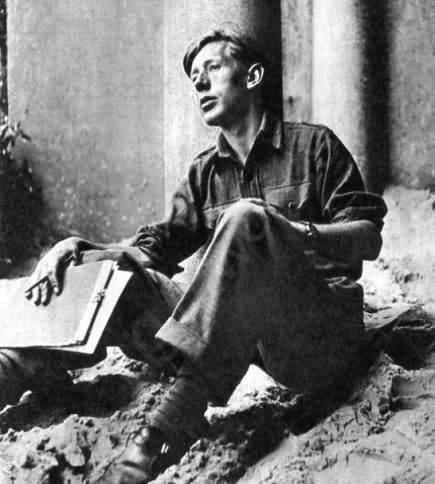
Laurie Lee

Laurence Edward Alan Lee, was an English poet, novelist and screenwriter, who was brought up in the small village of Slad in Gloucestershire.