BookBrief
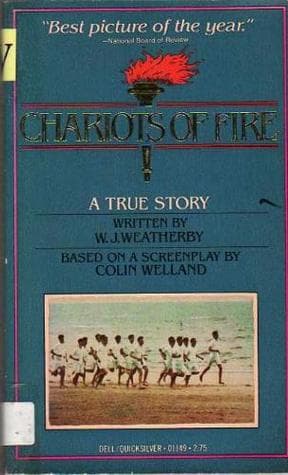
Chariots of Fire cover
Archivist's Choice

Chariots of Fire

William J. Weatherby (1982)

Genre

Biography / History / Spirituality

Reading Time

90 min

Key Themes

See below

Track Your Reading

Sign in to track this book

At the 1924 Olympics, two British sprinters, one Jewish and fighting prejudice, the other a devout missionary, test their limits and beliefs, racing for gold and for their principles.

Core Idea

William J. Weatherby's "Chariots of Fire" looks at the lives of British sprinters Eric Liddell and Harold Abrahams. It argues their chase for Olympic gold in the 1924 Paris Games was more than just a sports event. The book says Liddell's strong Christian faith, which made him refuse to run on a Sunday, and Abrahams's fight against antisemitism and his drive for self-worth, show deep personal rebellions and loyalty to their beliefs. Through their separate journeys, Weatherby shows how sport can shape identity, faith, and social views. He suggests that real greatness is not just in winning, but in the honesty and belief shown under great pressure. The main point is that when personal values guide the pursuit of excellence, sports become a sign of the human spirit's ability to win physically and morally.
Reading time
90 min
Difficulty
Easy
✓ Read this if...
You are interested in the intersection of sports, faith, history, and personal conviction, or if you enjoyed the film and want to delve deeper into the real stories.
✗ Skip this if...
You are looking for a highly technical deep dive into running mechanics or a purely secular sports biography without spiritual or historical context.

Core idea

The central argument and framework that powers the entire book.

William J. Weatherby's "Chariots of Fire" looks at the lives of British sprinters Eric Liddell and Harold Abrahams. It argues their chase for Olympic gold in the 1924 Paris Games was more than just a sports event. The book says Liddell's strong Christian faith, which made him refuse to run on a Sunday, and Abrahams's fight against antisemitism and his drive for self-worth, show deep personal rebellions and loyalty to their beliefs. Through their separate journeys, Weatherby shows how sport can shape identity, faith, and social views. He suggests that real greatness is not just in winning, but in the honesty and belief shown under great pressure. The main point is that when personal values guide the pursuit of excellence, sports become a sign of the human spirit's ability to win physically and morally.

At a glance

Reading time

90 min

Difficulty

Easy

Read this if...

You are interested in the intersection of sports, faith, history, and personal conviction, or if you enjoyed the film and want to delve deeper into the real stories.

Skip this if...

You are looking for a highly technical deep dive into running mechanics or a purely secular sports biography without spiritual or historical context.

Key Takeaways

1

Running as Rebellion

Harold Abrahams used athletics as a weapon against antisemitism and class prejudice.

Quote

For Abrahams, running was not merely a sport; it was a crusade against the entrenched prejudices of his time, a means to prove the worth of a Jew in a society that often sought to diminish it.

Harold Abrahams's strong desire for Olympic gold was tied to his identity as a Jewish man in early 20th-century Britain. He faced clear and subtle antisemitism, especially among the elite at Cambridge University and in British athletics. Abrahams used his frustration and ambition in his running. His dedication was not just about winning; it was about showing intellectual and physical skill, which challenged the biased stereotypes common in society. Each win was a symbolic blow against those who tried to sideline him, making his sports...

Supporting evidence

Abrahams's experiences at Cambridge, where he faced discrimination and an 'old boy' network, fueled his determination to succeed on his own terms, culminating in his 100-meter dash victory at the 1924 Paris Olympics.

Apply this

Identify areas in your life where you feel marginalized or underestimated. Channel that energy into a focused pursuit of excellence that not only benefits you but also challenges the underlying prejudices. Let your success be your loudest retort.

antisemitismsocial-justiceathletic-rebellion
2

Faith in Motion

Eric Liddell's running was an act of worship, glorifying God with his natural talent.

Quote

When I run, I feel His pleasure.

For Eric Liddell, a religious Scottish missionary-in-training, running was part of his spiritual life. Unlike Abrahams, whose motivation was largely external, Liddell's drive came from his faith. He believed his athletic gifts were from God, and using them fully was a way to honor his creator. This view gave his running a joyful, almost divine quality. His famous refusal to run on a Sunday, despite great pressure and the risk of losing an Olympic medal, came directly from this strong belief. It showed his deep commitment to his princi...

Supporting evidence

Liddell's decision to withdraw from the 100-meter dash, his best event, because the heats were scheduled for a Sunday, and his subsequent triumph in the 400-meter race, which he had not specialized in, exemplifies his faith-driven approach.

Apply this

Reflect on your core values and how they manifest in your daily actions and pursuits. Consider how aligning your talents and passions with your deepest beliefs can create a more purposeful and fulfilling experience, even if it means sacrificing conventional success.

spiritual-athleticismfaith-over-famepurpose-driven-life
3

The Price of Principle

Both men demonstrated an unyielding commitment to their personal codes of honor, even at great cost.

Quote

They would sacrifice anything to achieve their goals, except their honor.

The story of 'Chariots of Fire' is about the honesty of its main characters. Harold Abrahams, even with his strong desire to win, refused to change his Jewish identity or accept the subtle condescending attitudes of the establishment. He sought victory on his own terms, demanding respect rather than just accepting tolerance. Eric Liddell's refusal to run on a Sunday, a decision that surprised the British Olympic committee and the public, was an act of moral strength. Both men faced great pressure to conform, to put national glory or p...

Supporting evidence

Liddell's Sunday race refusal and Abrahams's persistent battle against prejudice, even when it made him unpopular, illustrate their unwavering commitment to their respective principles.

Apply this

Identify a core principle you hold dear. Practice defending it, even in small ways, when it's challenged. Understand the long-term strength and clarity that comes from living in alignment with your values, even if it means short-term discomfort or missed opportunities.

integritymoral-couragepersonal-ethics
4

Beyond the Finish Line

Olympic glory served as a launchpad for different, yet equally impactful, life paths.

Quote

The Olympics were but a prelude to the greater races they were destined to run in life.

The 1924 Olympics were an important moment that shaped what happened next for Abrahams and Liddell. For Harold Abrahams, his success in sports opened doors, letting him have a good career in law, sports journalism, and athletic management. He became a respected voice in British sports, continuing to support fairness and merit. Eric Liddell, true to his calling, went back to China as a missionary, giving his life to service and education. He faced great hardship during World War II. Their stories show that while sports success can be m...

Supporting evidence

Abrahams's post-Olympic career as a barrister and sports commentator, and Liddell's return to missionary work in Tientsin, China, leading to his internment during WWII and eventual death in a Japanese civilian internment camp.

Apply this

Consider how your current pursuits, whether academic, professional, or personal, could serve as stepping stones to a larger, more meaningful purpose. Don't view successes as endpoints, but as catalysts for future impact and contribution.

legacylife-purposepost-athletic-life
5

The Crucible of Competition

Intense rivalry and personal challenges forge character and reveal true potential.

Quote

The pressure of the Olympic arena stripped away all pretense, revealing the true mettle of each man.

The Olympic Games are the top level of sports competition, a place where people push their physical and mental limits. For Abrahams and Liddell, this setting changed them. Abrahams did well under pressure, his competitive drive strongest when the stakes were highest, proving his critics wrong with each step. Liddell, though calm on the outside, found a deeper connection to his faith and purpose amidst the tough demands. The story clearly shows how facing strong opponents and the great pressure of global expectations makes athletes con...

Supporting evidence

Abrahams's focused training with Sam Mussabini to overcome a perceived mental block, and Liddell's ability to pivot from the 100m to the 400m and win, despite the unexpected challenge.

Apply this

Embrace challenging situations as opportunities for growth and self-discovery. Instead of shying away from competition or difficult tasks, lean into them, recognizing that they can reveal your hidden strengths and clarify your purpose.

mental-fortitudepeak-performanceself-mastery
6

Mentorship's Guiding Hand

The influence of coaches and mentors was crucial in shaping the athletes' success.

Quote

Behind every great athlete often stands a guiding hand, a voice of wisdom that helps unlock potential.

The book quietly highlights the important part mentors played in the lives of Abrahams and Liddell. Harold Abrahams, known for his intensity and sometimes difficult personality, gained a lot from the teaching of Sam Mussabini, a professional coach often viewed with suspicion by the amateur-focused British athletic establishment. Mussabini's scientific methods and psychological insights were key to improving Abrahams's technique and mental approach. While Liddell's guidance was more spiritual and internal, he also had supportive people...

Supporting evidence

The detailed account of Sam Mussabini's coaching of Harold Abrahams, including his focus on starting technique and mental preparation, which was unconventional for the era.

Apply this

Seek out mentors or coaches who can provide specialized guidance and support in your chosen field. Be open to their insights, even if they challenge your preconceived notions. Conversely, consider how you might mentor others, sharing your experience to foster their growth.

coachingguidancepersonal-development
7

The Universal Language of Sport

Despite differing motivations, sport provided a common stage for human excellence and connection.

Quote

Though their paths diverged and their beliefs contrasted, the track offered a universal language where only speed and heart truly mattered.

While Abrahams ran to stand against prejudice and Liddell ran as an act of worship, the Olympic stage brought them together in a shared pursuit of athletic excellence. The book shows how sport, at its simplest, can bridge differences in religion, background, and personal philosophy. In the crowd's noise and the race's intensity, what mattered was the athletes' raw talent, dedication, and spirit. This common ground allowed for mutual respect, even among competitors with very different worldviews. It emphasizes that shared human efforts...

Supporting evidence

The narrative's focus on both Abrahams and Liddell, juxtaposing their stories while recognizing their shared pursuit of Olympic glory and the mutual respect they held for each other as competitors.

Apply this

Look for shared activities or goals that can unite diverse individuals, transcending differences in background or belief. Recognize the power of common pursuits to foster understanding and mutual respect, whether in sports, work, or community.

sportsmanshipunity-through-sporthuman-connection
8

The Weight of Expectation

National pride and public scrutiny add immense pressure to individual athletic pursuits.

Quote

Every stride was not just for himself, but for the hopes and expectations of a nation watching.

The story clearly shows the great pressure on Olympic athletes, not just from personal goals, but from national expectations. Abrahams felt the weight of representing his Jewish community and proving their worth to a doubtful British society. Liddell faced intense public and official scrutiny for his religious beliefs, with many seeing his Sunday refusal as a betrayal of national honor. This constant outside pressure, made bigger by the growing media coverage of the time, added a significant mental aspect to their athletic challenges....

Supporting evidence

The public outcry and political maneuvering surrounding Liddell's refusal to run on Sunday, and the intense scrutiny Abrahams faced as a prominent Jewish athlete in Britain.

Apply this

When facing high-stakes situations, acknowledge and address the external pressures. Develop strategies to compartmentalize or manage these expectations, focusing on your performance and core values rather than solely external validation. Build a strong internal locus of control.

performance-pressurenational-identitypsychological-resilience
9

Defining Greatness

True greatness is measured not just by victory, but by character and enduring impact.

Quote

Their greatness lay not solely in their medals, but in the unwavering spirit and integrity with which they pursued them, and the lives they lived thereafter.

Ultimately, 'Chariots of Fire' argues that real greatness goes far beyond the brief moment of Olympic triumph. Harold Abrahams's greatness is defined by his tireless fight against prejudice and his later contributions to sports administration and journalism, where he supported a fairer system. Eric Liddell's greatness is found in his strong faith, his self-sacrifice as a missionary, and his deep impact on others, ending in his sad but principled death. The book questions a view of success based only on results, suggesting that the mos...

Supporting evidence

The contrasting post-Olympic lives of Abrahams and Liddell, both marked by significant contributions and adherence to their principles, even in the face of adversity.

Apply this

Re-evaluate your own definition of 'success' or 'greatness.' Shift focus from mere achievements to the character you cultivate, the impact you have on others, and the integrity with which you live your life. Consider what kind of legacy you want to build.

characterlegacy-buildingpurposeful-living

Critical analysis

Notable Quotes

I believe God made me for a purpose, but He also made me fast. And when I run, I feel His pleasure.

Eric Liddell reflecting on his running and faith.

For me, the race is an expression of my faith.

Eric Liddell explaining his motivation for running.

You can praise God by peeling a potato if you peel it to perfection.

A general spiritual principle that might have influenced Liddell's approach to his talents.

When you give up your dream, you die.

A sentiment that could be attributed to either Liddell or Abrahams in their pursuit of excellence.

I will raise my voice against injustice, even if I stand alone.

Reflecting the moral courage of the characters, particularly Liddell's stand on Sunday running.

We are not here to win medals, but to win souls.

Eric Liddell's ultimate mission as a missionary.

To win, you must want to win more than you fear to lose.

A core philosophy for competitive athletes like Harold Abrahams.

Your greatest victory is not in never falling, but in rising every time you fall.

A theme of resilience and perseverance present in the lives of both Liddell and Abrahams.

The pursuit of excellence is a spiritual journey.

A general reflection on the dedication and passion shown by the athletes.

God will honor those who honor Him.

A belief that underpins Eric Liddell's decisions, particularly regarding the Sunday race.

Talent without dedication is merely potential.

A lesson learned by many athletes, including Abrahams, in their training.

True victory is found not in the applause of men, but in the approval of God.

Eric Liddell's perspective on success and ultimate judgment.

One day, I will be a part of the history of this country.

Harold Abrahams' ambition and determination to overcome prejudice.

The race is not always to the swift, nor the battle to the strong, but time and chance happeneth to them all.

A biblical quote that resonates with the unpredictable nature of competition and life's events.

Quiz

Test Your Knowledge

Ready to see how well you understood this book? Take our interactive quiz with 10 questions.

10
Questions
~5
Minutes
?
Best Score

Key Questions (FAQ)

'Chariots of Fire' tells the inspiring true story of two British Olympic runners, Harold Abrahams and Eric Liddell, as they prepare for and compete in the 1924 Paris Olympics. It explores their individual motivations, challenges, and deeply held beliefs that drive them to achieve greatness on the track.

About the author