“Sometimes the heart sees what is invisible to the eye.”
— A character reflects on faith and perception beyond physical reality.


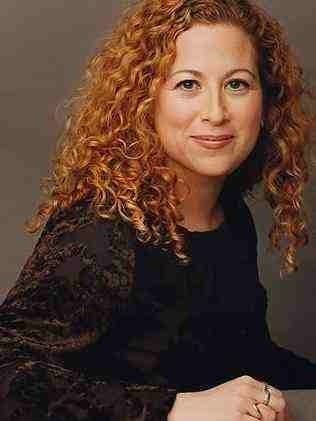
Jodi Picoult (2008)
Genre
Spirituality
Reading Time
9-10 hours
Key Themes
See below
Sign in to track this book
A grieving mother, reeling from her daughter's death, must choose between forgiving the killer and saving her other child's life.
The story begins with June Nealon dealing with the murder of her five-year-old daughter, Elizabeth, and her husband, Kurt. They were found killed in their New Hampshire home. The main suspect, Shay Bourne, a drifter who had been working on their property, is quickly arrested. Shay, a man with a difficult past and a history of violence, confesses to the murders, saying an unknown force drove him. June's other daughter, eleven-year-old Claire, is very traumatized but lives. June's world is completely broken, and she is overcome by grief and a strong desire for justice for her lost family. The community is shocked, and Shay's trial is about to begin.
Shay Bourne is assigned Maggie Nealon, Kurt's sister and June's sister-in-law, as his public defender. Maggie, a cynical and practical lawyer, at first focuses on a standard defense. However, Shay starts making increasingly strange and deep spiritual claims, saying he is a vessel for God and can perform miracles. During the trial, Shay's calm manner and unusual statements puzzle both the court and Maggie. He talks about forgiveness and love, ideas that seem out of place for a confessed murderer. Maggie feels torn between her professional duty to defend Shay and her personal loyalty to June, who sees Shay as completely evil.
While in prison, Shay Bourne starts to show stigmata — wounds like those of Christ's crucifixion appear on his hands, feet, and side. This causes a huge media stir and gets the attention of religious groups and the public. Many people, including a growing number of followers, start to believe that Shay is a divine figure, a modern-day Christ, or at least a prophet. This greatly complicates his legal case, as it changes public opinion and adds a spiritual aspect to what was initially a simple murder trial. Maggie struggles with this new situation, as the stigmata makes it hard to present Shay as just a mentally disturbed person.
The Catholic Church, worried about the growing group around Shay Bourne, assigns Father Michael Wright, a former priest who left the priesthood after a personal tragedy, to investigate Shay's claims of divinity and the truth of his stigmata. Michael, cynical and without faith, approaches the task expecting to disprove Shay's claims. However, as he spends more time with Shay, he sees Shay's constant calmness, his deep spiritual insights, and the unexplainable nature of the stigmata. Michael finds his own long-lost faith being challenged and reawakened, leading him on a personal journey of self-discovery and spiritual rethinking.
June's surviving daughter, Claire, starts to suffer from a rare and severe congenital heart defect that quickly gets worse, requiring a heart transplant. Her condition becomes critical, and she is put on a waiting list, with her chances of survival decreasing. At this terrible time, Shay Bourne, from his prison cell, makes a surprising offer: he says he can heal Claire, but only if June Nealon, the mother of his victims, publicly forgives him for the murders. This proposal puts June in a painful moral dilemma, making her choose between her strong desire for revenge and her desperate hope to save her beloved daughter's life.
June is conflicted by Shay's offer. Forgiving the man she believes murdered her husband and other daughter is an impossible act, a betrayal of their memory. Yet, the thought of losing Claire is unbearable. She talks with Maggie, who, despite her own mixed feelings, advises June on the legal and ethical sides. June also speaks with Father Michael, looking for spiritual advice, but finds no easy answers. The media frenzy around Shay grows, with public opinion split on whether June should accept his offer. June's internal struggle is huge, a fight between her deepest hatred and her deep motherly love, ending in her eventual, reluctant decision to consider Shay's terms.
Despite the appeals and the controversy around his spiritual claims, Shay Bourne is sentenced to death and executed. On the same day and at the same time as Shay's execution, a suitable donor heart miraculously becomes available for Claire. The transplant is done successfully, saving Claire's life. This incredible timing strengthens the belief among Shay's followers that he performed a final, ultimate miracle, sacrificing himself for Claire's salvation. June, though relieved for Claire, is left with a deep sense of uncertainty, unsure whether to credit Claire's survival to divine intervention, a medical wonder, or a harsh twist of fate.
Driven by her professional duty and a lingering sense of unease, Maggie Nealon keeps investigating the original murders. Through careful research and re-examining evidence, she finds the shocking truth: Kurt Nealon, June's husband, was the actual killer of Elizabeth, driven by a deep mental illness and delusions. Shay Bourne, who was working on their property, discovered the crime and, in a deep act of self-sacrifice, confessed to protect June and Claire from the devastating knowledge that Kurt was the killer. He also arranged the heart donation, using his unique blood type and rare heart condition to ensure his heart would match Claire's upon his execution, thus performing a very real, though unusual, 'miracle'.
Maggie presents her findings to June, who is completely devastated by the revelation that her beloved husband was a murderer and that Shay, the man she hated, was a selfless savior. The truth shatters her view of her family, her grief, and her understanding of justice. June has to re-evaluate everything she believed, facing the complexities of good and evil, and the true meaning of sacrifice and forgiveness. The ending leaves June with a deep, though painful, understanding of the events, and a path toward real healing, not from revenge, but from understanding and accepting the complicated truths of human nature and divine love.
The Protagonist
Transforms from a woman consumed by vengeance to one who, through painful revelations, understands the complex nature of love and forgiveness.
The Antagonist/Redeemer
Presented as a murderer, he is gradually revealed as a Christ-like figure of ultimate sacrifice and redemption.
The Supporting
From a cynical lawyer, she becomes the relentless seeker of truth, navigating complex personal and professional ethics.
The Supporting
Begins as a faithless skeptic and slowly reclaims his spiritual understanding through his encounters with Shay.
The Supporting
Her illness is the catalyst for the central conflict, and her recovery symbolizes the bittersweet redemption.
The Mentioned/Antagonist
From perceived victim to the true, hidden antagonist whose actions trigger the entire plot.
The Supporting
Remains largely static, representing the institutional church's perspective.
The Mentioned
Static, serves as the embodiment of the legal system.
This theme looks at the conflict between wanting punishment for terrible crimes and forgiving the person who did them. June Nealon at first wants only justice for her murdered family, wanting Shay Bourne to pay the highest price. However, Shay's offer to save Claire if June forgives him puts June in a painful moral problem, making her question if justice is always the most important thing, especially when weighed against her child's life. The novel suggests that real 'justice' can be much more complex and tied to understanding and sacrifice than simple punishment.
“Would you give up your vengeance against someone you hate if it meant saving someone you love? Would you want your dreams to come true if it meant granting your enemy's dying wish?”
The book explores faith, miracles, and the struggle between belief and doubt. Father Michael, a priest who left the church, shows skepticism, trying to disprove Shay Bourne's claims of divinity and stigmata. Yet, Shay's constant calmness and the strange events around him challenge Michael's cynicism, making him rethink his lost faith. The novel presents different kinds of faith — blind belief, intellectual questioning, and ultimate faith in people's ability for good — making the reader think about where miracles truly come from and what they mean, whether divine or human.
“Sometimes, the only way to believe in God is to understand that he works through the people he's put on this earth.”
Shay Bourne's character shows sacrifice and redemption. At first seen as a terrible murderer, his actions are finally shown to be a deep act of self-sacrifice, taking the blame for someone else's crime and arranging his own death to save Claire. His 'miracle' is not supernatural, but a deeply human act of giving his own heart. This challenges the usual idea of redemption, suggesting it can be found not just through regret, but through selfless love and giving oneself completely, even for those who hate you.
“The greatest love a man can have for his friends is to give his life for them.”
The story constantly asks what is true and how easily people accept or reject it based on their biases and desires. June believes the 'truth' is that Shay murdered her family, while the public deals with the 'truth' of his divine claims. Maggie's persistent investigation slowly uncovers layers of lies and assumptions, revealing a much more complex and devastating truth about Kurt's actions and Shay's reasons. The story shows how easily appearances can trick people and how painful the actual truth can be, forcing characters to rethink their entire understanding of past events.
“The truth is a terrible thing, but it's the only thing that sets you free.”
June Nealon's journey is deeply rooted in her strong motherly love for her daughters and her overwhelming grief for Elizabeth. Her love for Claire is so deep that it makes her consider the unthinkable act of forgiving her family's murderer. Her grief is raw and consuming, shaping her initial desire for revenge. The novel explores the depths of a mother's pain and how far she will go to protect her child, showing how love and loss can both destroy and, in a complex way, heal.
“There is no pain like the pain of losing a child. It is a wound that never truly heals.”
The story is told through the shifting viewpoints of June, Maggie, and Father Michael, initially obscuring the full truth.
The novel employs multiple first-person narrators: June Nealon, Maggie Nealon, and Father Michael Wright. Each character offers a distinct perspective on Shay Bourne, the murders, and the spiritual claims, but none initially possess the complete picture. June is blinded by grief and hatred, Maggie by her legal pragmatism and family ties, and Michael by his skepticism. This narrative structure keeps the reader constantly questioning the 'truth' and allows for the gradual, piecemeal revelation of the full story, culminating in Maggie's discovery that recontextualizes everything that came before. It highlights how personal biases and limited information can shape perception.
Shay Bourne's confession and spiritual claims serve to mislead the audience about the true murderer.
Shay Bourne's immediate confession to the murders of Elizabeth and Kurt, coupled with his subsequent claims of being a divine figure and the manifestation of stigmata, act as a significant red herring. These elements intensely focus the reader's attention on Shay as either a deranged killer or a miracle worker, diverting suspicion away from the true perpetrator, Kurt Nealon. This misdirection is crucial to the plot's ultimate twist, ensuring that the revelation of Kurt's guilt is genuinely shocking and forces a re-evaluation of Shay's character and motivations.
Shay's spiritual claims and the subsequent 'miracle' of Claire's heart transplant drive the central conflict and moral dilemma.
Shay Bourne's alleged ability to perform miracles, particularly his offer to heal Claire, serves as the primary catalyst for the story's central moral dilemma. It forces June to confront an impossible choice, and it draws Father Michael into an investigation that challenges his faith. The 'miracle' itself – Claire receiving a donor heart at the exact moment of Shay's execution – is initially presented as a divine act, but is later revealed to be a carefully orchestrated human sacrifice. This device allows the novel to explore themes of faith, sacrifice, and the definition of a miracle, whether divine or profoundly human.
The legal proceedings against Shay Bourne provide a structured framework for exploring justice, truth, and morality.
The legal trial of Shay Bourne provides a significant structural framework for a large portion of the novel. It allows for the presentation of evidence, the cross-examination of witnesses, and the exploration of legal arguments surrounding Shay's guilt and his spiritual claims. The courtroom setting becomes a battleground for competing truths and moral stances, with Maggie Nealon navigating the complexities of the law, June seeking justice, and Shay presenting his unusual defense. The trial serves to heighten the tension and provides a public forum for the unfolding drama and the public's reaction to Shay's alleged divinity.
“Sometimes the heart sees what is invisible to the eye.”
— A character reflects on faith and perception beyond physical reality.
“Forgiveness is not about forgetting. It is about letting go of another person's throat.”
— Discussed in relation to a character grappling with grief and anger.
“What if the person you thought you knew best turns out to be someone you never really knew at all?”
— A character questions assumptions about a loved one's true nature.
“The heart has its reasons which reason knows nothing of.”
— Referenced in a philosophical discussion about emotion versus logic.
“Redemption is not a prize you win, but a gift you accept.”
— A character contemplates spiritual salvation and personal responsibility.
“We are all broken, that's how the light gets in.”
— A reflection on suffering and spiritual growth.
“The measure of a life is not its duration, but its donation.”
— Discussed in the context of organ donation and legacy.
“Faith is the bird that feels the light and sings when the dawn is still dark.”
— A metaphor for hope in uncertain times.
“To err is human; to forgive, divine.”
— Quoted in a debate about morality and compassion.
“The soul always knows what to do to heal itself. The challenge is to silence the mind.”
— A character's inner monologue on spiritual recovery.
“Love is not love which alters when it alteration finds.”
— Referenced in a discussion about unconditional love.
“The only way out is through.”
— Advice given to a character facing emotional turmoil.
“In the end, we will remember not the words of our enemies, but the silence of our friends.”
— A reflection on loyalty and moral courage.
“Peace is not the absence of conflict, but the ability to cope with it.”
— A character's realization about inner tranquility.
Ready to see how well you understood this book? Take our interactive quiz with 10 questions.
Biography coming soon.

Kay Lynn Mangum
4.3
Stormie Omartian
4.3

Jerry Bridges
4.3
Walter Brueggemann
4.3

Rhonda Byrne
4.3
Brother Lawrence
4.3
Joseph Campbell
4.3

Unknown
4.3