BookBrief
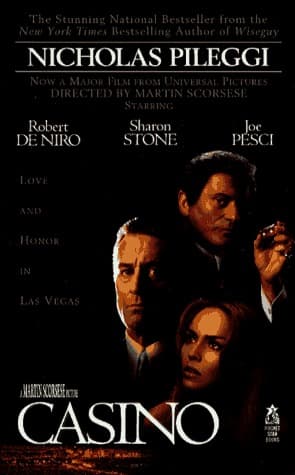
Casino cover
Archivist's Choice

Casino

Nicholas Pileggi (1995)

Genre

Biography / History

Reading Time

700 min

Key Themes

See below

Track Your Reading

Sign in to track this book

In the glittering, high-stakes world of 1970s Las Vegas, a sharp Jewish handicapper, his brutal mob enforcer best friend, and his beautiful, treacherous showgirl wife gamble with their lives as the Mafia’s iron grip on the casino empire begins to slip.

Core Idea

Nicholas Pileggi's "Casino" examines the brutal, self-destructive rule of the Mafia over Las Vegas in its golden age. Through the intertwined stories of mob enforcer Tony Spilotro (Rothstein in the book's narrative) and his childhood friend, casino manager Frank Rosenthal (Ace Rothstein), Pileggi shows how the Mob, despite its strong control and skimming operations, was undone by its own internal codes, rivalries, and the intense scrutiny from their increasingly violent behavior. The book argues that while the Mob built Vegas, their inability to operate within legitimate structures, coupled with their greed and violence, led to their downfall. This made way for corporate control and ended a unique era in American history.
Reading time
700 min
Difficulty
Medium
✓ Read this if...
You are fascinated by the inner workings of the Mafia, the true history behind Las Vegas's development, or the gritty realities of organized crime's rise and fall.
✗ Skip this if...
You prefer fictionalized accounts of the Mob or are turned off by detailed, non-sensationalized historical narratives of violence and corruption.

Core idea

The central argument and framework that powers the entire book.

Nicholas Pileggi's "Casino" examines the brutal, self-destructive rule of the Mafia over Las Vegas in its golden age. Through the intertwined stories of mob enforcer Tony Spilotro (Rothstein in the book's narrative) and his childhood friend, casino manager Frank Rosenthal (Ace Rothstein), Pileggi shows how the Mob, despite its strong control and skimming operations, was undone by its own internal codes, rivalries, and the intense scrutiny from their increasingly violent behavior. The book argues that while the Mob built Vegas, their inability to operate within legitimate structures, coupled with their greed and violence, led to their downfall. This made way for corporate control and ended a unique era in American history.

At a glance

Reading time

700 min

Difficulty

Medium

Read this if...

You are fascinated by the inner workings of the Mafia, the true history behind Las Vegas's development, or the gritty realities of organized crime's rise and fall.

Skip this if...

You prefer fictionalized accounts of the Mob or are turned off by detailed, non-sensationalized historical narratives of violence and corruption.

Key Takeaways

1

The Mob's Vegas Blueprint

How organized crime systematically siphoned millions from legitimate casinos.

Quote

They didn't just own the casinos; they owned the system. Every count, every drop, every dollar was a potential leak they could tap.

Pileggi details the sophisticated, multi-layered system the Chicago Outfit and other crime families used to skim profits from Las Vegas casinos. This was not simple theft; it was a well-organized, corporate-level fraud. Key figures like Frank 'Lefty' Rosenthal were installed as 'front men' to manage the casinos, ensuring money was diverted before it reached the IRS. The book reveals how every aspect, from the counting rooms to the junkets, was compromised, creating an 'invisible tax' that funded the mob's operations back East. The sch...

Supporting evidence

The detailed accounts of the 'skim' operations, specifically how cash was removed from the counting rooms before being reported, often involving suitcases full of untaxed profits being flown back to mob bosses in Kansas City, Milwaukee, and Chicago.

Apply this

Understand how even highly regulated industries can be exploited through intricate, systemic fraud when oversight is compromised and key personnel are corrupted. It highlights the importance of multi-layered auditing and independent verification in financial institutions.

casino-skimorganized-crime-financefront-men
2

The 'Made Man' vs. The 'Associate'

The perilous hierarchy and unwritten rules governing mob loyalty and betrayal.

Quote

In the mob, you're either a made man or you're not. And if you're not, you're always expendable, no matter how much money you make or how many bones you break.

The book shows the rigid, often brutal, caste system within the Mafia, especially through the contrasting fates of Frank Rosenthal (an associate) and Tony Spilotro (a made man). Rosenthal, despite his value in running casinos and generating millions, was always an outsider, a Jew in an Italian-American organization, and thus vulnerable. Spilotro, a 'made man,' held a different kind of power and protection, even when his actions became reckless and harmed the Outfit's interests. This distinction shows the internal logic of the mob: blo...

Supporting evidence

Rosenthal's constant need for mob approval and protection, despite his financial genius, versus Spilotro's impunity for violence and disregard for established protocols, stemming from his 'made' status and family connections.

Apply this

Recognize that power structures, even informal ones, have deeply ingrained rules and hierarchies that dictate behavior and outcomes. Understanding these unspoken rules is crucial for navigating any complex organization, legitimate or illicit.

mob-hierarchymafia-rulesmade-man
3

Vegas: A Mobster's Paradise (and Prison)

How the unique environment of Las Vegas both enabled and entrapped its mob figures.

Quote

Vegas was a golden cage. They had everything they could ever want, but they couldn't leave, not really. Their freedom was an illusion, tethered to the very place they exploited.

Pileggi paints Las Vegas not just as a location, but as a character itself – a glittering, lawless frontier that attracted ambitious, dangerous men, offering opportunities for wealth and power. However, it also became their gilded prison. Figures like Rosenthal and Spilotro, while living lives of luxury and influence, were constantly watched by law enforcement and their own bosses back East. The constant pressure to perform, to maintain the 'skim,' and to navigate the treacherous internal politics of the mob created a highly stressful...

Supporting evidence

The detailed accounts of FBI surveillance, the constant pressure on Rosenthal to keep the money flowing, and Spilotro's increasing recklessness and isolation as he tried to exert control over the city, ultimately leading to his downfall.

Apply this

Consider how environments, both physical and cultural, can profoundly shape human behavior and destiny, offering both immense opportunity and inherent limitations or dangers. The 'gold rush' mentality often comes with hidden costs.

las-vegas-historymob-influenceenvironmental-determinism
4

The Perils of 'Heat'

How excessive violence and high-profile actions ultimately brought down the mob's Vegas empire.

Quote

The problem with Tony was, he loved the action too much. He loved the violence. And in Vegas, that kind of 'heat' was like ringing a bell for the feds.

The book shows how Tony Spilotro's escalating violence, along with Frank Rosenthal's high-profile persona and public antics, generated immense 'heat' – unwanted attention from law enforcement and the media. While intimidation was part of the mob's toolkit, Spilotro's brutal reputation and the body count associated with his 'Hole in the Wall Gang' became too much to ignore. Similarly, Rosenthal's TV appearances and public disputes, while showing his ego, also drew scrutiny to his illicit operations. This excessive visibility and unchec...

Supporting evidence

Spilotro's murder of loan shark Frank Cullotta, the beatings of various individuals, and Rosenthal's highly publicized TV appearances and confrontations with the Gaming Control Board, all of which led to increased federal surveillance.

Apply this

Understand that in any illicit enterprise, maintaining a low profile and avoiding unnecessary attention is paramount for survival. Hubris and unchecked aggression are often precursors to downfall, regardless of power or influence.

mob-downfalllaw-enforcement-pressureorganized-crime-strategy
5

The Women Behind the Mob

The complex and often tragic roles of women entangled in the Mafia's orbit.

Quote

For women like Geri, the mob offered a life of glamour and danger, but ultimately, it was a life without true agency, trapped by the men and their rules.

Pileggi examines the lives of women like Geri McGee, Frank Rosenthal's wife, a former showgirl and hustler whose tumultuous relationship with Frank is a central part of the narrative. Geri's story shows the paradoxical existence of women in this world: showered with luxury and attention, yet controlled, exploited, and ultimately disposable. Their lives were often defined by the men they were with, subjected to their rules, their violence, and their paranoia. Geri's struggle with addiction, her affairs, and her tragic death show the ps...

Supporting evidence

Geri McGee's addiction struggles, her affair with Tony Spilotro, and her eventual overdose, all presented as direct consequences of her life within Rosenthal's mob-controlled world.

Apply this

Examine how power dynamics and societal structures, even within criminal organizations, can severely limit individual agency, especially for marginalized groups. It's a stark reminder of the hidden costs of 'glamour' when entangled with dangerous men.

women-in-mobgender-dynamics-crimeaddiction-consequences
6

The Illusion of Control

How the mob's grip on Vegas ultimately slipped due to internal conflicts and external pressures.

Quote

They thought they had it all sewn up, but the threads were always fraying. Greed, ego, and betrayal – those were the real enemies they couldn't control.

Despite their intricate skimming system and brutal enforcement, the mob's control over Las Vegas was never absolute and eventually unraveled. Pileggi demonstrates that the very forces that empowered them – ambition, greed, and a disregard for rules – also became their undoing. Internal conflicts between different crime families, Tony Spilotro's erratic and violent behavior, Frank Rosenthal's ego and public profile, and the relentless pressure from federal law enforcement combined to create an unsustainable situation. The illusion of c...

Supporting evidence

The Kansas City Wiretap evidence, the FBI's Operation Strawman, and the subsequent trials and convictions of mob bosses across several states, directly linking them to the Vegas skim.

Apply this

Recognize that even the most powerful and seemingly impenetrable systems are vulnerable to internal friction, human fallibility, and persistent external pressure. No empire, legitimate or criminal, lasts forever without adapting or facing its inherent flaws.

mob-declineorganizational-failurefederal-investigation
7

The Informant's Burden

The psychological and physical toll of turning against the mob.

Quote

Once you cross them, there's no going back. You're living on borrowed time, always looking over your shoulder, always wondering if today's the day.

The book touches upon the harrowing experiences of individuals who chose to cooperate with the authorities, showing the immense personal cost. While not a central theme, the fate of figures like Frank Cullotta, a former Spilotro associate who turned informant, is a reminder of the constant fear, isolation, and relocation that became their new reality. Informants lived with the knowledge that a contract was likely on their head, forcing them into witness protection, severing ties with their past, and living under assumed identities. Th...

Supporting evidence

The brief but impactful mention of Frank Cullotta's cooperation and subsequent entry into witness protection, detailing the drastic changes to his life.

Apply this

Consider the profound psychological and social impact of making life-altering decisions, especially when those decisions involve betraying powerful, dangerous organizations. It's a reminder of the courage and sacrifice involved in whistleblowing or turning state's evidence.

witness-protectioninformant-lifebetrayal-consequences
8

The Corrosive Nature of Greed

How insatiable desire for wealth and power ultimately destroyed all involved.

Quote

In the end, it wasn't just the law that brought them down. It was their own insatiable hunger, eating away at them from the inside.

Pileggi shows how overwhelming greed motivated and ultimately undid nearly every character in the book, from the mob bosses back East to the street-level enforcers. The relentless pursuit of more money led to the audacious skim, but also fueled internal rivalries, increasing violence, and reckless disregard for established rules. Frank Rosenthal's desire for public recognition and control, Tony Spilotro's desire for power and easy money, and even Geri McGee's yearning for a lavish lifestyle, all stemmed from an insatiable desire that ...

Supporting evidence

The constant pressure to increase the skim, Spilotro's expansion into other criminal enterprises in Vegas, and the mob's willingness to eliminate anyone who threatened their financial interests.

Apply this

Reflect on how unchecked ambition and greed can corrupt individuals and organizations, leading to self-destructive behaviors. It's a cautionary tale about the ethical boundaries of profit and power, and the importance of long-term sustainability over short-term gains.

greed-consequencescorruption-cyclemoral-decay
9

The End of an Era

The transition from mob-controlled Vegas to corporate ownership.

Quote

The mob built Vegas, but they couldn't keep it. The corporations came in with their lawyers and their clean money, and that was the end of the party.

The book implicitly chronicles the shift in Las Vegas's identity. The end of mob influence, largely driven by federal crackdowns, made way for a new era of corporate ownership and management. While the mob had established the city's foundation and its initial allure, their methods were ultimately unsustainable in a modernizing, increasingly regulated world. The arrival of legitimate corporations with vast financial resources, legal teams, and a focus on public image marked the professionalization of the casino industry. This transitio...

Supporting evidence

The concluding chapters detailing the convictions of mob figures and the subsequent changes in casino ownership and management structure, moving away from 'straw bosses' to publicly traded companies.

Apply this

Analyze how industries evolve under regulatory pressure and changing market dynamics. It's a case study in how illicit, 'wild west' operations can be replaced by more structured, legal frameworks, fundamentally altering an entire economic landscape.

vegas-corporate-eraindustry-evolutionregulatory-impact
10

The Price of Living 'Outside the Law'

The inescapable consequences of a life built on crime and violence.

Quote

They thought they were above the law, but gravity always wins. Eventually, everyone pays their due, one way or another.

Ultimately, 'Casino' is a cautionary tale about the inescapable consequences of choosing a life outside the law. Despite the wealth, power, and temporary impunity enjoyed by figures like Rosenthal and Spilotro, their stories conclude with violent deaths, imprisonment, or a life lived in constant fear and isolation. The book shows that the 'glamour' of the mob life is superficial, masking a grim reality of paranoia, betrayal, and a perpetual dance with death or incarceration. There is no true freedom or lasting peace for those who oper...

Supporting evidence

The brutal murders of Tony Spilotro and his brother, Geri McGee's overdose, Frank Rosenthal's attempted assassination, and the widespread convictions of mob bosses.

Apply this

Reinforce the understanding that criminal enterprises, regardless of their initial success, are inherently unstable and carry severe, often fatal, long-term consequences for all involved. It serves as a powerful deterrent against romanticizing a life of crime.

crime-consequencesmob-justicelife-of-crime

Critical analysis

Notable Quotes

In Vegas, everybody's got a gimmick. You got the guys who dress up like cowboys, the guys who dress up like gangsters, the guys who dress up like Elvis. I was just me.

Sam Rothstein reflecting on his role and persona in Las Vegas.

The casino was a machine, and it ran on money. It took it from the suckers, and it gave it to the bosses. And I was the guy who made sure the machine kept running.

Sam Rothstein describing his job as the casino manager.

In Vegas, you could be whoever you wanted to be. You could reinvent yourself. But the past always caught up with you.

A general observation about the nature of Las Vegas and its inhabitants.

The mob didn't own the casinos, they owned the people who ran them. And those people owned the town.

Explaining the true nature of organized crime's control over Las Vegas.

She was beautiful, but she was a problem. And in my business, problems cost money.

Sam Rothstein's pragmatic view of Ginger McKenna.

You got three ways to do anything out here: the right way, the wrong way, and the Vegas way.

A character explaining the unique moral landscape of Las Vegas.

For us, it was always about skimming. Skimming was how we paid for everything. It was the lifeblood.

Frank Rosenthal (Sam Rothstein) detailing the illegal skimming operation.

The problem with a guy like Nicky was, he was a street guy. He understood muscle, but he didn't understand finesse. And Vegas needed finesse.

Sam Rothstein contrasting his approach with Nicky Santoro's.

When you're dealing with the kind of money we were dealing with, everybody's a little bit crooked. It's just a matter of how much.

Reflecting on the pervasive corruption in the high-stakes world of casinos.

They built these places to take your money. It's not a secret. It's just how they do it.

A blunt assessment of the fundamental purpose of casinos.

The desert was a great place to bury your mistakes. Nobody ever found anything in the desert.

A grim observation about the desolate landscape surrounding Las Vegas.

In Vegas, you were only as good as your last score. Or your last fight.

Highlighting the volatile and high-pressure nature of life in Las Vegas.

The biggest mistake you can make is to think you're smarter than the house. The house always wins.

A universal truth about gambling and the casino industry.

It was a beautiful life, for a while. Champagne and caviar, the best suites, the fastest cars. But nothing lasts forever.

Recalling the opulent but ultimately fleeting lifestyle of the casino bosses.

Quiz

Test Your Knowledge

Ready to see how well you understood this book? Take our interactive quiz with 10 questions.

10
Questions
~5
Minutes
?
Best Score

Key Questions (FAQ)

"Casino" by Nicholas Pileggi is a non-fiction book that exposes the inside story of the mob's control over the Las Vegas gambling industry. It details the true events, characters, and criminal operations behind the billion-dollar casinos, focusing on figures like Frank Rosenthal (Lefty), Tony Spilotro, and Rosenthal's wife, Geri. The narrative covers themes of love, betrayal, and violence within the Mafia's dealings in Vegas.

About the author