BookBrief
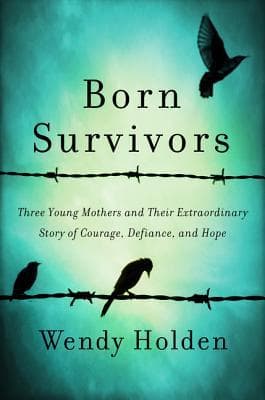
Born Survivors cover
Archivist's Choice

Born Survivors

Wendy Holden (2015)

Genre

Biography / Memoir / History

Reading Time

8-10 hours

Key Themes

See below

Track Your Reading

Sign in to track this book

Three women, having lost everything in Auschwitz and Mauthausen, secretly nurtured their unborn children, giving birth in the shadow of the crematoria.

Core Idea

Born Survivors tells the true story of Priska, Rachel, and Anka, three pregnant women who survived Auschwitz, Mauthausen, and a death march. The book shows how their maternal instinct drove them through extreme deprivation, brutal conditions, and constant threats. It explains how preserving life within them was a quiet act of defiance against a regime designed to extinguish it, showing human resilience and the power of hope even in the darkest times.
Reading time
8-10 hours
Difficulty
Medium
✓ Read this if...
You are fascinated by incredible true stories of human resilience, the power of maternal love, and the indomitable spirit of those who survived the Holocaust against all odds. If you appreciate historical accounts that focus on personal narratives of hope amidst atrocity.
✗ Skip this if...
You find detailed descriptions of concentration camp atrocities and the suffering of pregnant women and newborns too distressing. If you prefer books with a broader historical analysis over intensely personal, harrowing biographical narratives.

Core idea

The central argument and framework that powers the entire book.

Born Survivors tells the true story of Priska, Rachel, and Anka, three pregnant women who survived Auschwitz, Mauthausen, and a death march. The book shows how their maternal instinct drove them through extreme deprivation, brutal conditions, and constant threats. It explains how preserving life within them was a quiet act of defiance against a regime designed to extinguish it, showing human resilience and the power of hope even in the darkest times.

At a glance

Reading time

8-10 hours

Difficulty

Medium

Read this if...

You are fascinated by incredible true stories of human resilience, the power of maternal love, and the indomitable spirit of those who survived the Holocaust against all odds. If you appreciate historical accounts that focus on personal narratives of hope amidst atrocity.

Skip this if...

You find detailed descriptions of concentration camp atrocities and the suffering of pregnant women and newborns too distressing. If you prefer books with a broader historical analysis over intensely personal, harrowing biographical narratives.

Key Takeaways

1

The Unseen Act of Defiance

Concealing pregnancy in a death camp was a radical act of hope and resistance.

Quote

In a place where life was systematically extinguished, the very act of carrying new life was a profound, silent rebellion against the Nazi regime's dehumanization.

The book shows how Priska, Rachel, and Anka's choice to hide their pregnancies was not just about personal survival, but a powerful, hidden act of defiance against the Nazi's genocidal plans. In a system designed to strip away identity, hope, and the future, choosing to nurture life within them was a radical assertion of humanity. This act required immense courage, constant watchfulness, and a strong will, as discovery would have meant certain death for both mother and child, especially with figures like Josef Mengele present. Their h...

Supporting evidence

The women's elaborate efforts to hide their growing bellies, endure grueling labor, and subsist on starvation rations without their condition being detected by SS officers or doctors like Mengele, who performed horrific experiments on pregnant women and twins.

Apply this

In any oppressive or challenging environment, look for the 'unseen acts' of resistance or hope. Sometimes, the most powerful forms of defiance are internal, quiet, and deeply personal, yet they can be foundational for future resilience.

resistancehope-in-adversitysilent-defiance
2

The Maternal Instinct as a Survival Engine

The drive to protect an unborn child fueled unimaginable endurance.

Quote

They had lost everything – their homes, their families, their husbands – but they would not lose this. This tiny, unseen life was all they had left, and it became the engine of their survival.

Born Survivors illustrates that for Priska, Rachel, and Anka, their maternal instinct was more than emotion; it became a primal, unstoppable force driving their will to live. Faced with starvation, brutal labor, and constant fear, many might have given up. However, the responsibility for another life, an innocent and vulnerable one, gave them an almost superhuman capacity for endurance. This instinct provided a purpose beyond their own suffering, turning their struggle from individual survival into a mission to preserve the future. Th...

Supporting evidence

The women's ability to continue working in the harshest conditions, such as digging trenches or carrying heavy loads, despite their advanced pregnancies and extreme malnutrition, driven by the fear that if they stopped, their condition would be discovered, and their babies lost.

Apply this

Identify your deepest 'why' – the core motivation that can sustain you through profound difficulties. This powerful inner purpose can unlock reserves of strength you didn't know you possessed.

maternal-instinctendurancepurpose-driven-survival
3

The Illusion of Control

Even in total captivity, small, personal choices offered psychological anchors.

Quote

They had no control over their fate, their bodies, or their future. But they had control over how they chose to perceive their children, how they spoke to them in their minds, how they imagined their lives outside the wire.

The book highlights how, in environments of absolute powerlessness like concentration camps, the human spirit seeks small areas of control to maintain sanity and identity. For these women, this appeared in their internal worlds: the secret conversations they had with their unborn babies, the dreams they had for their children's future, and the private names they gave them. These were not grand gestures, but important psychological anchors. By using this internal 'control,' they denied the Nazis total power over their minds and spirits...

Supporting evidence

The women's internal monologues, their silent promises to their unborn children, and their efforts to shield their minds from the horrors around them by focusing on the hope of their babies' survival.

Apply this

In situations where external control is limited, focus on what you *can* control: your mindset, your internal narrative, and your reactions. These small internal victories can be crucial for psychological resilience.

psychological-resilienceinternal-locus-of-controlhope-as-strategy
4

The Unseen Network of Compassion

Acts of kindness, however small, were life-saving in a cruel environment.

Quote

Amidst the horror, there were always whispers of humanity, tiny acts of kindness that, like sparks in the dark, kept hope alive.

Born Survivors reveals that even in extreme cruelty, small acts of compassion from fellow prisoners or even sympathetic guards could be the difference between life and death. Whether it was a shared crumb of bread, a warning about an inspection, or a moment of comforting silence, these gestures created an 'unseen network' of humanity. These acts were incredibly risky for those who performed them, showing their deep moral courage. They not only provided material aid but, more importantly, reinforced the women's sense of being seen and ...

Supporting evidence

Instances where other prisoners, despite their own starvation, shared meager food rations with the pregnant women, or helped them conceal their condition from guards. The book also mentions moments where specific individuals, often overlooked, offered crucial, quiet support.

Apply this

Actively seek opportunities to offer or receive small acts of kindness, especially in challenging environments. These gestures build essential human connection and can significantly impact morale and resilience.

human-connectioncompassionaltruism-in-extremis
5

The 'Seventeen-Day Hell' and the Timing of Miracles

Survival often hinged on a razor's edge of timing and external intervention.

Quote

They had survived Auschwitz, survived the death marches, but it was on that final, unbearable train journey, as the war was ending, that their lives, and the lives of their babies, hung by the thinnest thread.

The book details the horrific seventeen-day train journey to Mauthausen, a period where the women were at their physical and mental breaking point, giving birth under brutal conditions. This section shows a critical point: survival in extreme circumstances is not solely about individual will, but often a combination of endurance meeting outside help at a crucial moment. Had liberation come a few days later, or had the journey been less arduous at that specific time, the outcome for the mothers and their newborns might have been tragic...

Supporting evidence

The detailed account of the train journey from Auschwitz as the Allies closed in, where the women gave birth in open cattle cars, in freezing conditions, without medical aid, and the arrival of American soldiers at Mauthausen just days after their babies were born.

Apply this

Recognize that even after immense personal effort, external factors and timing can play a decisive role in outcomes. Cultivate gratitude for opportune interventions and be prepared for unexpected turns, both good and bad.

serendipitycritical-timingexternal-factors-in-survival
6

Birth as an Act of Liberation

The arrival of their children coincided with their own freedom, symbolizing rebirth.

Quote

They were born into a world still at war, but a world on the cusp of peace, a world that, for their mothers, had just been reborn.

The narrative ends with the babies' births coinciding almost exactly with the liberation of Mauthausen. This is more than a chronological event; it is a profound symbolic moment. The children, born into the literal 'hell' of the concentration camp, emerged just as the gates of that hell were opening. Their first cries were heard amidst the sounds of freedom, representing not only the survival of their mothers but the rebirth of hope for a shattered world. Their births were a defiant statement against the Nazi ideology that sought to e...

Supporting evidence

All three women gave birth within days of each other, on or around the time of the liberation of Mauthausen by American soldiers in April 1945.

Apply this

Look for symbolic moments of 'rebirth' or new beginnings in your own life, especially after periods of struggle. Acknowledge and celebrate these moments as powerful markers of progress and hope.

symbolism-of-birthliberationnew-beginnings
7

The Enduring Scars, Visible and Invisible

Survival did not erase the profound trauma, leaving lasting impacts on families.

Quote

They had survived, but survival did not mean forgetting. The shadows of the camps stretched long into their lives, shaping not only them but the children they had so miraculously saved.

While 'Born Survivors' shows incredible resilience, it also addresses the lasting trauma endured by the mothers and, by extension, their children. The physical scars of starvation and labor were clear, but the invisible wounds of loss, fear, and the horror of their experiences continued to shape their post-war lives. The book implicitly explores the complex psychology of survivors—the guilt, the difficulty of processing unimaginable pain, and the challenge of raising children born into such a legacy. This takeaway emphasizes that surv...

Supporting evidence

The book details the mothers' struggles with their past in the post-war years, their reluctance to speak about their experiences, and the ways in which their trauma subtly, and sometimes overtly, impacted their parenting and their children's understanding of their origins.

Apply this

Acknowledge that trauma has long-lasting effects. Practice empathy and patience with those who have endured significant hardship, understanding that healing is a complex, ongoing journey for individuals and families.

intergenerational-traumasurvivor-guiltpost-traumatic-growth
8

The Power of Shared Experience

Finding others who understood their unique ordeal provided comfort and validation.

Quote

To find another, years later, who had shared that specific horror – to have given birth in hell, yet emerged with life – was to find a mirror for a pain and a miracle no one else could truly comprehend.

The unique bond formed between Priska, Rachel, and Anka, and later their children, is a powerful theme. While they did not know each other well during their captivity, the shared, almost unbelievable experience of giving birth in a concentration camp created an unbreakable connection. The book highlights the deep comfort and validation that came from finding others who could truly understand the specific details of their trauma and their miracle. This shared understanding was important for processing their past and building a sense of...

Supporting evidence

The later-life reunions and connections between the three mothers and their children, facilitated by the author's research, which brought together individuals who shared this singular, traumatic, and miraculous origin story.

Apply this

Seek out communities or individuals who understand your unique challenges or experiences. Shared understanding can be a powerful source of healing, validation, and strength.

community-supportshared-traumavalidation
9

The Imperative of Bearing Witness

Stories like these must be told to ensure remembrance and prevent recurrence.

Quote

Their survival was a miracle, but the telling of their story is an imperative. It is how we learn, how we remember, and how we honor those who were lost and those who endured.

Wendy Holden's 'Born Survivors' is not just a biography; it is an act of bearing witness. The book shows the moral need to document and share these harrowing yet hopeful stories. In an era where historical denial can arise, these personal narratives serve as clear evidence of the atrocities committed and the extraordinary resilience of the human spirit. By bringing Priska, Rachel, and Anka's experiences to light, Holden ensures that their suffering and their triumph are not forgotten, serving as a powerful reminder of the consequences...

Supporting evidence

The meticulous research undertaken by Wendy Holden, interviewing the survivors and their children, cross-referencing historical records, and piecing together fragmented memories to construct a comprehensive and authentic account.

Apply this

Support and engage with historical accounts and testimonies, especially those from marginalized or victimized populations. Understand that remembering the past is a crucial step in shaping a more just future.

historical-memorynever-againtestimony
10

Life as the Ultimate Victory

Choosing to live, and to bring new life, was the ultimate defeat of evil.

Quote

The Nazis sought to extinguish life, hope, and the future. By giving birth, by choosing to survive, these mothers delivered the ultimate blow to that ideology: the triumph of life itself.

Ultimately, the main message of 'Born Survivors' is that life itself, especially new life, can be the most profound victory against forces of destruction and hate. The Nazis' ideology was based on dehumanization and extermination. Priska, Rachel, and Anka, by not only surviving but bringing three new lives into the world from within that system, dealt an unparalleled blow to that ideology. Their children, born against all odds, represent the enduring power of hope, the resilience of the human spirit, and the ultimate triumph of creati...

Supporting evidence

The mere existence and flourishing lives of the three 'born survivors' – Hana, Eva, and Mark – who grew up to have families of their own, representing generations that the Nazis intended to obliterate.

Apply this

In moments of despair, remember that the act of continuing, of creating, of living fully, can be a powerful and meaningful form of resistance against negativity and destructive forces in the world.

triumph-of-liferesiliencehope-against-evil

Critical analysis

Notable Quotes

Before the train, before the selection, before the camp, there was the waiting.

Describing the initial period of uncertainty and dread experienced by those being deported.

Life had become a single, overwhelming imperative: survive.

Reflecting on the all-consuming focus of prisoners in the concentration camps.

In the face of such overwhelming evil, the human spirit, incredibly, found ways to resist, to hope, to endure.

A general observation about the strength of the human spirit amidst extreme suffering.

Every day was a battle, every crumb a victory.

Illustrating the daily struggle for existence and the small triumphs in the camps.

The babies were born into a world that wanted them dead, yet they lived.

Highlighting the miraculous births and survival of the three babies in Mauthausen.

Their mothers’ love, fierce and unwavering, was their first line of defense.

Emphasizing the crucial role of maternal love in the infants' survival.

Hope, however faint, was a lifeline in the abyss.

Discussing the importance of maintaining hope even in the darkest circumstances.

The smell of freedom was a scent they could almost taste.

Describing the overwhelming anticipation and longing for liberation.

To forget was to betray the dead.

Underlining the moral imperative to remember the Holocaust and its victims.

Even in the darkest corners, humanity could still find a flicker of light.

A general reflection on acts of kindness and human connection amidst atrocity.

Their lives, against all odds, became a testament to the indomitable will to live.

Summarizing the enduring legacy of the survivors and their children.

The weight of their past was immense, but so was their capacity for joy.

Discussing the complex emotional landscape of survivors after liberation.

They were the children of the impossible, born into a nightmare, yet destined for life.

A poignant description of the three 'born survivors' and their unique circumstances.

The world had tried to extinguish them, but they burned brighter than ever.

A powerful statement about the resilience and eventual thriving of the survivors.

Quiz

Test Your Knowledge

Ready to see how well you understood this book? Take our interactive quiz with 10 questions.

10
Questions
~5
Minutes
?
Best Score

Key Questions (FAQ)

'Born Survivors' tells the incredible true story of three women—Priska, Rachel, and Anka—who were pregnant while imprisoned in Nazi concentration camps during World War II. They defied death and the horrific conditions of places like Auschwitz and Mauthausen to give birth and ensure the survival of their children.

About the author