BookBrief
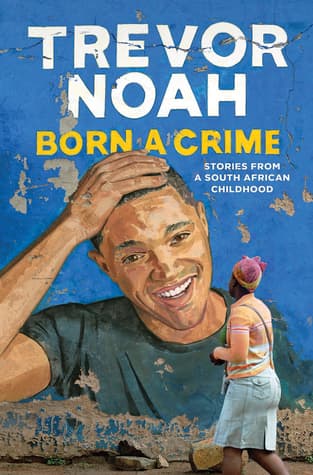
Born a Crime: Stories From a South African Childhood cover
Archivist's Choice

Born a Crime: Stories From a South African Childhood

Trevor Noah (2016)

Genre

Biography / Memoir

Reading Time

360 min

Key Themes

See below

Track Your Reading

Sign in to track this book

Trevor Noah's "Born a Crime" is a poignant and often hilarious memoir of a biracial boy navigating the absurdities and dangers of apartheid South Africa, all while being shaped by his fiercely rebellious and devout mother who literally risked everything for his existence.

Core Idea

Trevor Noah's "Born a Crime" is a poignant and often hilarious memoir that chronicles his childhood in apartheid and post-apartheid South Africa as the son of a Black Xhosa mother and a white Swiss father. His very existence was a crime under the apartheid regime's racial segregation laws, forcing his family to navigate a world of secrecy and danger. Noah shows that apartheid's impact extended beyond legal discrimination, shaping individual identities, social interactions, and economic realities, even after its official end. Through a series of anecdotes, he demonstrates how language became his most useful tool, allowing him to bridge racial divides, adapt to diverse communities, and find his place in a fractured society.
Reading time
360 min
Difficulty
Medium
✓ Read this if...
You want a deeply personal, often humorous, and insightful look into the lived experience of apartheid and its aftermath, told through the eyes of someone whose identity defied its rigid classifications.
✗ Skip this if...
You are looking for a purely academic or historical account of apartheid and prefer to avoid personal narrative, or if you are sensitive to descriptions of poverty, domestic violence, and racial discrimination.

Core idea

The central argument and framework that powers the entire book.

Trevor Noah's "Born a Crime" is a poignant and often hilarious memoir that chronicles his childhood in apartheid and post-apartheid South Africa as the son of a Black Xhosa mother and a white Swiss father. His very existence was a crime under the apartheid regime's racial segregation laws, forcing his family to navigate a world of secrecy and danger. Noah shows that apartheid's impact extended beyond legal discrimination, shaping individual identities, social interactions, and economic realities, even after its official end. Through a series of anecdotes, he demonstrates how language became his most useful tool, allowing him to bridge racial divides, adapt to diverse communities, and find his place in a fractured society.

At a glance

Reading time

360 min

Difficulty

Medium

Read this if...

You want a deeply personal, often humorous, and insightful look into the lived experience of apartheid and its aftermath, told through the eyes of someone whose identity defied its rigid classifications.

Skip this if...

You are looking for a purely academic or historical account of apartheid and prefer to avoid personal narrative, or if you are sensitive to descriptions of poverty, domestic violence, and racial discrimination.

Key Takeaways

1

The Absurdity of Apartheid

Apartheid's rules created bizarre, illogical realities that shaped individual lives.

Quote

I was born a crime.

Trevor Noah's very existence was illegal under apartheid, a system built on racial segregation and classification. This created an absurd reality where a child had to be hidden, and a mother's love was a criminal act. The book vividly illustrates how apartheid wasn't just about oppression, but about an illogical framework that forced people into categories, dictating where they could live, who they could love, and even how they could define themselves. Noah's unique position as 'colored' in a black-and-white world further exposed the ...

Supporting evidence

Noah's description of being kept indoors for his early years to avoid detection by authorities, and the legal implications of his parents' interracial relationship.

Apply this

Reflect on how systemic discrimination creates 'crimes' out of natural human existence and interactions. Challenge rigid classifications that limit human freedom and identity.
apartheidracial-classificationsystemic-discrimination
2

The Power of a Mother's Unyielding Love

Patricia Nombuyiselo Noah's resilience and unconventional parenting were Trevor's greatest assets.

Quote

My mother raised me like a white kid—not white as in Caucasian, but white as in the English definition of the word: 'free, unconstrained.'

Patricia Noah is the hero of this memoir. Her fierce independence, unwavering faith, and unconventional approach to motherhood provided Trevor with a unique foundation. Despite extreme poverty and the dangers of apartheid, she instilled in him a sense of curiosity, critical thinking, and boundless possibility. She taught him to question authority, to seek knowledge, and to navigate complex social situations, often in ways that defied traditional expectations for black children in South Africa. Her determination to expose him to the wo...

Supporting evidence

Her insistence on taking Trevor to white neighborhoods and schools, her refusal to conform to societal expectations for black women, and her ultimate survival of domestic violence.

Apply this

Recognize the profound impact of a determined parent or mentor in shaping an individual's worldview and opportunities, especially against challenging odds. Emphasize education and critical thinking.

parentingresilienceunconditional-lovematernal-influence
3

Language as a Bridge and a Weapon

Mastering multiple languages allowed Trevor to navigate, connect, and survive in a fractured society.

Quote

Language, even more than color, defines who you are to people.

In a country divided by race and tribe, Trevor discovered that language offered a tool for connection and camouflage. His ability to speak several of South Africa's eleven official languages allowed him to move between different racial and tribal groups, instantly shifting his identity and gaining acceptance. This wasn't just about convenience; it was a survival mechanism that disarmed potential aggressors, earned trust, and provided access to information and opportunities. Noah shows how language can transcend racial barriers, acting...

Supporting evidence

His anecdotes of defusing tense situations with rival gangs by speaking their language, and his ability to blend into various social groups by code-switching.

Apply this

Cultivate multilingualism or at least an appreciation for linguistic diversity. Understand how language shapes perception and can be used to foster understanding or create division.

multilingualismcode-switchingcultural-assimilationidentity
4

The Complexities of Identity in a Post-Apartheid World

Freedom brought new challenges of self-definition for those who didn't fit neat categories.

Quote

I was the anomaly, the black kid who could go anywhere, who could be friends with anyone, because I didn't fit into any group.

While the end of apartheid brought liberation, it also ushered in a period of identity negotiation, particularly for someone like Trevor, who was 'colored' in a society that had traditionally only recognized 'black' and 'white.' He struggled with not belonging fully to any one group, often feeling like an outsider looking in. This in-between space, while sometimes isolating, also granted him a unique perspective and an ability to traverse different social worlds. His experiences show that while legal segregation may end, the deeply in...

Supporting evidence

His struggles to find a 'crew' in high school, feeling too black for the white kids and too white for the black kids, and his classification as 'colored' on official documents.

Apply this

Embrace the complexities of identity, especially in diverse societies. Understand that belonging can be fluid and self-defined, rather than solely dictated by external categories.

identity-formationpost-apartheidmixed-racebelonging
5

Poverty's Persistent Grip

Even after apartheid, the cycle of poverty and its associated violence remained a profound challenge.

Quote

Poverty is a crime, a crime that I was born into.

Noah vividly portrays the harsh realities of growing up in poverty in the townships, even after the official end of apartheid. This wasn't just about a lack of money, but an environment of limited opportunity, inadequate infrastructure, and violence. He recounts how poverty dictated everything from diet to housing to safety, forcing people into difficult choices and often criminal activities just to survive. The book illustrates that while political freedom is important, it doesn't automatically dismantle the economic structures that ...

Supporting evidence

Descriptions of living in shacks, going without food, the prevalence of petty crime and gang violence in the townships, and his mother's relentless struggle to provide.

Apply this

Recognize that systemic poverty is a multifaceted issue requiring more than just political change. Advocate for economic justice and resources for marginalized communities.

povertytownship-lifesocioeconomic-inequalitypost-colonialism
6

The Transformative Power of Education

Despite its flaws, education offered a pathway out of poverty and a broader understanding of the world.

Quote

My mother understood that there was no way that I was going to get out of the ghetto if I didn't get an education.

Patricia Noah believed in the power of education, even if it meant sending Trevor to schools far from their home or making significant financial sacrifices. She saw it not just as a means to a job, but as a key to intellectual freedom and a way to break cycles of poverty and ignorance. Trevor's experiences in various schools, from predominantly black township schools to a multi-racial private school, exposed him to different perspectives and opportunities. This takeaway shows the role education plays in individual empowerment and soci...

Supporting evidence

His mother's decision to send him to a Catholic school, her insistence on him reading books, and his own self-directed learning through observation and interaction.

Apply this

Prioritize access to quality education for all, understanding its role in fostering critical thinking, expanding opportunities, and promoting social change.

educationsocial-mobilityintellectual-freedompersonal-growth
7

Finding Humor in Adversity

Humor served as a coping mechanism, a social tool, and a way to process trauma.

Quote

We're not meant to be perfect. We're meant to be whole.

Despite the challenges and injustices he faced, Noah consistently finds humor in his experiences. This isn't about trivializing hardship, but rather using comedy as a coping mechanism, a way to defuse tension, and a means of connecting with others. His observational humor allowed him to process the absurdities of apartheid and the difficulties of his upbringing. This takeaway shows the resilience of the human spirit and the power of laughter to navigate trauma, create community, and offer a different way to view painful realities. It ...

Supporting evidence

His detailed anecdotes about childhood pranks, his early career as a DJ and comedian, and his ability to see the lighter side of difficult situations with his mother.

Apply this

Cultivate a sense of humor, even in challenging times. Use humor constructively to build connections, lighten moods, and process difficult experiences.

humorcoping-mechanismresiliencetrauma-response
8

The Enduring Scars of Domestic Violence

The cycle of abuse can persist and devastate, even within loving relationships.

Quote

The greatest gift my mother gave me was the belief that I could be anything I wanted to be.

The book culminates in an account of domestic violence, revealing the devastating impact of abuse on individuals and families. Noah's mother, Patricia, a woman of strength and independence, falls victim to an abusive relationship that nearly costs her life. This is a reminder that violence can affect anyone, regardless of their personal fortitude, and that its roots are complex. It shows the systemic failures to protect victims and the deep psychological scars left by such experiences, showing the importance of addressing and preventi...

Supporting evidence

The detailed account of his stepfather Abel's escalating violence, culminating in the shooting of his mother.

Apply this

Be aware of the signs of domestic violence and support resources for victims. Understand that abuse is a complex issue requiring societal intervention and support.

domestic-violenceabusetraumaresilience
9

The Search for Self-Worth and Belonging

Trevor's journey is fundamentally about defining himself in a world that sought to define him.

Quote

I was a product of my mother's rebellion.

Ultimately, 'Born a Crime' is an exploration of one man's search for self-worth and belonging. Born into a world that denied his very existence, Trevor Noah had to actively construct his identity. He navigated racial divides, economic hardships, and personal challenges, constantly questioning where he fit in and who he was meant to be. His story is about the human need for connection and acceptance, but also the strength found in forging a unique path, even if it means being an outsider. His journey from a hidden child to a global voi...

Supporting evidence

His constant efforts to find acceptance among different groups, his entrepreneurial ventures, and his eventual move to the United States to pursue comedy.

Apply this

Reflect on your own journey of self-discovery. Understand that identity is not static but an ongoing process of negotiation and creation.

self-discoveryidentity-crisisbelongingpersonal-narrative

Critical analysis

Notable Quotes

We tell people to follow their dreams, but you can only dream of what you can imagine, and depending on where you come from, your imagination can be quite limited.

Reflecting on the constraints of poverty and environment on ambition.

Language, even more than color, defines who you are to people.

Discussing how speaking multiple languages helped him navigate apartheid South Africa.

The first thing I learned about having money was that it gives you choices. People don't want to be rich. They want to be able to choose.

Reflecting on his mother's financial struggles and the value of economic freedom.

In society, we do horrible things to one another because we don't see the person it affects. We don't see their face. We don't see them as people.

Analyzing the dehumanization inherent in systemic racism and violence.

My mom did what school didn't. She taught me how to think.

Describing his mother's unconventional and critical approach to his education.

The world doesn't love the way you love you. The world loves the way you look.

Reflecting on societal pressures around appearance and self-worth.

I was blessed with another trait I inherited from my mother: her ability to forget the pain in life. I remember the love more than the hardship.

Discussing resilience and focusing on positive memories despite challenges.

Growing up in a home of abuse, you struggle with the notion that you can love a person you hate, or hate a person you love. It's a strange feeling.

Reflecting on the complex emotions toward his abusive stepfather.

The name Trevor is a sentence. It means 'to cross over.' My mother wanted her child to cross over, to not be bound by the limitations of his birth.

Explaining the significance of his name and his mother's hopes for him.

You don't have to be the victim of your environment. You can be the victor of your environment.

Encouraging agency and overcoming circumstances, inspired by his upbringing.

Religion is a powerful tool. It can be used to oppress, but it can also be used to liberate.

Reflecting on his mother's devout Christianity and its dual role in their lives.

The black people in South Africa are the most forgiving people on the planet. They have to be.

Commenting on the resilience and forgiveness required to survive apartheid.

I became a chameleon. My color didn't change, but I could change your perception of my color.

Describing how he used language and behavior to fit into different racial groups.

Love is a creative act. When you love someone, you create a new world for them.

Reflecting on the transformative power of love, especially his mother's love.

Quiz

Test Your Knowledge

Ready to see how well you understood this book? Take our interactive quiz with 10 questions.

10
Questions
~5
Minutes
?
Best Score

Key Questions (FAQ)

'Born a Crime' is Trevor Noah's memoir about growing up as a mixed-race child in apartheid South Africa, where his birth was literally illegal. It chronicles his coming-of-age journey, his complex relationship with his fiercely determined mother, and his navigation of identity in a society built on racial segregation.

About the author