BookBrief
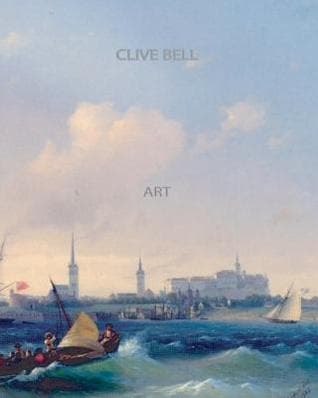
Art cover
Archivist's Choice

Art

Clive Bell

Genre

Creativity / Philosophy

Reading Time

90 min

Key Themes

See below

Track Your Reading

Sign in to track this book

Clive Bell's 'Art' states that 'significant form'—a quality of line and color—is the only thing that creates aesthetic emotion, defining true art and connecting works across all cultures and times.

Core Idea

Clive Bell's 'Art' says that the core of all visual art, no matter the culture or time, lies in 'Significant Form.' These are specific combinations of lines, colors, and spatial relationships that create a unique aesthetic emotion in the viewer. This feeling is separate from what the art shows or what it might be used for. This aesthetic emotion is different from everyday feelings; it offers a direct experience of beauty and a glimpse into a deeper reality. An artist, guided by an aesthetic vision, creates Significant Form. A critic and viewer with the right sensitivity can see and respond to it.
Reading time
90 min
Difficulty
Medium
✓ Read this if...
You are interested in early 20th-century art theory, modernism's philosophical underpinnings, or a concise, provocative argument for art's intrinsic value and independence from mimetic representation.
✗ Skip this if...
You prefer art theories that emphasize social context, historical narrative, or the artist's biography over purely formal elements, or if you find highly abstract and exclusive aesthetic arguments unconvincing.

Core idea

The central argument and framework that powers the entire book.

Clive Bell's 'Art' says that the core of all visual art, no matter the culture or time, lies in 'Significant Form.' These are specific combinations of lines, colors, and spatial relationships that create a unique aesthetic emotion in the viewer. This feeling is separate from what the art shows or what it might be used for. This aesthetic emotion is different from everyday feelings; it offers a direct experience of beauty and a glimpse into a deeper reality. An artist, guided by an aesthetic vision, creates Significant Form. A critic and viewer with the right sensitivity can see and respond to it.

At a glance

Reading time

90 min

Difficulty

Medium

Read this if...

You are interested in early 20th-century art theory, modernism's philosophical underpinnings, or a concise, provocative argument for art's intrinsic value and independence from mimetic representation.

Skip this if...

You prefer art theories that emphasize social context, historical narrative, or the artist's biography over purely formal elements, or if you find highly abstract and exclusive aesthetic arguments unconvincing.

Key Takeaways

1

Significant Form is the Essence of Art

True art evokes a unique aesthetic emotion through specific formal arrangements.

Quote

The one quality common to all works of art is 'significant form.' In each, lines and colours combined in a particular way, certain forms and relations of forms, stir our aesthetic emotions.

Bell's main idea is that 'significant form' is what defines all real art, across cultures and times. This is not about what art shows, traditional beauty, or the artist's personal feelings. It is about the specific arrangement of lines, colors, and forms that can create a distinct 'aesthetic emotion' in the viewer. This emotion is unique, unlike any other human feeling; it is an appreciation of form for its own sake, separate from daily life or sentimental connections. Bell argues that recognizing significant form is the main job of a...

Supporting evidence

Bell points to diverse examples like Byzantine mosaics, Persian carpets, and Post-Impressionist paintings (like Cézanne's) as possessing significant form, despite their vastly different subjects or lack thereof, and their varying degrees of realism.

Apply this

When encountering art, consciously shift focus from the subject matter or narrative to the pure arrangement of lines, colors, and shapes. Ask: 'What formal relationships are at play here? How do these elements interact to create a unified whole, independent of what they represent?'

significant-formaesthetic-emotionformalism
2

Art's Independence from Representation

The artistic value of a work is independent of its ability to imitate reality.

Quote

To appreciate a work of art we need bring with us nothing from life, no knowledge of its ideas and affairs, no familiarity with its emotions. Art transports us from the world of man's activity to a world of aesthetic exaltation.

Bell strongly argues that art's main purpose is not to show or copy reality. He believes that realistic portrayal, while a technical skill, is mostly unrelated to a work's artistic value. For example, a photograph might perfectly copy reality but lack significant form, and thus, for Bell, not be art. On the other hand, a very abstract or distorted work can have deep artistic value if it shows significant form. This separation from showing reality lets art go beyond the ordinary and offer a unique experience—a direct interaction with p...

Supporting evidence

Bell frequently references the art of primitive societies and non-Western cultures, which often prioritize symbolic or abstract forms over realistic portrayal, yet profoundly move viewers with their aesthetic power. He also highlights 'primitive' Italian painters like Giotto, whose formal mastery, not their realism, makes them great.

Apply this

Challenge the common impulse to judge art based on its realism. Instead of asking 'Does it look real?', ask 'Does the arrangement of its visual elements create a compelling or moving experience, regardless of its subject?'

non-representational-artimitation-theoryabstraction
3

The Unique Nature of Aesthetic Emotion

Art evokes a distinct, non-utilitarian, and universal emotional response.

Quote

The aesthetic emotion is an emotion about form. It is a peculiar emotion, quite unlike the emotions of life.

Bell says that 'aesthetic emotion' is a single, unique feeling, different from everyday emotions like joy, sorrow, or love. It's not a response to what a painting shows (e.g., feeling sad because a painting shows a tragedy). Instead, it is a direct response to the significant form itself. This emotion is described as an 'exaltation,' a deep pleasure from looking at pure form. Importantly, this emotion is universal and does not depend on personal history or culture. This means that significant form, when present, will create this feeli...

Supporting evidence

Bell draws parallels to the 'religious emotion' or the 'mathematical emotion' – experiences that are unique and profound, not reducible to other feelings. He suggests that just as one doesn't confuse the beauty of a theorem with the beauty of a sunset, one shouldn't confuse aesthetic emotion with life's emotions.

Apply this

When experiencing art, try to isolate your emotional response. Is it tied to the story or subject, or is there a deeper, more abstract feeling evoked by the composition, colors, and lines themselves? Cultivate the ability to feel this 'pure' aesthetic emotion.

aesthetic-experiencedisinterested-contemplationuniversalism
4

The Artist's Vision and Intent

True artists create significant form due to a profound, unique vision, not mere skill.

Quote

The artist who produces significant form has a peculiar and rare gift. He sees lines and colours and forms as means to the end of conveying his emotion, not the emotions of life, but the emotion of his vision.

Bell argues that artists who create significant form are not just skilled craftspeople. They are individuals with a unique vision. They do not just copy reality; they see the world in terms of lines, colors, and forms. They are driven by their own 'aesthetic emotion'—a wish to share this formal vision. The artist's goal is not to tell a story or create a common emotion, but to embody their unique view of significant form. This means that even if an artist aims for realism, their greatness comes from their ability to give that realism ...

Supporting evidence

Bell points to artists like Cézanne, who he believes was not merely trying to paint apples but was grappling with fundamental problems of form, volume, and spatial relationships, driven by an internal artistic necessity rather than a desire for photographic accuracy.

Apply this

When analyzing an artwork, consider the artist's choices beyond mere subject matter. Ask: 'What fundamental compositional or formal problems might the artist have been addressing? What unique way of seeing is being expressed through the arrangement of elements?'

artistic-intentionvisionary-artistformal-problems
5

The Role of the Critic and Viewer

The critic's task is to identify significant form and guide the viewer to aesthetic emotion.

Quote

The function of the critic is to provoke in others the aesthetic emotion that has been provoked in him by a work of art.

For Bell, the art critic is a guide, not a storyteller, historian, or moralizer. Their main job is to see and explain the presence of significant form in a work of art, helping others to feel the aesthetic emotion. This needs great sensitivity and a well-developed ability to see beauty. The critic should not explain what a painting 'means' in terms of life. Instead, they should point out the formal relationships that make it art. The viewer, in turn, must approach art with an open mind, free from old ideas, and be willing to engage wi...

Supporting evidence

Bell criticizes critics who focus on biography, historical context, or narrative content rather than the formal qualities of the art itself, arguing they distract from the true artistic experience.

Apply this

As a viewer, actively train yourself to look beyond the surface narrative of art. Seek out critics who discuss composition, color theory, and line quality over subject matter. Engage with art by asking: 'What is it about the way this is put together that moves me?'

art-criticismaesthetic-perceptionviewer-engagement
6

Art's Detachment from Life's Practicalities

Art offers an escape from the utilitarian and moral demands of everyday existence.

Quote

Art is not a means to life but an end in itself. It is a world apart, a refuge from the humdrum of existence.

Bell supports art as an independent area, separate from the practical, moral, and useful concerns of daily life. True art, by creating aesthetic emotion through significant form, takes the viewer to a place of pure thought, free from the demands of action or judgment. It is not meant to teach, improve morals, or serve any outside purpose. This detachment gives art its unique value and power. It allows for an experience of deep, detached joy that does not depend on real-world results or social rules. Art is a self-sufficient thing, exi...

Supporting evidence

Bell contrasts art with propaganda, moralizing tales, or even sentimental illustrations, all of which serve an external purpose beyond pure aesthetic experience, and thus, in his view, fall short of being 'art.'

Apply this

Approach art as a sanctuary. When engaging with a piece, consciously suspend any judgments about its utility, moral message, or practical implications. Allow yourself to be immersed solely in its visual qualities and the feeling they evoke.

art-for-art's-sakeautonomy-of-artdisinterested-pleasure
7

The Decline of Art and the Rise of Sentimentality

When art prioritizes narrative or emotion over form, it ceases to be true art.

Quote

When art becomes a means to an end, however noble, it loses its unique quality. When it aims at telling a story, or conveying information, or expressing a human emotion, it falls from grace.

Bell regrets periods in art history when the focus moved away from significant form toward storytelling, sentiment, or illustrative content. He argues that when artists prioritize telling a story, showing a specific emotion (like the sadness of a dying hero), or sending a moral message, they weaken or destroy the essential aesthetic quality. Such works become 'descriptive' rather than 'artistic,' appealing to our human emotions and mind instead of our unique aesthetic sense. This, in Bell's view, leads to a drop in artistic value, as ...

Supporting evidence

Bell often criticizes much of Victorian painting for its excessive sentimentality and narrative focus, which he sees as prioritizing 'human interest' over 'significant form,' thereby reducing it to mere illustration.

Apply this

Be critical of art that aims primarily to elicit a common human emotion or tell a straightforward story. Ask: 'Is this piece relying on sentimentality or narrative to move me, or is it the inherent arrangement of its visual elements that truly resonates?'

sentimentality-in-artnarrative-artartistic-degeneration
8

Art as a Bridge to a Higher Reality

Through aesthetic emotion, art offers a glimpse into a more profound, universal truth.

Quote

Art is a bridge from the world of appearance to the world of reality. It is a way of apprehending reality directly, without the intervention of intellect or morality.

Beyond simple pleasure, Bell suggests that the aesthetic emotion from significant form connects us to a deeper reality. This 'reality' is not the physical world of objects but a basic truth about the universe, a universal order or essence. By removing the accidental and what is shown, art lets us see this basic reality directly, bypassing intellectual analysis or moral judgment. It's a somewhat mystical experience, offering a brief escape from the surface of everyday perception to a more basic understanding of existence, shared by eve...

Supporting evidence

Bell likens this experience to the insights gained by mystics or mathematicians, who apprehend truths that are not immediately evident in the empirical world but are felt to be profoundly real and universal.

Apply this

When deeply moved by art, reflect on the nature of that feeling. Is it merely pleasure, or does it hint at something more profound, a sense of universal order or truth that transcends the specific artwork itself?

metaphysics-of-arttranscendenceuniversal-truth
9

The Historical Trajectory of Art

Art evolves not in progress, but in cycles of formal discovery and decline.

Quote

Art has its periods of bloom and decay, not of progress. Each great period of art is a fresh attack on the problem of form.

Bell rejects the idea of steady progress in art history, suggesting instead a cycle of discovery and decline. Important periods of art (like Byzantine, Primitive Italian, or Post-Impressionist) happen when artists focus intensely on the 'problem of form'—finding new ways to create significant form. During these times, art thrives, producing works that strongly create aesthetic emotion. However, as these formal problems are 'solved' or become common, later generations often turn to outside concerns like showing things, storytelling, or...

Supporting evidence

Bell contrasts the formal rigor of early Italian masters like Giotto with the more descriptive and less formally significant works of later Renaissance artists who prioritized realism and narrative over pure form, seeing the latter as a decline.

Apply this

Study art history not as a progression towards greater realism or technical mastery, but as a series of distinct challenges and solutions to the problem of creating significant form. Identify which periods or movements prioritize formal innovation.

art-history-cyclesformal-innovationpost-impressionism
10

The Exclusivity of Aesthetic Experience

Not everyone is equally capable of experiencing true aesthetic emotion.

Quote

Only those who are capable of feeling aesthetic emotion can be said to appreciate art. For others, art is merely a pleasant illustration or a historical document.

Bell suggests that the ability to feel aesthetic emotion, and thus to truly appreciate art, is not universal. While many people can enjoy art for its subject matter, historical interest, or sentimental appeal, only a few have the sensitivity and detachment needed to see significant form and feel the unique aesthetic emotion it creates. This implies a certain elitism in Bell's view, where true art appreciation is a rare and refined skill, like a 'gift.' He believes that this aesthetic sensitivity can be developed, but it ultimately dep...

Supporting evidence

Bell often speaks of 'people of peculiar sensibility' or those with 'the power to feel aesthetic emotion' as distinct from the general populace who might be moved by a painting's subject but not its form.

Apply this

Reflect on your own responses to art. Are you genuinely moved by the formal qualities, or are you primarily drawn to narrative or subject? Consider how to cultivate a more refined aesthetic sensibility by consciously focusing on form.

aesthetic-sensibilityelitism-in-artcultivating-taste

Critical analysis

Notable Quotes

The starting-point for all systems of aesthetics must be the personal experience of a peculiar emotion.

Introducing the concept of 'significant form' as the trigger for aesthetic emotion.

To appreciate a work of art we need bring with us nothing from life, no knowledge of its ideas and affairs, no familiarity with its emotions.

Arguing for the pure, unadulterated aesthetic experience, separate from life's practicalities.

For, to create, the artist must be in a peculiar state of mind.

Describing the necessary mental state of the artist during creation.

Significant form is the one quality common to all works of visual art.

The central thesis of his aesthetic theory.

The representative element in a work of art may be the practical hitch in the aesthetic experience.

Suggesting that representation can distract from the pure aesthetic experience.

Art is a religion: it is an expression of the subconscious.

Elevating art to a spiritual or primal level of human expression.

To create a work of art is to express a sense of order and relation.

Defining the fundamental act of artistic creation.

We have no other means of judging a work of art than by the quality of the emotion it provokes in us.

Emphasizing the subjective and emotional response as the ultimate arbiter of art's value.

The artist is a man of peculiar sensibility.

Highlighting the unique perceptive abilities of the artist.

To see art is to be sensitive to form.

Connecting the act of seeing art with an appreciation for its formal qualities.

Great art is an expression of a great emotion.

Linking the greatness of art to the intensity of the emotion it embodies or evokes.

All art aims at emotion.

Stating the fundamental purpose or outcome of all artistic endeavor.

For the artist, the world of appearances is a means to an end.

Explaining that artists use reality not to copy, but to create something new.

To become a work of art, a thing must possess significant form.

Reinforcing the core criterion for an object to be considered art.

Quiz

Test Your Knowledge

Ready to see how well you understood this book? Take our interactive quiz with 10 questions.

10
Questions
~5
Minutes
?
Best Score

Key Questions (FAQ)

Clive Bell's 'Art' explores the fundamental nature of art, introducing his influential theory of 'Significant Form' as the defining characteristic of all aesthetic experience. The book delves into the philosophy of aesthetics, seeking to understand what makes an object a work of art and the unique emotion it evokes.

About the author

Clive Bell

Clive Bell was a prominent British art critic and writer, best known for his influential 1914 book 'Art'. He was a key figure in the Bloomsbury Group and a proponent of the theory of 'Significant Form' in aesthetics. Bell's work significantly shaped modernist art criticism and theory.