BookBrief
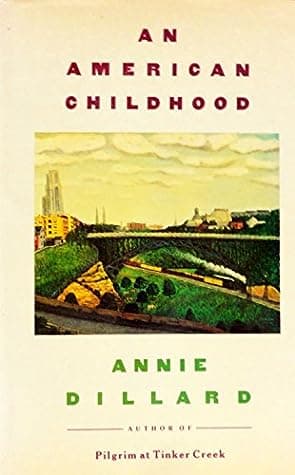
An American Childhood cover
Archivist's Choice

An American Childhood

Annie Dillard (1987)

Genre

Biography / Memoir

Reading Time

6 hours 30 minutes

Key Themes

See below

Track Your Reading

Sign in to track this book

Annie Dillard's memoir explores a 1950s Pittsburgh childhood, where snowball fights with adults and microscopic explorations of pond life spark a lifelong sense of wonder.

Core Idea

Annie Dillard's "An American Childhood" shows how an artist's sensitivity develops during a mid-20th century childhood in Pittsburgh. It suggests that intense engagement with the physical world, driven by curiosity and imagination, forms a unique way of seeing and understanding. Dillard argues that ordinary daily details, when closely examined and written about, reveal deeper patterns, setting the stage for a life dedicated to observation and discovery.
Reading time
6 hours 30 minutes
Difficulty
Medium
✓ Read this if...
You appreciate evocative, poetic prose, are interested in the development of an artist's mind, or enjoy memoirs that deeply reflect on the meaning of childhood experiences and the power of observation.
✗ Skip this if...
You prefer fast-paced, plot-driven narratives, are looking for a straightforward chronological biography, or dislike highly descriptive and introspective writing.

Core idea

The central argument and framework that powers the entire book.

Annie Dillard's "An American Childhood" shows how an artist's sensitivity develops during a mid-20th century childhood in Pittsburgh. It suggests that intense engagement with the physical world, driven by curiosity and imagination, forms a unique way of seeing and understanding. Dillard argues that ordinary daily details, when closely examined and written about, reveal deeper patterns, setting the stage for a life dedicated to observation and discovery.

At a glance

Reading time

6 hours 30 minutes

Difficulty

Medium

Read this if...

You appreciate evocative, poetic prose, are interested in the development of an artist's mind, or enjoy memoirs that deeply reflect on the meaning of childhood experiences and the power of observation.

Skip this if...

You prefer fast-paced, plot-driven narratives, are looking for a straightforward chronological biography, or dislike highly descriptive and introspective writing.

Key Takeaways

1

The World as a Canvas for Discovery

Childhood is a relentless pursuit of understanding the universe's mechanics.

Quote

The world was a volume, and I a reader.

Dillard's childhood shows a strong curiosity, where she treated every part of her environment as a puzzle or something to understand. She did not just passively observe; she actively investigated, from pond life to stars. Her early experiences gave her a deep sense of wonder that later defined her nature writing. This time was less about formal schooling and more about her own immersive exploration of Pittsburgh's natural and urban areas, shaping her view of the world as a collection of connected wonders.

Supporting evidence

Her detailed descriptions of examining pond water under a microscope, the elaborate games of hide-and-seek that became exercises in spatial awareness and strategy, and her fascination with the stars and astronomical phenomena.

Apply this

Cultivate a 'beginner's mind' in daily life, approaching familiar surroundings with the curiosity of a child. Dedicate time to observing small details in nature or urban environments, asking 'how' and 'why' to rekindle a sense of wonder.


curiositywonderobservation
2

The Thrill of the Chase

Life's most vivid lessons are often learned through intense, often reckless, pursuits.

Quote

I was a catcher, not a pitcher. I caught whatever came my way.

Dillard clearly remembers the exciting joy of a chase, especially the snowball fight with the 'crazy man.' This experience is more than a childhood prank; it teaches about engagement, consequences, and the sheer energy of living intensely. It shows how intense, spontaneous moments can deeply affect one's mind, teaching lessons about courage, persistence, and the unexpected limits of human interaction. These were not formal lessons but direct experiences that shaped her understanding of the world's unpredictable energy.

Supporting evidence

The extended, thrilling chase by the 'crazy man' after she and her friend threw snowballs at his car, an incident that became a defining memory of exhilaration and terror.

Apply this

Embrace opportunities for spontaneous, adventurous experiences, even if they carry a slight risk. Seek out activities that demand full presence and engagement, pushing beyond comfort zones to experience life's raw intensity.

adventureintensityrecklessness
3

The Power of Narrative and Imagination

Stories, both real and imagined, are the blueprints of understanding and identity.

Quote

I was a reader, a writer, a maker of things in my head.

Dillard's childhood is closely tied to storytelling, whether through reading, writing, or imaginative play. Books were not just entertainment but ways into other worlds and frameworks for understanding her own. Her early attempts at writing and the detailed stories she made up in her mind were key to her development as a writer. This point highlights how creating and consuming stories shapes our view of reality, our empathy, and our ability to understand complex human experiences. It shows imagination's vital role in how we think.

Supporting evidence

Her detailed accounts of reading extensively, from natural history to adventure novels, and her own early attempts at writing and drawing, creating her own worlds and characters.

Apply this

Engage actively with diverse forms of narrative – read widely, write daily, or simply tell stories. Encourage imaginative play in children and nurture your own inner storyteller to foster creativity and deeper understanding.

storytellingimaginationliterature
4

The Unseen Architecture of the Everyday

Beneath the ordinary surface of life lies a hidden world of intricate systems and wonders.

Quote

The world was not just there; it was put together.

Dillard had a natural ability to see the hidden structures and processes in ordinary things. From bicycle mechanics to river flow, she saw patterns and systems where others saw only objects. This perspective is important for understanding her later work, which often explores nature's hidden complexities. Her childhood prepared her for this sharp observation, teaching her to look beyond the immediate and to appreciate existence's detailed design. It asks us to engage with the world not just artistically but intellectually, seeking its ...

Supporting evidence

Her fascination with the inner workings of things, like the gears of a bicycle or the construction of buildings, and her detailed observations of natural phenomena such as insect life and geological formations.

Apply this

Practice 'deep observation' of everyday objects and systems. Instead of just seeing, try to understand how things work, their components, and their purpose. This could be anything from a household appliance to a city's infrastructure.

systems thinkingobservationcomplexity
5

The Paradox of Childhood Freedom

Boundless freedom often coexists with a profound sense of isolation and vulnerability.

Quote

We were not supervised. We were on our own.

While Dillard's childhood gave her great freedom to explore and experiment, this independence also came with a feeling of being 'on her own.' This contrast shows a common theme in memoirs from that time: children had vast spaces for independent discovery, but this independence could also feel like a lack of guidance or protection. This freedom allowed for deep personal growth and self-reliance, but it also exposed her to the world's indifference and occasional harshness, shaping her resilience and independent spirit. It is a nuanced l...

Supporting evidence

The extensive periods she spent alone or with peers, exploring the city and nature without adult supervision, and the implied emotional distance from her parents, who were present but not always actively engaged.

Apply this

Reflect on the balance between independence and support in personal development. For parents, consider how to foster autonomy in children while providing a secure emotional base. For individuals, recognize how past freedoms (or lack thereof) have shaped self-reliance.

autonomyindependencevulnerability
6

The Education of a Naturalist

Early, unstructured encounters with nature forge a deep ecological consciousness.

Quote

I was learning to see, to fix my gaze on what was before me.

Dillard's early years were like an apprenticeship in natural history, done not in classrooms but in Pittsburgh's woods, rivers, and even city wild areas. Her careful observations of insects, plants, and geological formations were not just hobbies; they were the building blocks of her understanding of ecology. This immersive, hands-on learning developed a deep respect for the natural world and a keen awareness of its complex connections. It shows how direct engagement with nature, without formal teaching, can lead to a deeper, more dir...

Supporting evidence

Her detailed descriptions of studying insects, collecting rocks, observing river life, and her fascination with the changing seasons and their impact on the local environment.

Apply this

Prioritize direct, unstructured engagement with nature. Spend time observing local flora and fauna, even in urban settings. Keep a nature journal to record observations, fostering a deeper connection and understanding of ecological systems.

ecologynaturalismobservation
7

The Formation of Identity Through Experience

Identity is not given, but actively constructed through a lifetime of lived moments.

Quote

I was a collection of all the things I had seen and done.

Dillard's memoir shows that who we become results directly from our experiences, especially intense, formative ones from childhood. Her identity as a thinker, observer, and writer was not set but formed through her adventurous spirit, intellectual curiosity, and deep engagement with both nature and people. This point emphasizes the active, dynamic process of self-formation, highlighting how every interaction, discovery, and challenge adds to the evolving story of the self. It rejects a fixed view of identity for a fluid, experience-ba...

Supporting evidence

The cumulative impact of her diverse experiences, from the snowball chase to her scientific explorations and literary pursuits, all contributing to the person she becomes.

Apply this

Actively seek out new experiences and challenges, recognizing that each one contributes to personal growth and identity formation. Reflect regularly on past experiences to understand their impact on your current self and future trajectory.

identityself-formationexperience
8

The Aesthetics of Ordinary Life

Beauty and meaning are found not just in grand spectacles, but in the overlooked details of daily existence.

Quote

Everything was shot with light.

Dillard can find deep beauty and meaning in seemingly ordinary things. Her childhood memories show the aesthetic richness of everyday life – a rock's texture, light's movement, a neighborhood's architecture. This view challenges us to look beyond common ideas of beauty and to appreciate the detailed art in our immediate surroundings. It asks us to develop an attentiveness that turns the ordinary into the amazing, encouraging a deeper engagement with the world's inherent wonder.

Supporting evidence

Her poetic descriptions of light falling on objects, the colors and forms of insects, the patterns in ice, and the distinct character of Pittsburgh's streets and houses.

Apply this

Practice mindful observation of your immediate environment. Look for patterns, colors, textures, and light in everyday objects and scenes. Keep a visual journal or simply pause to appreciate the aesthetic qualities of your surroundings.

aestheticsmindfulnessbeauty
9

The Enduring Power of Place

The physical and cultural landscape of childhood profoundly shapes one's inner world.

Quote

Pittsburgh was my world, and my world was Pittsburgh.

Pittsburgh in the 1950s is not just a background for Dillard's story; it is an active character, shaping her experiences and perceptions. The city's industrial landscape, distinct neighborhoods, and natural surroundings provided the material for her explorations and thoughts. This point highlights how deeply our sense of place becomes part of our personal identity and worldview. The specific textures, sounds, and social dynamics of a childhood environment leave a lasting mark, influencing how we interact with the world long after we h...

Supporting evidence

Her vivid descriptions of Pittsburgh's specific geography, its rivers, hills, and industrial features, and how these elements influenced her adventures and observations.

Apply this

Reflect on the places that have shaped you. Consider how your hometown or significant childhood environments influenced your values, perspectives, and interests. Revisit these places if possible, or engage with their memories through journaling.

sense of placegeographynostalgia
10

The Discipline of Attention

True understanding emerges from sustained, focused observation.

Quote

It is with the eyes of children that we see the world most clearly.

Throughout her memoir, Dillard suggests the deep importance of paying attention. Her childhood was a continuous exercise in observation, whether she studied pond life, tracked a snowball-throwing person, or read books. This constant focus on detail, this refusal to let the world pass by unexamined, is the foundation of her intellectual and artistic development. It suggests that the ability for deep engagement, for truly 'seeing' what is before us, is a learned skill, essential for both artistic creation and a rich inner life. This act...

Supporting evidence

Her detailed accounts of watching small creatures, her meticulous descriptions of the urban and natural environment, and her sustained focus during games and intellectual pursuits.

Apply this

Practice focused attention daily. Choose one object or phenomenon and observe it for an extended period without distraction. Engage in activities that demand high concentration, like drawing, playing an instrument, or reading deeply, to train your observational skills.

attentionfocusmindfulness

Critical analysis

Notable Quotes

I woke in the dark with a feeling of dread. I didn't know what it was, but it was there, and it was going to stay.

Early morning thoughts as a child.

Our life was not a string of pearls, but a tangled knot, and sometimes we pulled on the wrong string.

Reflecting on family life and its complexities.

You could not be good enough for your parents, but you could be good enough for yourself.

A realization about self-worth versus parental expectations.

The world was full of things to learn, and I wanted to learn them all.

Expressing a child's boundless curiosity.

We were always looking for something, even if we didn't know what it was.

A general observation about human yearning and exploration.

The past was not a story to be told, but a place to be revisited.

Considering the nature of memory and its relationship to the past.

Childhood itself is a kind of emigration, a journey from one country to another.

A metaphor for the transformative nature of growing up.

There was a time when I believed in magic, and I still do.

Reflecting on the enduring sense of wonder from childhood.

We lived in a world of endless possibilities, where anything could happen.

Describing the imaginative freedom of childhood.

The street was a stage, and we were the actors.

Describing children playing outdoors, creating their own dramas.

It was not enough to see the world; you had to understand it.

Emphasizing the importance of critical thinking and deeper comprehension.

Every day was a fresh start, a new page in the book of life.

A perspective on optimism and renewal.

The world was wider than I had imagined, and more mysterious.

A growing awareness of the vastness and complexity of existence.

We learned to read the world as if it were a book, full of signs and symbols.

Describing the process of interpreting one's surroundings.

Quiz

Test Your Knowledge

Ready to see how well you understood this book? Take our interactive quiz with 10 questions.

10
Questions
~5
Minutes
?
Best Score

Key Questions (FAQ)

'An American Childhood' is Annie Dillard's vivid memoir of her experiences growing up in Pittsburgh during the 1950s. It explores her formative years, observations, and adventures as she navigated childhood in post-war America.

About the author

Annie Dillard

Annie Dillard is a Pulitzer Prize-winning author celebrated for her lyrical prose and profound explorations of nature, faith, and the human condition. Her notable works include "Pilgrim at Tinker Creek," "An American Childhood," and "The Writing Life." Dillard's essays and books often blend personal reflection with philosophical inquiry, earning her a significant place in contemporary American non-fiction.