BookBrief
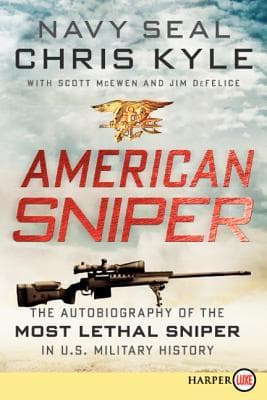
American Sniper: The Autobiography of the Most Lethal Sniper in U.S. Military History cover
Archivist's Choice

American Sniper: The Autobiography of the Most Lethal Sniper in U.S. Military History

Chris Kyle (2012)

Genre

Biography / Memoir / History

Reading Time

12 Minutes

Key Themes

See below

Track Your Reading

Sign in to track this book

Core Idea

Chris Kyle's autobiography, "American Sniper," offers an unvarnished first-person account of modern warfare through the eyes of the deadliest sniper in U.S. military history. The book delves into Kyle's motivations for joining the Navy SEALs, his experiences across four tours in Iraq, and the psychological and moral complexities of his role as a sniper. It portrays his unwavering commitment to his fellow soldiers and his country, his struggle to balance his military duty with his family life, and his ultimate perspective on the cost of war. Beyond the combat narratives, the book also touches upon the challenges of transitioning back to civilian life and the camaraderie that defines military service.
Difficulty
Medium

Core idea

The central argument and framework that powers the entire book.

Chris Kyle's autobiography, "American Sniper," offers an unvarnished first-person account of modern warfare through the eyes of the deadliest sniper in U.S. military history. The book delves into Kyle's motivations for joining the Navy SEALs, his experiences across four tours in Iraq, and the psychological and moral complexities of his role as a sniper. It portrays his unwavering commitment to his fellow soldiers and his country, his struggle to balance his military duty with his family life, and his ultimate perspective on the cost of war. Beyond the combat narratives, the book also touches upon the challenges of transitioning back to civilian life and the camaraderie that defines military service.

At a glance

Difficulty

Medium

Key Takeaways

1

The Sniper's Paradox: Detached Precision, Deep Purpose

Kyle's effectiveness stemmed from his ability to view targets as threats, not people, enabling lethal precision driven by a profound sense of protecting his comrades.

Quote

My shots saved lives. I know that. I was just doing my job.

Chris Kyle often says his high kill count came from one goal: protecting American lives. He saw insurgents as 'savages' and 'evil' threats to his fellow soldiers, not as individuals. This view, while hard for civilians to understand, was a necessary mental tool that let him do his job without hesitation or moral doubt. He describes the cold, calculated process of finding and eliminating targets, without emotional connection to the enemy. This detachment was balanced by a strong emotional bond with his 'brothers' – the Marines and SEAL...

Supporting evidence

Kyle's consistent use of terms like 'savages' for insurgents and his detailed accounts of prioritizing the safety of his 'brothers' over any personal glory or moral qualms about killing.

Apply this

Understanding how professionals in high-stakes, ethically complex roles create psychological frameworks to execute their duties effectively, often by reframing the 'enemy' and focusing on their primary mission.

2

War's Relentless Toll on Family Life

The memoir poignantly illustrates the immense, often irreparable, strain combat deployments place on marriages and children, as seen through the alternating perspectives of Chris and Taya Kyle.

Quote

I wasn't just losing him physically; I was losing him mentally, emotionally. He was there, but he wasn't.

Beyond combat stories, 'American Sniper' gives an honest look at the home life struggles military families face. Taya Kyle's chapters are especially strong, offering a necessary balance to Chris's combat accounts. She describes the intense worry during deployments, the difficulty of coming home, and the emotional distance that grew between them. Chris's struggles with being overly alert, having a short temper, and the lasting effects of war are clear, even if he does not call them PTSD. The book shows how the warrior mindset, so vital...

Supporting evidence

Taya Kyle's personal accounts of Chris's emotional withdrawal, anger, and difficulty adjusting to home life after deployments, including specific arguments and periods of marital strain.

Apply this

Recognizing the hidden costs of military service on families and the need for comprehensive support systems for veterans and their spouses transitioning back to civilian life.

3

The Brotherhood of War: Unbreakable Bonds

Kyle frequently emphasizes the profound camaraderie among SEALs and other service members, portraying it as a primary motivating factor and source of strength.

Quote

You never leave a man behind. It's not just a saying; it's how we live.

Throughout the memoir, Kyle highlights the strong bonds made in combat. He describes his fellow SEALs, Marines, and soldiers as a true 'brotherhood,' a family beyond blood ties. This camaraderie is not just a nice outcome of shared experience but a basic part of survival and morale. The willingness to die for each other, to push through extreme hardship for the team, is a repeated theme. Kyle's stories of saving trapped Marines in Fallujah or fighting alongside friends show this deep connection. This part of the book helps explain the...

Supporting evidence

Numerous anecdotes detailing mutual support, rescue missions, and the shared grief over fallen comrades, such as the deaths of Marc Lee and Ryan Job.

Apply this

Exploring the power of shared purpose and extreme adversity in forging unbreakable human bonds, applicable to team dynamics in high-pressure civilian environments.

4

The Adrenaline-Fueled Reality of Combat

Kyle's narrative immerses the reader in the raw, visceral experience of modern urban warfare, highlighting both its chaotic intensity and moments of surreal calm.

Quote

There are times when you're in the middle of a firefight, and everything just slows down. You see every bullet, every grain of sand.

Kyle's writing captures the overwhelming sensory and mental demands of combat. He vividly describes the sounds of gunfire, the smell of cordite, the sight of chaos, and the split-second decisions needed to survive. His accounts of firefights in Fallujah, Ramadi, and Sadr City are gripping, showing the brutal power of modern weapons and the sheer unpredictability of asymmetric warfare. He also mentions how time seems to slow down during intense moments. This raw, honest portrayal of combat is a major strength of the memoir, offering an...

Supporting evidence

Detailed descriptions of specific engagements, such as the 2,100-yard kill shot, the intense street fighting in Fallujah, and close-quarters combat with a pistol in Ramadi.

Apply this

Gaining insight into the psychological and physiological responses to extreme stress and danger, relevant to fields like emergency services or extreme sports.

5

The Moral Ambiguity of 'Good vs. Evil'

While Kyle firmly believes in the righteousness of his cause, his narrative implicitly raises questions about the long-term consequences and complexities of a 'good versus evil' framework in warfare.

Quote

I don't regret it. My only regret is that I couldn't save more. More of my guys, more Americans.

Kyle presents a simple moral world: Americans are good, insurgents are evil. This clear division was likely essential for him to function mentally in combat. However, the memoir naturally leads to thoughts about the wider ethical issues of the Iraq War. While Kyle's personal belief is firm, a careful reader might question the simplicity of this view in a conflict full of political complexities, sectarian violence, and unforeseen results. The book does not directly discuss these broader moral questions, but it powerfully shows an indiv...

Supporting evidence

Kyle's consistent labeling of all enemy combatants as 'savages' or 'evil,' and his unwavering belief that his actions were always justified in protecting American lives.

Apply this

Considering how individuals construct moral frameworks to navigate ethically challenging situations, and the potential disconnect between personal conviction and broader geopolitical realities.

6

From Cowboy to SEAL: The Making of a Warrior

Kyle's journey from a Texan rodeo rider to an elite Navy SEAL highlights the role of innate grit, marksmanship, and a strong sense of duty in shaping his military career.

Quote

I was raised to believe that you protect your family, your country. And that's what I did.

The memoir traces Kyle's background, focusing on his rural Texan upbringing, where hunting and shooting were central to his childhood. This early exposure to firearms and developing a sharp eye for marksmanship clearly set the stage for his future as a sniper. His brief time as a professional saddle-bronc rider also suggests a tough, resilient personality used to physical and mental challenges. Joining the Navy after 9/11, Kyle found a strong sense of purpose. His story suggests that while training is important, certain natural qualit...

Supporting evidence

Descriptions of childhood hunting trips with his father, his rodeo career, and his immediate response to the 9/11 attacks as a call to serve.

Apply this

Understanding how foundational experiences and personal values can drive career choices and excel in demanding professions.

7

The Lingering Scars of War, Unacknowledged

Despite his outward resilience, Kyle's narrative reveals subtle indicators of psychological trauma and the difficulty veterans face in fully processing their experiences.

Quote

I loved my country. I loved my wife and kids. And I loved my brothers. Beyond that, I don’t know what else to say.

While Chris Kyle mostly shows himself as unaffected by the psychological toll of war, especially compared to his deceased friends Marc Lee and Ryan Job, his wife Taya's accounts and subtle details in his own story hint at deeper struggles. His short temper, sleep problems, hyper-vigilance, and difficulties with civilian life match symptoms of PTSD, even if he does not explicitly name it. The book, then, is an important, though perhaps unintentional, study of how veterans often internalize and downplay their trauma, believing it is a s...

Supporting evidence

Taya's descriptions of Chris's irritability and emotional distance, and Chris's own admission of difficulty adjusting to 'normal' life and the constant pull back to combat.

Apply this

Developing empathy for veterans' reintegration challenges and recognizing the subtle manifestations of trauma, even in seemingly 'strong' individuals.

8

The Legacy of a Legend: Heroism and Controversy

Kyle's story, while celebrated by many, also generated significant public debate about the nature of heroism, war, and the portrayal of combat veterans.

Quote

I'm just a guy who went to war and did my job.

Chris Kyle became a legend in the military and, after his death, in American popular culture. His memoir and the film based on it solidified his image as an American hero. However, his story also started much public debate. Critics questioned the glorification of killing, the 'good vs. evil' story, and some exaggerations or inaccuracies in his anecdotes that came out after his death. This point acknowledges that while the book presents Kyle's personal truth, its reception and legacy are far more complex. It is a reminder that war memo...

Supporting evidence

The immense popularity of the book and film, contrasted with the controversies that arose concerning Kyle's claims and the moral implications of his actions.

Apply this

Analyzing how individual narratives are shaped and interpreted by public discourse, and the role of media in constructing heroism and national identity.

9

The Sniper's Patience and Discipline

Beyond raw marksmanship, Kyle's accounts underscore the immense patience, discipline, and mental fortitude required for successful sniper operations.

Quote

Waiting is the hardest part. But it's also the most important.

While Kyle's shooting skill is often emphasized, his memoir shows that most of a sniper's mission involves long periods of observation, careful planning, and great patience. He describes hours, sometimes days, spent in hide sites, enduring discomfort and boredom, waiting for the perfect shot or the right moment to provide overwatch. This requires a level of mental discipline and focus different from the adrenaline-fueled chaos of a direct firefight. His ability to stay calm under pressure, make precise calculations, and maintain aware...

Supporting evidence

Detailed descriptions of establishing hide sites, observing targets for extended periods, and the mental checklist involved in making a long-range shot.

Apply this

Appreciating the value of patience, observation, and strategic waiting in achieving high-stakes objectives in various professional fields.

10

The Unseen Enemy: Insurgency and Adaptability

Kyle's experiences demonstrate the constant adaptability required to combat a fluid and elusive insurgent enemy in asymmetrical warfare.

Quote

The enemy was everywhere and nowhere, always changing tactics.

Kyle's deployments in Iraq put him in the middle of an insurgency, a conflict very different from traditional warfare. His story highlights the challenges of fighting an enemy that blends with civilians, uses improvised explosive devices (IEDs), and constantly changes tactics. This required SEALs and other forces to be highly adaptable, creative, and always alert. Kyle's stories show the frustration of finding and engaging targets among civilians, the mental toll of IED threats, and the need for intelligence gathering and quick action...

Supporting evidence

Accounts of adapting to IED threats, distinguishing insurgents from civilians, and the constant tactical adjustments made by SEAL teams in various cities.

Apply this

Understanding the strategic and tactical challenges of asymmetrical warfare and the importance of flexibility and intelligence in dynamic, unpredictable environments.

Critical analysis

Notable Quotes

Quiz

Test Your Knowledge

Ready to see how well you understood this book? Take our interactive quiz with 10 questions.

10
Questions
~5
Minutes
?
Best Score

Key Questions (FAQ)

Chris Kyle was a United States Navy SEAL who served in the Iraq War. He is known as the most lethal sniper in U.S. military history, with a confirmed record of over 150 kills.

About the author

Chris Kyle

Chris Kyle was a United States Navy SEAL and the author of the bestselling autobiography, "American Sniper." The book details his four combat tours in Iraq, where he was credited with the most sniper kills in U.S. military history. Kyle's memoir offers a firsthand account of the realities of modern warfare and his experiences as a decorated SEAL.