BookBrief
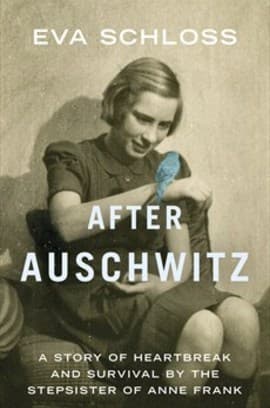
After Auschwitz cover
Archivist's Choice

After Auschwitz

Eva Schloss (2013)

Genre

Biography / Memoir / History / Spirituality

Reading Time

7-8 hours

Key Themes

See below

Track Your Reading

Sign in to track this book

Eva Schloss, Anne Frank's stepsister, recounts her survival of Auschwitz and the lifelong effort to honor those lost, finding purpose in remembrance.

Core Idea

Eva Schloss's "After Auschwitz" explores the lasting effects of Holocaust survival, showing that survival is more than just physical endurance. Her personal story reveals the deep psychological and emotional scars that shape identity, relationships, and purpose after trauma. The book argues that true survival involves rebuilding a broken life, facing evil, and finding meaning through advocacy and memory. Schloss also navigates the unique experience of being Anne Frank's stepsister and a living witness to history.
Reading time
7-8 hours
Difficulty
Medium
✓ Read this if...
You are interested in the long-term psychological and emotional impact of Holocaust survival, the process of rebuilding a life after extreme trauma, and the power of memory and advocacy.
✗ Skip this if...
You are looking for a purely historical account of the Holocaust or prefer to avoid detailed personal narratives of extreme suffering and its aftermath.

Core idea

The central argument and framework that powers the entire book.

Eva Schloss's "After Auschwitz" explores the lasting effects of Holocaust survival, showing that survival is more than just physical endurance. Her personal story reveals the deep psychological and emotional scars that shape identity, relationships, and purpose after trauma. The book argues that true survival involves rebuilding a broken life, facing evil, and finding meaning through advocacy and memory. Schloss also navigates the unique experience of being Anne Frank's stepsister and a living witness to history.

At a glance

Reading time

7-8 hours

Difficulty

Medium

Read this if...

You are interested in the long-term psychological and emotional impact of Holocaust survival, the process of rebuilding a life after extreme trauma, and the power of memory and advocacy.

Skip this if...

You are looking for a purely historical account of the Holocaust or prefer to avoid detailed personal narratives of extreme suffering and its aftermath.

Key Takeaways

1

Survival's Paradox

Luck, resilience, and the unbearable burden of outliving others.

Quote

Survival was a combination of luck, the will to live, and the protection of those I loved. But it came with a price I would pay for decades.

Eva Schloss's survival of Auschwitz was not due to a grand plan or her own merit, but to random chance. She highlights the sheer randomness of who lived and who died. She attributes her survival to many small bits of luck, like avoiding selections, being in the "right" place, and, most importantly, her mother Fritzi's protection and shared resilience. This view rejects any idea of a survivor's 'merit' and instead shows the deep psychological cost of outliving her father and brother. This burden appeared as survivor's guilt and a long ...

Supporting evidence

Eva recounts specific instances of avoiding selections, such as being hidden by her mother during a selection for the gas chambers, or being moved to a different camp just before a major extermination event at Auschwitz.

Apply this

Recognize that trauma's impact extends far beyond the event itself, often manifesting as complex emotional and psychological challenges for survivors. Approach personal and historical narratives of survival with empathy, acknowledging the role of chance and the profound, lasting internal battles faced by those who endure.

survivor-guilttrauma-recoveryresilience
2

The Unspoken Scars

The long, silent battle of post-Holocaust life and the struggle to reintegrate.

Quote

The war ended, but the silence began. We were expected to just 'get on with life,' but how do you get on when a part of you is forever missing?

Schloss clearly explains that liberation was not a magical cure. It was just the end of physical captivity and the start of a deep, often unspoken, psychological imprisonment. She describes the immense difficulty of returning to 'normal' life, a world that seemed unaware of the horrors she had seen. The expectation to simply move on, combined with the inability to speak about the unspeakable, led to years of suppressed trauma, nightmares, and a deep feeling of alienation. Her initial silence, common among survivors, was a coping metho...

Supporting evidence

Eva describes her initial reluctance to speak about her experiences, even to her husband, and the years of nightmares and emotional detachment she endured before finally finding her voice decades later.

Apply this

Understand that traumatic experiences leave invisible wounds that require patience, understanding, and often professional support to heal. Create safe spaces for individuals to share their stories without pressure or judgment, recognizing that healing is a non-linear process that can take a lifetime.

post-traumatic-stresshistorical-traumaintergenerational-trauma
3

The Power of Maternal Love

A mother's unwavering devotion as an anchor in unimaginable horror.

Quote

My mother's strength, her determination, and her constant protection were the only things that kept me alive. She was my rock, my reason to keep fighting.

A central theme in Schloss's memoir is the extraordinary strength of her mother, Fritzi. Fritzi's unwavering love, cleverness, and strong protective instincts were comforting and essential for Eva's survival in Auschwitz. From sharing small amounts of food to shielding Eva during selections and giving her hope, Fritzi was a basic, life-sustaining force. This shows how human connection, especially family ties, can be a crucial, tangible lifeline in the most inhumane conditions, turning abstract love into concrete acts of survival. Frit...

Supporting evidence

Eva details numerous instances where her mother saved her life or provided crucial support, such as sharing a single potato she found, or physically hiding Eva from SS guards during selections.

Apply this

Appreciate the profound impact of strong, supportive relationships during times of crisis. Foster and nurture family and community bonds, recognizing their potential to provide crucial emotional and practical support when facing extreme adversity.

familial-bondshuman-connectionresilience-in-adversity
4

Anne Frank's Living Legacy

From childhood friend to a custodian of memory.

Quote

Anne's diary gave voice to the millions who perished. After marrying Otto, it became my life's mission to ensure her message, and the message of the Holocaust, was never forgotten.

Eva Schloss's unique relationship with Anne Frank, first as a childhood friend and later as her stepsister through her mother's marriage to Otto Frank, made her an important guardian of Anne's legacy. This role, first taken on by Otto, became Eva's deep responsibility. Her work, sharing her own story alongside Anne's, turns the abstract numbers of the Holocaust into personal narratives, making history relatable and impactful. Eva's journey from a silent survivor to a global speaker shows how individual memory can serve a collective pu...

Supporting evidence

Eva describes her extensive work speaking in schools and public forums worldwide, often alongside Otto Frank initially, sharing her personal experiences and emphasizing the importance of Anne's diary and its message.

Apply this

Engage actively with historical narratives and personal testimonies to understand the past and prevent its recurrence. Support initiatives that preserve memory and promote education about human rights and the dangers of hatred and intolerance.

holocaust-educationmemory-preservationhistorical-narratives
5

The Weight of Witnessing

How personal testimony transforms abstract history into visceral reality.

Quote

When you share your story, it's not just about what happened to you; it's about giving a voice to those who can no longer speak, and a warning to those who must listen.

Schloss's memoir is an important reminder of the irreplaceable value of survivor testimony. Her detailed, honest descriptions of daily life in Auschwitz—the hunger, the fear, the dehumanization, the constant nearness of death—turn the abstract horrors of the Holocaust into a real, human experience. By sharing her personal memories, Eva forces readers to confront the individual suffering behind the statistics, making it impossible to deny or lessen the atrocities. Her commitment to speaking out, even when painful, highlights the moral ...

Supporting evidence

Eva's detailed descriptions of specific events in Auschwitz, such as witnessing children being separated from their mothers, the constant hunger, the brutal selections, and the overwhelming smell of burning flesh, provide stark, unforgettable imagery.

Apply this

Seek out and engage with first-hand accounts and testimonies of historical events, particularly those involving human rights abuses. Understand that personal stories are vital for fostering empathy and ensuring that history is remembered and learned from.

eyewitness-accountshuman-rightshistorical-memory
6

Rebuilding Love and Family

Finding connection and purpose amidst profound loss.

Quote

To find love and build a family after such loss felt like a miracle. It was a testament that life, despite everything, could still offer beauty and connection.

Despite immense loss, Eva Schloss and her mother Fritzi both found love and rebuilt families. This shows an extraordinary capacity for hope and resilience. Fritzi's marriage to Otto Frank and Eva's own marriage and children are a strong act of defiance against the Nazis' attempt to destroy their spirit and lineage. This rebuilding was not about forgetting the past, but integrating it into a future with new connections and purpose. It highlights the human need for belonging and love's power to heal, even if scars remain. Their ability ...

Supporting evidence

Eva recounts her mother Fritzi's marriage to Otto Frank, forming a new family unit, and her own marriage to Zvi Schloss, with whom she had children and built a life.

Apply this

Recognize the importance of human connection and the courage it takes to open oneself to love and new relationships after experiencing profound loss. Support individuals in their journey of healing and rebuilding, understanding that new connections do not diminish past loves but expand the capacity for life.

hope-after-traumafamily-reconstructionpost-war-life
7

The Banality of Evil's Echoes

Understanding how ordinary people perpetuate extraordinary cruelty.

Quote

The guards were not monsters with horns; they were ordinary men who chose to be cruel. That is the most terrifying lesson of all.

Eva Schloss's observations of the Nazi guards and officials in Auschwitz echo Hannah Arendt's idea of the 'banality of evil.' She describes them not as monsters, but as ordinary people who, through indifference, obedience, and dehumanization of their victims, became tools of terrible cruelty. This insight is important because it warns against thinking that evil is always strange or easy to spot. Instead, it shows how societal pressures, propaganda, and a lack of moral courage can turn 'normal' people into perpetrators. This highlights...

Supporting evidence

Eva describes instances where guards, appearing to be ordinary men, would carry out horrific acts with a disturbing lack of emotion, reinforcing the idea that they were not inherently demonic but chose their actions.

Apply this

Cultivate critical thinking and moral courage to challenge dehumanizing rhetoric and actions in everyday life. Understand that systemic evil is often perpetuated by ordinary individuals making choices, and that vigilance against prejudice and discrimination is a continuous responsibility.

banality-of-evildehumanizationmoral-courage
8

The Long Road to Forgiveness

A personal journey of reconciliation, not forgetting.

Quote

I can never forgive what they did, but I have learned to let go of the hatred. Forgiveness, for me, is about finding peace within myself, not absolving them.

Eva Schloss's view on forgiveness is personal and complex. She makes it clear that true forgiveness, in the sense of excusing the perpetrators, is impossible for the atrocities committed. However, she distinguishes this from the internal process of letting go of hatred and bitterness, which she found necessary for her own peace and healing. This journey was not about accepting evil but about reclaiming her emotional freedom from its lasting hold. Her approach shows that forgiveness can be a complex, internal act of self-preservation r...

Supporting evidence

Eva discusses her decades-long struggle with anger and bitterness, and how, through her work and the passage of time, she found a way to release the hatred for her own well-being, without ever forgetting or excusing the crimes.

Apply this

Recognize that forgiveness is a deeply personal and complex process, especially after profound trauma. Respect individual journeys of healing, understanding that 'forgiveness' can take many forms, including self-compassion and the release of personal burdens, without necessarily implying reconciliation with perpetrators.

healing-traumaemotional-releasereconciliation
9

The Danger of Indifference

Silence and inaction as complicity in the face of injustice.

Quote

The greatest lesson of the Holocaust is not just about the hatred of the Nazis, but the indifference of the world. Silence is complicity.

Beyond the active perpetrators, Eva Schloss implicitly and explicitly criticizes the widespread indifference that allowed the Holocaust to happen. Her story shows how the silence of bystanders, the inaction of international communities, and the gradual acceptance of hateful rhetoric created a situation where unimaginable atrocities became possible. This highlights an important lesson: evil often wins not just through the actions of bad people, but through the inaction of good people. Her life's work directly challenges this indifferen...

Supporting evidence

Eva details the lack of international intervention and the failure of many individuals and nations to respond effectively to the escalating persecution of Jews, highlighting the devastating consequences of inaction.

Apply this

Actively challenge prejudice, discrimination, and injustice in all its forms, no matter how small. Understand that remaining silent in the face of wrongdoing contributes to its perpetuation and can have far-reaching, devastating consequences.

bystander-effectsocial-responsibilitymoral-inaction
10

Finding Purpose in Advocacy

Transforming personal pain into a global call for remembrance and peace.

Quote

My pain became my purpose. By sharing my story, I hope to be a voice for the voiceless and a warning to the future.

Eva Schloss's journey from a silent, traumatized survivor to a global advocate for Holocaust remembrance and human rights shows the power of purpose. Initially burdened by her past, she found deep meaning in sharing her story, often with Otto Frank, and later on her own. This was not just recounting history; it was a deeply felt mission to educate, warn, and inspire. Her dedication to speaking out, despite the emotional cost, shows how personal suffering can become a strong force for good. This ensures that the lessons of the Holocaus...

Supporting evidence

Eva's consistent and extensive public speaking engagements, lectures, and advocacy work at schools, universities, and remembrance events around the world, often for many decades after the war.

Apply this

Consider how personal experiences, especially challenging ones, can be transformed into opportunities for advocacy and positive change. Seek ways to contribute to causes that prevent injustice and promote understanding, recognizing the power of individual voices in shaping collective memory and future actions.

advocacysocial-justicemeaning-making

Critical analysis

Notable Quotes

I often wonder how many children were saved by their parents' quick thinking and the kindness of strangers.

Reflecting on the dangers and narrow escapes during the war.

The past is like a mirror. It shows you where you've been, but not where you're going.

Discussing the importance of remembering history while moving forward.

It is important to forgive, but never to forget.

Her perspective on reconciliation and remembrance post-Holocaust.

Even in the darkest times, there is always a flicker of hope.

Describing the resilience and human spirit in concentration camps.

My mother always said that if you have your health, you have everything.

Recalling her mother's wisdom, especially after the hardships of war.

We must learn from the past, so we don't repeat the same mistakes.

A core message about the importance of education and historical awareness.

The greatest revenge is to live a good life.

Her philosophy on overcoming trauma and honoring those lost.

Silence can be a killer, but speaking out can save lives.

Emphasizing the importance of sharing her story and others' stories.

Love is the most powerful force in the world. It can conquer anything.

Reflecting on the enduring power of love within her family and relationships.

You can't choose your past, but you can choose your future.

A message of empowerment and agency despite past suffering.

Every person has a story, and every story deserves to be heard.

Advocating for the importance of individual narratives and empathy.

The scars may fade, but the memories remain.

Describing the lasting impact of her experiences.

It's not about how many times you fall, but how many times you get back up.

A message of perseverance and resilience in the face of adversity.

My life became a testament to the fact that even after the worst of humanity, there can be beauty and purpose.

Her overarching reflection on her life's journey and advocacy.

Quiz

Test Your Knowledge

Ready to see how well you understood this book? Take our interactive quiz with 10 questions.

10
Questions
~5
Minutes
?
Best Score

Key Questions (FAQ)

'After Auschwitz' is Eva Schloss's memoir detailing her survival of the Holocaust, her experiences in Auschwitz alongside her mother, and her life after liberation. It also explores her journey to cope with immense loss and her eventual connection to Anne Frank's legacy through her mother's marriage to Otto Frank.

About the author