BookBrief
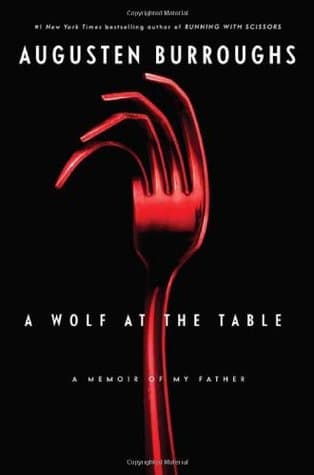
A Wolf at the Table cover
Archivist's Choice

A Wolf at the Table

Augusten Burroughs (2008)

Genre

Biography / Memoir

Reading Time

4-5 hours

Key Themes

See below

Track Your Reading

Sign in to track this book

In a chilling memoir, Augusten Burroughs unearths the psychological cruelty and terrifying 'games' inflicted by his enigmatic father, grappling with a childhood defined by betrayal and the desperate longing for a love that never materialized.

Core Idea

Augusten Burroughs's "A Wolf at the Table" examines the damaging and psychologically twisted relationship between a young boy and his disturbed, manipulative father. The memoir shows how abuse can be hidden in silence, emotional manipulation, and a false show of love, leaving deep scars. It illustrates how a child, wanting affection, can misinterpret or rationalize constant psychological terror, seeing the 'wolf-like' predator as a source of both fear and an unattainable, twisted love. This shapes their entire understanding of self and relationships.
Reading time
4-5 hours
Difficulty
Medium
✓ Read this if...
You are fascinated by the darkest corners of family dysfunction, the lasting impact of psychological abuse, and how individuals survive and process extreme childhood trauma within a seemingly normal suburban facade.
✗ Skip this if...
You prefer memoirs with clear arcs of healing and resolution, or find graphic depictions of emotional cruelty and child manipulation too disturbing.

Core idea

The central argument and framework that powers the entire book.

Augusten Burroughs's "A Wolf at the Table" examines the damaging and psychologically twisted relationship between a young boy and his disturbed, manipulative father. The memoir shows how abuse can be hidden in silence, emotional manipulation, and a false show of love, leaving deep scars. It illustrates how a child, wanting affection, can misinterpret or rationalize constant psychological terror, seeing the 'wolf-like' predator as a source of both fear and an unattainable, twisted love. This shapes their entire understanding of self and relationships.

At a glance

Reading time

4-5 hours

Difficulty

Medium

Read this if...

You are fascinated by the darkest corners of family dysfunction, the lasting impact of psychological abuse, and how individuals survive and process extreme childhood trauma within a seemingly normal suburban facade.

Skip this if...

You prefer memoirs with clear arcs of healing and resolution, or find graphic depictions of emotional cruelty and child manipulation too disturbing.

Key Takeaways

1

The Silent Predator

A father's chilling detachment creates a void of fear and confusion.

Quote

As Augusten grew older, something sinister within his father began to unfurl. Something dark and secretive that could not be named.

Burroughs shows how emotional neglect and psychological manipulation work through his father's character. The father is not physically abusive; his cruelty comes from his profound detachment and the 'games' he plays. This is not a story about a traditional monster, but about a man whose presence is defined by absence. His interactions are meant to disorient and control, leaving a child wanting connection but afraid of what it means. The father's silence and inscrutability become a weapon, forcing young Augusten to constantly interpret...

Supporting evidence

The recurring motif of the father as a 'shadowy presence,' a 'form on the stairs,' or a 'silent figure smoking a cigarette in the dark,' which evolves into the 'games' he plays, like the dream of burying a body, which blurs the line between reality and nightmare for young Augusten.

Apply this

Recognize that emotional abuse and neglect can be as damaging as physical harm, often manifesting through subtle control, gaslighting, and the withholding of affection or clear communication. Pay attention to how a parent's presence or absence shapes a child's sense of security and reality.

emotional-neglectpsychological-manipulationchildhood-traumaparental-detachment
2

The Unreliable Narrative

A child's reality is warped by a parent who blurs fact and fiction.

Quote

And sometimes…I wasn’t altogether sure about one thing: was it just a dream?

One unsettling part of Burroughs's memoir is how his father intentionally distorts his son's view of reality. The dream about burying a body is a chilling image for the whole relationship: a shared, unspoken secret that may or may not be real, but carries huge psychological weight. This constant ambiguity keeps Augusten uncertain, making him question his own memories and sanity. This is not just a parent lying; it is a parent building a world where truth is fluid, leaving the child without a stable base to understand himself or his su...

Supporting evidence

The central mystery surrounding the dream of burying the body, and Augusten's inability to discern if it was merely a dream or a repressed memory, highlighting the father's talent for creating psychological doubt.

Apply this

Be aware of how gaslighting and psychological manipulation can erode a person's sense of reality and self-trust. In relationships, seek clarity and consistency, and trust your own perceptions, especially when someone attempts to invalidate your experiences.

gaslightingchildhood-traumamemory-distortionpsychological-abuse
3

Love as a Double-Edged Sword

The agonizing struggle between longing for parental love and fearing its destructive nature.

Quote

It is a story for anyone who has ever longed for unconditional love from a parent.

Burroughs captures the pain of wanting love from a parent who also causes deep hurt. This memoir is not just about a bad father; it is about the child's basic need for parental affection and approval, even when that parent is terrifying and abusive. The 'radical pendulum swing between love and hate' refers not only to the father's erratic behavior but also to Augusten's own internal conflict. He wants connection, for 'the kind of father he wanted,' even as he instinctively pulls away from the 'wolf at the table.' This deep longing mak...

Supporting evidence

The book's premise, stating it's 'for anyone who has ever longed for unconditional love from a parent,' directly addresses this inherent conflict. The repeated 'betrayal after shocking betrayal' underscores the dashed hopes for a normal, loving paternal relationship.

Apply this

Acknowledge the complex emotions involved in abusive or neglectful family dynamics. It's normal to still desire love from difficult parents, but understanding this internal conflict is crucial for setting boundaries and prioritizing self-preservation.

attachment-traumaparental-loveemotional-conflictbetrayal
4

The Unspoken Language of Cruelty

Terror communicated through silence, glances, and disturbing 'games.'

Quote

The kind of father he wanted didn’t exist for him. This father was distant, aloof, uninterested…And then the “games” began.

The true horror of Burroughs's childhood is not always in explicit acts, but in the subtle ways his father showed power and malice. The 'games' are not playful; they are psychological traps meant to instill fear and control. This could be a lingering look, an unsaid implication, or calculated ambiguity that keeps Augusten on edge. This non-verbal cruelty is arguably more damaging than open aggression, as it is harder to identify, explain, or escape. It forces the child to live in constant hyper-vigilance, always looking for threats in...

Supporting evidence

The description of the father as 'distant, aloof, uninterested' followed by the commencement of 'the games,' which are implied to be psychologically tormenting rather than physically violent, creating an atmosphere of dread.

Apply this

Pay attention to non-verbal cues and subtle forms of manipulation in relationships. Trust your gut feeling when something feels 'off,' even if you can't articulate why. Recognize that psychological abuse often operates in the realm of the unspoken.

psychological-terrornonverbal-communicationcovert-abusehypervigilance
5

The Weight of Unnamed Evils

The profound impact of a terrifying presence that cannot be logically defined.

Quote

Something dark and secretive that could not be named.

Burroughs highlights the terror of facing an evil that is vague and hard to define. His father's 'something sinister' is not a clear condition or behavior pattern, but an unsettling essence. This inability to name or categorize the threat makes it more terrifying for a child. It is like the boogeyman, but real and living in the house. Without a name, there is no way to understand, predict, or fight it. This leaves Augusten in constant dread, dealing with a malevolent force that defies logic, forcing him to internalize the fear and con...

Supporting evidence

The repeated phrase 'something dark and secretive that could not be named' highlights the ineffable nature of the father's cruelty, making it more terrifying due to its mystery.

Apply this

Acknowledge that some forms of trauma come from experiences that defy easy categorization or explanation. Validating the feeling of 'unnamed evil' can be an important step in processing and healing, even without a clear label.

existential-dreadunnamed-traumapsychological-horrorambiguous-threat
6

The Quest for Unconditional Love

The universal human yearning for acceptance, even from the most flawed sources.

Quote

It is a story for anyone who has ever longed for unconditional love from a parent.

Despite the difficult experiences, the memoir's main message is the human need for unconditional love, especially from parents. Burroughs's story connects because it touches on a universal desire—the innate wish for a safe, accepting bond that forms a child's security. Even with such psychological cruelty, Augusten's hope for that love never fully dies. This persistent yearning shows the importance of healthy attachment and the devastating impact when it is missing or corrupted. The book does not just tell of abuse; it shows what we a...

Supporting evidence

The book's promotional material explicitly states its theme: 'It is a story for anyone who has ever longed for unconditional love from a parent.' This positions the memoir beyond a mere account of abuse, framing it as a exploration of a universal human need.

Apply this

Reflect on your own core needs for love and acceptance. If these needs were not met in childhood, understand how that may impact adult relationships and actively seek to build healthy, affirming connections now.

unconditional-loveattachment-theoryhuman-needshealing-trauma
7

Redemption in Survival

Finding profound joy and meaning in simply enduring and living beyond trauma.

Quote

Though harrowing and brutal, 'A Wolf at the Table' will ultimately leave you buoyed with the profound joy of simply being alive.

The memoir's triumph is not in a dramatic confrontation or solution, but in the act of survival and the later appreciation for life itself. Despite the 'stunning psychological cruelty,' Burroughs conveys a strong sense of resilience. The 'profound joy of simply being alive' is not a naive feeling; it is a hard-won outlook earned by dealing with unimaginable pain. This takeaway shows that even from the darkest experiences, a deep gratitude for existence can emerge. It shows the human spirit's ability to not only endure but to find mean...

Supporting evidence

The concluding statement in the book's description, promising readers will be 'buoyed with the profound joy of simply being alive,' indicates the transformative power of the narrative.

Apply this

In the face of adversity, focus on the strength gained through endurance. Cultivate gratitude for life's simple pleasures and the resilience of the human spirit, recognizing that survival itself is a victory.

resiliencepost-traumatic-growthsurvival-spiritgratitude
8

The Legacy of Silence

How unspoken family secrets and trauma shape a child's development.

Quote

It was the only thing we’d ever done together as father and son, and I promised not to tell.

The 'dream' of burying a body, whether real or imagined, represents the burden of unspoken secrets and shared involvement forced upon a child. This act, framed as the only thing they ever did together, highlights the twisted bonding that can happen through trauma and secrecy. Such silence, especially around disturbing events or parental behaviors, forces a child to carry immense psychological weight alone. It teaches them that certain truths are unspeakable, leading to isolation and distorting their ability to form healthy relations...

Supporting evidence

The opening lines of the book, detailing the dream of burying a body and the promise never to tell, immediately establish the theme of enforced secrecy and its profound, lasting impact on the protagonist.

Apply this

Break cycles of silence in families, especially around difficult truths. Encourage open, honest communication (age-appropriately) to prevent children from bearing the solitary burden of family secrets and trauma.

family-secretsintergenerational-traumachildhood-isolationunspoken-truths
9

The Distorted Mirror

A child's identity is formed in reaction to a parent's warped reflection.

Quote

The kind of father he wanted didn’t exist for him.

When a parent is emotionally absent or psychologically abusive, a child struggles to form a clear, positive self-image. Augusten's desire for 'the kind of father he wanted' speaks to the deep longing for a healthy mirror—a parent who reflects back love, worth, and security. Instead, he receives a distorted reflection, one that suggests he is either invisible, a target for 'games,' or unworthy of genuine affection. This constant invalidation forces the child to build an identity based on coping mechanisms rather than real self-expressi...

Supporting evidence

The repeated emphasis on the father's 'distant, aloof, uninterested' nature and the subsequent 'betrayals' directly impact Augusten's ability to feel seen, valued, or understood, thus warping his self-perception.

Apply this

Understand that early parental interactions profoundly shape self-esteem and identity. If you experienced a 'distorted mirror,' consciously work on self-validation and building a strong, authentic sense of self, separate from past reflections.

self-identityparental-influenceself-esteemchildhood-development

Critical analysis

Notable Quotes

The thing about lying is that you can't tell the difference between a lie and a truth once you've started.

Reflecting on his mother's elaborate fabrications.

My mother was a genius at creating an atmosphere of crisis and then blaming it on me.

Describing his mother's manipulative behavior.

There was no such thing as a small secret in our house. All secrets were enormous, pulsating things.

Discussing the weight and nature of family secrets.

When you're a child, you don't know that your family is dysfunctional. You just think that's how families are.

Realizing the abnormality of his upbringing in retrospect.

Love, in our house, was a conditional, dangerous thing, like a grenade with a loose pin.

Characterizing the volatile nature of affection in his home.

I learned to be invisible. It was my superpower.

His coping mechanism for avoiding his parents' attention.

My father was a ghost, even when he was in the room.

Describing his emotionally absent father.

The past wasn't dead. It wasn't even past. It was right here, breathing down my neck.

Feeling the lingering effects of his childhood trauma.

We were a family of actors, each playing our part in a drama no one understood.

Reflecting on the performative nature of his family dynamics.

Silence was not golden in our house. It was a loaded gun.

The tension and unspoken threats present in quiet moments.

To survive, I had to become a detective of human nature, especially my mother's.

His need to constantly analyze and predict his mother's behavior.

Hope was a dangerous thing. It could get you killed.

His cynical view on hope given his experiences.

Some people are just born bad. And some people are made bad. My mother was a combination.

His assessment of his mother's character and origins of her behavior.

The greatest trick my parents ever pulled was convincing me that I was the problem.

Realizing he was gaslighted into believing he was responsible for family issues.

Quiz

Test Your Knowledge

Ready to see how well you understood this book? Take our interactive quiz with 10 questions.

10
Questions
~5
Minutes
?
Best Score

Key Questions (FAQ)

'A Wolf at the Table' is a memoir by Augusten Burroughs detailing his terrifying and emotionally brutal relationship with his enigmatic and cruel father. It explores the profound psychological impact of his father's actions and the search for love and redemption amidst childhood trauma.

About the author

Augusten Burroughs

Augusten Burroughs is a bestselling author known for his darkly humorous and often shocking autobiographical fiction. His most famous work, 'Running with Scissors,' chronicles his unconventional childhood and became a cultural phenomenon. Burroughs's other notable books include 'Dry' and 'A Wolf at the Table,' all characterized by his distinctive, unflinching voice and exploration of family dysfunction.