The Cortical Column: A Universal Learning Machine
Intelligence emerges from countless identical, interacting mini-brains.
Quote
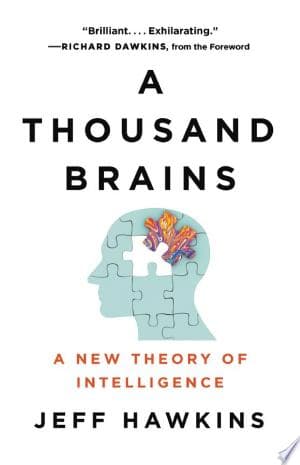
The secret to intelligence isn't a complex, centralized processing unit, but rather a vast number of nearly identical, highly interconnected learning machines.
Hawkins suggests that the neocortex is not a group of specialized regions but a sheet of 'cortical columns,' each acting as a complete, small learning system. Each column, no matter its location (visual, auditory, or somatosensory cortex), uses the same basic method to learn, predict, and model the world. This sameness is important: it means the brain does not need to create new methods for new tasks; it just uses the same strong, general learning mechanism for all sensory inputs and motor outputs. This idea challenges the traditional...
Supporting evidence
Hawkins's work at Numenta, particularly their Hierarchical Temporal Memory (HTM) theory, which models how cortical columns learn and make predictions based on sequences of sensory data. He cites anatomical evidence of the consistent six-layer structure and similar cellular composition across diverse cortical areas.
Apply this
Appreciating the brain's modularity can inform how we approach complex problems, breaking them down into smaller, self-similar learning tasks. In AI, this suggests a shift from highly specialized, task-specific architectures to more generalized, column-like learning units that can adapt to diverse data.