BookBrief
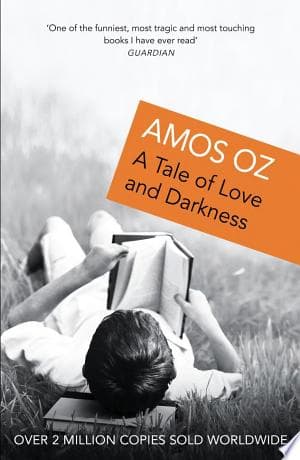
A Tale of Love and Darkness cover
Archivist's Choice

A Tale of Love and Darkness

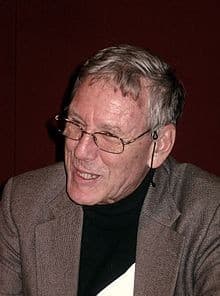
Amos Oz (2015)

Genre

Biography / Memoir / History

Reading Time

12-15 hours

Key Themes

See below

Track Your Reading

Sign in to track this book

In 1940s Jerusalem, a young Amos Oz navigates the weight of family history and a nation's birth, all while grappling with his mother's despair.

Core Idea

Amos Oz's 'A Tale of Love and Darkness' is a personal memoir that connects the author's early life in British Mandate Palestine and Israel with his family's history, the Zionist movement, and the country's founding. It shows how individual lives connect to historical events, revealing how the hopes, struggles, and ideas of European Jewish immigrants shaped both a new state and the mind of a boy dealing with his mother's suicide. The book suggests that memory is a changing, rebuilt act, and that storytelling, even if imperfect, helps us understand the mix of love, darkness, and belonging that defines both personal and national identity.
Reading time
12-15 hours
Difficulty
Medium
✓ Read this if...
You are fascinated by the intersection of personal tragedy and national history, enjoy rich literary prose, or seek a profound understanding of the human cost and intellectual currents behind the founding of Israel.
✗ Skip this if...
You prefer straightforward chronological narratives, are uninterested in detailed historical context, or find lengthy, introspective memoirs challenging to engage with.

Core idea

The central argument and framework that powers the entire book.

Amos Oz's 'A Tale of Love and Darkness' is a personal memoir that connects the author's early life in British Mandate Palestine and Israel with his family's history, the Zionist movement, and the country's founding. It shows how individual lives connect to historical events, revealing how the hopes, struggles, and ideas of European Jewish immigrants shaped both a new state and the mind of a boy dealing with his mother's suicide. The book suggests that memory is a changing, rebuilt act, and that storytelling, even if imperfect, helps us understand the mix of love, darkness, and belonging that defines both personal and national identity.

At a glance

Reading time

12-15 hours

Difficulty

Medium

Read this if...

You are fascinated by the intersection of personal tragedy and national history, enjoy rich literary prose, or seek a profound understanding of the human cost and intellectual currents behind the founding of Israel.

Skip this if...

You prefer straightforward chronological narratives, are uninterested in detailed historical context, or find lengthy, introspective memoirs challenging to engage with.

Key Takeaways

1

The Burden of History

Personal and national narratives are inextricably linked, shaping identity and destiny.

Quote

Every person is a miniature museum of the past.

Oz connects his family's history with Israel's beginnings. He shows how generations—their hopes, struggles, ideas, and failures—directly shaped his upbringing and the collective mind of a new nation. The memoir argues that understanding the present means looking closely at the past, revealing how historical forces and personal choices create a complex picture that defines identity. This is not just about remembering; it is about recognizing the active, often hidden, influence of inherited stories on individual and national character. ...

Supporting evidence

Oz details his family's intellectual lineage, particularly his father's encyclopedic knowledge and his mother's melancholic poetry, both products of a long European Jewish tradition that grappled with assimilation and persecution. Their move to Jerusalem and the subsequent cultural clashes with the more pragmatic 'new Jew' ideal exemplify this.

Apply this

Reflect on your own family's history and how their experiences (migration, profession, values) might have subtly shaped your worldview. Consider how collective historical events continue to influence contemporary societal attitudes and political discourse.
historical-memorynational-identityintergenerational-trauma
2

The Power of Storytelling

Narrative is a fundamental human need, a means to create order and meaning from chaos.

Quote

A person who does not tell stories is like a tree that does not bear fruit.

Oz’s memoir shows the human need to tell stories. He suggests that stories are not just for entertainment; they are a key way to process trauma, keep memories, and build identity, both personal and collective. By carefully recounting his family's unique traits, tragedies, and intellectual pursuits, Oz turns fragmented memories into a clear, meaningful whole. This act of storytelling becomes a way to fight against forgetting and to understand the seemingly random events that shape lives. The book itself shows this idea, demonstrating h...

Supporting evidence

Oz's recounting of his mother's stories and the family's constant discussions, often bordering on intellectual debates, highlights their reliance on narrative to navigate their complex lives. His own journey to becoming a writer is presented as a natural progression from this storytelling environment.

Apply this

Practice telling your own story or the stories of your family members. Understand that framing events in a narrative can help you make sense of difficult experiences and connect with others more deeply.

narrative-identitymemoir-writingoral-tradition
3

Jerusalem as a Character

The physical and spiritual landscape of Jerusalem profoundly shapes its inhabitants.

Quote

Jerusalem was not a city, but a state of mind.

Jerusalem is more than a setting in Oz's memoir; it is a living character, full of history, tension, and a unique feel. Oz describes the city as a place where old traditions meet modern hopes, and where the sacred and the everyday exist together. The narrow streets, distinct neighborhoods, and political changes all help form Oz's identity and the shared awareness of early Israel. The city's 'darkness' is not just literal (dimly lit streets) but also symbolic, reflecting the deep questions and conflicts that have always existed within ...

Supporting evidence

Oz vividly describes the specific sounds, smells, and sights of 1940s and 50s Jerusalem, from the British Mandate presence to the War of Independence. He details the specific 'types' of Jerusalemites, from the academics to the religious zealots, all shaped by the city's unique pressures.

Apply this

When traveling or exploring a new place, pay attention to how the physical environment, history, and local culture might shape the personalities and perspectives of its inhabitants. Consider how your own environment influences you.

sense-of-placeurban-identitycultural-geography
4

The Enigma of Motherhood

Maternal love and loss can be profound, complex, and forever defining.

Quote

My mother was a magician, a queen, a princess, a witch, a storyteller.

Oz's portrayal of his mother, Fania, is central to the book's emotional depth. Her sadness, intelligence, and eventual suicide affect his life and story. He tries to understand her, seeing her through a child's love, a teenager's confusion, and an adult's later view. Her story represents the 'darkness' of the title, showing the unknown depths of human suffering and the terrible impact of mental pain. Her artistic nature and inability to fully adjust to their new life in Israel highlight the personal costs of historical change and the ...

Supporting evidence

Fania's love for literature, her vivid storytelling, and her deep sadness are recurring motifs. Her eventual suicide, when Oz was 12, is the central traumatic event that anchors the memoir, driving much of his later reflection and literary career.

Apply this

Acknowledge the complex, often unspoken, emotional legacies within your own family. Seek to understand the struggles and inner lives of those closest to you, recognizing that outward appearances may hide deep internal battles.

maternal-losschildhood-traumapsychological-depth
5

The Intellectual's Dilemma

The pursuit of knowledge can be both a refuge and a source of profound alienation.

Quote

We were a family of bookworms, living in a house built of books.

Oz's family, especially his father, represents the European Jewish intellectual tradition. Their lives are filled with books, debates, and a respect for culture and learning. While this intellectual life provides a rich, stimulating environment, it also creates some separation from practical life and the developing Israeli identity, which valued physical work and direct action. The 'dilemma' is the tension between ideas and lived experience. Oz shows how this intellectual heritage, though noble, could also lead to a feeling of being u...

Supporting evidence

Oz's father's vast, albeit often impractical, knowledge of languages and history, and his family's constant, sometimes pedantic, intellectual discussions are central. Their struggle with economic hardship despite their education highlights this disconnect.

Apply this

Balance intellectual curiosity with practical engagement. Recognize that while knowledge is powerful, direct experience and community involvement are equally vital for a fulfilling and integrated life.

intellectual-historydiaspora-identitycultural-assimilation
6

The Formation of a Writer

Childhood experiences and early losses are foundational to artistic expression.

Quote

I started writing to invent the world I wanted to live in.

The memoir is not just about Oz’s life; it is about how he became a writer. He carefully traces how his childhood—marked by intellectual stimulation, family quirks, and great personal loss (his mother's suicide)—shaped his writing style and themes. Writing becomes a way to process trauma, create order from chaos, and express unspoken thoughts. Oz implies that a writer's view often comes from observation and some detachment, which is needed to turn lived experience into art. His later move to a kibbutz, a stark contrast to his Jerusale...

Supporting evidence

Oz explicitly connects his mother's storytelling and his family's rich linguistic environment to his own inclination towards writing. His detailed recollections of childhood observations and the emotional impact of his mother's death are presented as direct influences on his later literary themes.

Apply this

Consider how your own formative experiences, both joyful and challenging, might be sources of creativity or insight. Explore journaling or other creative outlets to process complex emotions and discover your unique voice.

creative-processautobiographical-fictionliterary-development
7

The Complexity of Love and Darkness

Life is a tapestry woven with intertwined threads of joy, sorrow, and moral ambiguity.

Quote

Every life contains a tale of love and darkness, and the two are often inseparable.

The title itself captures a main idea: that love and darkness are not opposites but often exist together in the same experiences, relationships, and historical moments. Oz avoids simple divisions, showing characters and events with all their contradictions. 'Love' appears in family bonds, intellectual interests, and the dream of a homeland, while 'darkness' includes personal tragedies, historical violence, and his family members' internal struggles. This balanced view suggests that true understanding requires accepting the full range ...

Supporting evidence

The love for his family is evident throughout, yet it's often shadowed by his mother's depression and suicide. The love for the nascent state of Israel is contrasted with the violence of its birth and the ongoing conflicts. This duality is constantly present.

Apply this

Resist the urge to categorize experiences or people as purely 'good' or 'bad.' Strive for a more nuanced understanding, recognizing the inherent complexities and contradictions that exist in every situation and individual.

moral-ambiguityhuman-conditionexistentialism
8

The Legacy of Zionism

The dream of a homeland is fraught with internal contradictions and external conflicts.

Quote

We were not just building a state; we were building a new kind of Jew.

Oz offers a personal and critical view of the Zionist project. He describes the early Zionists' strong hope for a safe place and a renewed Jewish identity, free from European persecution. However, he also clearly shows the internal ideological conflicts, practical difficulties, and moral compromises involved in nation-building, especially concerning the displacement of existing populations (though this is more implied through Jewish internal struggles than an explicit Palestinian narrative). The memoir shows how the grand vision of Zi...

Supporting evidence

Oz recounts the debates among his family and neighbors regarding the nature of the new state, the role of religion, and the relationship with the Arab population. His later decision to leave Jerusalem for a kibbutz reflects a desire for a different, more hands-on form of Zionism.

Apply this

Examine historical movements and national narratives with a critical eye, recognizing that even those founded on noble ideals often have complex and sometimes problematic consequences. Understand the different facets of a historical event.

zionist-historynation-buildingpolitical-ideology
9

The Search for Belonging

Displacement and the quest for home are enduring themes of the human experience.

Quote

We were all immigrants, even those of us born here.

The theme of displacement runs through the memoir. Oz’s family, like many Jewish families of their generation, carried the burden of generations of migration and the desire for a stable home. Even after arriving in the Promised Land, a new kind of displacement emerged—the cultural and psychological challenge of adapting to a harsh new reality and forming a new identity. Oz highlights that belonging is not just physical but deeply psychological and cultural, often hard to find. This search drives many of the characters' actions and wor...

Supporting evidence

The family's journey from Eastern Europe to Jerusalem, their struggles with the Hebrew language, and their often-uncomfortable relationship with the 'sabra' (native-born Israeli) culture all illustrate this search for belonging.

Apply this

Consider what 'home' means to you, beyond a physical address. Reflect on how personal and ancestral migrations or cultural shifts have influenced your sense of belonging and identity.

diasporacultural-identitymigration-studies
10

The Art of Memory

Memory is not a static archive but a fluid, reconstructive act.

Quote

Memory is not a photograph; it is a story we tell ourselves over and over.

Oz’s memoir explores memory itself. He does not present a simple, objective account but rather a very personal and often broken recollection, acknowledging the gaps, biases, and emotional coloring in remembering. He deals with how unreliable memory can be, especially when trying to reconstruct the inner lives of others, like his mother. This awareness about memory makes the book more than a simple autobiography, turning it into a reflection on how we build our pasts and, by extension, our identities. Writing becomes a process of re-me...

Supporting evidence

Oz frequently interjects with phrases like 'I think I remember,' 'perhaps it was,' or 'I imagine,' highlighting the subjective nature of his recollections, especially concerning his mother's state of mind before her death.

Apply this

When recalling past events, be aware that your memory is a reconstruction, influenced by current emotions and perspectives. Engage in reflective practices like journaling to explore different facets of your memories and understand their evolving nature.

autobiographical-memorycognitive-psychologynarrative-construction

Critical analysis

Notable Quotes

My mother died young, a victim of the melancholy that was her inheritance, and the burden of history that was ours.

Reflecting on his mother's early death and the broader historical context of their lives.

A man's homeland is not a place, but a language.

Exploring the profound connection between language and identity, particularly for immigrants and exiles.

The greatest tragedy is not death, but life without meaning.

A philosophical musing on the human condition and the search for purpose.

Jerusalem was always a city of dreams, of madness, of prophets and poets, a city where the mundane was constantly touched by the sublime.

Describing the unique and often contradictory nature of Jerusalem, a central setting in the book.

Children, it turns out, are far more resilient than we give them credit for. They are also far more observant.

Observing the capabilities and perceptions of children, drawing from his own childhood experiences.

Every family has its own secret language, its own code of silences and unspoken understandings.

Reflecting on the internal dynamics and hidden communications within families.

We were a generation born into a dream, a dream that was both beautiful and terrifying.

Referring to his generation, born into the nascent state of Israel and its accompanying challenges.

Memory is not a static thing; it shifts, it changes, it reinterprets itself with every telling.

Discussing the fluid and unreliable nature of memory, especially in the context of memoir writing.

Love, like darkness, can be all-encompassing, a force that both consumes and illuminates.

Connecting the themes of love and darkness, as hinted in the book's title, and their powerful impact.

The past is not dead. It's not even past. It is with us, always.

Emphasizing the enduring presence and influence of history and personal past.

Sometimes, the greatest act of courage is simply to keep going, to put one foot in front of the other even when the path is unclear.

A reflection on resilience and perseverance in the face of adversity.

Books were my refuge, my escape, my silent companions in a world that often felt too loud and too demanding.

Describing the profound role books played in his childhood and development.

We are all, in the end, stories. And the most important thing is how we tell them.

A meta-commentary on the nature of identity and the power of narrative, especially in a memoir.

Quiz

Test Your Knowledge

Ready to see how well you understood this book? Take our interactive quiz with 10 questions.

10
Questions
~5
Minutes
?
Best Score

Key Questions (FAQ)

'A Tale of Love and Darkness' is an autobiographical memoir by Amos Oz, blending his personal childhood and adolescence in 1940s and 1950s Jerusalem with the broader history of his family's journey from Europe and the nascent years of Israel. It explores themes of love, loss, identity, and the complexities of Jewish history and the birth of a nation.

About the author

Amos Oz

Amos Oz was an Israeli writer, novelist, journalist, and intellectual. He was also a professor of Hebrew literature at Ben-Gurion University of the Negev. From 1967 onwards, Oz was a prominent advocate of a two-state solution to the Israeli–Palestinian conflict.