BookBrief
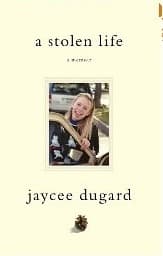
A Stolen Life cover
Archivist's Choice

A Stolen Life

Jaycee Dugard (2011)

Genre

Biography / Memoir

Reading Time

5-6 hours

Key Themes

See below

Track Your Reading

Sign in to track this book

Abducted at eleven, Jaycee Dugard's memoir recounts eighteen years living in a hidden backyard camp, raising two daughters fathered by her captor, and her difficult return to a world she barely knew.

Core Idea

A Stolen Life tells the story of Jaycee Dugard's eighteen-year abduction and captivity. It shows her strength in building a life and raising two daughters under extreme pressure. The book reveals the system's failures that allowed her disappearance, the complex ways she adapted psychologically to survive, and her ongoing struggle to regain identity and freedom after severe trauma. It highlights the human spirit's ability to endure and find purpose even in dehumanizing situations, while also showing the lasting impact of such an ordeal.
Reading time
5-6 hours
Difficulty
Medium
✓ Read this if...
You are interested in true crime from the victim's perspective, want to understand the psychological complexities of long-term captivity and resilience, or are looking for a powerful story of survival against overwhelming odds.
✗ Skip this if...
You are sensitive to detailed accounts of abduction and trauma, or prefer books with a focus on investigative journalism rather than personal memoir.

Core idea

The central argument and framework that powers the entire book.

A Stolen Life tells the story of Jaycee Dugard's eighteen-year abduction and captivity. It shows her strength in building a life and raising two daughters under extreme pressure. The book reveals the system's failures that allowed her disappearance, the complex ways she adapted psychologically to survive, and her ongoing struggle to regain identity and freedom after severe trauma. It highlights the human spirit's ability to endure and find purpose even in dehumanizing situations, while also showing the lasting impact of such an ordeal.

At a glance

Reading time

5-6 hours

Difficulty

Medium

Read this if...

You are interested in true crime from the victim's perspective, want to understand the psychological complexities of long-term captivity and resilience, or are looking for a powerful story of survival against overwhelming odds.

Skip this if...

You are sensitive to detailed accounts of abduction and trauma, or prefer books with a focus on investigative journalism rather than personal memoir.

Key Takeaways

1

The Power of Internal Resilience

How a child's mind adapts to unimaginable horror to survive.

Quote

I was just a little girl, but I knew I had to be strong. I had to survive for myself.

Jaycee's memoir shows a remarkable inner strength, a quality often seen in adults but clearly present in her as a child. From her abduction, she knew she had to survive. She separated the trauma to function in her terrible reality. This was not a conscious adult choice, but an innate drive to endure. She found ways to create small moments of normalcy and control, even if only in her mind. These were important for her psychological well-being. Her ability to keep a sense of self, even after losing her identity and freedom, shows the hu...

Supporting evidence

Jaycee's internal monologue throughout the book, detailing her efforts to educate herself, care for her daughters, and maintain a semblance of routine within the hidden backyard compound, despite the constant threat and psychological manipulation from Garrido.

Apply this

Recognize that resilience is not solely a learned trait but can be an inherent survival mechanism. In challenging situations, focus on finding small areas of control and maintaining a sense of purpose, however minimal, to preserve mental well-being.


resiliencesurvival-instinctpsychological-adaptation
2

The Stockholm Syndrome Paradox

Understanding the complex emotional bonds formed under duress.

Quote

I hated him, but he was all I had. He was my world, even if it was a terrible one.

Jaycee's story gives a raw look at the complexities of Stockholm Syndrome. She describes the strong emotional connection with her captor, Phillip Garrido, acknowledging the mixed feelings of fear, dependence, and even a strange affection that grew over nearly two decades. This is not romanticizing her abuser, but an honest picture of a mind trying to cope with complete powerlessness, where the captor becomes the only source of information, food, and perceived safety. Her story helps explain Stockholm Syndrome, showing it as a survival...

Supporting evidence

Her descriptions of moments where she felt a sense of 'normalcy' or even gratitude for Garrido's provision of basic needs, juxtaposed with her underlying terror and desire for freedom. Her struggle to reconcile these feelings even after her rescue.

Apply this

When evaluating victims of prolonged abuse, approach their emotional responses with empathy and understanding, recognizing the psychological defense mechanisms at play rather than judging their apparent 'loyalty' or 'affection' towards their abuser.

stockholm-syndrometrauma-bondingpsychological-manipulation
3

The Invisible Prison

How proximity and perceived security can mask extreme captivity.

Quote

We were right there, in his backyard, but no one ever saw us.

One of the most unsettling parts of Jaycee's abduction is how close her captivity was to the outside world. She was held in tents and sheds in Phillip Garrido's backyard, just feet from his house and neighbors, yet she went unnoticed for 18 years. This shows the idea of an 'invisible prison' — where the lack of an obvious, strong structure allows the captor a false sense of security and the captive an unimaginable level of isolation. It shows how easily extreme abuse can happen in plain sight, hidden by the everyday routines of suburb...

Supporting evidence

The detailed descriptions of the backyard compound, the fences, tarps, and soundproofing Garrido implemented, and the fact that he was a registered sex offender on parole, yet his property was never thoroughly inspected enough to uncover Jaycee.

Apply this

Be vigilant about unusual behaviors or inconsistencies in neighbors or acquaintances. Understand that danger can exist in seemingly 'safe' environments and that appearances can be profoundly deceiving. Question what is not seen as much as what is.

hidden-abusecoercive-controlbystander-effect
4

Motherhood as a Lifeline

The transformative power of caring for children in the darkest circumstances.

Quote

My daughters were my reason to keep going. They gave me a purpose.

Jaycee's experience of motherhood, though born from terrible events, became a deep source of strength and purpose. Raising her daughters while captive gave her a new identity beyond 'victim' — that of a protector and teacher. It shifted her focus from her own suffering to her children's needs, making her create a semblance of normal life, teaching them, nurturing them, and shielding them from the full brutality of their reality. This act of selfless care gave her a strong reason to survive and stay sane, turning what could have been a...

Supporting evidence

Her meticulous efforts to educate her daughters, teaching them to read and write, creating games, and attempting to instill a sense of 'normalcy' despite their isolated existence. Her constant vigilance to protect them from Garrido's more erratic behaviors.

Apply this

Recognize the inherent strength and purpose that can be found in caregiving roles, especially in times of personal crisis. Emphasize the importance of fostering a sense of responsibility and love for others as a powerful antidote to despair.

maternal-instinctpurpose-driven-lifehealing-through-care
5

The Lingering Scars of Freedom

The complex and often painful adjustment to life after prolonged captivity.

Quote

Freedom was overwhelming. It was everything I ever wanted, but it also felt like too much.

Jaycee's return to the 'real world' was not a simple happy reunion but a complex and challenging re-entry. Her memoir clearly shows how disorienting freedom was after 18 years of total control. Simple decisions, like choosing clothes or food, became overwhelming. She struggled with sensory overload, social interactions, and the huge pressure of public attention. This highlights that escaping captivity is only the first step; the real journey often involves navigating deep psychological and practical difficulties to rejoin a society th...

Supporting evidence

Her detailed accounts of feeling overwhelmed by everyday choices, her struggles with crowds and public spaces, and the difficulty of explaining her past to her daughters and the world.

Apply this

When encountering individuals who have experienced prolonged trauma or isolation, practice patience and empathy. Understand that their adjustment process will be unique and may involve significant struggles with seemingly simple aspects of daily life. Offer practical, non-judgmental support.

reintegration-traumapost-traumatic-stresssensory-overload
6

The Failure of the System

How systemic oversights allowed a predator to operate unchecked for decades.

Quote

He was on parole. How could they not have found us?

Jaycee's story clearly criticizes systemic failures. Phillip Garrido, a registered sex offender with a history of violent crime, was on parole during her entire 18 years of captivity. He was able to maintain an elaborate hidden compound in his backyard, father children with his captive, and avoid detection through many parole checks and neighbor complaints. This points to serious flaws in oversight, enforcement, and communication between agencies. This goes beyond individual mistakes; it suggests a wider breakdown in the protective sy...

Supporting evidence

Garrido's extensive criminal record, his parole status, the numerous visits by parole officers to his property (without ever discovering Jaycee), and the eventual discovery only due to an alert parole officer noticing his unusual behavior during a routine check.

Apply this

Advocate for stricter enforcement and more thorough oversight of parolees, especially those with a history of violent or sexual offenses. Support initiatives that improve inter-agency communication and training for law enforcement and social services to identify signs of hidden abuse.

systemic-failureparole-oversightlaw-enforcement-gaps
7

The Indelible Mark of Trauma

Trauma's deep impact on identity and the long road to self-reclamation.

Quote

A part of me will always be that little girl in the tent. But I am also so much more now.

Jaycee's memoir makes it clear that while she survived, the trauma of her captivity left a lasting mark on her identity. Her sense of self was deeply shaped by the years she spent as 'Jaycee, the captive.' She struggles with reclaiming the 'Jaycee' she was before, while combining the experiences that made her who she is now. This is not about 'getting over' trauma but learning to live with its effects, understanding how it shaped her view, her relationships, and her understanding of the world. Her journey is one of self-reclamation, a...

Supporting evidence

Her reflections on how she viewed the world, her initial difficulties connecting with her biological family, and her ongoing efforts to define her own life and identity separate from her captor.

Apply this

Understand that trauma survivors carry their experiences with them, and their journey of healing is a process of integration, not eradication. Support individuals in defining their own narrative and finding agency in their post-traumatic growth.

trauma-recoveryidentity-formationpost-traumatic-growth
8

The Unseen Victims: Nancy Garrido

Exploring the complicity and potential victimhood of the abductor's wife.

Quote

Nancy was there the whole time. She helped him. But sometimes, I felt sorry for her too.

Jaycee's account offers a nuanced, though disturbing, perspective on Nancy Garrido, Phillip's wife and accomplice. While clearly involved in the abduction and captivity, Jaycee sometimes hints at Nancy's own complex position within Phillip's manipulative control. Nancy was not just an enabler but also, in some ways, a victim of Phillip's psychological dominance. Her inability or unwillingness to intervene for 18 years, despite knowing about the horrific situation, speaks to the power of coercive control and how people can become trapp...

Supporting evidence

Jaycee's observations of Nancy's fear of Phillip, her subservience, and the moments where Nancy seemed to express a twisted form of care or regret, even while participating in the abuse.

Apply this

When analyzing cases of prolonged abuse, consider the full spectrum of relationships and power dynamics within the abusive environment. Recognize that complicity can sometimes stem from an individual's own victimhood under severe coercive control, without excusing their actions.

coercive-controlenablercomplex-victimhood
9

The Power of Voice and Narrative

Reclaiming agency through telling one's own story.

Quote

Writing this book was hard, but it was important. It was my story, in my own words.

Jaycee's decision to write her memoir in her own words, at age 30, is a strong act of reclaiming control over her story. For 18 years, her story was defined by her abductor, and after her rescue, it was largely told by the media and authorities. By writing 'A Stolen Life,' she takes ownership of her experiences, shaping her truth and sharing it on her terms. This act of speaking out is not just therapeutic; it is a strong statement of survival and empowerment. It shows how giving voice to one's trauma can change a victim into a surviv...

Supporting evidence

The very existence of the book, written by Jaycee herself, and her explicit statements within the text about the importance of telling her story accurately and personally.

Apply this

Encourage and support survivors of trauma in finding their voice, whether through writing, speaking, art, or other forms of expression. Recognize the therapeutic and empowering potential of narrative and personal storytelling.

narrative-therapyempowermentsurvivor-advocacy

Critical analysis

Notable Quotes

I was just a little girl, riding my bike to school. I had no idea my life was about to change forever.

Reflecting on the day of her abduction.

He didn't just steal my life; he stole my childhood, my family, my future.

Describing the full extent of the impact of her captor's actions.

The backyard was my world. It was small, but it was all I knew.

Describing the limited physical space she was confined to for years.

I learned to disappear within myself, to go to a place where he couldn't touch me.

Explaining a coping mechanism developed during her captivity.

My daughters were my reason for living, my reason for holding on.

Highlighting the motivation provided by her children during her ordeal.

Even in the darkest moments, a tiny flicker of hope remained.

Discussing her internal struggle to maintain hope.

I was a ghost in my own life, invisible to the world outside.

Reflecting on her forgotten existence during the years of captivity.

Freedom felt overwhelming, a vast, open space I wasn't sure how to navigate.

Describing her initial feelings upon being rescued.

The hardest part was learning to trust again, to believe that people could be good.

Discussing the challenges of reintegration into society.

My voice had been silenced for so long. Now it was time to speak.

Explaining her decision to write her memoir.

I am a survivor, not a victim. My story is about strength, not just suffering.

Asserting her identity and the message of her book.

Every day is a step forward, a new discovery in this life I am finally living.

Reflecting on her ongoing journey of healing and rediscovery.

To truly heal, you have to confront the darkness, not pretend it never happened.

Emphasizing the importance of facing trauma for recovery.

My daughters are thriving, and that is the greatest victory of all.

Expressing her joy and pride in her children's well-being.

Quiz

Test Your Knowledge

Ready to see how well you understood this book? Take our interactive quiz with 10 questions.

10
Questions
~5
Minutes
?
Best Score

Key Questions (FAQ)

'A Stolen Life' is Jaycee Dugard's memoir detailing her abduction at age eleven and her eighteen years in captivity. It covers her experiences, the birth of her two daughters during that time, and her feelings about her ordeal a year after her rescue.

About the author