BookBrief
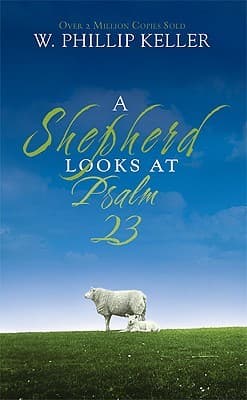
A Shepherd Looks at Psalm 23 cover
Archivist's Choice

A Shepherd Looks at Psalm 23

W. Phillip Keller (1970)

Genre

Spirituality

Reading Time

180 min

Key Themes

See below

Track Your Reading

Sign in to track this book

Join a shepherd to understand Psalm 23's practical wisdom, showing God's care through sheep's behavior.

Core Idea

W. Phillip Keller, using his long experience as a sheep farmer, says Psalm 23 is a practical guide to spiritual life. He believes we understand it best by looking at the close, dependent relationship between a sheep and its shepherd. He states that the psalm's promises of peace, provision, guidance, and protection are not just poetry but show the careful attention a good shepherd gives, much like God's detailed and loving care for His followers. Keller stresses that sheep rely completely on their shepherd for everything—food, water, protection from danger and sickness. Similarly, people depend on God for their spiritual health, purpose, and lasting security. The book explains each verse, showing how the real parts of sheep farming explain spiritual truths about God's care. It asks readers to trust and follow their Heavenly Shepherd.
Reading time
180 min
Difficulty
Easy
✓ Read this if...
You are seeking a deeper, more practical understanding of Psalm 23, appreciate an allegorical approach to scripture, or enjoy spiritual insights drawn from real-world analogies.
✗ Skip this if...
You prefer academic biblical analysis over devotional interpretation, are uncomfortable with strong anthropomorphic comparisons between humans and sheep, or find detailed analogies distracting.

Core idea

The central argument and framework that powers the entire book.

W. Phillip Keller, using his long experience as a sheep farmer, says Psalm 23 is a practical guide to spiritual life. He believes we understand it best by looking at the close, dependent relationship between a sheep and its shepherd. He states that the psalm's promises of peace, provision, guidance, and protection are not just poetry but show the careful attention a good shepherd gives, much like God's detailed and loving care for His followers. Keller stresses that sheep rely completely on their shepherd for everything—food, water, protection from danger and sickness. Similarly, people depend on God for their spiritual health, purpose, and lasting security. The book explains each verse, showing how the real parts of sheep farming explain spiritual truths about God's care. It asks readers to trust and follow their Heavenly Shepherd.

At a glance

Reading time

180 min

Difficulty

Easy

Read this if...

You are seeking a deeper, more practical understanding of Psalm 23, appreciate an allegorical approach to scripture, or enjoy spiritual insights drawn from real-world analogies.

Skip this if...

You prefer academic biblical analysis over devotional interpretation, are uncomfortable with strong anthropomorphic comparisons between humans and sheep, or find detailed analogies distracting.

Key Takeaways

1

Sheep Are Utterly Helpless

Recognizing our inherent vulnerability unlocks dependence on the Shepherd.

Quote

Sheep do not 'just take care of themselves' as some might suppose. They require more continuous, careful handling and a more detailed, intimate attention than any other class of livestock.

Keller, using decades as a sheep owner, shows how helpless sheep are. Unlike many animals, they cannot find their own food, fight off predators, or even stand up if they fall onto their backs. This inability to care for themselves shows humanity's spiritual state. We often pride ourselves on self-reliance, but Keller says true spiritual well-being comes from admitting our deep need for God's guidance and protection. To ignore this truth is to always 'be in want,' no matter how much we own, because the soul's deepest needs—peace, purpo...

Supporting evidence

Keller details various scenarios where sheep are entirely dependent: they cannot find good pasture without a shepherd, are prone to 'cast down' (lying on their backs, unable to get up, leading to death), and are defenseless against predators like wolves or even parasitic flies without intervention.

Apply this

Cultivate a daily practice of humility, consciously surrendering areas of control or anxiety to a higher power. Instead of striving harder when facing challenges, pause to acknowledge your limitations and invite divine assistance. This isn't passivity, but a recognition that true strength often comes from leaning on an external source.

vulnerabilitydependencespiritual-humility
2

The Shepherd's Presence is Peace

True contentment isn't about absence of trouble, but the presence of the Protector.

Quote

It is the presence of the shepherd that is the secret of the sheep's contentment.

Keller says the 'still waters' and 'green pastures' of Psalm 23 are not just pretty places but conditions the careful shepherd creates and keeps. Sheep are easily scared by fast water or dry land, and the shepherd's careful leading keeps them safe and fed. This shows a truth about human peace: it does not come from having no problems, but from feeling connected to a guiding, protecting presence. The shepherd's shadow, his voice, his nearness, calms the sheep. Similarly, our worries often go away not because things change, but because ...

Supporting evidence

Keller describes how sheep will not drink from turbulent water and are constantly wary. The shepherd must lead them to quiet pools or slow-moving streams. He also details how the shepherd must actively search for and prepare the best pastures, often moving the flock frequently.

Apply this

Practice mindfulness of the divine presence throughout your day. When anxiety arises, consciously acknowledge the feeling, then shift your focus to the idea of a 'shepherd' actively overseeing your situation. This can involve prayer, meditation, or simply a mental affirmation of guidance. Seek out 'still waters' in your daily routine – moments of quiet reflection and rest.

peacedivine-presencecontentment
3

Restoring the Soul: More Than Forgiveness

Spiritual restoration involves correcting internal and external imbalances, not just pardoning sin.

Quote

The phrase 'He restores my soul' means much more than just restoring us to fellowship after we have strayed. It has to do with the whole physical, mental, and spiritual well-being of the sheep.

Keller explains 'He restores my soul' as more than just forgiveness. For sheep, 'restoration' means the shepherd physically helping a fallen sheep, treating wounds, freeing them from tangles, or guiding them back from dangerous wandering. This complete view of restoration means our spiritual health is closely tied to our mental, emotional, and even physical states. When we are 'cast down' by sadness, 'wounded' by life's hurts, or 'wandering' in confusion, the Shepherd's restoration is not just spiritual cleaning; it is active help to ...

Supporting evidence

Keller details the life-threatening situation of a 'cast down' sheep, which can die if not quickly righted by the shepherd. He also describes the shepherd's role in treating injuries, protecting from parasites (like nasal flies), and guiding lost sheep back to the flock.

Apply this

Don't compartmentalize your 'spiritual life.' Recognize that your mental health, physical well-being, and emotional state are all part of your 'soul' that needs restoration. Actively seek spiritual input when you feel overwhelmed, despondent, or lost. Be open to the idea that 'restoration' might involve practical steps like seeking counsel, resting, or setting boundaries, not just prayer.

restorationwholenessspiritual-wellbeingholistic-health
4

Guidance on Right Paths

The Shepherd's leading is for our benefit, even when the path seems difficult or unclear.

Quote

The 'paths of righteousness' are simply the right paths, the best paths for the sheep to take.

Keller clarifies that 'paths of righteousness' are not abstract moral rules but practical, helpful routes for the sheep. The shepherd leads them along paths that keep them safe from predators, give them good food, and help them avoid poisonous plants or dangerous ground. This changes how we understand God's guidance: it is not about random rules, but about being led in ways that truly help us and make us thrive. Often, the 'right path' might not be the easiest or most obvious, but the shepherd's wisdom sees beyond what immediately app...

Supporting evidence

Keller describes the shepherd's intimate knowledge of the land, knowing where the best grass is, where dangerous ravines lie, and where predators might lurk. He recounts how sheep, left to themselves, will often graze on barren ground or wander into danger.

Apply this

When faced with decisions, consider not just the immediate gratification or ease, but what path aligns with long-term well-being and growth. Seek guidance from trusted sources (mentors, scripture, prayer) and be open to paths that might initially seem less appealing but are ultimately 'right' for your spiritual and personal health. Trust that 'detours' might be protection.

guidancedivine-willdiscernmentrighteousness
5

Facing the Valley of Shadows

Fear is overcome not by escaping darkness, but by the Shepherd's unwavering presence within it.

Quote

The valley of the shadow of death is not necessarily a place of physical death, but often a time of intense trial, deep despair, or overwhelming difficulty.

Keller reinterprets the 'valley of the shadow of death' not only as literal death but as any time of deep fear, uncertainty, or suffering. These are often steep, dark ravines or narrow passes where sheep are easily hurt or attacked. The main idea is that the shepherd does not stop the sheep from entering these valleys; instead, he goes with them through. This means faith does not promise a life without hardship, but a constant, comforting presence during it. The 'rod and staff' are tools for protection and guidance, not just symbols o...

Supporting evidence

Keller describes literal 'valleys of the shadow of death' as deep ravines or gorges in the Judean hills, often dark and perilous, where predators hide. He explains how the shepherd uses the rod to defend against wild animals and the staff to guide, rescue, and count the sheep.

Apply this

When facing a 'valley' of fear or difficulty, consciously remind yourself that you are not alone. Focus on the 'rod and staff' – the divine protection and guidance available to you. Instead of trying to escape the valley, lean into the presence of your Shepherd, trusting that this season, though dark, is temporary and part of a larger journey.

fearsufferingdivine-protectionperseverance
6

The Table Prepared: Abundance in Adversity

Blessings can be found and celebrated even in the presence of those who oppose us.

Quote

The table prepared for me in the presence of my enemies refers to the shepherd's careful preparation of high mountain pastures, often dangerous and exposed, where the sheep can feed in peace.

Keller interprets 'You prepare a table before me in the presence of my enemies' as the shepherd carefully preparing high mountain plateaus ('mesas' or 'tables') for grazing. These areas have rich food but are often open and dangerous, so the shepherd must scout, clear away poisonous weeds, and guard against predators. This image teaches that plenty and blessings do not depend on having no problems. Instead, true provision often happens within difficult situations, with the Shepherd watching. It shows God's control and care: even when ...

Supporting evidence

Keller recounts how shepherds would lead their flocks to high, flat 'tables' of land, meticulously clearing them of poisonous plants and ensuring water sources. He emphasizes the shepherd's constant vigilance against predators (enemies) in these exposed areas.

Apply this

Identify areas in your life where you feel 'surrounded by enemies' (e.g., difficult relationships, financial stress, health issues). Instead of despairing, actively look for how 'tables' of provision or peace are being prepared for you within those circumstances. Practice gratitude for these blessings, recognizing they are a testament to ongoing divine care, even amidst the struggle.

provisionblessingadversitydivine-care
7

Anointing: Protection from Within and Without

Divine anointing is a multifaceted protection against internal and external threats.

Quote

The anointing of the head with oil was not just a symbol; it was a practical measure to protect the sheep from parasites and flies, and to heal wounds.

Keller shows the practical, life-saving reason the shepherd puts oil on the sheep's head. This was not just a ritual; it was a real defense against harmful and often deadly nasal flies and other parasites that could make sheep sick or kill them. The oil also calmed irritation, healed small wounds, and kept pests away. This shows that God's 'anointing' is a deep act of care and protection, dealing with both seen and unseen threats. It means a complete defense: not only from outside dangers but also from inner irritations, worries, and ...

Supporting evidence

Keller vividly describes the torment of sheep afflicted by nasal flies, which lay eggs in their nostrils, causing intense irritation, head-banging, and eventual debilitation. The thick oil acts as a barrier and a soothing agent.

Apply this

Recognize that 'anointing' in your life can manifest as moments of peace, clarity, or protection from overwhelming thoughts or external pressures. Actively seek spiritual 'anointing' through prayer, meditation, or quiet reflection, asking for protection from negative influences, both internal and external. Be mindful of how divine intervention protects your mental and emotional well-being.

anointingprotectionspiritual-warfarehealing
8

Overflowing Cup: Abundance Beyond Expectation

The Shepherd's provision is not just sufficient, but generous and overflowing.

Quote

My cup overflows speaks of an abundance of life, not just bare sufficiency. It is a provision that is more than adequate, leaving no room for want.

Keller interprets 'my cup overflows' as a promise of abundant provision, much more than just surviving. For sheep, this means more than enough water and food, making sure they are not just fed, but thriving. This challenges a mindset of scarcity and shows the Shepherd's generous nature. It means a life lived in surplus—not necessarily material wealth, but much peace, joy, purpose, and spiritual food that extends into every part of life. The overflowing cup means the Shepherd's care is not limited; it is endless, making sure that 'I sh...

Supporting evidence

Keller contrasts a meager provision with the shepherd's goal of ensuring the sheep are robust and healthy, not just surviving. He implies that a good shepherd would always ensure ample water and pasture, so the sheep are never thirsty or hungry.

Apply this

Shift your perspective from scarcity to abundance. Instead of focusing on what you lack, acknowledge and be grateful for the 'overflow' in your life – whether it's relationships, opportunities, health, or inner peace. Cultivate a generous spirit, as abundance is often meant to be shared. Trust that your 'cup' is continually being refilled and overflowing.

abundancegenerosityprovisiongratitude
9

Goodness and Mercy: The Constant Companions

Divine kindness and steadfast love relentlessly pursue us throughout life.

Quote

Goodness and mercy are not just abstract concepts; they are the active, aggressive pursuit of God's benevolent care for us.

Keller stresses that 'goodness and mercy shall follow me all the days of my life' is not a passive statement, but an active, almost aggressive pursuit by the Shepherd. Just as a shepherd constantly watches over and helps his flock, God's goodness (kind care, provision) and mercy (compassion, forgiveness, help to prevent harm) are always working in our lives. They do not depend on what we do but are part of the Shepherd's character. This understanding brings deep security: no matter where we go or what mistakes we make, the Shepherd's ...

Supporting evidence

Keller describes how a shepherd will relentlessly search for a lost sheep, bring it back, and tend to its needs, demonstrating persistent goodness and mercy even when the sheep has strayed. He also highlights the consistent, daily care a shepherd provides.

Apply this

Recognize the 'goodness and mercy' actively at work in your life, even in difficult times. Look for instances of unexpected kindness, fortunate escapes, or moments of grace. Cultivate a sense of being pursued by divine love. This perspective can transform challenges into opportunities to witness divine intervention and deepen your trust in the Shepherd's unwavering commitment to you.

goodnessmercydivine-loveperseveranceeternal-security

Critical analysis

Notable Quotes

The Lord is my shepherd; I shall not want.

Opening line of Psalm 23, setting the theme of God's provision.

He makes me lie down in green pastures.

Describing how a shepherd ensures sheep rest in safe, nourishing places.

He leads me beside still waters.

Explaining how a shepherd guides sheep to calm water to prevent panic.

He restores my soul.

Drawing parallels to a shepherd reviving weary or injured sheep.

He leads me in paths of righteousness for his name's sake.

Comparing to a shepherd guiding sheep on safe, right trails.

Even though I walk through the valley of the shadow of death, I will fear no evil, for you are with me.

Reflecting on a shepherd's protection in dangerous valleys.

Your rod and your staff, they comfort me.

Explaining the shepherd's tools for defense and guidance.

You prepare a table before me in the presence of my enemies.

Describing how a shepherd prepares safe grazing areas despite threats.

You anoint my head with oil; my cup overflows.

Comparing to a shepherd applying oil to heal and protect sheep.

Surely goodness and mercy shall follow me all the days of my life.

Emphasizing the shepherd's constant, loyal care.

And I will dwell in the house of the Lord forever.

Concluding with the eternal security found in God's care.

A sheep's welfare depends almost entirely on the shepherd.

Keller's insight from his own shepherding experience.

The shepherd's presence alone is enough to reassure the sheep.

Highlighting how trust is built through constant companionship.

Green pastures are not automatic; they require the shepherd's labor.

Explaining the effort behind providing spiritual nourishment.

Quiz

Test Your Knowledge

Ready to see how well you understood this book? Take our interactive quiz with 10 questions.

10
Questions
~5
Minutes
?
Best Score

Key Questions (FAQ)

It's a spiritual classic where author W. Phillip Keller, drawing from his experience as a shepherd, provides unique insights into Psalm 23 by explaining the behavior and needs of sheep and how they parallel the relationship between God and believers.

About the author