BookBrief
A Room of One's Own cover
Archivist's Choice

A Room of One's Own

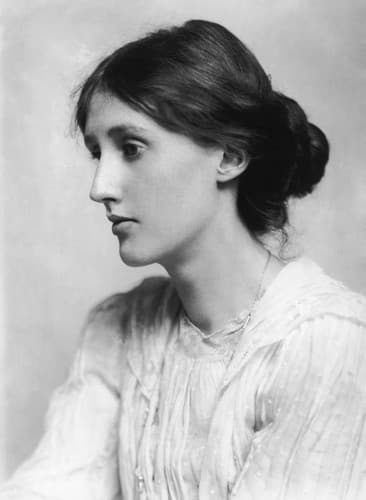
Virginia Woolf (1929)

Genre

Creativity / Philosophy

Reading Time

90 min

Key Themes

See below

Track Your Reading

Sign in to track this book

To write, a woman needs talent, a room of her own, and money, making a physical and mental space for her voice in a male-dominated world.

Core Idea

Virginia Woolf says that for women to create important work, they need two things: a private space ('a room of one's own') and money (a set annual income). She explains how historical and social structures, mostly controlled by men, have stopped women from getting these things, limiting their intellectual and artistic abilities. Using history, made-up stories, and observations, Woolf shows how much material conditions affect creativity. She argues that lacking these necessities has kept women from writing and has also made their portrayal in men's writing inaccurate. Her main point is a strong call for financial and spatial freedom as the base for women to fully participate in intellectual and artistic life. Woolf also states that the common male-centered view has created a biased reality where women's experiences are missing or wrong. She looks at the psychological cost of this social control, mentioning the hidden anger and constant struggle against outside expectations that use up women's creative energy. In the end, she supports a new way of writing that goes beyond gendered views, imagining an 'androgynous mind' as the best state for true art, free from identity politics and social pressures. Her work is an important feminist text, stressing that structural change, not just individual talent, helps women create.
Reading time
90 min
Difficulty
Medium
✓ Read this if...
You're interested in the historical and societal barriers to women's creativity, the material conditions necessary for artistic production, or foundational feminist thought.
✗ Skip this if...
You prefer practical self-help books over philosophical essays, or are looking for a light, plot-driven narrative.

Core idea

The central argument and framework that powers the entire book.

Virginia Woolf says that for women to create important work, they need two things: a private space ('a room of one's own') and money (a set annual income). She explains how historical and social structures, mostly controlled by men, have stopped women from getting these things, limiting their intellectual and artistic abilities. Using history, made-up stories, and observations, Woolf shows how much material conditions affect creativity. She argues that lacking these necessities has kept women from writing and has also made their portrayal in men's writing inaccurate. Her main point is a strong call for financial and spatial freedom as the base for women to fully participate in intellectual and artistic life.

Woolf also states that the common male-centered view has created a biased reality where women's experiences are missing or wrong. She looks at the psychological cost of this social control, mentioning the hidden anger and constant struggle against outside expectations that use up women's creative energy. In the end, she supports a new way of writing that goes beyond gendered views, imagining an 'androgynous mind' as the best state for true art, free from identity politics and social pressures. Her work is an important feminist text, stressing that structural change, not just individual talent, helps women create.

At a glance

Reading time

90 min

Difficulty

Medium

Read this if...

You're interested in the historical and societal barriers to women's creativity, the material conditions necessary for artistic production, or foundational feminist thought.

Skip this if...

You prefer practical self-help books over philosophical essays, or are looking for a light, plot-driven narrative.

Key Takeaways

1

The Necessity of 'A Room of One's Own'

Financial independence and personal space are fundamental for women's creative expression.

Quote

A woman must have money and a room of her own if she is to write fiction.

Woolf's main idea is practical: talent alone is not enough, especially for women. Creative genius needs specific material conditions. Historically, women lacked both the money and the physical space—a private room for thinking, reading, and writing without interruption—to develop their minds and art. This was not just about comfort; it was about whether sustained thought and creation were even possible. Without money, a woman depends on others, her time and energy spent on home tasks or earning a living. Without a private room, her th...

Supporting evidence

Woolf imagines Shakespeare's equally gifted sister, Judith, whose genius is thwarted by societal expectations, forced marriage, and a lack of education and opportunity, ultimately leading to her tragic end.

Apply this

Beyond literal rooms, women must actively carve out and protect their intellectual and emotional 'rooms' — spaces for uninterrupted thought, learning, and creative work, even if it means setting boundaries with family or professional obligations. Financial literacy and independence remain crucial tools for self-determination.
financial-independencecreative-freedomgender-inequality
2

The Burden of Historical Absence

The lack of female literary history profoundly impacts women's self-perception and creative output.

Quote

Indeed, I thought, when a woman tries to write, she is trying to write in a foreign language, or at any rate, in a language with which she has but an imperfect acquaintance.

Woolf notes the common absence of women in historical records and literary works. When she looks for women's lives and writings, she finds only pieces, stereotypes, or silence. This emptiness is not just an academic oversight; it affects aspiring female writers deeply. Without a line of female authors, thinkers, and characters who truly show their experiences, women lack examples for their own lives and models for their creative goals. They must navigate a literary world mostly shaped by male views, often feeling like outsiders or pio...

Supporting evidence

Woolf's extensive research in the British Museum library, where she finds countless books *about* women written by men, but almost no books *by* women or accurate portrayals of their inner lives.

Apply this

Actively seek out and champion the works of female authors, artists, and thinkers from all eras. Support initiatives that recover and promote forgotten or marginalized voices. Engage in critical reading that deconstructs gender biases in existing narratives.

literary-canongender-biashistorical-erasure
3

The Distorting Mirror of Male Perspective

Women in literature are often reflections of male anxieties and desires, not authentic human beings.

Quote

For women have sat all these centuries in kitchens and drawing-rooms, while men have gone to the wars, and sailed the seas, and written books. And women have been, as a result, 'mirrors' of men, reflecting men at twice their natural size.

Woolf sees that women, when they appear in literature, are often not shown as complex, independent people. Instead, they are idealized or evil figures who serve to highlight male characters or social ideals. They are 'mirrors' that reflect men's fears, desires, and self-perceptions, rather than independent beings with their own inner lives. This common distortion means that even when women are present, their portrayal often supports male-dominated norms, limiting what a woman can be or do. This creates a cycle: if women are only shown...

Supporting evidence

Woolf points out that while women are central to poetry and fiction, they are almost entirely absent from history books, despite their immense influence on men's lives and imaginations. She notes that women in fiction are 'splendid and miserable, beautiful and hideous, divine and degraded,' but rarely simply 'themselves.'

Apply this

Critically analyze how women are portrayed in media and literature. Challenge one-dimensional female characters and demand more nuanced, complex representations. Support works that offer authentic and diverse female perspectives.

gender-stereotypesrepresentation-in-mediapatriarchal-gaze
4

The Rage Beneath the Surface

Suppressed anger and frustration often fuel women's writing, sometimes to its detriment.

Quote

It is obvious that the values of women differ very often from the values which have been impressed upon them by the other sex. Yet it is the masculine values that prevail.

Woolf finds a deep current of anger and frustration in the works of early female writers. This makes sense, given the systemic problems they faced: lack of education, ridicule, financial dependence, and constant pressure to conform. This anger, though understandable, can sometimes warp their art, making it argumentative or overly defensive, instead of allowing for the full range of human experience. The struggle to express oneself honestly while fighting social limits often leads to a highly emotional tone. While powerful, this can so...

Supporting evidence

Woolf observes the 'intensity' and 'bitterness' in the novels of figures like Charlotte Brontë, suggesting that the author's personal grievances and the constraints of her era often seep into the narrative, making her characters sometimes 'too much of a woman and too little of a human being.'

Apply this

Recognize and validate the anger that can arise from systemic injustice, but also explore constructive ways to channel it into creative and impactful work. Support platforms that allow women to express their full range of emotions without judgment.

feminist-critiqueemotional-laborcreative-expression
5

Androgyny of the Creative Mind

True creative genius transcends gender, requiring a fusion of masculine and feminine qualities.

Quote

For it is when a man is a woman, or a woman a man, that the greatest work is done.

Woolf offers an interesting idea: the ideal creative mind is 'androgynous.' This does not mean biological sex, but a psychological state where qualities traditionally linked to masculinity and femininity are harmoniously mixed. A mind that is only 'masculine' or 'feminine' in its outlook, she suggests, is incomplete and limited. For a writer to create the best art, they must be able to use and combine both the rational and emotional, the objective and subjective, the assertive and receptive parts of human experience. When the mind is ...

Supporting evidence

Woolf cites Shakespeare as an example of an androgynous mind, capable of embodying both male and female characters with equal depth and understanding, without his ego or gender identity intruding on his art.

Apply this

Cultivate a balanced perspective in one's own thinking and creative endeavors, resisting rigid gender roles or expectations. Embrace complexity and nuance, allowing for the integration of diverse viewpoints and emotional ranges in one's work.

gender-identitycreative-psychologyholistic-thinking
6

The Power of the Unrecorded Life

The lives of ordinary women, though unwritten, form the bedrock of society and influence literature.

Quote

For masterpieces are not single and solitary births; they are the outcome of many years of thinking in common, of thinking by the body of the people, so that the experience of the mass is behind the single voice.

While regretting the lack of recorded female history, Woolf also recognizes the large, often unseen, contributions of many ordinary women. These are the mothers, sisters, wives, and workers whose lives, though not written down, provided the social structure and often the silent support for male achievements. She argues that even when a woman writes, she uses not only her individual talent but also the collective unconscious and experiences of generations of women. The 'body of the people'—especially the women within it—shapes the cond...

Supporting evidence

Woolf imagines the rich, complex inner lives of anonymous women throughout history, suggesting that their unwritten stories are as profound and impactful as those of historical figures, even if they remain unrecorded.

Apply this

Recognize and value the unpaid labor and often invisible contributions of women in all spheres. Engage in oral histories or community projects that bring unrecorded stories to light. Appreciate the collective cultural heritage that underpins individual achievements.

social-historycollective-consciousnessinvisible-labor
7

Breaking the Sentence, Breaking the Mould

Women writers must forge new literary forms to express their unique experiences.

Quote

The novel, it has been said, is the only form of art which women have invented.

Woolf suggests that traditional literary forms, mostly shaped by male experiences, may not always be enough for women to fully express their realities. She thinks the novel, with its flexibility and ability to explore inner lives and home spaces, was a more suitable form for early female writers. However, even within the novel, women might need to 'break the sentence'—to change established narrative structures and language rules—to truly capture the details of female consciousness. This is not about rejecting tradition entirely, but a...

Supporting evidence

Woolf critiques the limitations of existing literary forms for female writers, implying that the 'man's sentence' might not be suitable for conveying a woman's full experience, leading to stylistic innovations by women writers.

Apply this

Encourage experimentation with form and style in writing and other creative pursuits. Do not be constrained by conventional structures if they do not adequately serve the message. Seek out and appreciate works that challenge traditional narratives.

literary-innovationnarrative-structurefeminist-literature
8

The Long Road to Equality

Achieving true equality requires sustained effort over generations, not just individual triumphs.

Quote

It is useless to go to the British Museum and ask for a book upon woman, where you will find a complete record of all that she has done since the beginning of time.

Woolf acknowledges that achieving women's full participation in intellectual and creative life will be a long and hard journey, taking generations. She writes at a time when women have only recently gained access to higher education and the right to vote, but she understands these are just first steps. The deep-seated biases, lack of historical examples, and systemic barriers will take centuries to remove. She tells her audience not to be satisfied, but to continue the fight, not just for themselves but for the 'Judith Shakespeares' o...

Supporting evidence

Woolf's address to the young women of Girton and Newnham, implicitly entrusting them with the continuation of the work started by earlier generations, and emphasizing the need for persistent effort.

Apply this

Engage in long-term advocacy for gender equality in education, arts, and professional fields. Support mentorship and community building among women. Recognize that societal change is incremental and requires sustained commitment.

feminist-movementsocial-progressintergenerational-legacy
9

The Subjectivity of Truth

Knowledge is inherently shaped by the observer's experience and perspective.

Quote

When I came to write about women, I found myself in a difficulty. I had to consider whether my own experience was of any value.

Woolf subtly questions the idea of objective truth, especially about human experience. She begins her essay by admitting her own subjectivity, saying she can only offer an 'opinion' rather than a definite truth. This self-awareness is important, as she argues that men have historically presented their experiences as universal, thereby pushing women's realities aside. By focusing on her own perspective as a woman, Woolf shows that truth is always filtered through individual and group experiences. This does not lessen her insights but m...

Supporting evidence

Woolf explicitly states that she is offering 'one opinion upon an obscure subject,' and encourages her listeners to form their own conclusions, emphasizing the subjective nature of her observations.

Apply this

Practice critical self-reflection about one's own biases and perspectives. Actively seek out diverse viewpoints to broaden understanding. Recognize that 'universal' truths often reflect a dominant group's experience and challenge them when necessary.

epistemologyfeminist-theorysubjectivity
10

Beyond the 'Woman' Question

True liberation allows one to transcend gender as the primary focus of one's art.

Quote

It is fatal for any one who writes to think of their sex. It is fatal to be a man or a woman pure and simple; one must be woman-manly or man-womanly.

While supporting women's rights and the need for their voices, Woolf also hopes that one day writers, regardless of their sex, can create without feeling the need to constantly address the 'woman question.' Her idea of the 'androgynous mind' is ultimately about going beyond the limits imposed by gender identity, allowing the artist to focus on the broader human condition. The current need to stress female experience is a correction, a necessary step in reclaiming a voice. But the final goal is a world where gender is no longer a barri...

Supporting evidence

Woolf suggests that while it's currently necessary for women to write about women's experiences, the ideal future involves a mind that is 'naturally and spontaneously creative,' unhindered by the consciousness of one's sex.

Apply this

Strive for a nuanced understanding of identity that moves beyond binary gender definitions. Support art that explores universal human themes while also acknowledging and celebrating diverse perspectives. Aim for a future where one's identity doesn't limit artistic or intellectual pursuits.

post-feminismhuman-conditionartistic-freedom

Critical analysis

Notable Quotes

A woman must have money and a room of her own if she is to write fiction.

The central thesis of the book, arguing for women's independence and resources to pursue creative work.

One cannot think well, love well, sleep well, if one has not dined well.

Woolf emphasizes the importance of material conditions for intellectual and emotional well-being.

Lock up your libraries if you like; but there is no gate, no lock, no bolt that you can set upon the freedom of my mind.

A defiant statement on intellectual freedom and resistance against oppression.

For masterpieces are not single and solitary births; they are the outcome of many years of thinking in common, of thinking by the body of the people, so that the experience of the mass is behind the single voice.

Reflecting on how great works emerge from collective cultural and social contexts.

It is in our idleness, in our dreams, that the submerged truth sometimes comes to the top.

Woolf suggests that creativity and insight often arise during moments of leisure and reflection.

The history of men's opposition to women's emancipation is more interesting perhaps than the story of that emancipation itself.

A critical observation on the dynamics of gender struggle and historical resistance.

Fiction is like a spider's web, attached ever so lightly perhaps, but still attached to life at all four corners.

A metaphor describing how literature is connected to and reflects real-life experiences.

I would venture to guess that Anon, who wrote so many poems without signing them, was often a woman.

Speculating on the anonymous contributions of women to literature throughout history.

The beauty of the world which is so soon to perish, has two edges, one of laughter, one of anguish, cutting the heart asunder.

A poetic reflection on the dual nature of beauty and human experience.

Women have served all these centuries as looking-glasses possessing the magic and delicious power of reflecting the figure of man at twice its natural size.

Critiquing how women have been used to bolster male ego and status in society.

So long as you write what you wish to write, that is all that matters; and whether it matters for ages or only for hours, nobody can say.

Encouraging authenticity and personal expression in writing, regardless of external validation.

The human frame being what it is, heart, body and brain all mixed together, and not contained in separate compartments as they will be no doubt in another million years or so, a good dinner is of great importance to good talk.

Highlighting the interconnectedness of physical and intellectual experiences in social interaction.

When, however, one reads of a witch being ducked, of a woman possessed by devils, of a wise woman selling herbs, or even of a very remarkable man who had a mother, then I think we are on the track of a lost novelist, a suppressed poet, of some mute and inglorious Jane Austen.

Imagining the lost literary potential of women throughout history due to oppression.

For it is a perennial puzzle why no woman wrote a word of that extraordinary literature when every other man, it seemed, was capable of song or sonnet.

Questioning the historical absence of women in literature, linking it to social constraints.

Quiz

Test Your Knowledge

Ready to see how well you understood this book? Take our interactive quiz with 10 questions.

10
Questions
~5
Minutes
?
Best Score

Key Questions (FAQ)

A Room of One's Own is Virginia Woolf's extended essay arguing that women need both literal space (a room of their own) and financial independence (500 pounds a year) to write fiction successfully. Through a fictional narrator, Woolf explores women's historical exclusion from literature and the conditions necessary for creative expression.

About the author

Virginia Woolf

Adeline Virginia Woolf was an English writer. She is considered one of the most important modernist 20th-century authors and a pioneer in the use of stream of consciousness as a narrative device.