BookBrief
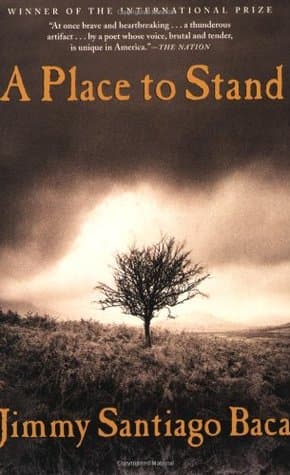
A Place to Stand cover
Archivist's Choice

A Place to Stand

Jimmy Santiago Baca (2001)

Genre

Biography / Memoir

Reading Time

6-8 hours

Key Themes

See below

Track Your Reading

Sign in to track this book

From a maximum-security prison, Jimmy Santiago Baca builds hope and poetic strength, turning despair into an example of human endurance.

Core Idea

Jimmy Santiago Baca's "A Place to Stand" is a raw memoir about his change from an illiterate, violent young man jailed for drug dealing to a celebrated poet. The book shows that even in dehumanizing systems, people can find their voice and a path to a better life through self-discovery, literature, and unexpected kindness. Baca shows how reading and writing became his way to survive, helping him move past the harsh realities of prison life, face his past troubles, and get back his identity and humanity. He argues that art, especially poetry, is not just an escape but a tool for resistance, self-expression, and making a new self against difficult odds. The memoir states that while the prison system's problems are significant, individual acts of courage, seeking knowledge, and making real connections can create a "place to stand" even in the worst places. Baca's story shows how much reading affects personal freedom and how much people can change when they use language to engage with the world. This offers a strong example of human strength and how writing can help people improve their lives.
Reading time
6-8 hours
Difficulty
Medium
✓ Read this if...
You are interested in powerful memoirs of transformation, the redemptive power of literature, or the human spirit's resilience in the face of extreme adversity and systemic injustice. This book is for those who appreciate raw, honest storytelling about finding purpose and voice in the most unlikely places.
✗ Skip this if...
You prefer light-hearted narratives or are sensitive to graphic descriptions of violence, prison life, and personal trauma. The book can be intense and emotionally challenging, focusing on the dark realities of incarceration and a difficult past.

Core idea

The central argument and framework that powers the entire book.

Jimmy Santiago Baca's "A Place to Stand" is a raw memoir about his change from an illiterate, violent young man jailed for drug dealing to a celebrated poet. The book shows that even in dehumanizing systems, people can find their voice and a path to a better life through self-discovery, literature, and unexpected kindness. Baca shows how reading and writing became his way to survive, helping him move past the harsh realities of prison life, face his past troubles, and get back his identity and humanity. He argues that art, especially poetry, is not just an escape but a tool for resistance, self-expression, and making a new self against difficult odds.

The memoir states that while the prison system's problems are significant, individual acts of courage, seeking knowledge, and making real connections can create a "place to stand" even in the worst places. Baca's story shows how much reading affects personal freedom and how much people can change when they use language to engage with the world. This offers a strong example of human strength and how writing can help people improve their lives.

At a glance

Reading time

6-8 hours

Difficulty

Medium

Read this if...

You are interested in powerful memoirs of transformation, the redemptive power of literature, or the human spirit's resilience in the face of extreme adversity and systemic injustice. This book is for those who appreciate raw, honest storytelling about finding purpose and voice in the most unlikely places.

Skip this if...

You prefer light-hearted narratives or are sensitive to graphic descriptions of violence, prison life, and personal trauma. The book can be intense and emotionally challenging, focusing on the dark realities of incarceration and a difficult past.

Key Takeaways

1

Finding Voice in the Void

Literacy as a tool for survival and self-discovery in the most desolate environments.

Quote

I was a criminal, a drug addict, a street person, an animal. I had been called all those things. But when I read, I was none of those. I was myself.

Baca's memoir shows how learning to read and write changed his life from one of despair and violence to one of self-awareness and purpose. He was illiterate at first, but his journey to reading and writing in prison was about getting his humanity back. Words protected him from the dehumanizing forces of prison, letting him deal with trauma, express his pain, and imagine a future beyond bars. This intellectual and emotional freedom shows the power of education, especially for those without a voice, proving that the mind can go beyond p...

Supporting evidence

Baca describes teaching himself to read by painstakingly sounding out words from a dictionary and later, how his first attempts at writing poetry became a way to communicate his inner world, a world previously inaccessible to him and others.

Apply this

Support literacy programs for incarcerated individuals, recognizing that education is a fundamental human right and a powerful tool for rehabilitation and reintegration. Engage in personal writing or journaling to process difficult emotions and develop a stronger sense of self.

literacy-incarcerationself-discoveryrehabilitation
2

The Brutality of the System

A stark look at the dehumanizing conditions and systemic violence within maximum-security prisons.

Quote

The guards hated us, and we hated them. It was a war, every day, every minute.

Baca directly describes the constant brutality, racial tensions, and psychological battles in maximum-security prisons. His story reveals not only the physical violence from inmates and guards but also how the system takes away people's dignity, control, and hope. The ongoing threat of violence, the unfair rules, the lack of real help, and the deep isolation create an environment meant to break people. This point strongly criticizes prison systems that focus on punishment over reform, often continuing cycles of violence and despair in...

Supporting evidence

Baca recounts numerous instances of guard brutality, solitary confinement, and the constant threat of stabbings and fights among inmates, often fueled by racial divisions enforced by the prison structure.

Apply this

Advocate for prison reform, focusing on humane treatment, rehabilitation programs, and addressing systemic issues that contribute to violence and recidivism. Educate oneself on the realities of incarceration beyond media portrayals.

prison-reformsystemic-violencedehumanization
3

Brotherhood in Adversity

Unexpected bonds forged in the crucible of shared suffering and mutual support.

Quote

In that place, where everything was taken from us, the only thing we had left was each other.

Despite the widespread violence and mistrust, Baca's memoir shows the deep and often surprising bonds of friendship that formed among some inmates. These relationships, born from shared suffering and a great need for connection, gave important emotional support, protection, and even intellectual stimulation. Whether sharing food, knowledge, or simply understanding, these connections offered a vital contrast to the dehumanizing forces of the prison. This shows the human need for community and solidarity, even in the worst places, and h...

Supporting evidence

Baca describes learning from older, wiser inmates, sharing books and stories, and forming alliances that offered a measure of safety and camaraderie against both other inmates and the guards.

Apply this

Seek out and nurture supportive communities in your own life, recognizing the profound impact of shared experiences and mutual aid. Offer support to those facing adversity, understanding the power of human connection.

solidarityhuman-connectionshared-suffering
4

Poetry as Resistance

Artistic expression as a powerful act of defiance and a pathway to freedom.

Quote

My words were my weapons, my armor, my wings. They were the only things no one could take from me.

Baca's journey into poetry is not just a personal interest; it is an act of resistance against a system designed to silence and erase individuality. In a world where inmates are numbers, his poems were a statement of his unique identity, his pain, and his hopes. Writing, often done in secret and in harsh conditions, was a direct challenge to the authority that tried to control every part of his life. This shows how art, in its purest form, can be a revolutionary force, allowing people to overcome their circumstances and assert their h...

Supporting evidence

Baca details writing poems on scraps of paper, sometimes even toilet paper, and how the act of creating poetry became his primary means of self-expression and mental escape, often leading to confrontations with guards who saw it as insubordination.

Apply this

Engage in creative expression (writing, art, music) as a means of processing emotions, asserting individuality, and finding personal freedom, especially during challenging times. Support programs that bring arts into correctional facilities.

artistic-expressionresistancepersonal-freedom
5

The Weight of the Past

How childhood trauma and societal neglect contribute to cycles of incarceration.

Quote

I was born into a world that didn't want me, and I spent most of my life proving them right.

Baca's memoir suggests that his path to prison was not only due to individual choices but was deeply shaped by a childhood with abandonment, poverty, and systemic neglect. Growing up an orphan, experiencing abuse, and lacking stable support, he was led into a life of crime and drug use. This story challenges the simple view of crime, instead presenting a compelling argument for understanding the complex connection between personal history, societal failures, and the criminal justice system. It asks readers to consider the root causes ...

Supporting evidence

Baca frequently revisits memories of his abandonment by his parents, his time in orphanages and juvenile detention centers, and the lack of guidance that led him to the streets and drugs at a young age.

Apply this

Advocate for policies that address childhood poverty, provide support for at-risk youth, and invest in mental health services and educational opportunities to break cycles of intergenerational trauma and incarceration.

childhood-traumasystemic-neglectroot-causes-crime
6

Redemption Through Self-Transformation

The arduous and deeply personal journey of rebuilding oneself from within.

Quote

I had to kill the man I was to become the man I was meant to be.

More than a survival story, 'A Place to Stand' is a story of self-redemption. Baca's change is not a sudden moment but a hard, slow process driven by his commitment to reading, poetry, and constant self-reflection. He faces his past actions, his anger, and his self-destructive habits, choosing to create a new identity based on creativity and self-worth. This redemption is hard-won, showing that real change needs great personal effort, accountability, and a willingness to face one's deepest flaws. It is an example of the human ability ...

Supporting evidence

Baca details his internal struggles with rage and despair, his efforts to understand his own motivations, and the slow, painful process of channeling his intense emotions into his writing rather than into violence.

Apply this

Embrace personal growth and self-reflection as continuous processes. Recognize that transformation is often difficult and requires sustained effort, but the rewards of self-awareness and positive change are profound.

self-redemptionpersonal-growthtransformation
7

The Power of a Single Ally

How one person's belief can ignite a spark of hope and change a trajectory.

Quote

He saw something in me that no one else had ever bothered to look for.

Amidst the despair of prison, Baca tells of the important role played by a few people — most notably a fellow inmate and later, a supportive teacher — who saw his potential and encouraged his writing. These allies, though few, offered important validation and guidance, giving him a lifeline that helped him believe in a future beyond prison. Their belief in him, when he often did not believe in himself, shows the power of mentorship and how much even one kind person can affect another's life, especially for those in marginalized or hop...

Supporting evidence

Baca describes how a particular inmate shared books with him and encouraged him to write, and later, the support he received from a prison teacher who helped him submit his poems for publication.

Apply this

Be a mentor or ally to someone in need, offering encouragement, belief, and practical support. Recognize the ripple effect of kindness and the importance of fostering potential in others.

mentorshipempathysupport-systems
8

Beyond the Walls: Reentry Challenges

The continued struggle for acceptance and integration after release from prison.

Quote

Leaving prison was like being born again, but into a world that still saw me as a ghost of my past.

While the memoir mainly focuses on his time inside, Baca touches on the great difficulties of returning to society. Even with new literacy and a strong poetic voice, the stigma of his past, the lack of opportunities, and society's prejudice against ex-convicts bring new big challenges. This shows that release from prison is not the end of the struggle, but often the beginning of another. It makes readers think about society's role in helping successful reintegration, rather than creating constant barriers that push people back into cy...

Supporting evidence

Baca alludes to the struggle to find employment, housing, and general acceptance after his release, despite his literary achievements, due to his criminal record.

Apply this

Advocate for policies that support successful reentry, such as fair chance hiring, housing assistance, and mental health services for formerly incarcerated individuals. Challenge personal biases against ex-offenders.

reentry-challengesstigmasocietal-prejudice
9

The Healing Power of Storytelling

Sharing one's narrative as a path to understanding, empathy, and collective healing.

Quote

My story was not just my own; it was the story of so many others who had been forgotten.

Baca's choice to write and publish his memoir is an act of great courage and generosity. By sharing his difficult experiences with honesty, he not only heals his own wounds but also gives a voice to many others who have suffered similar fates in the prison system. His story creates empathy in readers, challenging common ideas about 'criminals' and showing the complex humanity of those often ignored by society. Storytelling, therefore, becomes a strong tool for social justice, bridging differences and advocating for a more compassionat...

Supporting evidence

The very existence of 'A Place to Stand' as a published memoir serves as this evidence, demonstrating Baca's commitment to sharing his truth and advocating for others.

Apply this

Encourage and support diverse voices in literature and media, recognizing the power of personal narratives to foster empathy and drive social change. Share your own story or listen actively to others' stories.

storytellingempathy-buildingsocial-justice
10

Hope in Desperation

An enduring message that even in the darkest places, hope can persist and flourish.

Quote

Even in the deepest pits of hell, if you look hard enough, you can find a spark. And that spark can light a fire.

Ultimately, 'A Place to Stand' confirms the strong human spirit. Despite enduring great brutality, loss, and despair, Baca never completely gives up hope. His journey, fueled by the power of words, is an example of the strength of the human mind and heart. The memoir leaves readers with a strong message that even in the most desperate lives, hope is possible and necessary for survival and eventual success. This hope is not naive but earned through hardship, made strong by adversity, and is a guide for anyone facing difficult challenge...

Supporting evidence

Baca's ultimate release from prison, his success as a poet, and the very act of writing this memoir are all evidence of his enduring hope and spirit.

Apply this

Cultivate resilience and maintain hope in the face of personal challenges, recognizing that setbacks are not final. Seek inspiration from stories of perseverance and transformation.

resiliencehuman-spiritperseverance

Critical analysis

Notable Quotes

I will not let one second of my life be lived in a way that is not my own.

Reflecting on his past and future while in prison.

The prison walls could not contain the wildness of my spirit, only make it stronger.

Describing his resilience and inner strength despite incarceration.

Poetry was the only way I could make sense of the chaos, the only way I could speak truth to power.

Explaining the role of poetry in his life, especially during his time in prison.

Reading and writing became my daily bread, my water, my air. They kept me alive.

Highlighting the vital importance of literacy and creative expression for his survival.

My rage was a fire that could either consume me or forge me into something new.

Pondering the transformative potential of his anger and difficult experiences.

The streets taught me to be hard, but the books taught me to be human.

Contrasting the lessons learned from his rough upbringing with those gained from reading.

I had to create my own world, because the one I was given offered me nothing but despair.

Speaking about his need to build an internal world of hope and meaning.

Every word I wrote was a brick in the wall of my freedom.

Emphasizing how writing was a path to liberation, even from within prison.

There is a dignity in struggle, a strength forged in the fire of adversity.

Reflecting on the value and lessons derived from facing hardship.

I learned to speak through silence, to hear with my heart, to see with my soul.

Describing a deeper form of perception developed through his experiences.

The only way out was through, and I had to walk that path alone.

Acknowledging the personal journey of self-discovery and overcoming challenges.

My story is not just my own; it is the story of many who have been silenced.

Placing his personal narrative within a broader context of marginalized voices.

Hope is not a luxury; it is a necessity, the fuel that keeps us moving forward.

Underscoring the critical role of hope in enduring difficult circumstances.

I found my voice in the quiet corners of my cell, where the echoes of my past could not reach.

Describing the solitude of prison as a space for self-discovery and finding his poetic voice.

Quiz

Test Your Knowledge

Ready to see how well you understood this book? Take our interactive quiz with 10 questions.

10
Questions
~5
Minutes
?
Best Score

Key Questions (FAQ)

'A Place to Stand' is a powerful memoir by Jimmy Santiago Baca that chronicles his harrowing experiences inside maximum-security prisons. It details his journey of self-discovery, his struggle with illiteracy, and how he found solace and a path to redemption through poetry and writing while incarcerated.

About the author