BookBrief
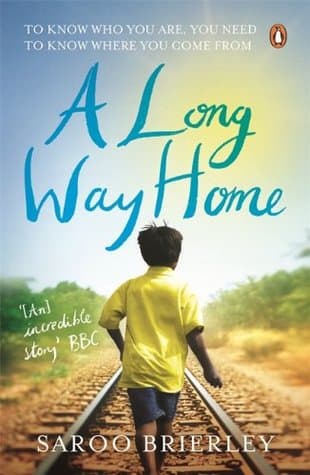
A Long Way Home cover
Archivist's Choice

A Long Way Home

Saroo Brierley (2013)

Genre

Biography / Memoir

Reading Time

360 min

Key Themes

See below

Track Your Reading

Sign in to track this book

A five-year-old boy's accidental train ride across India leads to a 25-year odyssey of survival and adoption, culminating in an extraordinary quest to find his birth family using Google Earth.

Core Idea

Saroo Brierley's "A Long Way Home" shows the lasting power of memory and the human desire for origin. The book tells Saroo's journey from a lost five-year-old in India to his reunion with his birth family 25 years later. His vivid, fragmented childhood memories and Google Earth helped him. Brierley argues that while adoption can change one's immediate family and environment, the thread of one's earliest experiences and the need to understand one's roots stays strong, guiding a lifelong search. He shows how the kindness of strangers and the love of both his adoptive and biological mothers highlight the human ability for connection and compassion. He says identity comes from both nurture and the lasting marks of one's past.
Reading time
360 min
Difficulty
Easy
✓ Read this if...
You are interested in true stories of survival, adoption, the power of memory, and how technology can facilitate extraordinary human connections, especially if you enjoy narratives that explore identity and belonging across cultures.
✗ Skip this if...
You prefer fictional narratives, find stories of lost children and separation too emotionally challenging, or are looking for a book with complex philosophical arguments rather than a straightforward personal account.

Core idea

The central argument and framework that powers the entire book.

Saroo Brierley's "A Long Way Home" shows the lasting power of memory and the human desire for origin. The book tells Saroo's journey from a lost five-year-old in India to his reunion with his birth family 25 years later. His vivid, fragmented childhood memories and Google Earth helped him. Brierley argues that while adoption can change one's immediate family and environment, the thread of one's earliest experiences and the need to understand one's roots stays strong, guiding a lifelong search. He shows how the kindness of strangers and the love of both his adoptive and biological mothers highlight the human ability for connection and compassion. He says identity comes from both nurture and the lasting marks of one's past.

At a glance

Reading time

360 min

Difficulty

Easy

Read this if...

You are interested in true stories of survival, adoption, the power of memory, and how technology can facilitate extraordinary human connections, especially if you enjoy narratives that explore identity and belonging across cultures.

Skip this if...

You prefer fictional narratives, find stories of lost children and separation too emotionally challenging, or are looking for a book with complex philosophical arguments rather than a straightforward personal account.

Key Takeaways

1

The Unbreakable Thread of Memory

Even fragmented childhood memories can guide an impossible quest.

Quote

My five-year-old brain was like a sponge, soaking up every detail, every fear, every moment of that terrifying journey. And it was those details, those scraps of memory, that became my compass years later.

Saroo's journey shows the strong resilience of early childhood memory, even under extreme stress. Despite being only five when separated from his family and experiencing trauma, he kept vivid, though often jumbled, images and feelings of his hometown, mother, and siblings. These fragments—the name of his village, the water tower, the train station, his mother's face—were not just memories; they were key details he put together decades later. This shows the brain's ability to store important survival information, even if it stays hidde...

Supporting evidence

Saroo's relentless mental reconstruction of his village's layout, the specific landmarks (water tower, bridge over a river, a specific type of railway crossing), and the numerical sequence of towns he passed through on the train. He spent hours drawing maps from memory and cross-referencing them with Google Earth.

Apply this

Value and document early childhood memories, especially in families with adopted children or those who have experienced displacement. These 'scraps' might seem insignificant, but they can hold deep personal meaning and provide crucial links to identity and origin later in life. Encourage children to share and draw their memories.

childhood-memorytrauma-resiliencecognitive-mapping
2

The Serendipity of Human Kindness

Survival in adversity often hinges on the unexpected generosity of strangers.

Quote

In the chaos and brutality of the streets, there were still moments of unexpected kindness, small acts of humanity that kept me from despair.

Saroo's survival on the streets of Kolkata as a five-year-old was not just because of his own cleverness, but also because of the helpful, though brief, kindness of strangers. From the woman who gave him food to the street children who shared what little they had, these short meetings offered temporary safety, food, and a bit of humanity in a harsh place. This shows how, even in the worst situations, human empathy and compassion can appear, offering help to those most in need. It reminds us that connection and helping others are basic...

Supporting evidence

The woman who gave him a banana and some water near the train station, the group of street children who took him in for a short period and shared their food and shelter, and the various individuals who eventually directed him to an orphanage, acting as informal guides and protectors.

Apply this

Cultivate a greater awareness of and responsiveness to those in need, particularly children, in our communities. Small acts of kindness can have profound, life-altering impacts on individuals facing extreme hardship. Support organizations that provide safe havens and assistance to vulnerable populations.

altruismstranger-kindnessurban-survival
3

Adoption as a Bridge, Not an Erasure

Adoption offers new life while preserving the foundational essence of identity.

Quote

My adoptive parents gave me a new life, a new home, and unconditional love. But they never tried to erase where I came from. They understood that part of me would always be Indian.

Saroo's time with the Brierley family in Tasmania shows the deep, yet complex, nature of international adoption. His adoptive parents gave him a stable, loving, and privileged upbringing, saving him from the poverty he faced in India. Importantly, they never tried to cut his ties to his Indian heritage. Instead, they created an environment that recognized and respected his origins, understanding his past was a part of who he was. This allowed Saroo to fit into his new life without feeling he had to leave his basic identity, showing ho...

Supporting evidence

His adoptive parents' consistent support for his eventual search, their lack of surprise or resentment when he expressed a desire to find his birth family, and their efforts to expose him to Indian culture (albeit limited in Tasmania) throughout his upbringing.

Apply this

For adoptive parents, actively acknowledge and celebrate a child's birth culture and heritage. Provide opportunities for connection to their origins, whether through stories, food, language, or eventually, a physical journey. This fosters a stronger, more integrated sense of self in the child.

international-adoptionidentity-formationcultural-heritage
4

Technology as a Catalyst for Connection

Digital tools can overcome vast geographical and temporal barriers to reunite families.

Quote

Google Earth wasn't just a map; it was a time machine, a window into my past, a tool that made the impossible seem within reach.

Saroo's use of Google Earth is the most known and central part of his story. His careful, almost obsessive, search of railway lines and geographical features through satellite images changed a seemingly impossible search into a solvable problem. This shows the power of modern technology, especially mapping, to connect huge distances and fill historical gaps in information. What was once an impossible task, needing luck or expensive investigations, became possible with a free, public tool. His story shows how digital tools can help peo...

Supporting evidence

Saroo's systematic tracing of railway lines outwards from Kolkata, estimating distances based on his childhood journey, and then meticulously scanning satellite images for familiar landmarks like the water tower and the specific 'T' shaped junction, eventually leading him to Khandwa.

Apply this

Embrace and explore the potential of readily available digital tools for personal research, historical inquiries, and family genealogy. Understand that technology can be a powerful instrument for discovery and connection, breaking down barriers that once seemed impregnable.

google-earthdigital-genealogygeospatial-technology
5

The Lingering Ache of the Unknown

Even a fulfilling life cannot fully silence the call of an unresolved past.

Quote

I had a wonderful life, a loving family, and every opportunity. Yet, there was always a part of me, a quiet ache, that wondered about the family I had lost.

Despite growing up in a loving, wealthy Australian family, Saroo felt a lasting sense of not being complete, a constant curiosity about where he came from. This 'ache' was not a sign of being ungrateful to his adoptive family, but a basic human need to understand his roots and deal with his past. The story shows that even when all physical and emotional needs are met, the psychological need to know where one comes from, and to resolve the trauma of separation, stays strong. It shows how identity is linked to origin and that an unsettl...

Supporting evidence

Saroo's consistent, though often suppressed, thoughts about his birth family throughout his adolescence and early adulthood, which intensified after he moved out of home and began to reflect more deeply on his past, culminating in his decision to actively search.

Apply this

Encourage open dialogue about family history and origins, especially for adopted individuals. Recognize that the desire to connect with one's biological roots is a natural and healthy part of identity formation, and support individuals in their search for answers and closure.

identity-crisisroot-seekingpsychological-closure
6

The Resilience of the Human Spirit

Against unimaginable odds, the will to survive and thrive can overcome profound trauma.

Quote

I was just a child, alone in a vast, indifferent city. But something inside me, a stubborn little spark, refused to give up.

Saroo's early life on the streets of Kolkata, where he faced hunger, homelessness, and constant danger, shows the incredible strength of the human spirit. As a five-year-old, he navigated a complex and dangerous environment, showing an innate ability to survive, adapt, and protect himself. This time in his life, though traumatic, built a deep inner strength that would help him years later in his search for his birth family. His story reminds us that even the most vulnerable people have a great ability to endure, adapt, and thrive, eve...

Supporting evidence

His ability to find food, shelter, and avoid predators on the streets of Kolkata for several weeks, his quick learning of survival tactics from older street children, and his eventual navigation to an orphanage, demonstrating an instinctive drive for safety and stability.

Apply this

Recognize and foster resilience in children by providing safe environments, teaching problem-solving skills, and offering consistent support. Support initiatives that help children in vulnerable situations develop coping mechanisms and access resources for survival and growth.

survival-instinctchildhood-traumahuman-resilience
7

The Power of a Name

A single, mispronounced word can be the key to unlocking a lost past.

Quote

The name 'Khandwa' was a whisper in my memory, a sound I'd mispronounced for years. But it was that sound, that single word, that held the truth.

A small detail—the wrong pronunciation of his hometown's name—became a key piece in Saroo's search. For years, he thought his village was 'Ginestlay,' a child's phonetic version of 'Ganesh Talai' or 'Khandwa.' This shows how important language and sounds are in memory and identity. The subtle change in sound, though at first a barrier, eventually became the key that opened his past when he recognized the correct pronunciation. It shows how personal and subjective our internal ideas of reality can be, and how a seemingly small language...

Supporting evidence

His initial inability to correctly articulate his village's name to authorities in India or his adoptive parents, and the eventual breakthrough when he connected his childhood memory of the sound to the correctly spelled 'Khandwa' on Google Earth.

Apply this

Be attentive to the nuances of language and pronunciation, especially when dealing with names and places from different cultural contexts. For individuals assisting those who have experienced displacement, encourage phonetic descriptions and cross-referencing to aid memory recall.

linguistic-memoryphoneticsidentity-linguistics
8

The Unconditional Love of a Mother (Times Two)

Love transcends biological ties, manifesting in both birth and adoptive mothers.

Quote

I had two mothers, both extraordinary women, who loved me fiercely in their own ways. One gave me life, the other gave me a future, and both shaped who I became.

Saroo's story shows the wide reach of maternal love, proving it is not limited by biology. His birth mother, dealing with poverty, suffered the pain of losing a child, yet her love remained a strong, almost spiritual, force in Saroo's memory. At the same time, his adoptive mother, Sue Brierley, gave him steady love, stability, and a future he could not have imagined. Both women, in their different roles and situations, showed deep maternal devotion. This dual love shows that the ability to nurture and care for a child is a deeply huma...

Supporting evidence

The profound emotional reunion with his birth mother, who had never given up hope, and the consistent, selfless support from his adoptive mother, who encouraged his search and celebrated his eventual reunion, demonstrating her unconditional love.

Apply this

Recognize and value the diverse forms of family and maternal relationships. Understand that love, care, and family bonds can be forged through various pathways, and that these connections are equally valid and powerful. Support blended families and adoptive parents.

maternal-loveadoptive-parentingfamily-diversity
9

The Weight of Survival Guilt

Thriving while others suffer can bring a complex burden of conscience.

Quote

I had escaped, I had thrived, while my birth family likely continued to struggle. That thought, that knowledge, was a heavy weight I carried.

Saroo's story touches on the often-unspoken burden of survivor's guilt. Having been saved from poverty and given a privileged life in Australia, he struggled with the knowledge that his birth family likely still faced hardship. This difference created a moral and emotional tension within him, even when he was happy. It shows a common psychological feeling where people who escape bad situations feel a sense of responsibility or guilt towards those they left behind. This complex emotion adds depth to his journey, showing that survival a...

Supporting evidence

His internal struggle and the driving force behind his search, which wasn't just for personal knowledge but also a deep-seated desire to ensure his birth family was alright and to potentially alleviate their suffering. The emotional impact of seeing their continued poverty upon reunion.

Apply this

Foster empathy and understanding for individuals who have experienced significant social or economic mobility. Recognize that their journey may involve complex emotional landscapes, including survivor's guilt, and offer support without judgment. Encourage giving back to communities of origin.

survivor-guiltsocial-disparitymoral-burden
10

The Universal Quest for Belonging

No matter where life takes us, the need for roots and connection remains fundamental.

Quote

Even after twenty-five years, and a life lived across the world, the call of my origins, the desire to truly belong to my first family, was undeniable.

At its heart, Saroo's story explores the human need for belonging and connection to one's roots. Despite fully adapting to Australian life and forming strong bonds with his adoptive family, a part of him longed for the basic connection to his birth family and the land where he came from. This search was not about choosing one family over another, but about bringing together all parts of his identity to feel complete. It shows that while circumstances can shape our lives, the basic human drive to understand our lineage, to find our 'pl...

Supporting evidence

His tireless dedication to the search, often at the expense of other aspects of his life, and the overwhelming emotional impact of his reunion with his birth mother and siblings, which brought a profound sense of peace and completeness.

Apply this

Support initiatives that help displaced individuals and refugees trace their origins and reconnect with family. Encourage personal exploration of ancestry and heritage, recognizing its importance in shaping individual and collective identity and fostering a sense of belonging.

sense-of-belongingidentity-rootshuman-connection

Critical analysis

Notable Quotes

I had to find my way back to the place where I was born, to the place where I had been lost.

Saroo reflecting on his deep-seated desire to find his birth family and village.

Every night I would lie in bed and close my eyes, trying to conjure up the images of my past, the faces of my mother and siblings.

Saroo's nightly routine of trying to remember details of his early life in India.

I was an expert at surviving, even at the age of five.

Saroo describing his resilience and resourcefulness after being separated from his family.

The memory of my mother's face was a beacon, guiding me through the darkness.

Saroo explaining how the faint memory of his mother motivated his search.

Sometimes, the smallest decisions can change your life forever.

Saroo reflecting on the seemingly insignificant decision to get on the train that took him away from his home.

The internet was my only hope, my only connection to a past I barely remembered.

Saroo explaining his reliance on Google Earth and the internet to find his village.

My adopted parents never tried to erase my past; they just wanted to give me a future.

Saroo appreciating the understanding and support of his adoptive parents.

Even though I had a wonderful life in Australia, there was always a part of me that felt incomplete.

Saroo describing his feelings of longing and an unfulfilled need to know his origins.

It was like trying to find a needle in a haystack, but I had to try.

Saroo describing the immense challenge of finding his village on Google Earth.

The moment I saw her, I knew. It was my mother.

Saroo's emotional reunion with his birth mother in India.

My story is a testament to the power of hope, and the unbreakable bonds of family.

Saroo summarizing the overarching themes of his incredible journey.

I was a ghost of my former self, haunted by memories I couldn't quite grasp.

Saroo describing his feeling of being disconnected from his past before his search.

Home isn't just a place; it's a feeling, a connection to who you are.

Saroo's realization about the true meaning of home after his journey.

The world is full of good people, and I was lucky enough to meet many of them.

Saroo reflecting on the kindness he encountered, both as a lost child and during his search.

Quiz

Test Your Knowledge

Ready to see how well you understood this book? Take our interactive quiz with 10 questions.

10
Questions
~5
Minutes
?
Best Score

Key Questions (FAQ)

'A Long Way Home' is the true memoir of Saroo Brierley, who, as a five-year-old boy in India, was separated from his family after accidentally boarding a train alone. The book chronicles his survival on the streets of Calcutta, his adoption by an Australian couple, and his eventual twenty-five-year journey to find his birth family using Google Earth.

About the author