BookBrief
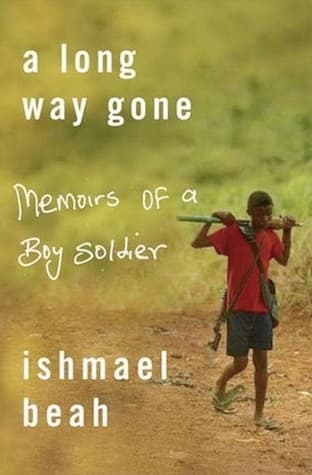
A Long Way Gone: Memoirs of a Boy Soldier cover
Archivist's Choice

A Long Way Gone: Memoirs of a Boy Soldier

Ishmael Beah (2007)

Genre

Biography / Memoir / History

Reading Time

12 Minutes

Key Themes

See below

Track Your Reading

Sign in to track this book

A twelve-year-old boy's innocence is shattered as he transforms from a refugee into a child soldier, forced to commit unspeakable acts in the brutal civil war of Sierra Leone.

Core Idea

Ishmael Beah's memoir offers a harrowing, first-person account of his experiences as a child soldier during the Sierra Leone Civil War. It vividly portrays the brutal realities of armed conflict, the psychological trauma inflicted upon children forced to commit atrocities, and the challenging, often painful, path to rehabilitation and rediscovering humanity. The book fundamentally argues that even after immense suffering and participation in violence, the human spirit can find a way to heal and advocate for peace, highlighting the critical role of compassion and international aid in the recovery process.
Difficulty
Medium

Core idea

The central argument and framework that powers the entire book.

Ishmael Beah's memoir offers a harrowing, first-person account of his experiences as a child soldier during the Sierra Leone Civil War. It vividly portrays the brutal realities of armed conflict, the psychological trauma inflicted upon children forced to commit atrocities, and the challenging, often painful, path to rehabilitation and rediscovering humanity. The book fundamentally argues that even after immense suffering and participation in violence, the human spirit can find a way to heal and advocate for peace, highlighting the critical role of compassion and international aid in the recovery process.

At a glance

Difficulty

Medium

Key Takeaways

1

The Brutal Erosion of Childhood Innocence

War transforms children into instruments of violence, stripping away their youth and humanity.

Quote

My childhood had gone by then, and in its place was a void that I didn't know how to fill.

Beah's memoir shows how the relentless violence of war systematically dismantles childhood. He recounts how, at just twelve years old, he was forced to flee his village, losing his family and experiencing horrors. This displacement and trauma led to his conscription. The book describes the transition from a boy who enjoyed rap music to one who wielded an AK-47, showing the psychological conditioning that normalizes brutality. This change is not a choice but a survival mechanism, forced upon children by circumstances beyond their contr...

Supporting evidence

Beah's personal account of fleeing his village at age 12, witnessing atrocities, and his subsequent forced recruitment into the Sierra Leonean army, where he was given drugs and a gun, exemplify this erosion.

Apply this

Understanding this process is crucial for designing rehabilitation programs for child soldiers that address deep-seated trauma and the fundamental loss of formative years, rather than just focusing on demilitarization.
2

The Psychological Warfare of Drugs and Propaganda

Armies exploit drugs and propaganda to desensitize child soldiers and foster unwavering loyalty.

Quote

We were all brainwashed, and we knew it, but we didn't care. We were soldiers, and we were proud of it.

A main point from Beah's narrative is how military forces deliberately use drugs and propaganda to manipulate child soldiers. Beah details being given 'brown brown' (cocaine mixed with gunpowder) and marijuana, which dulled his senses, suppressed fear, and made him more susceptible to orders. This chemical manipulation, coupled with constant indoctrination that demonized the enemy and glorified violence, created an effective fighting force. The psychological conditioning was so strong that even when moments of clarity arose, the child...

Supporting evidence

Beah's descriptions of being given drugs before battles and the relentless speeches by his superiors that dehumanized rebels and instilled a sense of duty and revenge.

Apply this

Policy makers must recognize the role of chemical and psychological manipulation in perpetuating child soldiery, advocating for strict international controls on drug trafficking in conflict zones and robust de-radicalization programs.

3

The Unseen Scars of Survival

Surviving war as a child soldier leaves profound, lifelong psychological and emotional damage.

Quote

My mind had been damaged, and I knew it. The only way to deal with my past was to completely shut it out, but it always crept back in.

Beah's most moving insight is the lasting psychological trauma that follows child soldiers, even after their escape or rescue. His transition from a killer back to a civilian is full of nightmares, flashbacks, and a deep sense of alienation. He struggles to rejoin society, finding it difficult to relate to peers who haven't experienced war. This shows that 'survival' is not just physical; it is a continuous battle against internal demons. The book conveys the weight of his past actions and the difficulty of forgiving himself, even tho...

Supporting evidence

Beah's struggles with PTSD, vivid nightmares, and his initial inability to articulate his experiences to others during his rehabilitation at UNICEF centers and later in New York.

Apply this

Support systems for former child soldiers must extend far beyond initial rehabilitation, providing long-term psychological counseling, educational opportunities, and social reintegration programs that acknowledge the depth of their trauma.

4

The Power of Compassion and Rehabilitation

Humanitarian intervention and genuine compassion are crucial for healing and reintegrating child soldiers.

Quote

The nurses and the staff at the rehabilitation center treated us like humans, not like monsters. That's what made all the difference.

Beah's journey from soldier to survivor is largely helped by the staff at the UNICEF rehabilitation center. He initially resists their efforts, displaying aggressive behavior and distrust. However, the consistent, patient, and empathetic approach of the aid workers, especially Nurse Esther, gradually breaks through his hardened exterior. Their refusal to judge him for his past actions, instead seeing the boy beneath the soldier, is important. This shows that empathy, consistent care, and a safe environment help child soldiers confront...

Supporting evidence

The detailed accounts of his time at the UNICEF rehabilitation center, particularly his interactions with Nurse Esther and the other staff who patiently worked with him despite his initial aggression.

Apply this

International aid organizations and governments should prioritize funding and training for rehabilitation programs that employ trauma-informed care, recognizing the importance of psychological support over immediate punishment.

5

Storytelling as a Path to Healing and Advocacy

Sharing one's narrative can be a powerful tool for personal healing and global awareness.

Quote

I told my story not for pity, but so that others might understand, and so that it might never happen again.

Beah's eventual ability to talk about his experiences, first to his new family in New York and then to the world, shows the healing power of storytelling. While initially painful, recounting his past allows him to process his trauma and regain a sense of control. His memoir acts as a piece of advocacy, giving voice to child soldiers worldwide. By sharing his personal hell, he forces readers to confront the realities of modern warfare and its impact on children, turning his personal tragedy into a call for change. This aspect of the bo...

Supporting evidence

Beah's journey to New York, his adoption by Laura Simms, and his subsequent work with the United Nations as an advocate for child soldiers, culminating in the publication of his memoir.

Apply this

Encourage and support platforms for survivors of conflict to share their stories, recognizing the dual benefits of personal catharsis and public education, which can drive policy change.

6

The Fragile Nature of Peace

Even after conflict, the scars of war make true peace and stability difficult to achieve.

Quote

The war was over, but it wasn't over for us. It would always be with us.

The memoir shows the fragility of peace in post-conflict societies. Even after Beah is demobilized and enters rehabilitation, the environment around him is still unstable. The lingering presence of weapons, the psychological wounds of former combatants, and the broken social fabric mean that renewed violence or social unrest is always possible. Beah's own nightmares and hyper-vigilance reflect the broader societal anxiety. This shows that merely ending hostilities is not enough; true peace requires long-term investment in social recon...

Supporting evidence

Beah's continued struggles with nightmares and flashbacks even after leaving the war zone, and the general instability and fear that pervade the rehabilitation centers and towns he inhabits post-conflict.

Apply this

International development and peacebuilding efforts must adopt a holistic, long-term approach that addresses the deep-seated psychological and social wounds of conflict, not just political settlements.

7

The Universal Language of Culture and Humanity

Shared cultural experiences, like music, can offer solace and connection amidst profound trauma.

Quote

Rap music was my way of escaping the reality of my life. It was a language that connected me to others, even when we had nothing else.

Beah often mentions rap music in his memoir, showing its importance as a source of comfort, identity, and connection. Before the war, it was a shared joy with his family; as a soldier, it offered a brief break from the horrors, and in rehabilitation, it became a way to connect with other boys and express himself. This thread of music shows how cultural elements can provide anchors to humanity and normalcy, even in inhumane conditions. It shows that despite attempts to dehumanize them, a core human desire for connection and expression ...

Supporting evidence

Beah's memories of rap music with his family, his and the other child soldiers' continued enjoyment of rap even in the army, and his use of rap to connect with peers in rehabilitation.

Apply this

In conflict zones and refugee camps, integrating cultural and artistic expression programs can provide vital psychological support, foster community, and help individuals reconnect with their pre-war identities.

8

The Indifference of the World

The global community often remains detached from the brutal realities faced by child soldiers.

Quote

My new friends have begun to suspect I haven’t told them the full story of my life. 'Why did you leave Sierra Leone?' 'Because there is a war.' 'You mean, you saw people running around with guns and shooting each other?' 'Yes, all the time.' 'Cool.'

The book's opening lines, where Beah recounts the casual reaction of his new American friends to his war experiences, highlight a global disconnect. This indifference, or inability to understand the scale of suffering, is a recurring theme. It shows how conflicts in distant lands, especially those involving children, often fail to register with the wider world beyond headlines. Beah's memoir directly challenges this detachment, forcing readers to confront the reality he lived. This observation questions the effectiveness of global hum...

Supporting evidence

The initial anecdote about his American friends' 'cool' reaction to his war experiences, and the general lack of in-depth understanding he encounters from those outside his direct experience.

Apply this

Educational institutions and media outlets have a responsibility to foster greater global empathy and understanding of complex humanitarian crises, moving beyond superficial reporting to highlight personal narratives.

9

The Cycle of Violence and Revenge

War perpetuates a vicious cycle where victims become perpetrators, driven by trauma and a desire for retribution.

Quote

We were fighting for revenge, for our families, for our country. That's what they told us, and we believed it.

Beah's experience shows how violence can fuel a destructive cycle. Having witnessed his family's potential demise and endured displacement, he is then manipulated into seeking revenge as a soldier. The military exploits this grief and anger, channeling it into a justification for atrocities. This illustrates that war doesn't just create victims; it often forces them into the role of perpetrators, blurring moral lines and making true reconciliation difficult. The book suggests that breaking this cycle requires addressing the root cause...

Supporting evidence

Beah's initial motivation to join the army after losing his family, and the constant indoctrination by his commanders that framed their actions as justified revenge against the rebels.

Apply this

Conflict resolution strategies must incorporate robust restorative justice programs and trauma-informed interventions to break the cycle of violence and foster forgiveness rather than perpetuating retribution.

10

The Enduring Hope for Humanity

Despite unimaginable horrors, the human spirit's capacity for resilience and hope can endure.

Quote

Even in the midst of all the chaos, there was still a part of me that believed in something good, something beautiful.

Despite the difficult narrative of violence and loss, Beah's memoir ultimately has a strong sense of resilience and hope. His survival, his ability to heal, and his advocacy work show the human spirit's capacity to overcome adversity. The small acts of kindness he encounters — from strangers who offer food to the rehabilitation staff — are rays of light in an otherwise dark world. The book doesn't offer easy answers, but it does leave the reader with an appreciation for the human ability to find meaning and purpose even after experien...

Supporting evidence

Beah's eventual ability to form new relationships, pursue education, and become an advocate, despite his past, showcases his remarkable resilience and the power of external support.

Apply this

Foster environments that nurture resilience by providing access to education, community support, and opportunities for meaningful engagement, especially for young people in vulnerable situations.

Critical analysis

Notable Quotes

Quiz

Test Your Knowledge

Ready to see how well you understood this book? Take our interactive quiz with 10 questions.

10
Questions
~5
Minutes
?
Best Score

Key Questions (FAQ)

'A Long Way Gone: Memoirs of a Boy Soldier' is the true story of Ishmael Beah's experience as a child soldier in Sierra Leone. It recounts his journey from a normal childhood to fleeing violence, being recruited into the army, and his eventual escape from that life.

About the author