BookBrief
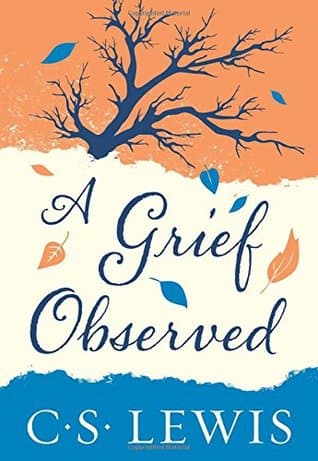
A Grief Observed cover
Archivist's Choice

A Grief Observed

C.S. Lewis

Genre

Biography / Memoir / Spirituality / Philosophy

Reading Time

90 min

Key Themes

See below

Track Your Reading

Sign in to track this book

After his wife's death, C.S. Lewis struggles with his faith, questioning God and the nature of love and loss with honesty.

Core Idea

C.S. Lewis, after his wife H. died, writes about the experience of grief. He questions common ideas about faith, love, and God. He thinks about God's apparent absence and cruelty, how his intellectual beliefs were broken, and the confusion that comes with losing someone. Lewis concludes that true faith can include doubt and sadness. He also finds that true love, even after death, changes how one understands reality, God, and oneself, leading to a difficult acceptance of life's challenges.
Reading time
90 min
Difficulty
Medium
✓ Read this if...
You are experiencing profound grief, grappling with spiritual doubt in the face of loss, or seeking a raw, honest, and intellectually rigorous exploration of bereavement's impact on faith and identity.
✗ Skip this if...
You are looking for a comforting or prescriptive guide to grief recovery, prefer a strictly optimistic spiritual perspective, or are sensitive to intense expressions of doubt and despair.

Core idea

The central argument and framework that powers the entire book.

C.S. Lewis, after his wife H. died, writes about the experience of grief. He questions common ideas about faith, love, and God. He thinks about God's apparent absence and cruelty, how his intellectual beliefs were broken, and the confusion that comes with losing someone. Lewis concludes that true faith can include doubt and sadness. He also finds that true love, even after death, changes how one understands reality, God, and oneself, leading to a difficult acceptance of life's challenges.

At a glance

Reading time

90 min

Difficulty

Medium

Read this if...

You are experiencing profound grief, grappling with spiritual doubt in the face of loss, or seeking a raw, honest, and intellectually rigorous exploration of bereavement's impact on faith and identity.

Skip this if...

You are looking for a comforting or prescriptive guide to grief recovery, prefer a strictly optimistic spiritual perspective, or are sensitive to intense expressions of doubt and despair.

Key Takeaways

1

Grief's Assault on Faith

Profound loss can shatter even the most robust spiritual convictions.

Quote

The terrible thing is that a perfectly good God is in the dock. When the punch comes, it's not a blow from God, but a blow from reality itself, against which God seems to have no defense.

Lewis, a Christian writer, found his basic beliefs about God's goodness and power tested by his wife's death. He says God seemed 'absent' or 'indifferent' in his suffering, wondering if his earlier faith was just a 'house of cards.' This is not a rejection of God, but an honest look at the difference between religious belief and real-life pain. The book shows that intellectual agreement with faith is different from the strong reality of pain, which can show how fragile even strong spiritual beliefs are. His 'yelling' and 'kicking at G...

Supporting evidence

Lewis's questioning if his faith was 'a sort of spiritual insurance policy' against pain, or if God was 'like a dentist' who inflicts pain for good, but whose 'goodness' is only visible in retrospect. He describes feeling God's 'door slammed in my face' during prayer.

Apply this

Allow space for doubt and anger in your own spiritual journey during times of intense suffering. Recognize that questioning is not necessarily a loss of faith, but an authentic engagement with the mystery of suffering and the nature of God. Don't suppress 'unacceptable' emotions; they are part of a healthy grieving process.


theodicydark-night-of-the-soulspiritual-crisis
2

The Brutality of Bereavement

Grief is a violent, disorienting, and profoundly isolating experience.

Quote

No one ever told me that grief felt so like fear. I am not afraid, but the sensation is like being afraid. The same fluttering in the stomach, the same restlessness, the yawning. I keep on swallowing.

Lewis describes the physical and mental pain of grief, comparing it to a 'harrow' from which there is no escape. He says the experience is a constant state of unease, a constant worry that affects every moment, blurring the lines between being awake and asleep. The 'mad midnight moments' are not just emotional outbursts but a basic disruption of his reality. He notes the unexpected feeling of fear, physical symptoms like anxiety, and the deep loneliness that comes when others, no matter how well-meaning, cannot truly understand his in...

Supporting evidence

His description of grief feeling 'like living in a world of glass,' where he can see others but cannot truly connect, and his observation that 'indecision and self-pity assailed Lewis.'

Apply this

Be gentle with yourself and others experiencing grief. Understand that it's not just an emotional state but a holistic, often debilitating, experience. Avoid platitudes and instead offer presence and practical support, recognizing that the grieving person is navigating a profoundly altered reality.

grief-psychologyloss-traumaemotional-disorientation
3

The Illusions of Love

Love's intensity can create an idol, obscuring the true nature of the beloved and God.

Quote

It is a test, of course, of the quality of a man's love whether he can bear to have the beloved object removed from his sight while he still trusts in the love. But it is also a test of the quality of God's love whether He can bear to have His creatures removed from His sight while He still trusts in their love.

Lewis thinks about the difficult idea that his strong love for Joy, while good, might have accidentally become too important, replacing his main devotion to God. He questions if focusing on Joy's comfort and presence overshadowed his spiritual path, making her loss not just a personal sadness but also a spiritual turning point. This thought does not lessen his love but is a deep look at its nature. He wonders if he loved God 'through' Joy, instead of loving God for Himself. This idea is a challenging but important part of his grief, m...

Supporting evidence

His brutal self-questioning about whether he was 'loving God for His own sake' or using Him as a 'comfort' or 'cosmic sugar-daddy,' and his fear that he 'had loved Joy too much,' making her a 'god.'

Apply this

Examine the objects of your deepest affection. While human love is a gift, ensure it doesn't become an ultimate end, eclipsing your spiritual or existential grounding. Practice gratitude for loved ones while consciously cultivating a broader sense of purpose and connection beyond individual relationships.

idolatryattachment-theoryspiritual-discernment
4

The Shifting Face of God

Suffering reveals a God more complex and less anthropomorphic than previously imagined.

Quote

My idea of God is not a divine person, but a divine impersonal force. When I was happy, He was a loving father. Now He is a cosmic surgeon, whose instruments are pain.

Lewis’s experience of grief makes him rethink his understanding of God. The comforting, kind 'Father' he knew in happy times seems to become a 'cosmic surgeon' or even a 'torturer' in his pain. This is not a rejection of God, but a recognition that his previous religious ideas were not enough to hold the reality of deep suffering. He moves beyond simple human-like ideas, admitting that God's nature is much more mysterious and less predictable than he had thought. This change is painful but leads to a more complex, if less comforting, ...

Supporting evidence

His struggle with the 'hideous' experience of God seeming to be 'the great iconoclast,' smashing his comforting images of Him, and his description of God as 'the great vivisector.'

Apply this

Be open to having your understanding of God (or ultimate reality) challenged and expanded by life's difficult experiences. Resist the urge to cling to simplistic images or doctrines that fail to account for suffering. Embrace the mystery and complexity that emerge when your established frameworks break down.

theology-of-sufferingdivine-mysterydeconstruction-of-faith
5

The Reality of the Beloved

Grief strips away idealized projections, revealing the truer, more complex person.

Quote

The most important thing is that Joy was not a symbol, but a real woman. I must not use her as a peg on which to hang my own thoughts, but let her be herself.

When first grieving, Lewis found himself creating an ideal, almost perfect image of Joy, which is a common way to cope. However, as his mourning went on, he consciously fought against this, seeing that it lessened the real, complex woman he loved. He understood that true love, and true grief, means engaging with the beloved's full humanity — their quirks, flaws, and unique spirit — rather than reducing them to a comforting memory or a symbol. This commitment to 'letting her be herself' is a deep act of love and intellectual honesty, a...

Supporting evidence

His realization that he was making Joy into a 'beautiful ghost' and his determined effort to recall her 'warts and all' – her sharp intellect, her directness, her specific physical presence, not just a generalized 'beloved.'

Apply this

When remembering loved ones, especially after loss, strive to recall their full, complex selves rather than just idealized versions. This practice honors their individuality and allows for a more grounded, authentic connection to their memory. Engage with their specific stories, flaws, and triumphs.

memory-workobject-relationsauthentic-remembrance
6

Grief as Universal Initiation

Bereavement is an inescapable, integral part of the human experience of love.

Quote

Bereavement is a universal and integral part of our experience of love. It is not an accident of life, but a part of its very texture.

Lewis realizes that grief is not unusual or a punishment, but a natural result of love. To love deeply means to be open to the pain of loss. This understanding changes grief from a personal sadness into a shared human experience, showing the courage and openness needed to form deep connections. It reframes suffering not as something imposed, but as a part of a life lived fully and lovingly. This acceptance, while not stopping the pain, gives a way to understand its place in human existence.

Supporting evidence

His reflection that 'the price of love is grief' and his eventual recognition that 'bereavement is not an exception, but the rule' for those who dare to love.

Apply this

Embrace the vulnerability that comes with deep love, understanding that grief is its natural counterpart. Instead of fearing loss, appreciate the present moments of connection. When grief inevitably arrives, see it not as a failure, but as evidence of a life lived with openheartedness.

existentialismhuman-conditionacceptance-of-suffering
7

The Value of Raw Honesty

Unfiltered expression of pain is crucial for healthy grief and spiritual growth.

Quote

I am grateful to Lewis for having the courage to yell, to doubt, to kick at God in angry violence. This is a part of a healthy grief which is not often encouraged.

Madeleine L'Engle's introduction notes Lewis's courage in publishing his honest account of grief. In a society that often expects people to grieve 'nicely' or quietly, Lewis's 'yelling' and 'kicking at God' allows others to express their own messy, 'unacceptable' emotions. This honesty is helpful for the individual and also helps the community by making the often-hidden parts of deep loss normal. It shows that even a famous writer can feel doubt and anger, confirming the universal human struggle with suffering.

Supporting evidence

Lewis's decision to publish his 'mad midnight moments' initially under a pseudonym, 'N.W. Clerk,' to protect his privacy and reputation, but ultimately allowing it to be published under his own name, revealing his vulnerability.

Apply this

Cultivate an environment, both personally and communally, where raw, honest expression of grief and doubt is welcomed, not suppressed. Resist the urge to offer facile comforts or demand stoicism. Encourage journaling, honest conversations, or creative outlets to process difficult emotions.

emotional-literacygrief-counselingvulnerability
8

The Paradox of Presence

The departed can feel both intensely absent and strangely present.

Quote

She is not here. But I can't quite believe she is not here. There are moments when my heart is so full of her that she seems to be physically present.

Lewis explains the confusing paradox of grief: the departed are not physically present, yet their presence can feel very real in the mind and heart of the grieving person. He describes moments where Joy's presence is so vivid it feels almost touchable, only to be immediately followed by the crushing realization of her absence. This back and forth between phantom presence and stark emptiness is a sign of strong grief, showing the mind's struggle to match objective reality with subjective experience. It shows how deeply the loved one is...

Supporting evidence

His description of seeing her 'phantom' in everyday objects or hearing her voice, and then the immediate 'recoil' of reality, making the absence even more painful.

Apply this

Acknowledge and validate these paradoxical experiences during grief. It is normal to feel the presence of a lost loved one, and these moments, though painful, can also be a testament to the enduring bond. Don't dismiss them as hallucinations, but understand them as a natural part of the mind's processing of profound loss.

phantom-limb-syndromegrief-hallucinationsbereavement-phenomena
9

Writing as a 'Safety Valve'

The act of writing can be a crucial tool for processing profound trauma and grief.

Quote

Writing A Grief Observed as 'a defense against total collapse, a safety valve,' he came to recognize that 'bereavement is a universal and integral part of our experience of love.'

Lewis clearly states that writing this book was an act of self-preservation, a 'safety valve' to prevent 'total collapse.' This shows the power of writing down strong emotions and chaotic thoughts. Putting internal turmoil onto paper, even if it feels disconnected and raw, gives a necessary structure and outlet for the overwhelming experience of grief. It allows for some distance and analysis, helping the author to make sense of the senseless and to map out their own suffering. This process of writing can be a key step towards integra...

Supporting evidence

The fact that the book was written in 'longhand in notebooks' he found, suggesting an immediate, unmediated outpouring of his thoughts and feelings, rather than a carefully planned literary endeavor.

Apply this

Consider journaling or expressive writing as a coping mechanism during times of crisis, grief, or trauma. Don't focus on perfection or audience; simply allow thoughts and feelings to flow onto the page. This act of externalization can provide clarity, release, and a sense of control.

expressive-writingbibliotherapycognitive-restructuring
10

Beyond the 'Happy Ending'

Grief doesn't 'end' but transforms, leading to a new, altered understanding of reality.

Quote

I will not say that I have now come to 'see' God. But I think I can now begin to 'taste' Him. And He is not what I expected. He is not a substitute for Joy.

Lewis does not end his book with a triumphant return to his former faith or a neat solution to his pain. Instead, he speaks of 'tasting' God in a new, deeper, and less traditional way. This shift from 'seeing' to 'tasting' suggests a deeper, more embodied, and less intellectual understanding of the divine. His grief does not magically disappear, but it forces a basic reorientation of his spiritual direction. There is no 'getting over it,' but rather a hard-won, complex acceptance of loss into a changed worldview, one that is perhaps l...

Supporting evidence

His final reflections suggest not a recovery of his old, comfortable faith, but a discovery of a 'new' God, or at least a new way of relating to God, one that no longer seeks to fill the void left by Joy.

Apply this

Manage expectations around grief; it is not a linear process with a clear 'cure.' Understand that healing involves integration and transformation, not erasure of pain. Be open to how profound loss might fundamentally alter your worldview and spiritual understanding, leading to a deeper, more authentic connection with reality.

grief-integrationpost-traumatic-growthspiritual-transformation

Critical analysis

Notable Quotes

No one ever told me that grief felt so like fear.

Lewis's initial reaction to his wife's death.

The death of a beloved is an amputation.

Describing the profound sense of loss and incompleteness.

Her absence is like the sky, spread over everything.

Illustrating the pervasive nature of his wife's absence.

Bereavement is a universal and integral part of our experience of love.

Reflecting on the inevitability of loss in the context of love.

For in grief nothing 'stays put.' One keeps on emerging from a phase, but it always recurs. Round and round. Everything repeats. Am I going in circles, or dare I hope I am on a spiral?

Describing the cyclical and confusing nature of the grieving process.

What reason have we to expect that our own sorrows should be less than those of the saints?

Challenging the expectation of an easy or painless life, even for the devout.

To die is nothing, but to live defeated and inglorious is to die daily.

Contrasting physical death with the spiritual death of a life without meaning.

The terrible thing is that a perfectly good God is in this matter of suffering, apparently, not good. Not as we understand goodness.

Grappling with the problem of evil and suffering in a world with a benevolent God.

You can't see anything by looking straight at it.

A philosophical observation on the nature of perception and understanding, especially in spiritual matters.

I not only have to live with her death but also with her life.

Realizing that grief involves confronting both the past and the present.

There is a kind of anodyne in the sheer intensity of the pain. It's too big to be borne, so it can't be felt completely.

Describing how overwhelming grief can paradoxically numb one's full capacity to feel it.

The world is crammed with delightful things. I've been a great happiness and I've been a great sorrow. I'm going to be a great nothing.

A moment of existential reflection on the transient nature of human experience and the finality of death.

It is not a question of 'consoling' myself. It is a question of being consoled.

Distinguishing between self-generated comfort and true, perhaps divine, solace.

Sorrow is a great but not a good teacher.

Acknowledging the profound lessons learned through suffering, but without endorsing suffering itself.

Quiz

Test Your Knowledge

Ready to see how well you understood this book? Take our interactive quiz with 10 questions.

10
Questions
~5
Minutes
?
Best Score

Key Questions (FAQ)

'A Grief Observed' is a memoir by C.S. Lewis detailing his raw and honest experience of grief following the death of his wife, Joy Davidman. It explores his personal struggles with faith, doubt, and the nature of love and loss during this period.

About the author

C.S. Lewis

Clive Staples Lewis was a British writer, literary scholar, and Anglican lay theologian. He held academic positions in English literature at both Oxford University and Cambridge University. He is best known as the author of The Chronicles of Narnia, but he is also noted for his other works of fiction, such as The Screwtape Letters and The Space Trilogy, and for his non-fiction Christian apologetics, including Mere Christianity, Miracles, and The Problem of Pain.