BookBrief
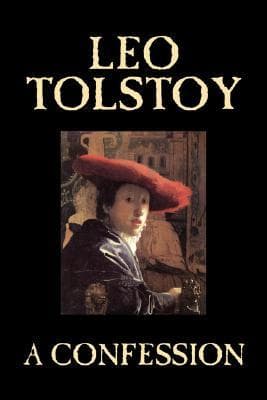
A Confession cover
Archivist's Choice

A Confession

Leo Tolstoy

Genre

Biography / Memoir / Spirituality / Philosophy

Reading Time

90 min

Key Themes

See below

Track Your Reading

Sign in to track this book

Haunted by life's meaninglessness, Leo Tolstoy searches through science, philosophy, and faith, finding comfort not in intellectual pursuits but in the simple beliefs of ordinary people.

Core Idea

Tolstoy recounts his spiritual crisis, a period where, despite worldly success, he was plagued by life's meaninglessness, leading him to consider suicide. He critiques science, philosophy, and intellectual pursuits for failing to answer fundamental questions: 'Why do I live? What is the meaning of my life?' His journey ends with the realization that true meaning and strength come not from rational inquiry or the privileged, but from the simple, unquestioning faith and labor of common people. This leads him to embrace a personal, spiritual understanding of God and a life of service, rather than the dogmas of institutional religion.
Reading time
90 min
Difficulty
Medium
✓ Read this if...
You are grappling with existential questions about life's purpose, feel disillusioned with conventional sources of meaning (science, wealth, fame), or are interested in the spiritual journey of a great literary figure.
✗ Skip this if...
You prefer practical self-help, are uninterested in philosophical or spiritual memoirs, or find deeply introspective and melancholic narratives tedious.

Core idea

The central argument and framework that powers the entire book.

Tolstoy recounts his spiritual crisis, a period where, despite worldly success, he was plagued by life's meaninglessness, leading him to consider suicide. He critiques science, philosophy, and intellectual pursuits for failing to answer fundamental questions: 'Why do I live? What is the meaning of my life?' His journey ends with the realization that true meaning and strength come not from rational inquiry or the privileged, but from the simple, unquestioning faith and labor of common people. This leads him to embrace a personal, spiritual understanding of God and a life of service, rather than the dogmas of institutional religion.

At a glance

Reading time

90 min

Difficulty

Medium

Read this if...

You are grappling with existential questions about life's purpose, feel disillusioned with conventional sources of meaning (science, wealth, fame), or are interested in the spiritual journey of a great literary figure.

Skip this if...

You prefer practical self-help, are uninterested in philosophical or spiritual memoirs, or find deeply introspective and melancholic narratives tedious.

Key Takeaways

1

The Existential Abyss of Meaninglessness

Even immense success cannot fill the void of life's ultimate questions.

Quote

My life was a malicious and stupid joke played on me by someone.

Tolstoy, at the height of literary success and material comfort, felt paralyzed by an overwhelming sense of meaninglessness. Despite fame, wealth, and a seemingly fulfilling family life, he was plagued by unanswerable questions: 'Why?' and 'What then?' This crisis was a deep spiritual illness that made all his accomplishments feel empty. He realized that conventional markers of success, often equated with happiness, were insufficient for life's ultimate purpose. His despair was so deep that even art and family love could not ease the ...

Supporting evidence

Tolstoy describes his life at fifty as 'all going splendidly well' – he had a good wife, children, property, fame, and health. Yet, he felt an 'insurmountable terror' and the 'arrest of life,' leading him to hide ropes and avoid firearms to prevent suicide.

Apply this

Regularly question your fundamental motivations and values. Don't assume external achievements will automatically bring internal peace. Actively seek personal meaning beyond societal definitions of success before a crisis forces the issue.

existentialismnihilismmeaning-crisis
2

Science's Limits on Ultimate Truth

Empirical knowledge can explain 'how,' but not 'why' life exists.

Quote

Scientific knowledge explains everything, but that it is meaningless in relation to the meaning of life.

Tolstoy thoroughly investigated science for answers to his existential questions but found it lacking. He observed that empirical science, while excellent at describing the universe and the human body, could not address the fundamental 'why' of existence. Science could explain stars or organs, but it offered no comfort or purpose regarding life's brevity or death's inevitability. He concluded that science, by nature, deals only with the finite and observable, making it unable to grapple with infinite questions of meaning, morality, or...

Supporting evidence

Tolstoy recounts how various sciences—experimental, descriptive, abstract—all provided specific knowledge but universally ignored or dismissed the question of life's meaning, defining it as outside their purview. For example, he notes astronomy explaining the movement of stars but not their ultimate purpose.

Apply this

Recognize the boundaries of different knowledge systems. While science is invaluable for understanding the physical world, don't rely on it exclusively for answers to spiritual or existential dilemmas. Seek complementary philosophical or spiritual frameworks.

epistemologyscientismmetaphysics
3

Philosophy's Inability to Console

Intellectual rationalization of life's absurdity offers no solace for the heart.

Quote

Philosophy did not merely fail to solve the question, but openly acknowledged its insolubility.

Tolstoy turned to philosophy, hoping for insights into life's meaning, but found it equally unsatisfying. Philosophers like Schopenhauer and Solomon eloquently described life's meaninglessness, but their conclusions offered no practical path forward or emotional comfort. They could analyze the problem with intellectual rigor, but their solutions often led to a rational acceptance of despair or a call to non-existence, which Tolstoy found repellent. He realized that intellectual understanding alone, however brilliant, could not provide...

Supporting evidence

Tolstoy cites the wisdom of Solomon ('all is vanity') and Schopenhauer's philosophy, which he found affirmed his own despair but offered no way out. He also mentions Buddha's path of annihilation as a conclusion that he found intellectually consistent but emotionally unacceptable.

Apply this

Beware of intellectualizing away your emotional needs. While philosophy can offer valuable frameworks, ensure your chosen worldview provides a foundation for living meaningfully, not just understanding meaninglessness. Seek practices that integrate intellect with action and emotion.

nihilismpessimismrationalism
4

The Deception of 'Life-Affirming' Distractions

Ignoring death and suffering is a temporary, ultimately unsustainable coping mechanism.

Quote

I could not but see that there was nothing in life but the ruin of everything, and death.

Tolstoy identifies four common ways people cope with life's meaninglessness, which he calls 'four exits from the trap.' The first is ignorance, a blissful unawareness of the problem. The second is Epicureanism, focusing on pleasure while ignoring the end. The third is strength and energy, acknowledging the problem but choosing to end one's life. The fourth is weakness, clinging to life despite its absurdity. Tolstoy could not return to ignorance, was unwilling to commit suicide, and found Epicureanism a shallow distraction. He saw the...

Supporting evidence

Tolstoy describes the 'ignorance' of youth, the 'Epicurean' solution of enjoying life while ignoring its end (which he practiced for a time), the 'strength' of suicide, and the 'weakness' of clinging to life despite knowing its meaninglessness. He rejected the first two as dishonest and the third as an escape he couldn't take.

Apply this

Honestly confront your own coping mechanisms. Are you genuinely addressing existential questions, or are you distracting yourself? Seek a path that integrates, rather than avoids, the realities of suffering and mortality.

coping-mechanismshedonismdenial
5

The Wisdom of the Common People

True faith, not intellectualism, provides a workable meaning for life.

Quote

I saw that for mankind to live, it must either not understand life, or understand it in some other way than I understood it.

A key shift in Tolstoy's quest happened when he observed the simple, uneducated peasants around him. Despite hardships and lack of formal education, they had a strong sense of purpose and peace. He realized they lived not by intellectual doctrines or reasoning, but by a deep, unquestioning faith in God. This faith gave them a framework for understanding life's meaning, suffering, and death, allowing them to endure and even thrive. Tolstoy concluded that the answers he sought were not in the complex theories of the educated elite, but ...

Supporting evidence

Tolstoy contrasts his own despair with the 'calm death' and 'peaceful life' of the common people, who, despite poverty and suffering, found meaning in faith. He noted they 'understood the meaning of life, recognized it, and were able to live.'

Apply this

Look beyond academic or intellectual circles for wisdom. Pay attention to the lived experiences and spiritual practices of people who demonstrate genuine peace and purpose, especially those who navigate hardship with resilience. Humility is key to finding profound truths.

folk-wisdomspiritual-intuitionhumility
6

Faith as the 'Knowledge of Meaning'

Faith is not mere belief, but an essential force that enables life itself.

Quote

Faith is the power of life. If a man lives, he believes in something.

Tolstoy redefined faith not as adherence to dogma, but as the 'knowledge of the meaning of human life, in consequence of which man does not destroy himself but lives.' He understood faith as an intrinsic human need and an essential component for sustaining life itself. It is the conviction that gives life purpose, allowing individuals to endure suffering and face death without despair. Without some form of faith — whether in God, humanity, or a higher purpose — life becomes unbearable. This realization shifted his understanding from f...

Supporting evidence

Tolstoy's argument that if a person lives, they must believe in something, even if unconsciously. He saw that without this 'faith' (meaning-making), life would be impossible, leading to suicide or paralysis.

Apply this

Identify what truly gives your life meaning and purpose. Cultivate and consciously embrace these 'articles of faith,' whether they are spiritual, ethical, or communal, understanding them as fundamental to your well-being and ability to live fully.

spiritual-meaningexistential-purposewill-to-live
7

The Perversion of Institutional Religion

Dogma and ritual often obscure the simple, life-giving truth of Christ's teachings.

Quote

I saw that what I had found was a truth of which I was quite convinced, but which was not what the church taught.

While finding salvation in the concept of God and the simple faith of the peasants, Tolstoy became deeply critical of the Orthodox Church. He found its elaborate rituals, dogmatic pronouncements, and emphasis on miracles to be a distortion of the core Christian message. He felt the Church had become an institution focused on power, control, and maintaining tradition, rather than embodying the radical love, humility, and service taught by Christ. This led him to reject much of organized religion, particularly its support for state viol...

Supporting evidence

Tolstoy recounts his initial attempts to reconnect with Orthodoxy, attending services and fasting, but finding the rituals meaningless and often contradictory to his understanding of God's love. He was particularly disturbed by the Church's blessing of war and its intolerance of other faiths.

Apply this

Distinguish between genuine spirituality and institutional dogma. Critically evaluate religious traditions, seeking the core ethical and spiritual truths while being wary of rigid doctrines, empty rituals, or any teachings that promote hatred or violence.

religious-critiquespiritual-authenticitydogmatism
8

God as the Source of Life and Meaning

Accepting a higher power provides the only answer to life's ultimate questions.

Quote

To know God and to live is one and the same thing. God is life.

Ultimately, Tolstoy's journey led him to a deep, though unconventional, understanding of God. He concluded that the concept of God is not just a belief, but the very condition for life to have meaning. To live is to implicitly or explicitly believe in something beyond oneself, something that gives purpose and structure to existence. For Tolstoy, God became synonymous with the 'power of life' itself, an uncreated source of meaning that transcends human reason. This acceptance of God, not as a theological construct but as the fundamenta...

Supporting evidence

Tolstoy's climactic realization that when he ceased to believe in God, he ceased to live, and when he found God, he found life. He describes God as 'that without which one cannot live,' linking the concept directly to the ability to overcome despair.

Apply this

Explore your own understanding of a 'higher power' or ultimate reality. This doesn't necessarily mean adopting traditional religious dogma, but rather acknowledging and connecting with a source of meaning that transcends your individual self and provides a foundation for living.

theismspiritual-awakeningdivine-purpose
9

The Call to Live for Others

Self-centered existence is inherently meaningless; true purpose lies in service.

Quote

My life only has meaning when I serve God, and my service is to do good to my neighbor.

Though not explicitly detailed as a distinct takeaway in the summary, Tolstoy's later works and the implications of his 'Confession' suggest that his newfound faith led him to an ethic of selfless service. His rejection of wealth and societal acclaim, and his embrace of the simple life of the peasants, points to the conclusion that true meaning is found not in personal gain or intellectual pursuits, but in living in harmony with others and fulfilling one's duty to God through acts of love and compassion. A life lived solely for onesel...

Supporting evidence

While 'A Confession' primarily focuses on his internal struggle, it lays the groundwork for his later embrace of Christian anarchism and his rejection of private property, advocating for a life of simplicity and service, mirroring the selflessness he observed in the peasants. He implies that the 'meaning' found in God leads to specific ethical actions.

Apply this

Shift your focus from purely individualistic goals to communal well-being. Actively seek opportunities to serve others, contribute to your community, and live in a way that benefits more than just yourself. This external focus can provide deep internal meaning.

altruismservice-to-otherschristian-ethics

Critical analysis

Notable Quotes

What is it for? Why should I live? Why should I do anything? Is there any everlasting meaning in my life that would not be destroyed by the inevitable death awaiting me?

Tolstoy's central existential crisis and the driving question of the book.

My life stopped. I could breathe, eat, drink, and sleep, and I could not help doing these things; but there was no life, because there were no desires the gratification of which I could consider reasonable. If I wished for anything, I knew in advance that whether I satisfied my desire or not, nothing would come of it.

Describing his state of 'arrested life' when meaninglessness overwhelmed him.

I felt that what I was standing on had given way, that I had no longer anything to stand on, that what I had lived for was a lie, and that I had no longer anything to live for.

The moment of intellectual and spiritual collapse.

The knowledge of faith alone gives meaning to life, and makes it possible to live.

His realization after much searching, pointing towards a solution.

But a time came when I saw that this was not a joke, and that it was quite impossible to live on in this way, and that I should either have to hang myself or to explain life to myself so that I might not have to hang myself.

His stark choice between suicide and finding an explanation for life.

I involuntarily returned to the conclusion that a life of faith was the only possible one.

A recurring theme as he grapples with different paths.

I ran away from the light into the darkness, and when I ran from the darkness, I saw the light.

His metaphor for seeking truth, initially avoiding what he later embraced.

I saw that the answer to my question, 'What is my life?' was 'God.'

His ultimate, simple answer to the profound question.

If I live, I believe, and if I believe, I live.

Expressing the symbiotic relationship between life and belief for him.

I renounced the life of our circle, which was not life but a parody of life, and accepted the life of the common laboring people, which is the real life.

His rejection of aristocratic life and embrace of peasant values.

There is no evil in the world except the evil in ourselves.

A moral conclusion drawn from his spiritual awakening.

And I began to understand that the happiness and unhappiness of men are not in what they have or have not, but in what they are.

A profound insight into the nature of human well-being.

Faith is the force of life. If a man lives, he believes in something. If he did not believe that he had to live for something, he would not live.

Defining faith as an essential, inherent drive for all living beings.

I understood that the Church, which was supposed to be the embodiment of Christian truth, was in fact the enemy of that truth.

His disillusionment with organized religion, despite finding faith.

Quiz

Test Your Knowledge

Ready to see how well you understood this book? Take our interactive quiz with 10 questions.

10
Questions
~5
Minutes
?
Best Score

Key Questions (FAQ)

'A Confession' is a deeply personal essay by Leo Tolstoy detailing his spiritual crisis and his search for the meaning of life. He explores various avenues like science, philosophy, and Eastern wisdom before finding solace in the faith of ordinary people.

About the author

Leo Tolstoy

Count Lev Nikolayevich Tolstoy, usually referred to in English as Leo Tolstoy, was a Russian writer who is regarded as one of the greatest authors of all time. He received nominations for the Nobel Prize in Literature every year from 1902 to 1906 and for the Nobel Peace Prize in 1901, 1902, and 1909; the fact that he never won is a major controversy.