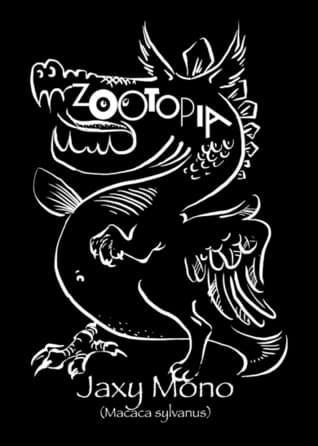
The Alphabet of Life: Beyond A, T, G, C
Imagining biological diversity using all 26 letters, not just the genetic four.
Quote
The book of life is written with an alphabet of only four letters – A, T, G and C. Yet these four letters, repeated in endless variations, are enough to spell out the recipes for life forms as diverse as bacteria, fungae, plants, insects, fish, birds, mammals, and even a singularly pompous, pretentious, and self-important species of old world monkey called Homo sapiens.
Mono playfully questions our view of biological limits by suggesting a world where the 'alphabet of life' goes beyond the four nucleobases of DNA. This imaginative idea allows for 'doggypotamuses' and 'rat-toothed catypusses,' showing the vast, unexplored possibilities for life forms if the basic building blocks were more numerous. It is a thought experiment that asks if our current understanding of biological diversity is limited by the 'language' we use to define it, suggesting nature's creativity could be much broader.
Supporting evidence
The author directly introduces the concept of using all twenty-six letters of the alphabet to invent new creatures, contrasting it with the four-letter genetic code of actual biology.
Apply this
When approaching creative or problem-solving tasks, challenge the assumed limitations of your 'toolkit.' Consider what new possibilities emerge if you expand your fundamental 'alphabet' or resources beyond the conventional.