BookBrief
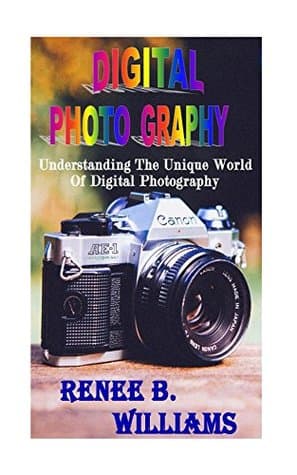
Digital Photography cover
Archivist's Choice

Digital Photography

Renee B. Williams (2015)

Genre

General

Reading Time

12 Minutes

Key Themes

See below

Track Your Reading

Sign in to track this book

Learn digital photography, from mastering your camera to starting a business and capturing life's moments clearly.

Core Idea

Renee B. Williams's "Digital Photography" serves as a foundational guide for aspiring photographers, demystifying the essential concepts and techniques required to capture compelling images with a digital camera. The book emphasizes that while modern digital cameras possess advanced features, a true understanding of photographic principles—such as exposure, composition, and lighting—is paramount to moving beyond automatic settings and achieving creative control. It encourages readers to experiment with their camera's capabilities and develop an artistic eye to consistently produce high-quality photographs.
Difficulty
Easy

Core idea

The central argument and framework that powers the entire book.

Renee B. Williams's "Digital Photography" serves as a foundational guide for aspiring photographers, demystifying the essential concepts and techniques required to capture compelling images with a digital camera. The book emphasizes that while modern digital cameras possess advanced features, a true understanding of photographic principles—such as exposure, composition, and lighting—is paramount to moving beyond automatic settings and achieving creative control. It encourages readers to experiment with their camera's capabilities and develop an artistic eye to consistently produce high-quality photographs.

At a glance

Difficulty

Easy

Key Takeaways

1

Demystifying Digital Photography's Core

Beyond the point-and-shoot: understanding the fundamental shift from analog to digital imaging.

Quote

Digital photography is more than just taking pictures; it's about comprehending the underlying technology that transforms light into digital data.

The book's best initial idea is its clear definition of digital photography. It says digital photography is not just a modern camera type but a distinct technology. Unlike film, which uses chemicals, digital photography turns light into electrical signals, then into binary data. This basic difference supports all later discussions, from image editing to storage. Williams effectively shows that understanding this core idea is key for anyone wanting to move past casual photos and truly master photography, whether for fun or work. This b...

Supporting evidence

The book's initial chapters, particularly 'What Is Digital Photography?', lay out the foundational concepts of digital image capture and processing, contrasting it implicitly with traditional film.

Apply this

Aspiring photographers should focus on understanding the digital sensor and image processor's role, as this knowledge directly impacts decisions about camera settings, file types, and post-processing.


2

The Power of Pixels

Unpacking the building blocks of every digital image and their impact on quality and versatility.

Quote

Understanding what pixels are in the world of digital photography is crucial for appreciating image quality and the possibilities of digital manipulation.

Williams wisely includes a section on 'Understanding What Pixels Are.' This is a vital, often overlooked, topic for beginners. Pixels are the basic units of a digital image. They directly affect resolution, sharpness, and the ability to enlarge or crop without much quality loss. The book suggests that more pixels (megapixels) generally mean more detailed images, giving more flexibility in printing and editing. This idea helps readers move past just comparing megapixel numbers and instead grasp how pixel density affects their photo goa...

Supporting evidence

The specific chapter 'Understanding What Pixels Are In The World Of Digital Photography' provides a direct explanation of this concept.

Apply this

When purchasing a camera or editing photos, consider the pixel count in relation to intended output (e.g., large prints require more pixels than web images). Learn to evaluate images for pixelation, especially after cropping or enlarging.

3

Digital Photography's Global Impact

Exploring the pervasive influence of digital imaging across diverse industries and daily life.

Quote

Digital photography benefits the world by integrating into virtually all industries, from medicine to marketing, revolutionizing how we document, communicate, and innovate.

This book shows how useful digital photography is, going beyond hobbies and professional portraits. The section 'How Digital Photography Benefits The World' says digital imaging changes 'all industries.' The book doesn't give specific examples because it's short, but it hints at uses in medical imaging, surveillance, science, e-commerce, and journalism. This broad view helps readers see career potential and the social importance of digital photography, making it more than just art. It highlights the technology's role in data collectio...

Supporting evidence

The chapters 'How Digital Photography Benefits The World' and 'Digital Photography In All Industries' explicitly state the broad applications.

Apply this

Individuals interested in photography careers should research specific industries (e.g., real estate, product photography, scientific imaging) to identify niches where their skills can be applied beyond traditional artistic roles.

4

From Hobby to Enterprise

A practical guide to transforming a passion for digital photography into a viable business.

Quote

If you love to take pictures, there will be the need for you to understand better what digital photography is and how simple shots can transform the way you live your life, potentially through a business.

One of the book's most practical sections is 'Setting Up A Digital Photography Business.' It talks directly about the business side of photography. Though short, it tells the reader that digital photography can be a source of income, not just a hobby. It suggests needing more than just technical skill, mentioning market research, finding clients, and pricing. This view helps beginners who might not have thought about making money from their passion. The book encourages thinking like a professional, even if it only gives a general over...

Supporting evidence

The dedicated chapter 'Setting Up A Digital Photography Business' directly supports this takeaway.

Apply this

Aspiring professional photographers should research local market demand, define their niche (e.g., events, portraits, product), and begin developing a business plan that includes marketing and pricing strategies.

5

The '5 W's' Framework for Better Shots

Applying journalistic principles to photography for more purposeful and impactful images.

Quote

Understanding the 5 W's of Digital Photography helps you capture more meaningful and comprehensive images.

Including 'Understanding The 5 W's Of Digital Photography' is a clever and effective teaching tool. Taken from journalism (Who, What, When, Where, Why), this method encourages photographers to think carefully about their subject and purpose before taking a photo. This approach lifts photography beyond just recording, making the photographer consider the story, context, and emotion of their images. While not fully detailed in the summary, the idea is that by thinking about these questions, photographers can create more engaging and inf...

Supporting evidence

The chapter 'Understanding The 5 W's Of Digital Photography' directly outlines this analytical framework.

Apply this

Before taking a picture, pause and ask: Who is the subject? What is happening? When and Where is this occurring? Why is this important to capture? This critical thinking will lead to more deliberate and impactful compositions.

6

Building Confidence Through Practice

Overcoming photographic apprehension by embracing continuous learning and experimentation.

Quote

Reading and understanding the information provided in this eBook will make it very easy for you to become one of the best digital photographers in the world or even see the uniqueness digital photography has to offer. Building your confidence as a digital photographer is key.

The book's focus on 'Building Your Confidence As A Digital Photographer' is an important psychological idea often missed in technical books. It recognizes that skill growth and self-assurance go together. While it doesn't detail specific confidence-building exercises, just including this topic suggests that constant learning and practice are key. The book's structure, from basic definitions to practical uses, aims to gradually empower the reader. This idea suggests that mistakes are part of learning and that consistent practice, along...

Supporting evidence

The chapter 'Building Your Confidence As A Digital Photographer' explicitly addresses this aspect.

Apply this

Regularly experiment with new techniques, review your work critically but constructively, and seek feedback from trusted peers. Focus on small, achievable goals to build momentum and self-belief.

7

The Versatility of Digital Cameras

Exploring the diverse range of digital cameras and their suitability for different photographic needs.

Quote

Digital Photography Cameras come in many forms, each offering unique advantages for various types of photography.

The chapter on 'Digital Photography Cameras' is important for helping beginners navigate the often-confusing world of camera gear. While the book's brevity likely prevents a full review, its inclusion shows the importance of matching the right tool to the job. It implicitly covers everything from smartphone cameras to DSLRs and mirrorless systems, each with its own capabilities and limits. This idea helps readers understand that 'the best camera' is not fixed; it depends on their specific goals, whether it's casual fun, event coverage...

Supporting evidence

The chapter 'Digital Photography Cameras' directly informs this understanding of equipment diversity.

Apply this

Before buying a camera, assess your primary photographic interests (e.g., travel, portraits, sports) and budget. Research camera types (e.g., mirrorless, DSLR, bridge) that best align with those needs rather than opting for the most expensive or popular option.

8

Digital Photography for Life's Moments

Leveraging digital imaging for both everyday enjoyment and special event documentation.

Quote

Digital photography can transform the way you live your life, whether for simple shots with your phone or capturing events.

The book's division into 'Digital Photography For Fun' and 'Digital Photography For Events' shows the dual nature of the medium: its accessibility for casual use and its need for formal documentation. This difference is valuable because it encourages readers to appreciate photography in both ways. 'For Fun' suggests spontaneous capture and creative expression, while 'For Events' implies a more careful approach, often with higher stakes and expectations. This idea reinforces that digital photography is a versatile tool. It can enrich p...

Supporting evidence

The chapters 'Digital Photography For Fun' and 'Digital Photography For Events' directly support this dual application.

Apply this

Practice capturing both spontaneous, everyday moments with your phone to foster creativity, and plan meticulously for important events, considering lighting, composition, and key moments to ensure comprehensive coverage.

9

Embracing Continuous Innovation

The imperative to remain open-minded to new ideas and evolving technologies in digital photography.

Quote

Be Open Minded To New Ideas. The world of digital photography is constantly evolving, requiring photographers to adapt and learn.

This idea, 'Be Open Minded To New Ideas,' is a key meta-lesson in a fast-changing field like digital photography. Unlike traditional film, which stayed fairly stable for decades, digital technology constantly changes, with new cameras, software, and techniques appearing regularly. Williams implicitly warns against becoming stuck, urging readers to adopt a mindset of continuous learning. This is a strong, forward-looking idea that prepares the reader not just for the current state of photography but for its future. It suggests that tru...

Supporting evidence

The chapter 'Be Open Minded To New Ideas' directly advocates for this adaptive mindset.

Apply this

Regularly read photography blogs, watch tutorials, and experiment with new software features or camera settings. Don't be afraid to try unconventional techniques or embrace emerging technologies like AI-powered editing tools.

10

The Simplicity of Learning

Demystifying digital photography as an accessible art form for everyone.

Quote

Reading and understanding the information provided in this eBook will make it very easy for you to become one of the best digital photographers in the world or even see the uniqueness digital photography has to offer.

The book's main message, supported by its short length and clear language, is that 'Learning Digital Photography' is not too hard. Williams aims to make the subject easy to understand, presenting it as something 'very easy' to grasp for anyone willing to engage with the material. This is a powerful encouragement for beginners who might feel scared by the technical terms often linked with photography. The book's short length (58 pages) itself shows this approach, suggesting that main ideas can be well communicated without too much deta...

Supporting evidence

The book's introductory statement and its concise format (58 pages) implicitly convey the ease of learning.

Apply this

Start with understanding fundamental concepts before diving into advanced techniques. Use readily available resources, including this book, to build a solid foundation, and don't hesitate to experiment, as learning by doing is highly effective.

Critical analysis

Notable Quotes

Quiz

Test Your Knowledge

Ready to see how well you understood this book? Take our interactive quiz with 10 questions.

10
Questions
~5
Minutes
?
Best Score

Key Questions (FAQ)

Digital photography is the art and practice of capturing images using digital cameras that record information as electronic data. Unlike film photography, digital images can be easily stored, edited, and shared.

About the author