BookBrief
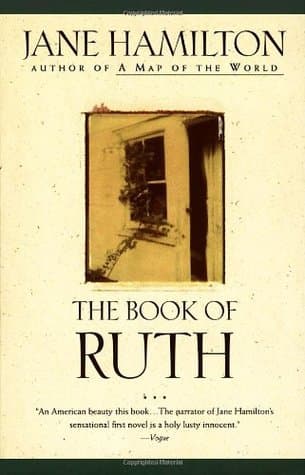
The Book of Ruth cover
Archivist's Choice

The Book of Ruth

Jane Hamilton (1988)

Genre

General

Reading Time

8-10 hours (based on ~328 pages)

Key Themes

See below

Track Your Reading

Sign in to track this book

In a small Wisconsin town, a young woman's life unravels amidst a suffocating marriage and a mother-in-law's escalating mental illness, forcing her to confront isolation while searching for love and redemption.

Core Idea

Jane Hamilton's "The Book of Ruth" explores how trauma and grief affect ordinary people in rural America. It argues that escaping a troubled past is difficult because unresolved pain often appears through cycles of abuse, neglect, and self-destruction. The novel suggests that true, though fragile, redemption and control over one's life come from bravely acknowledging one's history and the complex nature of love and suffering within families, rather than trying to forget or deny it.
Reading time
8-10 hours (based on ~328 pages)
Difficulty
Medium
✓ Read this if...
You are interested in a deep, character-driven psychological study of trauma, abuse, and the complexities of family bonds in a small-town setting, and appreciate literary fiction that doesn't shy away from difficult themes.
✗ Skip this if...
You prefer light-hearted reads, are sensitive to detailed depictions of abuse and mental health struggles, or dislike narratives with a strong sense of impending doom and limited immediate resolution.

Core idea

The central argument and framework that powers the entire book.

Jane Hamilton's "The Book of Ruth" explores how trauma and grief affect ordinary people in rural America. It argues that escaping a troubled past is difficult because unresolved pain often appears through cycles of abuse, neglect, and self-destruction. The novel suggests that true, though fragile, redemption and control over one's life come from bravely acknowledging one's history and the complex nature of love and suffering within families, rather than trying to forget or deny it.

At a glance

Reading time

8-10 hours (based on ~328 pages)

Difficulty

Medium

Read this if...

You are interested in a deep, character-driven psychological study of trauma, abuse, and the complexities of family bonds in a small-town setting, and appreciate literary fiction that doesn't shy away from difficult themes.

Skip this if...

You prefer light-hearted reads, are sensitive to detailed depictions of abuse and mental health struggles, or dislike narratives with a strong sense of impending doom and limited immediate resolution.

Key Takeaways

1

The Crushing Weight of Intergenerational Trauma

Unexamined family patterns can ripple through generations, dictating lives.

Quote

Ruth's life is a testament to the idea that sometimes the greatest burden we carry is the one we inherit, unspoken and unaddressed.

The novel shows how unacknowledged trauma and family problems from one generation can severely harm the next. Ruth's mother, May, scarred by her own past and mental health issues, projects her anxieties and failures onto Ruth. This creates an environment of emotional abuse and neglect. It is not just about bad parenting; it is a breakdown where cycles of violence, both physical and psychological, continue because no one has the means or desire to stop them. Ruth's childhood is marked by dread and a desperate need for love, constantly ...

Supporting evidence

May's erratic behavior, her verbal abuse, and her emotional manipulation of Ruth are constant throughout Ruth's childhood. The description of May's own difficult upbringing, hinted at through her bitterness and paranoia, suggests the origin of her pathology.

Apply this

Reflect on your own family history. Identify recurring negative patterns or unresolved issues. Seek therapy or open dialogue to understand and potentially interrupt these cycles, preventing their transmission to future generations. Acknowledge that healing generational trauma often starts with one individual's courage to look inward.


intergenerational-traumafamily-systemsemotional-abuse
2

The Illusion of Escape and the Pull of the Past

Attempting to flee one's origins often leads to replicating its patterns.

Quote

The past is never dead. It's not even past.

Ruth's journey includes repeated, often unsuccessful, attempts to escape her mother's shadow and the suffocating small town. She believes that moving away or new relationships will offer a fresh start. However, the novel clearly shows that without internal healing and self-awareness, merely changing external circumstances is not enough. Ruth repeatedly finds herself drawn to people and situations that mirror her past problems, especially in her relationship with Cowles. Her desire for love and acceptance, unmet in childhood, makes her...

Supporting evidence

Ruth's move away from her mother, her marriage to Cowles, and her subsequent struggles demonstrate how she carries the internal landscape of her past with her, attracting similar dynamics of control and emotional instability.

Apply this

Before making significant life changes to escape a difficult situation, engage in self-reflection or therapy to understand the underlying patterns you might be carrying. Address internal wounds and develop healthier coping mechanisms to ensure new environments genuinely foster growth, rather than just becoming a new stage for old problems.

repetition-compulsionattachment-theoryself-sabotage
3

The Destructive Nature of Unprocessed Grief

Grief, when ignored or misdirected, can fester into violence and madness.

Quote

Sometimes the things we refuse to mourn become the very things that destroy us.

The novel subtly, and sometimes directly, explores how grief, especially over the loss of a child, can twist a person's mind and lead to extreme, harmful behaviors. Cowles's deep and unaddressed grief over his lost child is a key, though often unspoken, reason for his increasingly erratic and violent actions. His inability to process this immense loss appears as rage, control, and a desperate, misguided attempt to reclaim what he has lost, often at Ruth's expense. This suggests that without healthy ways to mourn, pain can become toxic...

Supporting evidence

Cowles's fixation on children, his possessiveness, and his violent outbursts are all implicitly linked to the backstory of his lost child, providing a psychological explanation for his otherwise incomprehensible cruelty.

Apply this

Recognize that grief is a powerful and necessary human process. Seek support (therapy, support groups, trusted friends) when experiencing significant loss. Allow yourself to feel and express emotions rather than suppressing them, to prevent their destructive manifestation later.

complicated-grieftrauma-responseanger-management
4

The Power and Peril of Naiveté

Innocence can be both a shield and a fatal vulnerability.

Quote

Ruth's innocence was a fragile thing, easily shattered, but also a persistent flicker that refused to be extinguished.

Ruth has a deep, almost childlike, innocence that defines much of her character. This innocence, stemming from her sheltered and emotionally neglected upbringing, makes her constantly vulnerable to manipulation. She struggles to see harmful intentions and often misinterprets signs of danger, seeing the best in people even when evidence suggests otherwise. Her lack of experience and desperate desire for connection leave her open to predatory individuals like Cowles. However, this same innocence also acts as a strange kind of resilience...

Supporting evidence

Ruth's initial trust in Cowles, her inability to fully grasp the severity of her situation, and her persistent attempts to find good in others despite repeated betrayals illustrate her ingrained naiveté.

Apply this

While maintaining an open heart is valuable, cultivate critical thinking and healthy skepticism, especially in new relationships or situations. Trust your gut feelings and learn to identify red flags. Seek advice from trusted, experienced individuals when facing uncertainty.

vulnerabilityoptimism-biasdiscernment
5

The Unbreakable Bond of Siblinghood

Despite distance and dysfunction, sibling connections can endure as anchors.

Quote

My brother's voice was a lifeline, a whisper of a world where I was still known, still loved.

Amidst the chaos and isolation of Ruth's life, her relationship with her brother, Harry, is a beacon of genuine connection and unconditional love. Despite their physical separation and different life paths, Harry is a consistent, though sometimes distant, source of support and understanding. He is the one person who truly 'sees' Ruth, who remembers their shared past, and who offers a touchstone of sanity and affection. This bond shows the deep importance of sibling relationships, especially in troubled families, where they can become ...

Supporting evidence

Harry's letters, his occasional visits, and Ruth's internal reflections about him consistently portray him as her primary source of comfort and understanding, contrasting sharply with her other relationships.

Apply this

Nurture your sibling relationships, even if they are strained. Reach out, share memories, and offer support. These connections can be vital sources of strength and a reminder of your core identity, especially during difficult times.

sibling-bondfamily-supportresilience
6

Small Town Hypocrisy and the Price of Conformity

Beneath a veneer of normalcy, small communities can harbor deep-seated judgment and cruelty.

Quote

The town watched, judged, and then turned its back, pretending not to see what it had already condemned.

The novel paints a nuanced, often critical, picture of small-town life, especially the community of Honey Creek. While seemingly ideal on the surface, it is a place filled with gossip, judgment, and a quiet, harmful cruelty towards those who do not fit its rigid norms. Ruth, an outsider and later a figure of scandal, experiences the full force of this societal pressure. The townspeople, instead of offering support, often contribute to her isolation and suffering through whispers, stares, and thinly veiled contempt. This shows how conf...

Supporting evidence

The town's reaction to May's eccentricities, and later to Ruth's relationship with Cowles and her subsequent arrest, demonstrates their judgmental and unforgiving nature, contributing to Ruth's profound sense of alienation.

Apply this

Challenge your own biases and judgments towards those who are different or struggling. Actively cultivate empathy and offer support rather than contributing to gossip or ostracization in your own communities. Recognize that true compassion often involves looking beyond surface appearances.

social-ostracismconformitygroupthink
7

The Elusive Nature of Mercy and Compassion

True compassion emerges in unexpected places, often from those who have known suffering.

Quote

It was in the darkest corners that the smallest acts of kindness shone the brightest.

Despite the darkness and cruelty in Ruth's life, the novel is ultimately about the human capacity for mercy, compassion, and love. These qualities are not found where one might expect – not from the 'upstanding' members of the community or from those in positions of authority. Instead, moments of genuine compassion often come from unexpected sources: a kind word from a stranger, a moment of understanding from a fellow outcast, or the enduring love of her brother. This suggests that true mercy often comes from shared vulnerability or a...

Supporting evidence

The occasional kindness shown to Ruth by peripheral characters, the unwavering love of Harry, and her own capacity for empathy despite her hardships all illustrate the persistent presence of mercy.

Apply this

Actively look for opportunities to practice compassion and extend mercy, especially to those who are struggling or ostracized. Understand that even small acts of kindness can have a profound impact on someone's life. Don't wait for grand gestures; everyday empathy is powerful.

empathyhumanitarianismaltruism
8

Finding Voice and Agency Through Narrative

Telling one's own story is a crucial step towards reclaiming one's life.

Quote

To speak my truth was to finally begin to own my life, piece by painful piece.

The entire novel is told from Ruth's first-person perspective, acting as her confession and her way of coming to terms with the traumatic events of her life. This narrative structure is a powerful takeaway. By telling her story, Ruth is not just relaying facts; she is actively processing her experiences, making sense of the chaos, and finding her own voice after years of being silenced and defined by others. Storytelling becomes a form of therapy, a way to assert her agency and reclaim her identity. It allows her to move from being a ...

Supporting evidence

The entire book is Ruth's first-person account, detailing her life from childhood through adulthood and the events that led to her imprisonment, serving as her confession and reflection.

Apply this

Consider journaling or talking to a trusted therapist about significant life events. Articulating your experiences, especially traumatic ones, can provide clarity, foster self-understanding, and empower you to move forward. Your story holds power; give it a voice.

narrative-therapyself-authorshiptrauma-recovery
9

The Complexities of Love and Abuse

Love can be twisted and distorted, making it difficult to recognize abuse.

Quote

He said he loved me, and I believed him, even as his hands tightened around my throat.

The novel explores how abuse can appear as love, especially in intimate relationships. Ruth's experiences, first with her mother and later with Cowles, show how a desperate need for affection can blind a person to harmful behaviors. Cowles's possessiveness, control, and eventual violence are often mixed with declarations of love or moments of tenderness, creating a deeply confusing and manipulative dynamic. Ruth, having never truly experienced healthy love, struggles to tell the difference between genuine affection and controlling beh...

Supporting evidence

Cowles's alternating patterns of charm and cruelty, his possessiveness framed as 'caring,' and Ruth's internal struggle to reconcile these contradictions are central to their relationship.

Apply this

Educate yourself and others about the signs of emotional and physical abuse, recognizing that they often exist within a cycle of 'love bombing' and violence. Prioritize healthy boundaries and trust your instincts. Seek help if you or someone you know is in a relationship where love feels confusingly intertwined with fear or control.

cycle-of-abusegaslightingcoercive-control
10

Redemption Through Acknowledgment, Not Forgetting

True healing comes from confronting the past, not erasing it.

Quote

The only way out of the darkness was to walk through it, to name every shadow.

Ruth's journey is not about forgetting her past or pretending it did not happen. Instead, her eventual, hard-won peace comes from a deep act of acknowledgment. Through her narrative, she systematically revisits her trauma, confronts the actions of others, and grapples with her own choices. This process, though painful, is essential for her to understand the forces that shaped her life and to begin to integrate her fragmented self. Redemption, for Ruth, is not about traditional absolution, but about achieving self-understanding and inn...

Supporting evidence

The entire structure of the novel, being Ruth's detailed confession and reflection on her past, serves as the ultimate evidence of this takeaway. Her ability to articulate her experiences is her path to understanding and moving forward.

Apply this

Instead of suppressing painful memories, practice mindfulness or engage in therapeutic techniques to process them. Understand that confronting difficult truths about your past is a courageous act that can lead to profound personal growth and a more integrated sense of self. Embrace your story, including its difficult chapters.

post-traumatic-growthself-acceptancenarrative-coherence

Critical analysis

Notable Quotes

It was as if I'd always known that I would have to be the one to protect her.

Ruth reflecting on her relationship with her mother, May, from an early age.

The world was full of things that might break you, but it was also full of things that might make you whole again.

Ruth's general outlook on life and resilience despite hardships.

Sometimes I felt like a little boat, just drifting, and May was the wind pushing me wherever she wanted to go.

Ruth describing her mother's dominant influence and her own passivity.

There were moments when I loved her so fiercely it hurt, and moments when I wished she would just disappear.

Ruth's conflicted feelings about her mother, May.

I understood then that some people were just born to be broken, and others were born to pick up the pieces.

Ruth's realization about the different roles people play in life, often in relation to her mother.

The quiet of the house after she was gone was almost louder than her presence had ever been.

Ruth experiencing the profound absence of her mother.

I had always been the one to clean up the messes, literal and figurative, that May left behind.

Ruth's long-standing role as the caretaker and problem-solver in her mother's life.

There was a kind of freedom in having nothing left to lose.

Ruth contemplating her situation after a significant loss or change.

Some secrets are like heavy stones; they weigh you down even if you never speak them aloud.

Ruth reflecting on the unspoken truths and burdens she carries.

I learned early on that love could be a kind of cage, too.

Ruth's understanding of how her mother's 'love' often felt restrictive.

The past wasn't just behind you; it was inside you, shaping every breath.

Ruth's realization about the enduring impact of her history.

It was a strange thing, to mourn someone who was still alive.

Ruth's emotional state regarding her mother, who is physically present but perhaps emotionally or mentally absent.

Sometimes you had to break things apart to see what was truly holding them together.

Ruth reflecting on the necessity of disruption for understanding or change.

The world keeps turning, even when your own world feels like it's stopped dead.

Ruth observing the indifference of the outside world to her personal struggles.

Quiz

Test Your Knowledge

Ready to see how well you understood this book? Take our interactive quiz with 10 questions.

10
Questions
~5
Minutes
?
Best Score

Key Questions (FAQ)

'The Book of Ruth' by Jane Hamilton tells the story of Ruth, a young woman living in rural Illinois, whose life is marked by isolation, poverty, and a turbulent relationship with her disturbed husband, Woody. It explores themes of alienation, violence, and ultimately, the enduring human capacity for love and mercy in the face of adversity.

About the author