BookBrief
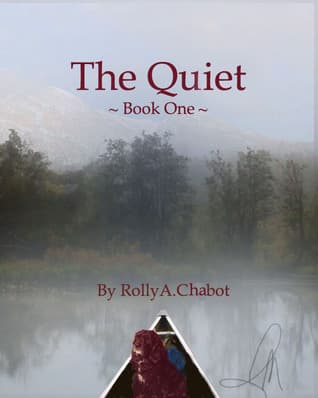
The Quiet cover
Archivist's Choice

The Quiet

Rolly A. Chabot (2011)

Genre

General

Reading Time

180 min

Key Themes

See below

Track Your Reading

Sign in to track this book

In the unforgiving Yukon, a man and his rescue dog, Tannis, embark on a 12-year journey of spiritual healing, confronting past traumas and discovering divine intervention amidst the raw power of nature.

Core Idea

The Quiet tells the story of a twelve-year journey of spiritual and personal transformation in the Yukon wilderness. It argues that confronting deep fears and embracing solitude can help with healing and rediscovering faith. Through encounters with nature's power, moments of divine intervention, and the solace of human and animal companionship, the author shows how isolation can create a strong connection to the spiritual and a renewed passion for life.
Reading time
180 min
Difficulty
Medium
✓ Read this if...
You are seeking a deeply personal narrative about spiritual renewal, enjoy stories set in challenging wilderness environments, or are grappling with themes of fear, isolation, and the search for meaning.
✗ Skip this if...
You prefer highly academic or scientific non-fiction, are not interested in faith-based personal memoirs, or dislike introspective, reflective storytelling.

Core idea

The central argument and framework that powers the entire book.

The Quiet tells the story of a twelve-year journey of spiritual and personal transformation in the Yukon wilderness. It argues that confronting deep fears and embracing solitude can help with healing and rediscovering faith. Through encounters with nature's power, moments of divine intervention, and the solace of human and animal companionship, the author shows how isolation can create a strong connection to the spiritual and a renewed passion for life.

At a glance

Reading time

180 min

Difficulty

Medium

Read this if...

You are seeking a deeply personal narrative about spiritual renewal, enjoy stories set in challenging wilderness environments, or are grappling with themes of fear, isolation, and the search for meaning.

Skip this if...

You prefer highly academic or scientific non-fiction, are not interested in faith-based personal memoirs, or dislike introspective, reflective storytelling.

Key Takeaways

1

The Yukon: A Crucible for the Soul

Embracing the wilderness as a path to profound self-discovery and resilience.

Quote

The Yukon is a captivating place for those who care to reach deep to probe the secrets she holds tightly to herself. It is not a land for the fainthearted.

The author describes the Yukon as a living entity that requires deep engagement from those who enter it. It is a land that removes superficialities, making people confront their inner selves and nature's power. This environment acts as a 'crucible,' where personal weaknesses are revealed and inner strengths are built through direct interaction with the elements. The Yukon becomes a symbol for any challenging life situation that, when faced with courage and openness, can lead to deep personal growth and a new sense of self. It is about...

Supporting evidence

The author's repeated emphasis on the Yukon as 'not a land for the fainthearted' and a place where one 'can close the door on your past and live according to the elements you are surrounded by.'

Apply this

Seek out environments or challenges that push you beyond your comfort zone. Instead of avoiding difficult situations, lean into them, viewing them as opportunities for profound self-discovery and growth. Embrace the discomfort as a sign of progress.


wilderness-therapyresilience-buildingself-discovery
2

Confronting Fear in Isolation

Acknowledging and navigating personal fears as a critical step towards healing and survival.

Quote

Fear has claimed many lives in the backcountry I have written about. I have shared some of my fears when I often found myself completely isolated with my closest friend Tannis, a rescue dog...

The book shows how destructive fear can be, especially in isolated, high-risk places. The author's admission of experiencing fear, even with a trusted dog, makes the story relatable and validates the common experience of apprehension. The goal is not to eliminate fear, but to understand it, acknowledge its ability to paralyze, and learn to act despite it. The backcountry is a reminder that unchecked fear can lead to serious consequences, making the ability to manage it a vital survival skill, both in the wilderness and in one's own em...

Supporting evidence

The direct statement: 'Fear has claimed many lives in the backcountry I have written about' and the author's personal sharing of 'some of my fears' during isolation.

Apply this

Identify specific fears that hold you back. Instead of suppressing them, acknowledge their presence and develop strategies to act despite them. Practice mindfulness to observe fear without letting it dictate your actions. Seek supportive companionship when facing daunting challenges.

fear-managementemotional-resilienceisolation-coping
3

The Healing Journey: A 12-Year Process

Understanding personal healing as a long-term, iterative journey rather than a singular event.

Quote

I will take you, the reader, through a process of 12 years of personal healing.

Chabot says that healing is not an instant cure but a long, often difficult process that takes years. This timeframe shows the depth of the wounds being healed and how recovery happens gradually. It challenges the idea of quick fixes for emotional or spiritual pain, instead promoting patience, persistence, and a willingness to commit to the journey over a long period. This long-term view can be empowering, normalizing the slow pace of change and encouraging people to commit to the marathon of healing rather than expecting a sprint. It...

Supporting evidence

The explicit mention of '12 years of personal healing,' highlighting the significant duration of the transformation.

Apply this

Adopt a long-term perspective on personal growth and healing. Break down large healing goals into smaller, manageable steps, celebrating progress along the way. Be patient with yourself and avoid the pressure of instant results. Understand that setbacks are part of the process, not a sign of failure.

long-term-healingpersonal-growthpatience
4

Divine Intervention and Human Connection

Recognizing the interplay between spiritual guidance and the impact of relationships in personal transformation.

Quote

God brought many people into my life, which, unbeknownst to me, had an impact upon His intervention and the love He has for me.

The author credits much of his healing journey to divine intervention, but he also connects this with the impact of 'many people' brought into his life. This suggests a strong connection: God's work often appears through human connections. It challenges the idea of solitary spiritual journeys, instead highlighting the communal side of faith and healing. These individuals, at first seeming incidental, are later seen as important in God's plan, showing that spiritual support can come in unexpected ways. This encourages readers to be ope...

Supporting evidence

The statement that 'God brought many people into my life, which, unbeknownst to me, had an impact upon His intervention and the love He has for me.'

Apply this

Cultivate meaningful relationships and be open to receiving support from others, even from unexpected sources. Reflect on past interactions, considering how certain individuals may have played a role in your growth or healing, even if you didn't recognize it at the time. Embrace the idea that divine guidance can manifest through human connection.

spiritual-guidancecommunity-supportdivine-love
5

The Power of Shared Faith

Understanding that articulating one's spiritual journey can profoundly impact others.

Quote

As I have written this series God has reminded me of the power of sharing our faith with the lost and the impact it can and will have on their lives.

Chabot emphasizes the power in sharing one's personal faith journey. This is not just about spreading beliefs, but about providing a real example of how faith can help navigate and overcome life's challenges. Sharing, especially with 'the lost,' offers hope and shows the author's own healing. It suggests that being vulnerable and authentic in telling one's spiritual path can connect deeply with others who are struggling, giving them inspiration and a sense of what is possible. The author's act of writing this book is an example of thi...

Supporting evidence

The author's direct reflection that God reminded him 'of the power of sharing our faith with the lost and the impact it can and will have on their lives.'

Apply this

Consider how you can authentically share aspects of your personal journey or beliefs with others, especially those who may be struggling. This could be through conversation, writing, or creative expression. Focus on sharing your experiences and insights rather than prescribing solutions.

faith-sharingspiritual-impactvulnerability
6

The Listener's Journey: Personal Revelation

Encouraging readers to seek personal meaning and divine messages within the narrative.

Quote

As you read, I encourage you to hear what the Father wants you to hear as He has spoken it to me.

This encourages active engagement with the text, rather than passive reading. Chabot invites readers to start their own spiritual journey through his story, not just to observe it. By asking readers to 'hear what the Father wants you to hear,' he implies that the book is not just his experiences but a possible way for personal revelation for each person. This empowers the reader, suggesting that the book's true 'meaning' is not only in the author's words, but in the reader's personal interpretation and the spiritual insights they ga...

Supporting evidence

The direct instruction to the reader: 'As you read, I encourage you to hear what the Father wants you to hear as He has spoken it to me.'

Apply this

Approach non-fiction or spiritual texts with an open mind, actively seeking personal insights and connections. Engage in reflective reading, pausing to consider how the material applies to your own life and experiences. Journaling about your thoughts and feelings while reading can enhance this process.

active-readingpersonal-revelationspiritual-discernment
7

The Unsung Hero: Tannis, the Rescue Dog

Highlighting the profound role of animal companionship in healing and emotional support.

Quote

I often found myself completely isolated with my closest friend Tannis, a rescue dog, who understood the true meaning of pain, suffering and rejection.

Tannis, the rescue dog, is more than a pet; she is a companion who deeply understands 'pain, suffering, and rejection.' This suggests that animals, especially those with their own difficult pasts, can offer a unique comfort and connection beyond human language. Her presence during the author's isolation shows how important animal-human bonds are for unconditional support and reducing loneliness and fear. Tannis represents healing through shared vulnerability, showing that empathy and companionship can come from unexpected sources and ...

Supporting evidence

The description of Tannis as 'my closest friend,' a 'rescue dog,' who 'understood the true meaning of pain, suffering and rejection,' and her presence during the author's complete isolation.

Apply this

Recognize and value the emotional support that animals can provide. If appropriate, consider adopting a rescue animal, as the shared experience of healing can be mutually beneficial. Spend quality time with pets, appreciating their capacity for unconditional love and companionship.

animal-companionshipemotional-support-animalsempathy
8

Embracing the Adventure of Life and Faith

Viewing life's challenges and spiritual growth as an ongoing, blessed adventure.

Quote

Be blessed on your adventure with Tannis and me.

The ending frames the entire experience—both the author's journey and the reader's engagement with it—as a 'blessed adventure.' This is powerful, turning potential difficulties and spiritual quests into an exciting, divinely guided expedition. It encourages a mindset of anticipation and openness to the unknown, rather than dread or apprehension. By inviting the reader to join 'your adventure with Tannis and me,' Chabot creates a sense of shared experience and camaraderie, suggesting that even solitary journeys are part of a larger, co...

Supporting evidence

The concluding invitation: 'Be blessed on your adventure with Tannis and me,' which encapsulates the spirit of the entire work.

Apply this

Adopt an 'adventure' mindset towards your life, viewing challenges as part of a grander journey. Cultivate gratitude for both the highs and lows, recognizing them as integral to your unique path. Approach new experiences and spiritual explorations with curiosity and a sense of wonder.

life-as-adventurespiritual-journeyoptimism

Critical analysis

Notable Quotes

There are times when the only thing you can do is to be still, to listen, and to learn.

Reflecting on the need for introspection and observation in a chaotic world.

Silence is not an absence, but a presence. A presence of self, of thought, of the world around you.

Defining silence not as emptiness but as a form of rich experience.

The greatest truths are often whispered in the quietest moments.

Highlighting how profound insights come during periods of calm.

To truly hear, you must first quiet the noise within yourself.

Emphasizing the importance of internal peace for effective listening.

In the rush of life, we often forget the beauty of simply being.

A reminder to appreciate the present moment and existence itself.

The world speaks in many languages, but its deepest secrets are revealed in silence.

Suggesting that universal truths are accessible through quiet contemplation.

Don't mistake quietness for weakness. It is often the source of immense strength.

Challenging the common misconception that quiet people lack power or resolve.

The most profound changes begin not with a shout, but with a whisper in the heart.

Illustrating how significant personal transformations often start internally and subtly.

Find your own quiet space, for it is there that you will find yourself.

Encouraging readers to seek out personal sanctuaries for self-discovery.

A mind at peace is a powerful mind.

Stating the direct correlation between mental tranquility and cognitive strength.

The answers you seek are not always found in the clamor, but in the calm.

Advising against seeking solutions in external noise and instead turning to internal serenity.

Embrace the pause. It is in the stillness between breaths that life truly unfolds.

Encouraging acceptance of moments of inactivity as crucial for understanding life's rhythm.

To be truly present, one must learn to silence the echoes of the past and the anxieties of the future.

Focusing on the practice of being fully in the current moment.

The quiet heart sees more than the busy eye.

Suggesting that inner peace allows for deeper perception and understanding.

Quiz

Test Your Knowledge

Ready to see how well you understood this book? Take our interactive quiz with 10 questions.

10
Questions
~5
Minutes
?
Best Score

Key Questions (FAQ)

'The Quiet' is a memoir by Rolly A. Chabot, detailing his 12-year journey of personal healing and spiritual growth in the remote Yukon wilderness. It explores themes of fear, isolation, faith, and the profound connection with his rescue dog, Tannis.

About the author