BookBrief
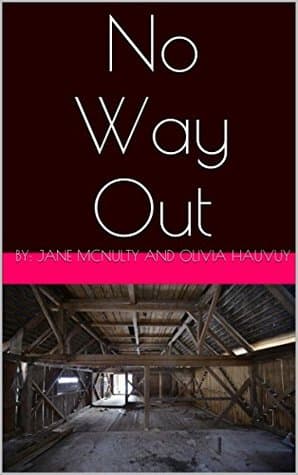
No Way Out cover
Archivist's Choice

No Way Out

Jane McNulty (2015)

Genre

General

Reading Time

300 min

Key Themes

See below

Track Your Reading

Sign in to track this book

Two women awaken with no memories, only to discover a hidden power and a past they must unravel, all while evading a truth that could be more dangerous than any lie.

Core Idea

Jane McNulty's "No Way Out" examines the traps in human perception and societal structures. It argues that seeking complete knowledge, origins, or freedom often leads to more entanglement. The book shows how people are caught by initial assumptions or perceived innocence, blinding them to unexpected powers and unwanted attention. It explores how partial truths become dangerous, creating a false sense of security. The act of seeking a problem's origin can deepen one's involvement. Ultimately, McNulty reveals that deception, shared secrets, and control structures are often internalized, forcing an identity change that restricts true autonomy, making escape difficult.
Reading time
300 min
Difficulty
Hard
✓ Read this if...
You are fascinated by the psychological and societal mechanisms that limit individual agency, the unintended consequences of seeking truth, and the complex interplay between knowledge, power, and identity. This book is for those who enjoy exploring the darker, more intricate aspects of human control and entrapment.
✗ Skip this if...
You prefer books with clear solutions, optimistic outlooks on human freedom, or straightforward narratives without deep philosophical dives into the nature of control and perception. This book might be too dense or unsettling if you're looking for light reading or simple answers.

Core idea

The central argument and framework that powers the entire book.

Jane McNulty's "No Way Out" examines the traps in human perception and societal structures. It argues that seeking complete knowledge, origins, or freedom often leads to more entanglement. The book shows how people are caught by initial assumptions or perceived innocence, blinding them to unexpected powers and unwanted attention. It explores how partial truths become dangerous, creating a false sense of security. The act of seeking a problem's origin can deepen one's involvement. Ultimately, McNulty reveals that deception, shared secrets, and control structures are often internalized, forcing an identity change that restricts true autonomy, making escape difficult.

At a glance

Reading time

300 min

Difficulty

Hard

Read this if...

You are fascinated by the psychological and societal mechanisms that limit individual agency, the unintended consequences of seeking truth, and the complex interplay between knowledge, power, and identity. This book is for those who enjoy exploring the darker, more intricate aspects of human control and entrapment.

Skip this if...

You prefer books with clear solutions, optimistic outlooks on human freedom, or straightforward narratives without deep philosophical dives into the nature of control and perception. This book might be too dense or unsettling if you're looking for light reading or simple answers.

Key Takeaways

1

The Blank Slate Trap

Amnesia isn't just about forgetting; it's about the dangerous void it creates.

Quote

When Lanaya Smith and Cara Gates wake up in an unknown building, with no memory of their lives, they quickly realize it's due to more than just amnesia.

The book immediately puts Lanaya and Cara into complete amnesia. This explores how fragile identity is. Without a personal history, they are vulnerable and easily manipulated, open to false stories. Their initial confusion and the later realization that their memory loss was planned show how a lack of self-knowledge can be used as a weapon. The 'blank slate' is not a fresh start but a dangerous emptiness that needs to be filled, often by forces they cannot control, leading to a desperate search for truth among many lies.

Supporting evidence

The initial awakening of Lanaya and Cara in an unknown building with no memory, and their immediate suspicion that it's 'more than just amnesia.'

Apply this

Reflect on how much of your identity is tied to your memories and past experiences. Consider journaling or documenting key life events to create a personal anchor, making it harder for external influences to redefine your narrative.
identity-crisismemory-lossvulnerability
2

Unforeseen Powers, Unwanted Attention

Discovering extraordinary abilities often leads to a life on the run, not celebration.

Quote

After they stumble across a power no one thought existed, they escape together, and are quickly thrust into a life they didn't know they had.

Lanaya and Cara's discovery of an unknown power quickly changes their situation from amnesia to a high-stakes chase. This suggests that certain truths or abilities disrupt established orders, making their owners targets. The 'power no one thought existed' acts as a trigger, turning their escape from a quest for freedom into a fight for survival. The book implies that being exceptional, especially when it challenges reality's known limits, rarely brings comfort. Instead, it brings the burden of being hunted and the constant threat of e...

Supporting evidence

The direct statement that after discovering their power, they are 'quickly thrust into a life they didn't know they had' and are 'constantly on the run.'

Apply this

Consider how revealing a unique skill or insight in your own life might attract both positive and negative attention. Be prepared for the potential consequences of standing out, and cultivate a support system that can help you navigate unexpected pressures.

supernatural-abilitiespersecutionfugitive-life
3

The Peril of Partial Truths

Reclaiming a fragmented past can be more disorienting than having no past at all.

Quote

They learn about their lives but something still seems missing.

Even as Lanaya and Cara start to put together parts of their past, the story emphasizes that 'something still seems missing.' This shows the psychological impact of incomplete information. A partial truth can be more unsettling than complete ignorance because it creates a nagging feeling of incompleteness and distrust. It suggests that the 'lives they learn about' might be altered versions, designed to guide them down a specific path or hide a deeper, more dangerous reality. The human need for consistency clashes with their fragmented...

Supporting evidence

The specific phrase 'something still seems missing' after they 'learn about their lives,' indicating an ongoing internal struggle with their identity.

Apply this

When seeking information or understanding, be wary of sources that offer only part of the story. Strive for comprehensive understanding, and be prepared to dig deeper, questioning gaps or inconsistencies, rather than settling for an incomplete picture.

incomplete-informationcognitive-dissonancedistrust
4

The Pursuit of Origins as a Trap

Obsessively seeking 'who put them there' can lead to more danger, not answers.

Quote

Constantly on the run, they attempt to dig into their past and find out who put them there.

The protagonists' strong desire to 'find out who put them there' is shown not just as a noble search for truth, but also as a dangerous need. While understandable, this focus makes them predictable and open to those who want to keep their secrets hidden. The act of 'digging into their past' becomes a cycle of danger, suggesting that sometimes seeking answers is the most risky path. The story implies that their enemies might expect this need, using it as bait to lure them into more traps or to reveal information on their own terms, not...

Supporting evidence

Their continuous state of being 'constantly on the run' directly linked to their active 'attempt to dig into their past and find out who put them there.'

Apply this

Before embarking on a quest for answers, especially regarding sensitive or dangerous topics, weigh the potential risks against the benefits. Sometimes, accepting a certain level of ambiguity or focusing on present safety might be a more pragmatic approach than relentlessly pursuing every buried truth.

obsessionself-sabotagedangerous-truths
5

Ignorance as a Shield

Some truths are so dangerous, knowing them becomes a death sentence.

Quote

They soon discover that sometimes the truth is better kept a secret...

This point is a clear warning: not all knowledge empowers. Lanaya and Cara's journey ends with the chilling realization that 'sometimes the truth is better kept a secret.' This suggests that the secret they uncover is so destabilizing or incriminating that simply knowing it, let alone revealing it, puts their lives at extreme risk. It challenges the common idea that truth always frees you, suggesting instead that some truths are so harmful they become a burden too heavy to carry, forcing a hard choice between ignorance and self-preser...

Supporting evidence

The direct statement 'sometimes the truth is better kept a secret,' which marks a significant turning point in their understanding of their situation.

Apply this

Before seeking out potentially dangerous or life-altering information, consider if you are truly prepared for the consequences of knowing. Evaluate whether the potential harm outweighs the benefit of having that knowledge, and develop strategies for handling sensitive information discreetly if necessary.

dangerous-knowledgesecrecyself-preservation
6

The Thin Line of Deception

The difference between truth and lies can be a matter of life and death.

Quote

...and that sometimes the difference between the truth and lies can be life or death.

The main lesson for Lanaya and Cara is the deep effect of deception. The story argues that the difference between 'truth and lies' is not just a philosophical idea but a matter of survival. In their world, a mistake in telling fact from fiction can be deadly. This highlights the extreme risks in their quest and their enemies' manipulative nature. It forces the protagonists, and the reader, to constantly question everything, realizing that their reality might be a carefully built illusion, where survival depends on seeing through decep...

Supporting evidence

The explicit conclusion of the narrative: 'sometimes the difference between the truth and lies can be life or death.'

Apply this

Develop critical thinking skills to analyze information and identify potential biases or deceptions. In high-stakes situations, always verify facts from multiple, reliable sources, and be aware that even small inaccuracies can have significant repercussions.

deceptioncritical-thinkingsurvival
7

Forced Evolution of Identity

Stripped of their past, protagonists are forced to forge new identities under duress.

Quote

They learn about their lives but something still seems missing. Constantly on the run, they attempt to dig into their past...

While they search for their past, the constant pressure of being 'on the run' and the 'missing' parts of their lives mean Lanaya and Cara cannot simply go back to old identities. They must change. Their amnesia, new powers, and fugitive status act as a test, forming new selves shaped by immediate threats and urgent choices. This is an active, often painful, creation of identity in real-time, under extreme pressure. The book subtly explores how hardship can remove old ideas of self, leaving only the core essence that adapts and fights ...

Supporting evidence

The continuous state of being 'on the run' while simultaneously trying to 'learn about their lives' and dealing with 'something still seems missing,' implying a constant state of flux and adaptation.

Apply this

In periods of significant life change or crisis, embrace the opportunity to redefine yourself. Recognize that identity isn't static and can be actively shaped by your responses to challenges, rather than solely by your history.

identity-formationresilienceadaptation
8

The Burden of Shared Secrets

A shared traumatic secret can bond individuals, but also makes them joint targets.

Quote

When Lanaya Smith and Cara Gates wake up in an unknown building... they escape together...

Lanaya and Cara's shared experience of waking up with amnesia and then finding their powers creates an immediate, strong bond. This shared trauma and secret form the basis of their relationship, making them deeply dependent on each other. However, this bond also makes them a single, larger target. Their shared knowledge and situation mean that if one fails, the other is likely in danger. The book shows how shared secrets, while creating a deep connection, also increase risk, turning individual weaknesses into a group liability that en...

Supporting evidence

Their simultaneous awakening, shared amnesia, discovery of power, and joint escape, indicating a co-dependent survival from the outset.

Apply this

When sharing sensitive information or embarking on a high-stakes endeavor with others, understand that your fates become intertwined. Build trust carefully, establish clear communication, and develop contingency plans for protecting both the secret and each other.

co-dependencyshared-traumamutual-vulnerability
9

The Architecture of Control

The unknown building symbolizes a system designed for total manipulation.

Quote

When Lanaya Smith and Cara Gates wake up in an unknown building...

The 'unknown building' where Lanaya and Cara awaken is more than just a place; it represents their initial state of complete control and manipulation. Its anonymity and their amnesia suggest a carefully designed environment meant to strip them of control and identity. This architectural symbol extends to the larger conspiracy: an unseen, powerful entity that controls their lives, memories, and even their escape. The building shows the first, physical form of this control, and their escape is not just from a place, but from a system de...

Supporting evidence

The initial setting of the 'unknown building' combined with their amnesia, implying a controlled environment for their initial state.

Apply this

Be aware of environments or systems that seek to control information, limit autonomy, or erase personal history. Question the motives behind such structures and actively seek to maintain your independence of thought and action.

systemic-controlmanipulationarchitecture-as-metaphor
10

The Paradox of Freedom

Escaping captivity doesn't guarantee freedom when the past still holds you captive.

Quote

After they stumble across a power no one thought existed, they escape together, and are quickly thrust into a life they didn't know they had. They learn about their lives but something still seems missing. Constantly on the run...

Lanaya and Cara's 'escape' is a strong moment, but the story quickly shows it is a limited freedom. They are 'thrust into a life they didn't know they had' and are 'constantly on the run.' This highlights a central contradiction: physical escape from a prison does not mean true freedom if the forces that imprisoned you still control your life, or if your past remains an inescapable trap. Their freedom is defined by constant flight and the relentless search for a truth that might be better left unknown. The book suggests that true free...

Supporting evidence

The immediate transition from 'escape' to being 'thrust into a life they didn't know they had' and being 'constantly on the run,' demonstrating that escape was merely the beginning of a different kind of captivity.

Apply this

When pursuing freedom or change, consider all dimensions: physical, mental, and circumstantial. Recognize that breaking free from one constraint might reveal others, and prepare for a longer, more complex journey towards genuine autonomy.

conditional-freedompsychological-captivityautonomy

Critical analysis

Notable Quotes

The city was a beast, and sometimes, you just had to let it eat you whole to survive.

Reflecting on the harsh realities of urban life and the compromises one makes.

Every secret you keep builds a wall around you, brick by painful brick.

A character's internal monologue about the isolating nature of their hidden past.

Hope is a dangerous thing in a place like this. It makes you soft.

A cynical character warning a more optimistic one about the perils of vulnerability.

There's no way out, not really. Only different ways to go deeper in.

The protagonist's grim realization about their predicament, giving the book its title.

The truth isn't always a weapon; sometimes, it's just another burden.

A character grappling with a difficult revelation and its implications.

You can run from your past, but you can't outrun the person it made you.

An observation about the lasting impact of past experiences on identity.

Silence can be louder than any scream when you're waiting for an answer.

Describing the tension and anxiety during a moment of profound uncertainty.

Justice is a luxury few can afford, and even fewer truly receive.

A commentary on the systemic inequalities and the elusive nature of true justice.

Sometimes the monster isn't under your bed; it's in the mirror.

A character confronting their own dark side or complicity.

The hardest part of letting go isn't the goodbye; it's the empty space that's left behind.

Musing on the aftermath of loss and the void it creates.

Trust is a fragile thing, easily broken, almost impossible to fully repair.

After a betrayal, reflecting on the damage done to a relationship.

Fear has a way of showing you exactly what you're capable of, for better or worse.

A character pushed to their limits by a terrifying situation.

We all wear masks, some more convincing than others, until the pressure cracks them.

Observing the facades people maintain and their eventual collapse under stress.

The weight of what you don't say can be heavier than any confession.

A character struggling with unspoken truths and their emotional burden.

Quiz

Test Your Knowledge

Ready to see how well you understood this book? Take our interactive quiz with 10 questions.

10
Questions
~5
Minutes
?
Best Score

Key Questions (FAQ)

'No Way Out' centers on Lanaya Smith and Cara Gates, who wake up with amnesia in an unknown building. They soon discover they possess extraordinary powers and are thrust into a life of danger, constantly on the run while trying to uncover who erased their memories and why.

About the author