BookBrief
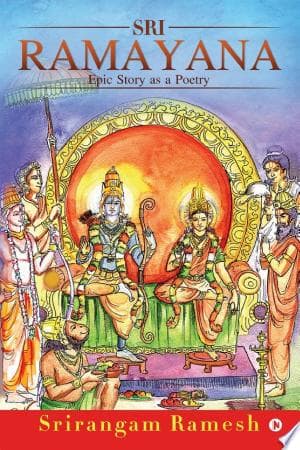
Sri Ramayana cover
Archivist's Choice

Sri Ramayana

Srirangam Ramesh (2016)

Genre

General

Reading Time

600 min

Key Themes

See below

Track Your Reading

Sign in to track this book

This poetic Ramayana uses metaphors of sky, river, and fire to guide young readers through Rama's journey of virtue, sharing timeless wisdom simply and engagingly up to his coronation.

Core Idea

The Sri Ramayana, a timeless Indian epic, explores Dharma—righteous conduct, duty, and cosmic order—through Prince Rama's exile and his commitment to virtue. The story shows how individual sacrifice, devotion, and wise counsel help overcome evil and restore balance. Ultimately, it champions the principle that justice will prevail and offers a model for ideal rulership (Rama Rajya), emphasizing integrity, compassion, and the welfare of all beings.
Reading time
600 min
Difficulty
Medium
✓ Read this if...
You are interested in understanding the core philosophical and ethical teachings embedded within one of India's most significant ancient epics, particularly its nuanced exploration of Dharma, leadership, and human values.
✗ Skip this if...
You are looking for a quick, modern summary of the Ramayana rather than a deep dive into its thematic and moral complexities, or if you prefer purely historical or empirical non-fiction.

Core idea

The central argument and framework that powers the entire book.

The Sri Ramayana, a timeless Indian epic, explores Dharma—righteous conduct, duty, and cosmic order—through Prince Rama's exile and his commitment to virtue. The story shows how individual sacrifice, devotion, and wise counsel help overcome evil and restore balance. Ultimately, it champions the principle that justice will prevail and offers a model for ideal rulership (Rama Rajya), emphasizing integrity, compassion, and the welfare of all beings.

At a glance

Reading time

600 min

Difficulty

Medium

Read this if...

You are interested in understanding the core philosophical and ethical teachings embedded within one of India's most significant ancient epics, particularly its nuanced exploration of Dharma, leadership, and human values.

Skip this if...

You are looking for a quick, modern summary of the Ramayana rather than a deep dive into its thematic and moral complexities, or if you prefer purely historical or empirical non-fiction.

Key Takeaways

1

The Essence of Dharma

Rama embodies righteousness, serving as the ultimate standard for moral conduct.

Quote

Ramayana is the sky; Rama is in its blue, All across the space, in the light of truth.

The Ramayana, through Rama, shows what Dharma—righteous conduct and moral duty—means. Rama's commitment to truth, even during his exile, sets an example for how people should handle life's problems. His actions are not just heroic, but choices guided by his moral compass, showing that true strength comes from upholding one's principles. Dharma is not a rigid set of rules, but a path of virtue that shapes character and destiny, influencing every decision.

Supporting evidence

Rama's immediate acceptance of his exile to the forest, without question or complaint, to uphold his father Dasharatha's promise to Kaikeyi, despite its injustice.

Apply this

Reflect on a recent difficult decision. Did you prioritize personal gain or a higher moral principle? Strive to make choices that align with your deepest values, even when inconvenient, mirroring Rama's commitment to truth and duty.


dharmarighteousnessmoral-duty
2

Sacrifice for the Greater Good

The epic showcases profound personal sacrifices made for family honor and societal well-being.

Quote

Ramayana is the cloud and Rama is the rain, Of wisdom in life between pleasure and pain.

The Ramayana is full of personal sacrifice, not just from Rama, but from many characters. Rama's 14-year exile, Sita's devotion and suffering, Lakshmana's selfless service, and Bharata's refusal to take the throne all highlight a central theme: individual desires often must give way to duty, family honor, and the kingdom's well-being. These sacrifices are shown not as burdens, but as parts of a virtuous life, showing that true leadership and love often mean putting others first. The story teaches that enduring pain for a noble cause l...

Supporting evidence

Bharata's decision to rule Ayodhya only as Rama's regent, placing Rama's sandals on the throne, and living an ascetic life outside the city for the entire duration of Rama's exile.

Apply this

Consider an area in your life where a small personal sacrifice could significantly benefit your family, community, or a long-term goal. Act on it, understanding that such acts build character and foster greater harmony.

sacrificedutyselflessness
3

The Strength of Devotion

Unwavering loyalty and devotion are powerful forces for good, overcoming immense obstacles.

Quote

Ramayana is a river; Rama is the boat, To float from banks of evil, to the divine shore.

Devotion in the Ramayana is not passive admiration but an active, transformative force. Lakshmana's commitment to Rama, Sita's loyalty despite abduction, and Hanuman's selfless service are key examples. Their devotion fuels their courage, resilience, and willingness to face great challenges. This theme shows that strong bonds of loyalty, whether to a person, a principle, or a divine ideal, can provide the inner strength needed to endure hardship and achieve difficult feats. Genuine devotion goes beyond emotion, becoming a driving forc...

Supporting evidence

Hanuman's epic leap across the ocean to Lanka in search of Sita, driven solely by his devotion to Rama and his mission.

Apply this

Identify a cause or a person you deeply believe in. How can you demonstrate more active, unwavering support? Cultivate a spirit of devoted service in your own endeavors, recognizing its power to overcome challenges.

devotionloyaltyfaith
4

The Nature of Evil

Ravana personifies unchecked ego and desire, illustrating the destructive power of vice.

Quote

Ramayana is the fire where Rama is the flame, Burns the evil desire,’Ravana’ is the name.

Ravana, the antagonist, is not just a villain but a complex character who shows the destructive results of unchecked ego, lust, and arrogance. Despite his great power, knowledge, and blessings, his inability to control his desires and his disregard for Dharma ultimately lead to his downfall. The story is a warning, showing that even the most powerful individuals can be ruined by their vices. Ravana's character reveals that true strength is not just physical power or magic, but moral fortitude and humility. His story illustrates how in...

Supporting evidence

Ravana's abduction of Sita, driven by lust and a desire for revenge, despite warnings from his wise brother Vibhishana and his wife Mandodari.

Apply this

Reflect on any recurring negative patterns or 'vices' in your own life (e.g., procrastination, anger, envy). What steps can you take to control these impulses before they lead to significant negative consequences, learning from Ravana's tragic flaw?

egoviceconsequence
5

The Importance of Wise Counsel

Listening to virtuous advisors is crucial for effective leadership and avoiding disaster.

Quote

Ramayana is the ocean with lessons in the deep, Rama is the salt in the food that we eat.

Throughout the Ramayana, wise counsel greatly affects characters' fates. King Dasharatha's initial reliance on his wife Kaikeyi's advice, driven by emotion, leads to Rama's exile. In contrast, Rama consistently seeks and values the advice of sages like Vishwamitra and Vashistha, and later, allies like Sugriva and Vibhishana. Ravana's downfall is hastened by his arrogant dismissal of Vibhishana's warnings. This shows that true leadership involves the humility to listen, discern, and use good advice, rather than giving in to pride or se...

Supporting evidence

Vibhishana's repeated attempts to advise his brother Ravana to return Sita and avoid war, which Ravana scornfully rejects, ultimately leading to Vibhishana joining Rama.

Apply this

Identify a current challenge you're facing. Instead of relying solely on your own perspective, seek out advice from a trusted, wise mentor or peer. Be open to perspectives that might challenge your own assumptions.

wisdomcounselleadership
6

The Power of Friendship and Alliance

Unexpected alliances forged through trust and shared purpose can overcome formidable foes.

Quote

In the wind of life, Ramayana is the breeze, Where Rama is ‘virtue’- the air that we breathe.

The Ramayana powerfully shows how different individuals can unite for a common, righteous cause. Rama, exiled and alone, forms alliances with the Vanaras (monkey race) led by Sugriva and Hanuman, and later with Vibhishana, Ravana's virtuous brother. These alliances are built on trust, mutual respect, and a shared commitment to Dharma. Without these allies, Rama's mission to rescue Sita would have been impossible. This theme teaches that no one can succeed alone; forming strong, principled connections and using collective strengths is ...

Supporting evidence

The construction of the Setu (bridge) to Lanka by the Vanara army, a monumental engineering feat made possible by their collective effort and loyalty to Rama.

Apply this

Consider a personal or professional goal that feels daunting. Who are potential allies or collaborators you could reach out to? Build bridges of trust and shared purpose to amplify your collective impact.

alliancefriendshipunity
7

Justice Will Prevail

Despite periods of intense suffering, the cosmic balance ensures that good ultimately triumphs over evil.

Quote

Ramayana is the ocean with lessons in the deep, Rama is the salt in the food that we eat.

A core message of the Ramayana is the ultimate triumph of justice and righteousness. While characters endure many trials, separation, and war, the story consistently moves toward a conclusion where Dharma is re-established and adharma (unrighteousness) is defeated. Ravana's defeat and Rama's coronation are not just plot points, but symbolic affirmations that the universe favors truth and virtue. This provides a strong message of hope and resilience, suggesting that even in the darkest times, maintaining moral integrity will eventually...

Supporting evidence

The climactic battle between Rama and Ravana, where Ravana, despite his immense power, is defeated due to his unrighteous actions, and Rama, the embodiment of Dharma, emerges victorious.

Apply this

When faced with injustice or unfairness, resist the urge to retaliate with similar negativity. Instead, continue to act with integrity and trust that, in the long run, your righteous actions will contribute to a just outcome.

justicetriumphrighteousness
8

The Ideal Rulership (Rama Rajya)

Rama's reign exemplifies a utopian state of governance based on justice, prosperity, and peace.

Quote

Rama’s coronation is the last part of Yuddha Kanda where we stop and stay.

The epic's end in the Yuddha Kanda, with Rama's coronation, marks the establishment of 'Rama Rajya'—an ideal kingdom of perfect justice, peace, and prosperity. This concept has become a timeless aspiration for governance, where the ruler acts selflessly for the welfare of all citizens, ensuring their happiness, security, and moral upliftment. It is a vision where everyone thrives under a just and compassionate administration, free from fear and want. The Ramayana, by ending here, leaves the reader with a powerful image of what society...

Supporting evidence

The narrative's focus on Rama's return to Ayodhya and his subsequent coronation, marking the end of chaos and the beginning of an era of unprecedented peace and virtue.

Apply this

Consider your role within any group or organization. How can you embody principles of fairness, compassion, and dedication to the collective good, even in a small way, to foster a 'Rama Rajya' in your own sphere of influence?

rama-rajyagovernanceutopia
9

The Enduring Power of Story

The Ramayana's poetic format and simple style ensure its timeless appeal and moral instruction for all ages.

Quote

A simple style of expression is maintained to keep it attractive for the youngsters to read and comprehend easily.

Srirangam Ramesh's version highlights the Ramayana's accessibility and its power as a tool for moral education. By presenting the story in a simple, poetic format, the book ensures that its lessons on Dharma, sacrifice, and the nature of good and evil are easy to understand, especially for younger audiences. This shows that stories, especially those rich in cultural and ethical wisdom, are effective ways to pass on values across generations. The Ramayana's lasting popularity in various versions and languages proves the universal appea...

Supporting evidence

The author's explicit statement about maintaining a simple style to attract youngsters and inspire them to explore further interpretations of the epic.

Apply this

Identify a core value you wish to impart to others, especially younger generations. Craft a simple story or analogy that effectively conveys this value, recognizing the power of narrative over didactic instruction.

storytellingmoral-educationepic-narrative

Critical analysis

Notable Quotes

Dharma protects those who protect Dharma.

A fundamental principle often invoked, emphasizing righteous conduct.

Truth and non-violence are the highest Dharma.

A core ethical teaching that guides actions throughout the epic.

A king's duty is to protect his subjects as a father protects his children.

Describing the ideal governance and responsibility of a ruler, exemplified by Rama.

Sorrow is a test of one's inner strength.

Reflecting on the numerous adversities faced by Rama and Sita.

Patience is the greatest virtue in times of distress.

Sita's unwavering resolve during her captivity in Lanka.

Even the mightiest can fall due to arrogance.

The downfall of Ravana, despite his immense power and boons.

Friendship with the virtuous is a pathway to success.

Rama's alliance with Sugriva and the Vanara army.

The greatest treasure is a pure heart.

Emphasizing internal purity over external wealth or power.

One must always uphold their word, come what may.

Dasharatha's tragic adherence to his promise to Kaikeyi.

The true measure of a man is not his strength, but his character.

Contrasting physical prowess with moral fiber, seen in many characters.

Even a small act of kindness can lead to great rewards.

Jatayu's sacrifice in trying to save Sita, and his subsequent reward.

Family bonds, when strong, can overcome any adversity.

The unwavering support between Rama, Lakshmana, and Bharata.

Selfless service is the highest form of devotion.

Hanuman's unparalleled devotion and service to Rama.

The path of righteousness may be difficult, but it leads to ultimate victory.

The overarching theme of Rama's struggle and eventual triumph over evil.

Quiz

Test Your Knowledge

Ready to see how well you understood this book? Take our interactive quiz with 10 questions.

10
Questions
~5
Minutes
?
Best Score

Key Questions (FAQ)

'Sri Ramayana' by Srirangam Ramesh presents the core story of the ancient Indian epic, Ramayana, in an accessible poetic format. It aims to introduce readers, especially youngsters, to the leading narrative and the timeless wisdom embedded within.

About the author