BookBrief
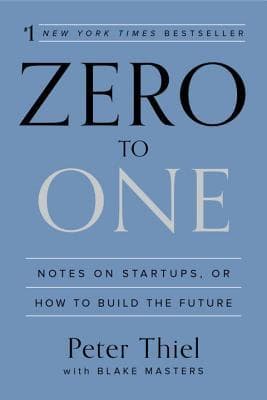
Zero to One: Notes on Startups, or How to Build the Future cover
Archivist's Choice

Zero to One: Notes on Startups, or How to Build the Future

Peter Thiel (2014)

Genre

Business / Leadership / Economics / Finance / Technology

Reading Time

12 Minutes

Key Themes

See below

Track Your Reading

Sign in to track this book

To build the future, Peter Thiel argues, you must embrace the idea that true innovation lies not in small improvements, but in creating something entirely new that avoids competition.

Core Idea

Zero to One argues that true progress and value creation come from building entirely new things (going from zero to one), rather than merely copying existing ones or making incremental improvements (going from one to N). Peter Thiel emphasizes the importance of monopolies, not as a negative force, but as the natural outcome and reward for creating something uniquely valuable that no one else can offer. The book advocates for contrarian thinking, focusing on fundamental questions about the future, and building companies that solve unique problems with proprietary technology, network effects, economies of scale, and branding.
Difficulty
Medium

Core idea

The central argument and framework that powers the entire book.

Zero to One argues that true progress and value creation come from building entirely new things (going from zero to one), rather than merely copying existing ones or making incremental improvements (going from one to N). Peter Thiel emphasizes the importance of monopolies, not as a negative force, but as the natural outcome and reward for creating something uniquely valuable that no one else can offer. The book advocates for contrarian thinking, focusing on fundamental questions about the future, and building companies that solve unique problems with proprietary technology, network effects, economies of scale, and branding.

At a glance

Difficulty

Medium

Key Takeaways

1

The Power of 'Zero to One'

True innovation creates something entirely new, rather than merely replicating existing models.

Quote

Doing what someone else already knows how to do takes the world from 1 to n, adding more of something familiar. But when you do something new, you go from 0 to 1.

Thiel's main point is the difference between horizontal progress (going from 1 to n) and vertical progress (going from 0 to 1). Horizontal progress copies successful models and expands existing markets. Vertical progress creates entirely new things. This difference shows what true innovation is. Most businesses operate in the 1 to n space, which leads to strong competition and often smaller returns. The rare companies that achieve 0 to 1 progress, like Google creating a better search engine or PayPal changing online payments, build mo...

Supporting evidence

Thiel references PayPal's early struggles in a crowded market and its eventual success by focusing on a niche that allowed it to achieve a near-monopoly, illustrating the strategic advantage of creating a new market rather than competing in an existing one.

Apply this

Entrepreneurs should relentlessly pursue unique solutions to fundamental problems, aiming to create entirely new product categories or significantly improve existing ones to the point of rendering competitors obsolete, rather than incrementally improving on existing offerings.

2

Monopolies as Drivers of Progress

Sustainable value creation often stems from establishing a temporary monopoly through radical innovation.

Quote

All happy companies are different: each one earns a monopoly by solving a unique problem. All failed companies are the same: they failed to escape competition.

This is one of the book's strongest ideas. Thiel says that healthy, innovative companies are almost always monopolies, not in a bad way, but because they offer something so unique and good that they lead their niche. Competition, though often praised, can reduce profits to nothing and stop long-term planning. Real monopolies, like Google's search dominance or Apple's early iPhone success, can invest in big, long-term research and development because they aren't constantly fighting many rivals. This view challenges the anti-monopoly ru...

Supporting evidence

Google's early dominance in search, allowing it to invest in projects like self-driving cars, is cited as an example of a valuable monopoly that continues to innovate due to its sustained profitability.

Apply this

Founders should strive to build a business with defensible advantages that allow it to become a 'monopoly of one,' focusing on proprietary technology, network effects, economies of scale, or strong branding to create a moat around their innovation.

3

The Importance of Secrets

Breakthrough innovations come from discovering non-obvious truths that others miss.

Quote

Every great company is built around a secret that's hidden from the outside. If you want to build a better future, you must believe in secrets.

Thiel believes that real innovation is not about small improvements or clear solutions. It is about finding 'secrets' – hidden truths about the world or human behavior that, once known, create huge value. These secrets are not mysterious; they are often problems or chances that others have missed, ignored, or not thought about. Believing in secrets means rejecting the idea that all big problems are solved or that all valuable knowledge is widely known. It promotes a deeper look at assumptions and common ideas, encouraging a mindset of...

Supporting evidence

Thiel suggests that many successful companies discovered a 'secret' about how to deliver a service or product more effectively than anyone else, such as PayPal realizing the need for secure online payments before major banks did.

Apply this

Entrepreneurs should cultivate a contrarian mindset, actively seeking out overlooked problems or unconventional solutions, and questioning widely accepted beliefs to uncover unique insights that can form the basis of a revolutionary business.

4

Founders as Visionaries

Strong, singular leadership and a clear vision are crucial for a startup's success.

Quote

A startup is a team of people on a mission, and a good culture is just a team that works. A startup messed up at its foundation cannot be fixed.

Thiel highlights the important role of the founder, often a single visionary, in shaping a company's future. He argues against the idea that management teams should be perfectly balanced or that leadership should be shared. Instead, he points out that successful startups often have a strong, even unusual, founder with a clear, almost obsessive vision. This founder sets the company's culture, mission, and long-term direction from the start. The first decisions about co-founders, ownership, and roles are most important, as early mistake...

Supporting evidence

Thiel frequently references the 'PayPal Mafia' and the singular visions of founders like Elon Musk (Tesla, SpaceX) and Steve Jobs (Apple) as examples of how strong, often unconventional, leadership can drive radical innovation.

Apply this

Founders should embrace their unique vision, carefully select co-founders and early team members who align with that vision, and establish a strong, distinct company culture that reflects their core mission and values from the outset.

5

The Seven Questions of a Startup

A robust business plan requires answering critical questions about technology, timing, market, team, distribution, durability, and secrets.

Quote

Every startup must answer seven questions: The Engineering Question, The Timing Question, The Monopoly Question, The People Question, The Distribution Question, The Durability Question, and The Secret Question.

This framework summarizes Thiel's main ideas, offering a checklist for reviewing any new business. The questions make founders think about their business as a whole, beyond just the product. For example, the 'Distribution Question' (Can you not just create but deliver your product?) often shows a neglected area, as many great inventions fail because of poor sales and marketing. The 'Durability Question' (Will your market position be defensible 10 and 20 years from now?) pushes for long-term planning over quick gains. This structured a...

Supporting evidence

Thiel uses these questions to dissect various companies, implicitly showing how a failure to adequately answer even one can lead to collapse, while strong answers across the board predict success.

Apply this

Entrepreneurs should rigorously apply these seven questions to their business concept, using them as a diagnostic tool to identify potential weaknesses and refine their strategy for long-term success and defensibility.

6

Against Indefinite Optimism

A definite plan for the future, rather than blind hope, is essential for progress.

Quote

Definite optimism means that you believe the future will be better than the present if you plan for it and work to make it better.

Thiel criticizes 'indefinite optimism,' where people believe the future will be better but have no specific plan for how to make it so, often hoping for luck or general progress. This is very different from 'definite optimism,' which involves a clear vision for the future and a concrete plan to reach it. He argues that the modern world, especially the West, has fallen into indefinite optimism, leading to a lack of progress outside of IT. This argument has limits, as too much 'definite' planning can sometimes stop new ideas from emergi...

Supporting evidence

Thiel contrasts the 'definite' space race of the 1960s with the more 'indefinite' approach to energy or space exploration in recent decades, suggesting a decline in grand, planned visions.

Apply this

Individuals and organizations should cultivate definite optimism by formulating clear, ambitious long-term goals and developing specific strategies to achieve them, rather than relying on vague hopes or reacting to trends.

7

Technology as Liberation

New technology is the primary driver of economic growth and human flourishing.

Quote

New technology tends to come from new companies—the ones that go from zero to one.

Thiel sees technology not just as devices, but as any new and better way of doing things. He argues that technological progress is the main driver of human progress and wealth, contrasting it with globalization, which simply spreads existing technologies. This idea shows how urgent it is to encourage innovation, especially in creating 'zero to one' technologies, to solve humanity's big problems. His focus on new companies as the main source of these breakthroughs highlights the need for entrepreneurs. While globalization has certainly...

Supporting evidence

The entire history of Silicon Valley, from semiconductors to software, serves as a testament to how new companies, driven by new technologies, create enormous wealth and societal advancement.

Apply this

Policymakers and investors should prioritize supporting early-stage, technology-driven startups that aim to create entirely new solutions, recognizing them as the most potent force for long-term economic and societal betterment.

8

The Founder's Paradox

Founders are often both revered and ridiculed, embodying unique traits essential for breakthrough innovation.

Quote

The single greatest advantage any one company can have is a founder who is eccentric and brilliant enough to come up with a novel idea, and then strong enough to build a company around it.

Thiel discusses the often-unusual nature of successful founders. They are often seen as outsiders, perhaps even eccentric, yet they have the unique vision and belief needed to go against common ideas and build something truly new. This 'founder's paradox' suggests that the traits that make a person seem unusual or even difficult can be precisely the ones that allow them to challenge norms and drive big changes. He explores how founders are often seen as symbols of their companies, for better or worse. This argument is strong, showing ...

Supporting evidence

Thiel uses examples like Steve Jobs, Elon Musk, and Larry Page to illustrate how their unique personalities and unyielding visions were integral to the success of their companies, despite (or because of) their unconventional approaches.

Apply this

Founders should embrace their unique perspectives and not shy away from being different, understanding that their individuality, when channeled effectively, can be a powerful asset in building a groundbreaking company.

9

Sales Matters Most

Even the best product fails without an effective strategy for distribution.

Quote

The greatest challenges for companies in the 21st century will be to improve distribution, not just to create new products.

This is an important, counter-intuitive point that brilliant technical founders often miss. Thiel argues that many companies fail not because their product is bad, but because they lack an effective way to sell and distribute it. He points out that 'sales is hidden' – it often does not look like traditional sales, but includes marketing, advertising, and complex partnerships. The 'better mousetrap' mistake, where a superior product is expected to sell itself, is a common error. A 'zero to one' product still needs a 'zero to one' distr...

Supporting evidence

Thiel points out that many 'dot-com' failures had technically sound products but lacked viable business models for customer acquisition, while companies like Google mastered distribution through advertising.

Apply this

Founders must prioritize developing a robust and innovative distribution strategy from the earliest stages of their company, recognizing that even a revolutionary product needs a clear path to market and effective customer acquisition.

10

The Future is Not Predetermined

Human agency and intentional action shape the future, rather than inevitable forces.

Quote

We are not in a race against the machines. We are in a race with the machines. We are human, and we are still in charge.

Thiel ends with a strong statement about human ability. He rejects views of the future that say it is fixed, whether technologically or economically, and instead argues that humans can actively build the future they want. This view directly challenges the often-fatalistic acceptance of 'progress' as an uncontrollable force. It strengthens the main message of 'zero to one': that conscious effort, clear vision, and the courage to build new things are what truly move humanity forward. This is the book's most inspiring takeaway, encouragi...

Supporting evidence

Thiel's entire narrative, from the importance of secrets to definite optimism, implicitly argues against determinism, emphasizing that human choices and innovations are the true drivers of change.

Apply this

Individuals should cultivate a proactive, creative mindset, seeking to shape the future through their actions and innovations, rather than passively accepting what they perceive as inevitable trends or outcomes.

Critical analysis

Notable Quotes

Quiz

Test Your Knowledge

Ready to see how well you understood this book? Take our interactive quiz with 10 questions.

10
Questions
~5
Minutes
?
Best Score

Key Questions (FAQ)

The core idea of Zero to One is that true innovation comes from creating something entirely new, moving from '0 to 1', rather than incrementally improving existing things, which is '1 to n'. It emphasizes thinking for yourself to find unique business opportunities.

About the author