BookBrief
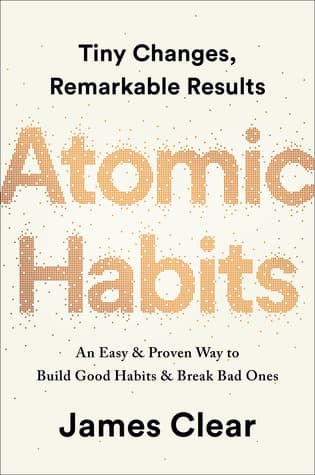
Atomic Habits: An Easy & Proven Way to Build Good Habits & Break Bad Ones cover
Archivist's Choice

Atomic Habits: An Easy & Proven Way to Build Good Habits & Break Bad Ones

James Clear (2018)

Genre

Business / Productivity / Health / Science / Self-Help

Reading Time

12 Minutes

Key Themes

See below

Track Your Reading

Sign in to track this book

Achieve remarkable results by mastering small, incremental "atomic" habits that build powerful systems for personal change.

Core Idea

Atomic Habits presents a practical, evidence-based framework for improving daily habits, arguing that significant change comes from the aggregation of marginal gains. James Clear introduces the 'Four Laws of Behavior Change' (Make it Obvious, Make it Attractive, Make it Easy, Make it Satisfying) as a simple set of rules to design an environment where good habits are inevitable and bad habits are impossible. The book emphasizes identity-based habits, focusing on who you wish to become rather than just what you want to achieve, and leveraging small, consistent improvements to achieve remarkable results over time.
Difficulty
Easy

Core idea

The central argument and framework that powers the entire book.

Atomic Habits presents a practical, evidence-based framework for improving daily habits, arguing that significant change comes from the aggregation of marginal gains. James Clear introduces the 'Four Laws of Behavior Change' (Make it Obvious, Make it Attractive, Make it Easy, Make it Satisfying) as a simple set of rules to design an environment where good habits are inevitable and bad habits are impossible. The book emphasizes identity-based habits, focusing on who you wish to become rather than just what you want to achieve, and leveraging small, consistent improvements to achieve remarkable results over time.

At a glance

Difficulty

Easy

Key Takeaways

1

Identity-Based Habits

Shift your focus from what you want to achieve to who you wish to become.

Quote

Your habits are how you embody your identity. When you make your bed every day, you embody the identity of an organized person. When you write every day, you embody the identity of a creative person.

This is the book's strongest idea, setting it apart from many other habit guides. Clear says true, lasting change comes from identity-based goals, not outcome-based ones. For example, instead of 'I want to lose 10 pounds,' think 'I want to be a healthy person.' When you adopt the identity first, your actions fit that identity. The goal is not to run a marathon, but to become a runner. This change offers internal motivation and resilience; failures become learning moments, not proof of inadequacy. It is a powerful way to reframe the 'w...

Supporting evidence

Clear cites numerous examples, including the story of a woman who quit smoking not by focusing on 'not smoking' but by adopting the identity of a 'non-smoker,' which changed her internal dialogue and decision-making.

Apply this

Instead of saying 'I want to read a book,' say 'I want to be a reader.' Ask yourself: 'What would a healthy person do?' or 'What would a productive person do?' and then take that small action.

2

The Four Laws of Behavior Change

Make good habits obvious, attractive, easy, and satisfying; make bad habits invisible, unattractive, difficult, and unsatisfying.

Quote

The Four Laws of Behavior Change are a simple set of rules we can use to build better habits. They are: 1. Make it Obvious. 2. Make it Attractive. 3. Make it Easy. 4. Make it Satisfying.

Clear breaks down habit formation into four simple laws, giving a practical, easy-to-remember framework. This is the core 'system' the book promises. 'Make it Obvious' uses environmental cues, like putting healthy snacks in sight. 'Make it Attractive' uses temptation bundling, pairing a desired action with an undesired one. 'Make it Easy' focuses on reducing difficulty, using the Two-Minute Rule. 'Make it Satisfying' introduces immediate rewards, countering the delayed gratification of many good habits. This framework works because it...

Supporting evidence

Clear illustrates 'Make it Obvious' with the story of the British cycling team, whose coach, Dave Brailsford, optimized every tiny detail of their environment, from bike seats to hand soap, to make success more obvious and easy.

Apply this

To start a workout habit: lay out your gym clothes the night before (obvious), listen to your favorite podcast only while exercising (attractive), do just two minutes of exercise to start (easy), and track your progress visibly (satisfying).

3

Environment is Architect of Behavior

Your surroundings, not willpower, are the primary driver of your actions.

Quote

Environment is the invisible hand that shapes human behavior.

This idea challenges the common belief that willpower determines success. Clear argues that relying on willpower alone is a losing battle because willpower is limited. Instead, we should design our environments to make good habits easy and bad habits impossible. This means making proactive choices like 'choice architecture' – setting up options so the desired behavior is the default. Not everyone has full control over their environment, but the principle encourages maximizing the control one does have. It is a practical approach that ...

Supporting evidence

Clear recounts the experiment where researchers changed the placement of water bottles in a hospital cafeteria, leading to a significant increase in water consumption over soda, without any direct persuasion or 'willpower' from the individuals.

Apply this

Want to eat healthier? Keep only healthy foods visible and accessible, and put unhealthy snacks out of sight. Want to reduce screen time? Move your phone charger to another room so your phone isn't the first thing you reach for in the morning.

4

The Two-Minute Rule

Start new habits by doing them for just two minutes or less.

Quote

When you start a new habit, it should take less than two minutes to do.

This simple rule helps with procrastination and perfectionism. The goal is not to finish the task in two minutes but to start the habit easily. Focusing on starting reduces the mental friction of big goals. For example, 'read for 30 minutes' becomes 'read one page.' This builds momentum and reinforces the identity of someone who does that habit, even briefly. This idea's strength is its practicality and low barrier to entry, making it available even to those with strong resistance to change. It acknowledges that consistency, not int...

Supporting evidence

Clear discusses how people often overestimate the effort required to start, and by reducing the initial commitment to two minutes, they bypass this psychological barrier. For example, 'run 3 miles' becomes 'put on my running shoes.'

Apply this

If you want to write a book, start by writing one sentence. If you want to exercise, just put on your workout clothes. The act of starting, no matter how small, is crucial for building consistency.

5

The Goldilocks Rule

Maintain motivation by working on tasks of 'just manageable difficulty.'

Quote

Humans experience peak motivation when working on tasks that are right on the edge of their current abilities. Not too hard. Not too easy. Just right.

Clear introduces the Goldilocks Rule to explain how to keep motivation going long-term, beyond the initial enthusiasm. When tasks are too easy, we get bored; when they are too hard, we get discouraged. The 'just manageable difficulty' zone offers optimal challenge, creating a sense of progress and ability, which fuels continued effort. This concept helps avoid plateaus and burnout. It suggests a dynamic approach to habit building, where you gradually increase difficulty as your skills improve, ensuring the task remains engaging and re...

Supporting evidence

Clear references the work of Mihaly Csikszentmihalyi on 'flow state,' where individuals are most engaged when challenges match their skills. He also uses examples like athletes who continuously push their limits slightly beyond their current capacity.

Apply this

If you're lifting weights, gradually increase the weight only when the current weight becomes too easy. If you're learning a language, choose materials that are slightly above your current comprehension level but not so advanced that you understand nothing.

6

Habit Tracking and Accountability

Make your progress visible and use social pressure for consistency.

Quote

One of the most satisfying feelings is the feeling of making progress. Habit tracking is a simple way to make that progress visible.

Clear emphasizes how visual feedback and social accountability help reinforce good habits. Habit tracking, whether with a calendar or an app, uses the 'Make it Satisfying' law by providing immediate, clear proof of progress. Breaking a streak becomes a strong deterrent. Also, involving others through accountability partners or groups adds social pressure, which can be a strong motivator when internal motivation fades. This approach acknowledges that people are social and benefit from external structures to support their internal goals...

Supporting evidence

Clear cites a study showing that people who track their food intake tend to lose twice as much weight as those who don't. He also mentions the power of public commitments, like those made by comedians to perform on stage, to ensure follow-through.

Apply this

Use a habit tracker app or a physical calendar to mark off each day you complete a habit. Share your goals with a friend or join a relevant online community to create an accountability system.

7

Never Miss Twice

The key to recovery is to get back on track immediately after a lapse.

Quote

The first mistake is never the one that wrecks you. It is the spiral of repeated mistakes that follows the first one that usually does the damage.

This rule gives guidance for managing inevitable setbacks. Clear acknowledges that perfection is impossible and that everyone will miss a habit sometimes. The danger is not the single miss, but letting that miss lead to completely abandoning the habit. The 'Never Miss Twice' rule encourages immediate recovery, preventing a minor slip from becoming a major problem. This idea is valuable because it addresses the psychological trap of 'all-or-nothing' thinking and self-blame after a lapse. It promotes a resilient mindset, emphasizing con...

Supporting evidence

Clear uses the analogy of professional athletes who might have a bad game but don't let it define their entire season; they focus on the next game. He emphasizes that one bad workout doesn't ruin your fitness; skipping a week of workouts does.

Apply this

If you miss a day of meditation, don't beat yourself up. Just make sure you meditate the very next day. The goal is to prevent one missed day from turning into two, then three, and so on.

8

The Plateau of Latent Potential

Results often lag effort, requiring patience and sustained commitment through the 'valley of disappointment.'

Quote

When you put in a lot of effort but don't see immediate results, it's easy to get discouraged. But often, the work is not wasted. It is simply being stored.

This idea addresses a main reason people give up on new habits: the expectation of linear progress. Clear explains that progress is rarely linear; instead, it often follows a 'J-curve' where much effort yields minimal visible results for a long time, followed by a sudden, quick breakthrough. This 'Plateau of Latent Potential' is where most people get discouraged and quit. Understanding this helps maintain motivation during the initial, seemingly fruitless stages of habit formation. It reinforces the idea that small, consistent improve...

Supporting evidence

Clear illustrates this with the example of ice cubes melting: the temperature slowly rises from 25 to 31 degrees Fahrenheit with no visible change, but at 32 degrees, the ice rapidly melts. Similarly, consistent effort accumulates until a tipping point is reached.

Apply this

When you feel discouraged by a lack of results, remind yourself of the Plateau of Latent Potential. Trust the process, continue with your small, consistent habits, and understand that breakthroughs often come suddenly after prolonged effort.

9

Focus on Systems, Not Goals

Achieving goals is a byproduct of consistently following effective systems.

Quote

Goals are good for setting a direction, but systems are best for making progress.

This is a main premise of the book, repeated throughout. Clear says that while goals give direction, relying too much on them can be harmful. Goals are about desired outcomes, but systems are about the processes that lead to those outcomes. If you ignore the system and only focus on the goal, you risk a 'yo-yo' effect where you achieve a goal, then go back to old habits, or you become unmotivated if you do not hit the goal. By building strong, repeatable systems, success is less about a single achievement and more about continuous imp...

Supporting evidence

Clear uses the example of coaches who obsess over winning championships (a goal) versus those who focus on daily practice habits, nutrition, and recovery routines (systems). The latter consistently produce better long-term results.

Apply this

Instead of setting a goal to 'write a book,' create a system to 'write 500 words every morning.' The outcome (the book) will naturally emerge from the consistent application of the system.

10

Reflection and Review

Regularly assess your habits to ensure they still serve your evolving identity.

Quote

Progress requires constant refinement. You need to review your habits and make sure they are still serving you.

Clear emphasizes that habit formation is not a one-time fix but an ongoing process of adaptation. The world changes, and so do we. What was a good habit yesterday might not be best today, or our identity might shift. So, a crucial, often overlooked, step is regular reflection and review. This prevents complacency and ensures that habits stay aligned with our evolving goals and identity. This is important for avoiding 'drift' where habits become mindless rituals that no longer help. It encourages a thoughtful approach to personal devel...

Supporting evidence

Clear suggests implementing an 'Annual Review' or a 'Habit Scorecard' where you assess each habit and decide whether to keep, improve, or discard it. He relates this to successful organizations that regularly audit their processes.

Apply this

Once a month or quarter, take time to review your current habits. Ask: 'Is this habit still serving the person I want to be?' 'Am I still getting value from this?' 'Can I improve this habit, or should I replace it?'

Critical analysis

Notable Quotes

Quiz

Test Your Knowledge

Ready to see how well you understood this book? Take our interactive quiz with 10 questions.

10
Questions
~5
Minutes
?
Best Score

Key Questions (FAQ)

Atomic Habits is a self-help book by James Clear that provides a framework for building good habits and breaking bad ones. It emphasizes the power of small, consistent changes and offers practical strategies based on psychology and neuroscience.

About the author

James Clear

James Clear is an expert in habits and decision-making. His work has appeared in the New York Times and Time, and he is a regular speaker at Fortune 500 companies.