BookBrief
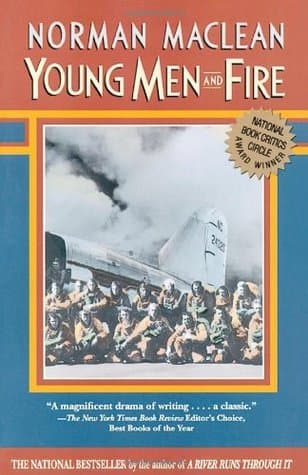
Young Men and Fire cover
Archivist's Choice

Young Men and Fire

Norman Maclean

Genre

Lifestyle / Biography / Memoir / History / Science

Reading Time

10-12 hours

Key Themes

See below

Track Your Reading

Sign in to track this book

Haunted for forty years, a master storyteller reconstructs the horrific 1949 Mann Gulch fire, where a 'blowup' firestorm killed thirteen elite smokejumpers, unraveling a tragedy of nature's violence, human error, and the quest for truth.

Core Idea

Norman Maclean's "Young Men and Fire" explores the 1949 Mann Gulch fire, where thirteen smokejumpers died. Maclean, driven by a personal need to understand and honor these men, reconstructs the event not just as history, but as an intellectual and emotional journey into tragedy, human error, and the limits of knowledge. He examines nature's unpredictable forces, the complexities of leadership, and the elusive pursuit of truth, showing how a single catastrophic event can expose the interplay of individual decisions, collective responsibility, and the natural world's unforgiving rules. The book's central idea is that understanding such a disaster requires not just facts but an empathetic immersion into the context, the people, and the scientific principles involved. It acknowledges the limits of hindsight while striving for a comprehensive truth. Maclean shows that even decades later, such an event demands rigorous intellectual inquiry and compassionate imagination to grasp its impact and lessons.
Reading time
10-12 hours
Difficulty
Hard
✓ Read this if...
You are fascinated by detailed historical reconstruction, the psychology of survival and leadership in extreme conditions, or the philosophical pursuit of truth in the face of tragedy. Ideal for those who appreciate literary non-fiction that blends meticulous research with profound personal reflection.
✗ Skip this if...
You prefer fast-paced narratives with clear resolutions, or if you are not interested in detailed technical explanations of wildfire behavior and the intricacies of investigative processes. This is not a light read.

Core idea

The central argument and framework that powers the entire book.

Norman Maclean's "Young Men and Fire" explores the 1949 Mann Gulch fire, where thirteen smokejumpers died. Maclean, driven by a personal need to understand and honor these men, reconstructs the event not just as history, but as an intellectual and emotional journey into tragedy, human error, and the limits of knowledge. He examines nature's unpredictable forces, the complexities of leadership, and the elusive pursuit of truth, showing how a single catastrophic event can expose the interplay of individual decisions, collective responsibility, and the natural world's unforgiving rules.

The book's central idea is that understanding such a disaster requires not just facts but an empathetic immersion into the context, the people, and the scientific principles involved. It acknowledges the limits of hindsight while striving for a comprehensive truth. Maclean shows that even decades later, such an event demands rigorous intellectual inquiry and compassionate imagination to grasp its impact and lessons.

At a glance

Reading time

10-12 hours

Difficulty

Hard

Read this if...

You are fascinated by detailed historical reconstruction, the psychology of survival and leadership in extreme conditions, or the philosophical pursuit of truth in the face of tragedy. Ideal for those who appreciate literary non-fiction that blends meticulous research with profound personal reflection.

Skip this if...

You prefer fast-paced narratives with clear resolutions, or if you are not interested in detailed technical explanations of wildfire behavior and the intricacies of investigative processes. This is not a light read.

Key Takeaways

1

Nature's Unpredictable Fury

Wildfires defy human control and understanding, demanding humility and constant adaptation.

Quote

They hadn't learned to count the odds and to sense they might owe the universe a tragedy.

Maclean details the Mann Gulch fire not just as a human tragedy, but as a confrontation with nature's immense, often incomprehensible power. The 'blowup' that consumed the smokejumpers was an event of such speed and intensity—a 2,000-degree firestorm 300 feet deep and 200 feet tall—that it defied conventional understanding and training. The book stresses that despite advancements in fire science and technology, an unpredictable element remains in wildfires, especially in complex terrain and under specific atmospheric conditions. This ...

Supporting evidence

The description of the 'blowup' in Mann Gulch, a phenomenon little understood at the time, and the sheer speed with which it engulfed the smokejumpers, rendering their training and equipment largely useless.

Apply this

Cultivate a profound respect for natural forces, recognizing that even with advanced preparation, the unpredictable can occur. In high-risk environments, always assume the worst-case scenario and prioritize escape routes and contingency plans over direct confrontation.

wildfire-dynamicsenvironmental-riskhuman-fallibility
2

The Weight of Leadership in Crisis

Foreman R. Wagner Dodge's controversial decision highlights the impossible choices leaders face under extreme duress.

Quote

The parents of the dead cry murder, charging that the foreman's fire killed their boys.

The book explores the actions of foreman R. Wagner Dodge, especially his decision to light an 'escape fire' and lie in its ashes. This move saved his life but was not followed by most of his men, becoming a source of controversy and grief. Maclean examines the psychological pressure on a leader facing an immediate, existential threat and the agonizing split-second decisions that determine life or death. Dodge's choice, though counter-intuitive and initially seen as abandonment by some, was an act of desperate ingenuity. It highlights ...

Supporting evidence

Wagner Dodge's 'escape fire' and his survival, contrasted with the tragic deaths of the men who ran uphill, believing it was the safer option.

Apply this

In high-stakes situations, leaders must be prepared to make unconventional, decisive choices that might initially be unpopular or misunderstood, prioritizing survival above all else. Clear, concise communication in crisis is paramount, even when time is short.

crisis-leadershipdecision-making-under-pressuremoral-dilemmas
3

The Obsession of Truth-Seeking

Maclean's decades-long investigation reveals the profound human need to understand and memorialize tragedy.

Quote

A writer obsessed by a strange and human horror, unable to let the truth die with these young men, searching for the last - and lasting - word.

Maclean's personal journey into the Mann Gulch fire is central to the book. Haunted for forty years, his relentless pursuit of the truth—interviewing survivors, studying fire science, revisiting the site—exemplifies a deep human need to make sense of inexplicable loss. This is not just about historical accuracy; it is about giving dignity to the dead, offering solace to the living, and understanding the interplay of human choices and natural forces. His commitment to 'the last - and lasting - word' speaks to the power of narrative to ...

Supporting evidence

Maclean's fourteen-year research process, including revisiting Mann Gulch with survivors and poring over historical documents and scientific analyses.

Apply this

When confronted with significant events or losses, commit to understanding the full context and multiple perspectives. This deep dive into truth-seeking can offer closure, prevent future errors, and provide a lasting memorial.

historical-researchgrief-processingnarrative-power
4

The Frailty of Youth and Experience

Even elite training cannot fully prepare young men for the raw terror of an unexpected 'blowup'.

Quote

A crew, young and proud, who 'hadn't learned to count the odds and to sense they might owe the universe a tragedy.'

The smokejumpers of 1949 were elite, young, and confident. Yet, their youth and relative inexperience with a 'blowup' of Mann Gulch's magnitude played a role in the tragedy. Maclean shows how their rigorous training could not fully simulate or prepare them for the psychological shock and disorienting speed of a super-heated firestorm. The natural human instinct to run uphill, away from the fire, proved fatal, overriding their foreman's desperate, counter-intuitive command. This shows that while skill and bravery are essential, they ar...

Supporting evidence

The fact that most of the young smokejumpers ran uphill, a natural but ultimately fatal instinct, rather than following Dodge into the escape fire.

Apply this

Recognize that even highly trained individuals have limits, especially under extreme, unprecedented stress. Training should include not just skills, but also psychological resilience and adaptability to truly novel threats.

psychological-stresswilderness-survivaltraining-limitations
5

The Evolving Science of Fire

Mann Gulch accelerated the understanding of fire behavior, transforming fire policy and science.

Quote

These first deaths among the Forest Service's elite firefighters prompted widespread examination of federal fire policy, of the field of fire science...

The Mann Gulch fire was a moment that forced a re-evaluation of federal fire policy and advanced the field of fire science. Before 1949, understanding of complex fire dynamics, especially 'blowups,' was limited. The tragedy spurred intense research into how fires behave under specific topographical and meteorological conditions, leading to better predictive models, safer firefighting techniques, and more informed resource management. Maclean's narrative suggests that while the cost was immense, the lessons learned from Mann Gulch save...

Supporting evidence

The book details the shift in fire policy and scientific understanding that occurred after Mann Gulch, moving beyond simple 'put it out' strategies to more nuanced approaches to fire behavior.

Apply this

View failures and tragedies as opportunities for profound learning and systemic improvement. Invest in scientific research and data analysis to continuously refine understanding and strategies in high-risk fields.

fire-ecologyrisk-managementscientific-advancement
6

The Landscape as a Character

The Montana wilderness is not merely a setting but an active, formidable participant in the tragedy.

Quote

It is a story of Montana, of the ways of wildfires...

Maclean portrays the Montana wilderness, specifically Mann Gulch, as more than a backdrop; it is a dynamic, unforgiving force that directly influenced the tragedy. The steep slopes, the specific fuel types (ponderosa pine, grass), and the unique wind patterns of the gulch were all critical factors that contributed to the fire's explosive behavior and the smokejumpers' entrapment. The terrain itself became an antagonist, amplifying the fire's destructive power and limiting escape routes. This stresses the importance of understanding an...

Supporting evidence

Detailed descriptions of the Mann Gulch terrain, including its steepness, vegetation, and how these factors funneled the fire and contributed to its 'blowup'.

Apply this

Before engaging in any high-risk outdoor activity, thoroughly study and understand the specific geographical and ecological characteristics of the environment. Recognize how terrain can both aid and hinder safety and operations.

environmental-factorsgeography's-impactwilderness-challenge
7

The Power of Oral History and Memory

Piecing together the past relies on fragmented, often conflicting, human recollections.

Quote

From the words of witnesses, the evidence of history...

Maclean's research is not just about scientific data or official reports; it is rooted in the often-unreliable, yet human, realm of memory and oral history. His interviews with the two survivors, Walter Rumsey and Robert Sallee, and other witnesses, reveal the challenges of reconstructing a chaotic event through subjective recollection. Memories are colored by trauma, guilt, and the passage of time, leading to discrepancies and gaps. Maclean navigates these complexities with sensitivity, acknowledging the inherent limitations while st...

Supporting evidence

Maclean's detailed recounting of his interviews with the two surviving smokejumpers, Walter Rumsey and Robert Sallee, and how their individual memories contributed to, and sometimes complicated, his understanding.

Apply this

When investigating past events, value personal testimonies and oral histories as crucial pieces of the puzzle, while also critically assessing their potential biases and inconsistencies. Cross-reference multiple sources to build a more complete picture.

oral-historymemory-biashistorical-reconstruction
8

Tragedy as a Collective Burden

The Mann Gulch fire's impact extends far beyond the immediate victims, shaping communities and policies for decades.

Quote

A tragedy that pays tribute to the dead and offers rescue to the living...

The Mann Gulch fire was not just a personal tragedy for the thirteen men who died and their families; it became a collective burden and a defining moment for the U.S. Forest Service, the community of Missoula, Montana, and the broader field of wildfire management. The grief, the subsequent inquiries, and the lasting questions about what happened resonated for decades. Maclean's work is an act of communal mourning and reconciliation, transforming individual suffering into a shared narrative that offers lessons and a pathway for future ...

Supporting evidence

The lasting controversy and grief surrounding the event, the impact on federal fire policy, and Maclean's dedication to providing a definitive account for the affected communities.

Apply this

Recognize that major tragedies have ripple effects across communities and institutions. Engage in collective remembrance and learning to ensure that sacrifices are not in vain and that lessons are integrated into future practices.

collective-memorycommunity-impactinstitutional-learning

Critical analysis

Notable Quotes

It is not the big things that matter, but the little things that are done well.

Maclean reflecting on the importance of meticulousness in firefighting and life.

You are never more alive than when you are almost dead.

Describing the intense, life-or-death situations faced by smokejumpers.

The hardest thing is to live with what you know to be true but cannot prove.

Maclean's struggle with understanding the exact sequence of events leading to the tragedy.

When you are young, you are not afraid to die. You are afraid to live.

Commenting on the youthful bravado and underlying anxieties of the smokejumpers.

The fire was not an enemy. It was a force of nature.

Emphasizing the impersonal and overwhelming power of the Mann Gulch fire.

All there is to thinking is seeing something new that is really old, but seen in a new way.

Maclean's approach to re-examining historical events and finding new insights.

What we call the past is not a story, but a landscape.

Highlighting the complex, multi-layered nature of historical investigation.

There are no easy answers, only hard questions.

Maclean's persistent inquiry into the Mann Gulch tragedy, resisting simplistic explanations.

He knew he was going to die, but he had to try.

Describing one of the smokejumpers' desperate attempts to escape the fire.

The wind was not just a wind; it was a living thing, with a mind of its own.

Personifying the unpredictable and dangerous forces at play during the fire.

Memory is not a museum, but a battlefield.

Reflecting on the painful and often conflicting nature of recalling traumatic events.

The only way to write about the dead is to make them live again.

Maclean's commitment to bringing the smokejumpers' stories to life through his writing.

It is not the fire that kills you, but the smoke.

A practical observation about the immediate danger in a wildfire, but also a metaphor for hidden dangers.

There are some things you can't learn in school, and some things you can't learn anywhere.

Maclean's musings on the limits of knowledge and experience in the face of nature's power.

Quiz

Test Your Knowledge

Ready to see how well you understood this book? Take our interactive quiz with 10 questions.

10
Questions
~5
Minutes
?
Best Score

Key Questions (FAQ)

The Mann Gulch fire was a devastating wildfire in Montana in 1949 that killed 13 smokejumpers. It is significant for being one of the deadliest incidents in Forest Service history, leading to major re-evaluations of federal fire policy and fire science.

About the author