BookBrief
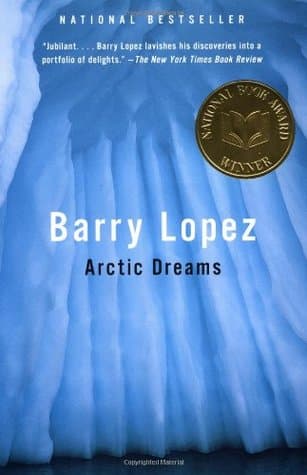
Arctic Dreams cover
Archivist's Choice

Arctic Dreams

Barry Lopez (1986)

Genre

Lifestyle / Memoir / History / Science

Reading Time

900 min

Key Themes

See below

Track Your Reading

Sign in to track this book

In "Arctic Dreams," Barry Lopez combines natural history with deep thought to show how the Far North's stark, grand landscape shapes human imagination and desire.

Core Idea

Barry Lopez's "Arctic Dreams" thinks about the Arctic as a physical place and as a way to understand human minds. It questions common ideas about wilderness and our place in it. Lopez carefully describes the ecology, geology, and human history that made this extreme environment. He argues for the value of wild places and how all life connects. He uses science, history, and personal reflection to say that understanding the Arctic is not just about facts, but about being ethical and seeing how a landscape can show us truths about ourselves and our society.
Reading time
900 min
Difficulty
Medium
✓ Read this if...
You are fascinated by the natural world, enjoy lyrical prose, and are willing to engage with a deep, philosophical exploration of landscape, ecology, and human connection to place.
✗ Skip this if...
You prefer fast-paced narratives, look for practical self-help, or are not interested in detailed descriptions of natural history and contemplative reflection.

Core idea

The central argument and framework that powers the entire book.

Barry Lopez's "Arctic Dreams" thinks about the Arctic as a physical place and as a way to understand human minds. It questions common ideas about wilderness and our place in it. Lopez carefully describes the ecology, geology, and human history that made this extreme environment. He argues for the value of wild places and how all life connects. He uses science, history, and personal reflection to say that understanding the Arctic is not just about facts, but about being ethical and seeing how a landscape can show us truths about ourselves and our society.

At a glance

Reading time

900 min

Difficulty

Medium

Read this if...

You are fascinated by the natural world, enjoy lyrical prose, and are willing to engage with a deep, philosophical exploration of landscape, ecology, and human connection to place.

Skip this if...

You prefer fast-paced narratives, look for practical self-help, or are not interested in detailed descriptions of natural history and contemplative reflection.

Key Takeaways

1

The Arctic as a Mirror

The extreme environment of the Arctic profoundly shapes human imagination and perception.

Quote

The physical landscape is itself a text, a narrative that we read with our bodies and our minds, and in turn, it shapes the narratives we create about ourselves and our place in the world.

Lopez says the Arctic is more than just a place; it greatly affects human thinking. Its size, quiet, and stark beauty make people face basic questions about existence, meaning, and our connection to nature. Unlike warmer places, the Arctic has few distractions. It removes what is not needed, showing the core of human perception. This extreme environment, with its special light, sounds, and geology, does not just exist around us; it helps form our inner worlds, affecting our dreams, fears, and hopes. It is a place where the outside wor...

Supporting evidence

Lopez frequently describes his own meditative experiences in the Arctic, such as the profound silence that amplifies inner thoughts or the way the 'long light' of summer or the perpetual darkness of winter alters temporal perception. He also details how indigenous cultures have developed complex mythologies and spiritual practices directly stemming from their intimate relationship with the land and its animal inhabitants.

Apply this

Seek out environments that challenge your comfortable perceptions. Spend time in places of extreme quiet, vastness, or unique light to observe how these conditions alter your inner monologue, creative thinking, and sense of self. Engage in 'deep looking' rather than superficial observation.
environmental-psychologylandscape-perceptionhuman-consciousness
2

The Intricacy of Adaptation

Arctic life demonstrates extraordinary evolutionary solutions to extreme conditions, highlighting nature's resilience.

Quote

Survival in the Arctic is not merely an endurance of hardship, but a testament to the elegant solutions evolution has wrought, a complex choreography of adaptation.

The Arctic shows how biology adapts. Lopez carefully describes the clever ways plants and animals have evolved to live well in what seems like a harsh wasteland. From the insulating blubber and special fur of marine mammals to the unique bird migrations and slow growth of tundra plants, every organism shows a deep fit with its environment. This is not just about surviving cold; it is about using resources well, timing life cycles perfectly with short seasons, and developing complex social groups. The variety of these adaptations shows...

Supporting evidence

Lopez vividly describes the migratory patterns and navigational abilities of Arctic terns, the specialized hunting techniques of polar bears, the physiological adaptations of musk oxen to conserve heat, and the intricate food webs that sustain these populations, particularly focusing on the role of plankton and krill.

Apply this

Observe and appreciate the specific adaptations of local wildlife in your own environment. Consider how your own 'adaptive strategies' (both physical and mental) allow you to navigate daily challenges. Look for elegant, efficient solutions rather than brute force.

evolutionary-biologynatural-selectionbiodiversity
3

The Fragility of the Wild

Despite its harshness, the Arctic ecosystem is delicate and vulnerable to human intrusion and climate change.

Quote

The apparent immutability of the Arctic is an illusion; beneath its vast, frozen surface lies an intricate web of life, exquisitely sensitive to disturbance.

Lopez corrects the idea that the Arctic is an unbreakable frontier. He shows a surprisingly delicate ecosystem where life lives on small margins. Slow growth rates, specialized diets, and how species connect mean that even small changes can have big, long-lasting effects. The impact of oil exploration, pollution, and especially climate change, which shows up most strongly in polar regions, threatens to undo thousands of years of evolutionary balance. This fragility is not just ecological; it also affects indigenous cultures whose live...

Supporting evidence

Lopez discusses the impact of historical whaling and trapping on animal populations, the potential for oil spills in pristine waters, and the effects of industrial development on traditional Inuit hunting grounds. He also touches upon the accelerating melt of sea ice and its implications for polar bear hunting and seal breeding.

Apply this

Educate yourself on environmental vulnerabilities in your own region. Support policies and practices that prioritize ecological preservation over short-term economic gain. Reduce your personal environmental footprint, recognizing the global interconnectedness of ecosystems.

climate-changeecosystem-fragilityconservation-biology
4

Indigenous Wisdom and Connection

The knowledge and worldview of indigenous Arctic peoples offer profound lessons in sustainable living and deep ecological understanding.

Quote

The Inuit, through generations of sustained attention, have acquired a knowledge of the land and its animals that far surpasses any scientific catalog; it is an integrated, felt understanding.

Lopez spends a lot of time on the Inuit and other indigenous peoples of the Arctic. He shows their relationship with the land not as one of taking over or just surviving, but as a deep, shared partnership. Their traditional knowledge, passed down over generations, includes a great understanding of animal behavior, weather, and the environment's subtle details. This knowledge is in their language, stories, and spiritual practices. It shows a worldview where humans are a part of the natural order, not separate from it. Their focus on re...

Supporting evidence

Lopez recounts numerous interactions with Inuit hunters and elders, detailing their sophisticated tracking skills, their understanding of animal migration routes, and their spiritual beliefs concerning the interconnectedness of all life. He highlights how their language contains specific terms for different types of snow and ice, reflecting a nuanced perception of their environment.

Apply this

Seek out and respect indigenous perspectives on land management and environmental stewardship. Learn about the indigenous history and knowledge of your own region. Recognize the value of traditional ecological knowledge alongside scientific inquiry.

indigenous-knowledgeethnoecologycultural-ecology
5

The Allure of the Unknown

The Arctic has historically drawn explorers and adventurers, driven by a complex mix of scientific curiosity, national ambition, and personal quest.

Quote

The lure of the Arctic has always been rooted not just in its physical challenges, but in its capacity to test the limits of human endurance and to reveal something fundamental about our own desires for discovery.

The history of Arctic exploration, as Lopez tells it, is an interesting look at why humans act. It shows many reasons, from seeking scientific knowledge and mapping unknown areas to less clear quests for national fame, money, and even personal growth. The Arctic was the ultimate test of human strength, a blank space where explorers put their hopes and fears. These journeys, often full of extreme difficulty and sadness, pushed the limits of human endurance and new technology. Lopez does not just tell events; he looks at what made these...

Supporting evidence

Lopez details the narratives of historical explorers like Franklin, Peary, and Amundsen, analyzing their motivations, methods, and often tragic outcomes. He discusses the scientific goals of early expeditions (mapping, magnetic pole research) alongside the geopolitical race for territorial claims and the personal drive for fame or self-discovery.

Apply this

Reflect on your own motivations for pursuing challenging goals. Understand that 'exploration' isn't limited to geographical frontiers; it can be intellectual, creative, or personal. Acknowledge the complex mix of noble and self-serving reasons behind human endeavors.

history-of-explorationhuman-motivationadventure-psychology
6

The Language of Landscape

The Arctic's unique features, like light, ice, and sound, create a distinct sensory language that shapes perception.

Quote

In the Arctic, the landscape speaks not just through its forms, but through the quality of its light, the texture of its ice, and the profound, resonant silence that can be both overwhelming and illuminating.

Lopez writes very well, and through his words, the Arctic landscape itself becomes a character. It communicates through its special sensory qualities. He points out the unusual light conditions—the constant daylight of summer, the long twilight, and the deep darkness of winter—all of which greatly change how we see and how time passes. The many forms and sounds of ice—from creaking glaciers to tinkling ice floes—make a soundscape unlike any other. This 'language of landscape' is not just pretty; it is a basic part of how the Arctic sh...

Supporting evidence

Lopez dedicates extensive passages to describing the specific qualities of Arctic light, such as the 'golden hour' that lasts for hours, or the way light refracts through ice. He details the different types of ice (pack ice, fast ice, pressure ridges) and the distinct sounds they make, as well as the 'silence' which is often filled with subtle natural sounds.

Apply this

Pay closer attention to the sensory details of your own environment – the quality of light, the specific sounds, the textures. Try to articulate how these elements influence your mood and perception. Practice mindful observation, engaging all your senses.

sensory-perceptionenvironmental-aestheticsphenomenology
7

The Ethics of Presence

Our engagement with the wild demands a conscious ethical framework, recognizing our impact and responsibility.

Quote

To be present in the Arctic, or any wild place, is to accept a moral obligation: to observe with humility, to learn with respect, and to act with a clear understanding of one's own impact.

Lopez says, both directly and indirectly, that we should approach the wild ethically, especially in untouched places like the Arctic. He criticizes the historical tendency to exploit and control, instead supporting a presence marked by humility, respect, and careful observation. This 'ethics of presence' means seeing that humans are not just watchers but active parts of the ecosystem, with a duty to do less harm and to understand. It means moving past human-centered views to truly value the worth of other species and natural processes...

Supporting evidence

Lopez contrasts the destructive practices of early commercial whalers and fur traders with the sustainable hunting practices of the Inuit. He reflects on his own role as an observer and writer, questioning the impact of even benign scientific or artistic endeavors on a pristine environment. He also critiques the 'heroic' narrative of exploration that often overlooked environmental consequences.

Apply this

Before entering a natural space, consider your intended impact and how you can minimize disturbance. Adopt a mindset of stewardship and learning rather than consumption or conquest. Engage in conservation efforts and advocate for ethical environmental policies.

environmental-ethicsconservation-philosophystewardship
8

The Narrative Impulse

Humans inherently seek to impose narrative and meaning onto the vast, indifferent expanse of the natural world.

Quote

Faced with the immense and often inscrutable reality of the Arctic, we invariably turn to story, to myth, to science, to impose order and find meaning in its grandeur.

Lopez looks at the basic human need to create stories—scientific, mythical, or personal—to make sense of the world. The Arctic, with its extreme conditions and great beauty, strongly encourages this storytelling. Early explorers wanted to map and name, putting Western ideas onto an ancient land. Indigenous peoples made rich myths to explain nature and guide their interactions with the environment. Even scientific observations, while aiming for objectivity, add to a larger story of understanding. Lopez suggests that these stories, whil...

Supporting evidence

Lopez analyzes the different narratives applied to the Arctic: the 'frontier' narrative of European explorers, the spiritual narratives of the Inuit involving animal spirits and creation myths, and the scientific narratives of geology, climatology, and biology. He shows how each lens reveals certain truths while obscuring others.

Apply this

Examine the narratives you apply to your own life and the world around you. Be aware of how these narratives shape your perceptions and actions. Seek out diverse narratives to gain a more complete understanding of complex issues and places.

mythologynarrative-theorysense-making
9

The Call to Wildness

The Arctic embodies a profound sense of wildness that connects us to a deeper, more ancient part of ourselves.

Quote

The wildness of the Arctic is not just an absence of human presence, but a vibrant, autonomous force that reminds us of the world's original state, and our own innate connection to it.

Beyond its scientific and historical parts, the Arctic, for Lopez, shows a basic wildness that deeply resonates within people. It is a place where nature's power is clear, where human control is small, and where life's rhythms are set by forces much older and bigger than ourselves. This wildness is not chaotic; it is a complex order that works on its own terms. Engaging with it, even through Lopez's writing, can bring a sense of wonder, humility, and a reconnection to something primal within us. It challenges our human-centered biases...

Supporting evidence

Lopez repeatedly describes moments of profound connection and spiritual insight he experiences in the Arctic wilderness, often while observing animals or simply contemplating the vast landscape. He contrasts this with the often-alienating aspects of modern industrial society, suggesting the Arctic offers a balm for the spirit.

Apply this

Seek out experiences in wild or semi-wild places, even if it's a local park. Allow yourself to be present and to simply observe, rather than trying to control or categorize. Reflect on how these experiences connect you to a larger sense of belonging in the natural world.

wilderness-philosophydeep-ecologybiophilia
10

The Interconnectedness of All Things

The Arctic serves as a microcosm illustrating the intricate web of relationships that define all ecosystems.

Quote

Every element in the Arctic, from the smallest plankton to the largest whale, from the shifting ice to the invisible currents, is bound together in a delicate and profound reciprocity.

One of the strongest ideas in 'Arctic Dreams' is how deeply connected all life and non-life are. Lopez carefully shows how geological formations affect ocean currents, which then cause plankton blooms, which then support whole food chains from fish to seals to polar bears. Human activity, whether indigenous hunting or industrial use, affects this complex web, touching everything. This understanding goes beyond simple cause-and-effect to a more complete view of systems. Every part plays a vital role, and changes in one area always affe...

Supporting evidence

Lopez details the specific food chains, such as the reliance of seals on specific fish populations, and polar bears on seals. He also explains how changes in sea ice directly affect the hunting grounds of polar bears and the migration routes of marine mammals, demonstrating physical and biological interconnectedness.

Apply this

Before making decisions, consider the ripple effects they might have on interconnected systems (environmental, social, economic). Cultivate a systems-thinking approach, recognizing that isolated problems often have roots in broader relationships. Advocate for holistic solutions that address root causes rather than just symptoms.

systems-thinkingecological-interconnectednessfood-webs

Critical analysis

Notable Quotes

The land is like a mirror that only reflects what you put into it.

Reflecting on the relationship between humans and the Arctic landscape.

To live in a place is to take on a history.

Discussing the deep historical layers embedded within the Arctic.

The quality of a landscape is not just in its forms but in its light.

Describing the unique and variable light conditions of the Arctic.

What is true in the Arctic is true everywhere else: we are all connected.

Emphasizing the interconnectedness of all life and ecosystems.

The silence in the Arctic is not an absence of sound, but a presence of space.

Contemplating the profound quietude and vastness of the Arctic.

We need to re-imagine our relationship with the natural world, not as masters, but as participants.

Advocating for a more humble and integrated approach to environmental stewardship.

The mind, like the land, has its own weather.

Drawing a parallel between internal human experience and external natural phenomena.

The desire to understand is a form of love.

Reflecting on the motivation behind scientific inquiry and exploration.

Beauty, like truth, has a clarity that is unmistakable.

Observing the inherent beauty and truth in the natural world.

Every act of observation is an act of participation.

Highlighting the active role of the observer in shaping their understanding.

The wilderness is not a place to escape from reality, but to find it.

Challenging conventional notions of wilderness as merely a retreat.

Memory is a landscape that changes with the light.

Exploring the fluid and subjective nature of memory.

The essential function of the wilderness is to provide a place where we can encounter the unknown.

Emphasizing the role of wilderness in fostering wonder and humility.

Geography is not just about maps, but about stories.

Arguing for a more narrative and human-centered understanding of place.

Quiz

Test Your Knowledge

Ready to see how well you understood this book? Take our interactive quiz with 10 questions.

10
Questions
~5
Minutes
?
Best Score

Key Questions (FAQ)

'Arctic Dreams' is Barry Lopez's National Book Award-winning masterpiece, offering a comprehensive exploration of the Arctic. It delves into the region's diverse terrain, unique wildlife, and the rich history of its native Eskimo inhabitants and early explorers.

About the author

Barry Lopez was an American author and essayist celebrated for his profound engagement with the natural world. His seminal work, "Arctic Dreams: Imagination and Desire in a Polar Landscape," earned him widespread acclaim and numerous awards, including the National Book Award. Lopez's writing often explored the intersection of human consciousness and the environment, blending scientific observation with lyrical prose.