BookBrief
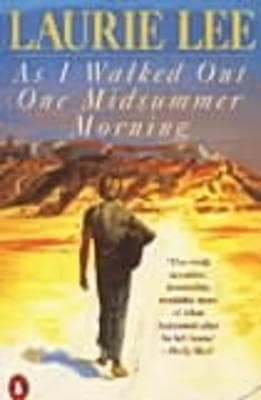
As I Walked Out One Midsummer Morning cover
Archivist's Choice

As I Walked Out One Midsummer Morning

Laurie Lee (1969)

Genre

Lifestyle / Biography / Memoir / History

Reading Time

240 min

Key Themes

See below

Track Your Reading

Sign in to track this book

With a violin and a single Spanish phrase, a young Laurie Lee travels from rural England to Spain in the 1930s, just before the civil war, capturing the country's beauty and underlying tension.

Core Idea

Laurie Lee's memoir tells of his journey across Spain in the 1930s, a young man with only his violin and strong curiosity. It shows how much unrestricted travel affects a young person, painting a clear, sensory picture of Spain before the civil war. The book argues for how much direct experience can change someone, showing how being open to the world can build character and deepen understanding of people, even during poverty and political unrest.
Reading time
240 min
Difficulty
Easy
✓ Read this if...
You yearn for evocative travel writing, appreciate lyrical prose, or are curious about pre-Civil War Spain through a personal lens.
✗ Skip this if...
You prefer plot-driven narratives, dislike descriptive writing, or seek a deep political analysis of the Spanish Civil War.

Core idea

The central argument and framework that powers the entire book.

Laurie Lee's memoir tells of his journey across Spain in the 1930s, a young man with only his violin and strong curiosity. It shows how much unrestricted travel affects a young person, painting a clear, sensory picture of Spain before the civil war. The book argues for how much direct experience can change someone, showing how being open to the world can build character and deepen understanding of people, even during poverty and political unrest.

At a glance

Reading time

240 min

Difficulty

Easy

Read this if...

You yearn for evocative travel writing, appreciate lyrical prose, or are curious about pre-Civil War Spain through a personal lens.

Skip this if...

You prefer plot-driven narratives, dislike descriptive writing, or seek a deep political analysis of the Spanish Civil War.

Key Takeaways

1

The Allure of the Open Road

Embracing uncertainty and the freedom of transient living.

Quote

I was a young man, and the world was my oyster, or so I believed. I had no money, no plans, and no fear, only the open road ahead.

Lee's first journey from his quiet Cotswold village to London, then to Spain, is driven by a strong desire to wander and a clear rejection of normal stability. He purposely leaves behind the comforts of home and work, choosing instead a life of uncertainty and constant movement. This choice comes not from desperation but from a romantic idea of freedom — the belief that real experience lies beyond the familiar. His ability to find beauty and support in unexpected places, from playing the violin for strangers to working on building sit...

Supporting evidence

Lee's decision to leave his village with only his violin and a few shillings, his subsequent busking in London, and his spontaneous decision to travel to Spain with minimal preparation.

Apply this

Cultivate a mindset of curiosity and adaptability. Embrace small acts of adventurousness—try a new route to work, talk to a stranger, or learn a new skill without a clear end goal. Practice resourcefulness by making do with less and finding creative solutions to everyday challenges.
wanderlustnomadic-lifestyleexistential-freedom
2

Music as Universal Language

Connecting across cultural divides through the power of melody.

Quote

My violin was my passport, my voice, my shield against the silence of strangers. It spoke a language all understood, even if I spoke none of theirs.

Throughout his travels, especially in Spain, Lee's violin is more than just a way to earn money; it is his main tool for talking and connecting. In a foreign country where he knows only one Spanish phrase, music crosses language barriers, opening doors to hospitality, friendship, and even moments of deep closeness. His playing brings smiles, tears, and shared humanity from people of all kinds, from villagers to soldiers. This shows the unique power of art, specifically music, to build connections and express feelings that words often ...

Supporting evidence

Lee's anecdotes of playing his violin in Spanish villages, receiving food and shelter in exchange for his music, and the emotional responses of his audiences who often understood little of his spoken language.

Apply this

Engage with art forms that transcend language—music, dance, visual art—to connect with diverse communities. Learn a few simple phrases in a new language, but also seek out non-verbal ways to communicate and build rapport. Attend local cultural events to foster a sense of shared experience.

cultural-exchangenon-verbal-communicationart-as-connection
3

The Beauty of Pre-War Spain

A romanticized yet poignant glimpse into a country on the brink.

Quote

Spain, in those days, was a country still sleeping, still dreaming, a land of ancient rhythms and sun-baked dust, unaware of the storm gathering on its horizon.

Lee's memoir paints a clear, almost dreamlike picture of Spain in 1934, just before the start of its terrible Civil War. He captures the country's raw beauty: its stark landscapes, lively festivals, old traditions, and the deep hospitality of its people. His descriptions are filled with a sense of nostalgia, as if he is saving a world he knows is about to be broken. This beauty is often set against subtle, yet increasingly threatening, signs of political unrest — a tension that adds a sad layer to his observations. This point emphasiz...

Supporting evidence

Lee's lyrical descriptions of Spanish villages, the customs of their inhabitants, the natural beauty of the land, and the growing undercurrents of political tension he observes in conversations and public displays.

Apply this

Seek out opportunities to experience cultures and places before they become overly commercialized or drastically altered by global forces. Engage with local history and traditions to understand the context of a place. Practice mindful observation, documenting your experiences through writing, photography, or sketching.

historical-memorycultural-preservationpre-war-era
4

Poverty and Dignity

Finding grace and resilience amidst material scarcity.

Quote

Though they had little, they gave everything. Their poverty was not a source of shame, but a shared condition that bound them together with an unbreakable dignity.

Lee often sees extreme poverty during his travels, both in London and especially in rural Spain. However, his story consistently shows the remarkable dignity, generosity, and strength of the people he meets. Despite their own difficulties, they often share what little they have with a stranger, offering food, shelter, and company without expecting anything in return. This challenges common ideas of wealth and poverty, suggesting that true richness is not in things but in human connection, community, and an unbreakable spirit. It is a ...

Supporting evidence

Numerous instances where Lee, penniless and hungry, is taken in by Spanish families, fed, and housed, often in very humble circumstances, simply for playing his violin or sharing a moment of human connection.

Apply this

Challenge your own assumptions about wealth and happiness. Seek opportunities to connect with people from different socioeconomic backgrounds, offering help or simply listening. Practice gratitude for what you have and consider ways to give back, even in small ways, to those with less.

resiliencehumanitarianismsocial-empathy
5

Sensory Immersion

Experiencing the world with heightened awareness and vivid detail.

Quote

Every smell, every taste, every sound was amplified, as if my senses, stripped of familiar comforts, had sharpened to an almost painful degree.

Lee's writing uses rich, vivid sensory details. He does not just say what he sees; he makes the reader feel the smells of dust and cooking oil, taste cheap wine and fresh bread, hear church bells and distant talks, and feel the sun on his skin or a hard stone bed. This heightened sensory awareness comes partly from his traveling life, where every experience is new and immediate, not dulled by routine. It teaches us the value of truly being present in our surroundings, using all our senses to fully take in and enjoy the world. This dee...

Supporting evidence

Lee's detailed descriptions of the specific aromas of Spanish markets, the texture of the food he eats, the particular sounds of different villages, and the tactile sensations of his surroundings.

Apply this

Practice mindful observation in your daily life. Take a 'sensory walk' where you consciously focus on what you see, hear, smell, taste, and touch. Keep a journal to record these sensory details, training yourself to notice the nuances of your environment.

mindfulnesssensory-experiencedescriptive-writing
6

The Disillusionment of Idealism

Confronting the harsh realities beneath romanticized notions of escape.

Quote

The dream of Spain had been one thing; the reality, another. The beauty was undeniable, but so was the bitterness, the poverty, and the growing shadow of conflict.

While Lee's first journey is fueled by youthful dreams and a romantic idea of adventure, his experiences slowly show him the harsher realities of the world. The beautiful landscapes and generous people are increasingly overshadowed by the poverty, political tensions, and social inequalities he sees. His innocent travels take on a more serious tone as he becomes aware of the coming civil war, a conflict that will tear apart the society he has grown to love. This point suggests that while idealism can be a strong driver, real understand...

Supporting evidence

Lee's growing awareness of political factions, the presence of soldiers, and the increasingly tense atmosphere in Spanish towns, contrasting sharply with his initial, purely aesthetic appreciation of the country.

Apply this

Approach new experiences with an open mind, ready to challenge your preconceived notions. Engage with diverse perspectives, even those that contradict your own, to develop a more nuanced understanding of complex issues. Be willing to adjust your ideals in the face of reality, learning from both the beautiful and the difficult aspects of life.

post-idealismpolitical-awakeningreality-check
7

The Power of Observation

Learning from the world by simply watching and listening.

Quote

I was a spectator, a silent witness, absorbing the world through my eyes and ears, allowing it to imprint itself upon me without judgment.

As a mostly solo traveler and an outsider, Lee often acts as a keen observer. With limited language skills, he relies heavily on watching interactions, reading body language, and listening to the rhythms of daily life. This quiet but deeply involved way of learning allows him to absorb the subtleties of Spanish culture in a way that active participation might not. He becomes like a sponge, soaking up the atmosphere, customs, and unspoken truths of the places he visits. This emphasizes the great value of slowing down, stepping back, an...

Supporting evidence

Lee's detailed descriptions of people's habits, social customs, the architecture of villages, and the natural environment, often gleaned from simply sitting and watching, or walking through towns.

Apply this

Dedicate time each day to quiet observation—in a park, a café, or even your own home. Practice 'active listening' in conversations, focusing on understanding rather than formulating a response. Keep a 'observation journal' to record details you notice, fostering a habit of mindful awareness.

mindful-observationethnographypassive-learning
8

Youthful Naiveté and Resilience

Navigating hardship with an unshakeable spirit and limited foresight.

Quote

I had no idea what I was doing, but I knew I had to do it. And somehow, despite all odds, I always managed to land on my feet.

Lee's journey shows a striking mix of youthful innocence and strong resilience. He starts big adventures with little planning, often finding himself in risky situations with no money, no connections, and little understanding of the local language or customs. Yet, again and again, he manages to get out of trouble, using his wits, his music, and the kindness of strangers. This is not always through careful planning but often through sheer courage and an almost innocent belief that things will work out. This point celebrates the unique s...

Supporting evidence

Lee's frequent accounts of running out of money, sleeping rough, getting lost, and yet always finding a way forward, often through serendipitous encounters or his own improvisational skills with the violin.

Apply this

Embrace small challenges that push you slightly outside your comfort zone, trusting in your ability to adapt. Allow yourself to be spontaneous occasionally, even if it means a slight deviation from a planned course. Reflect on past challenges and recognize your own capacity for resilience.

gritoptimismspontaneity
9

The Solace of Nature

Finding peace and perspective in the untamed wilderness.

Quote

When the towns became too much, or the people too demanding, I would seek the quiet comfort of the hills, where the earth itself seemed to breathe a silent wisdom.

Among the human interactions and growing political tension, Lee often goes to nature for comfort and thought. His descriptions of the Spanish landscapes — the mountains, valleys, rivers, and fields — are very personal and show deep respect. Nature provides a steady, grounding presence, a sharp contrast to the changing fortunes of human society. It is in these lonely moments, surrounded by the wild beauty of the land, that Lee often finds clarity, peace, and a renewed sense of purpose. This point stresses how important it is to connect...

Supporting evidence

Lee's detailed descriptions of walking through the Spanish countryside, sleeping under the stars, and finding moments of profound peace and contemplation away from human settlements.

Apply this

Integrate more time in nature into your routine, whether it's a walk in a local park or a hike in the mountains. Practice 'forest bathing' or simply sitting quietly in a natural setting. Pay attention to the subtle changes in seasons and the rhythms of the natural world.

nature-therapycontemplationwilderness-connection
10

Memory's Luminous Filter

The way time refines and enriches past experiences.

Quote

Thirty years later, the dust has settled, but the colors remain, perhaps even more vibrant, burnished by the passage of time.

Lee writes this memoir three decades after his journey, and this time gap greatly shapes his story. His memories are not just factual accounts but are filtered through memory, given a lyrical quality and a deep sense of nostalgia. The passing of time allows him to get to the core of his experiences, highlighting the most vivid moments and giving them a poetic feel. This point explores how memory works not as a perfect record, but like an artist, choosing, refining, and often beautifying the past. It suggests that our understanding and...

Supporting evidence

The entire book is written from a retrospective viewpoint, explicitly stated by Lee. His prose is highly poetic and reflective, often referencing the 'then' versus the 'now' of his understanding.

Apply this

Engage in reflective practices like journaling or storytelling to revisit past experiences. Consider how your perspective on significant life events has changed over time. Appreciate the subjective nature of memory and its role in shaping your personal narrative.

retrospectionautobiographical-memorynarrative-construction

Critical analysis

Notable Quotes

I was a boy of nineteen, with a good deal of hair and not much sense, and I was going to London.

Laurie Lee's departure from his village to London.

I had a fiddle, a haversack, and a few shillings, and that was all.

Describing his possessions at the start of his journey.

The world was suddenly rich with strangers, and I was one of them.

Reflecting on his initial experiences in London.

I was always a country boy, and the city, for all its excitements, was always a little alien to me.

His feelings about living in London.

To be young, poor, and in love, and in London, was a condition of almost unbearable joy.

His romantic experiences in the city.

I had left home with nothing but a fiddle and a few shillings, and I was going to Spain.

His decision to leave London for Spain.

Spain in those days was still a country of shadows, of ancient customs and a fierce, untamed beauty.

His first impressions of Spain.

I played my fiddle in the squares and cafés, and people gave me food and money, and sometimes a bed for the night.

Describing his life as a street musician in Spain.

The Spanish sun was a constant, blinding presence, a benediction and a curse.

Reflecting on the Spanish climate.

I learned to live by my wits, to trust in luck, and to accept the kindness of strangers.

Lessons learned during his travels.

The war, when it came, was like a sudden, brutal awakening, a shattering of the dream.

His experience of the outbreak of the Spanish Civil War.

I had walked out one midsummer morning, a boy with a fiddle, and I was returning a man, with a rifle.

The stark contrast between his departure and his return to the war zone.

There was a smell of dust and blood and fear, and the distant rumble of guns.

Sensory details of the war-torn landscape.

Life had a sudden, terrible clarity, a sharpness that cut through all illusions.

Reflecting on the impact of war on his perspective.

Quiz

Test Your Knowledge

Ready to see how well you understood this book? Take our interactive quiz with 10 questions.

10
Questions
~5
Minutes
?
Best Score

Key Questions (FAQ)

The book is a memoir by Laurie Lee, chronicling his journey in 1934 from the English Cotswolds to London, where he worked as a musician and labourer. It then follows his spontaneous decision to travel to Spain, where he tramped across the country just before the outbreak of the Spanish Civil War.

About the author

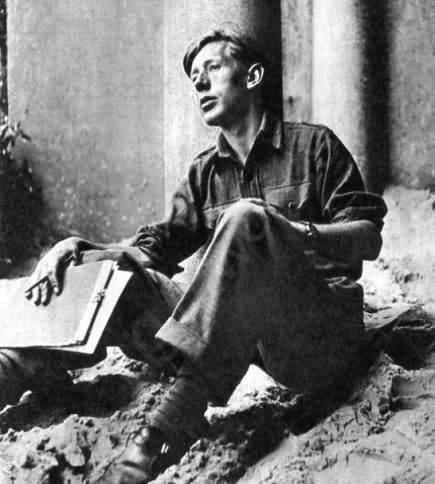
Laurie Lee

Laurence Edward Alan Lee, was an English poet, novelist and screenwriter, who was brought up in the small village of Slad in Gloucestershire.