BookBrief
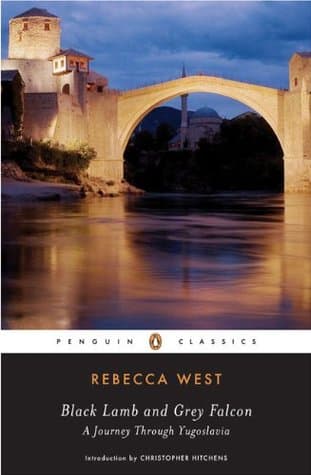
Black Lamb and Grey Falcon cover
Archivist's Choice

Black Lamb and Grey Falcon

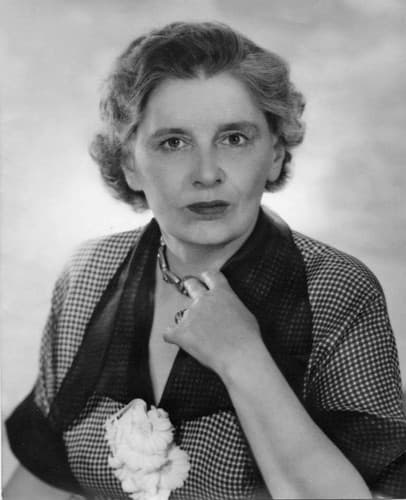
Rebecca West (1942)

Genre

Politics / Lifestyle / Biography / Memoir / History

Reading Time

12 Minutes

Key Themes

See below

Track Your Reading

Sign in to track this book

Rebecca West travels through Yugoslavia before WWII, exploring its history, culture, and her own reflections to understand the Balkans' turbulent nature.

Core Idea

Rebecca West's "Black Lamb and Grey Falcon" is a monumental travelogue and historical analysis of Yugoslavia on the eve of World War II. It delves into the complex tapestry of Balkan history, religion, and ethnicity, arguing that the region's perpetual conflict stems from deeply ingrained cultural and historical patterns, particularly the clash between Eastern and Western influences, and the lasting legacy of Ottoman rule. West uses her personal journey through the country as a lens to explore the philosophical and political forces that shaped the Yugoslavian identity, ultimately presenting a prescient warning about the fragility of peace and the human capacity for both creation and destruction.
Difficulty
Hard

Core idea

The central argument and framework that powers the entire book.

Rebecca West's "Black Lamb and Grey Falcon" is a monumental travelogue and historical analysis of Yugoslavia on the eve of World War II. It delves into the complex tapestry of Balkan history, religion, and ethnicity, arguing that the region's perpetual conflict stems from deeply ingrained cultural and historical patterns, particularly the clash between Eastern and Western influences, and the lasting legacy of Ottoman rule. West uses her personal journey through the country as a lens to explore the philosophical and political forces that shaped the Yugoslavian identity, ultimately presenting a prescient warning about the fragility of peace and the human capacity for both creation and destruction.

At a glance

Difficulty

Hard

Key Takeaways

1

The Burden of History

Yugoslavia's present is inextricably bound to its ancient past, perpetually reenacting cycles of conflict and martyrdom.

Quote

History is not just something that happened; it is something that is still happening, an active force shaping the present moment.

West's main idea is that the people of Yugoslavia, especially the Serbs, are not just influenced by history but are, in a way, trapped by it. Their national identity was formed by centuries of battles, betrayals, and sacrifices, particularly the Battle of Kosovo in 1389. This event, where Prince Lazar chose a spiritual kingdom through martyrdom, affects the Serbian mindset, leading to a glorification of suffering and a fatalistic view of tragic events. West argues that this deep historical awareness, more than just background, activel...

Supporting evidence

The detailed recounting of the Battle of Kosovo and its pervasive influence on Serbian oral tradition, poetry, and national mythology, even in the 20th century.

Apply this

When analyzing regions with deeply entrenched historical narratives of conflict, recognize that contemporary issues often cannot be understood or resolved without acknowledging and addressing these foundational historical traumas and their ongoing psychological impact.

2

The Landscape as Destiny

The rugged, fragmented geography of the Balkans has fostered distinct identities and perennial disunity.

Quote

The very mountains and rivers seem to have conspired to keep these peoples apart, fostering differences that grow into chasms.

West thoroughly describes how Yugoslavia's physical features—its mountains, isolated valleys, and varied coastlines—have shaped its many ethnic and cultural identities. This idea challenges analyses that focus only on politics or economics. Historically, poor communication routes led to different languages, religions, and customs developing even among nearby groups. This geographical separation, West suggests, naturally creates a sense of 'otherness' and suspicion, making a unified Yugoslavia difficult against strong regionalism. The ...

Supporting evidence

West's extensive travelogue details, describing the distinct cultural practices she observes in different villages and regions, directly correlating with their geographical isolation or connection.

Apply this

In understanding geopolitical tensions, always consider the role of geography. Physical barriers and natural resources can be as influential as political ideologies in shaping national character and fostering conflict or cooperation.

3

The Cult of Martyrdom

A pervasive cultural embrace of suffering and sacrifice often hinders pragmatic political solutions.

Quote

The Slavs, particularly the Serbs, have a peculiar genius for martyrdom; they do not merely suffer, they embrace suffering as a path to spiritual and national glory.

West observes a strong cultural respect for martyrdom, especially among the Serbs, which she connects to Prince Lazar's sacrifice at Kosovo. This is not just a past event but a current principle. She notes how this focus on martyrdom, while inspiring courage, can also hinder peace and compromise. If suffering is glorified, then seeking practical, less heroic solutions might seem like a betrayal of national identity. This helps explain why conflicts in the Balkans often escalate beyond what outside observers might consider logical, as ...

Supporting evidence

West's conversations with various Yugoslavs who express admiration for historical figures who chose death over submission, and her analysis of folk songs and epic poems celebrating sacrifice.

Apply this

When engaging with cultures that valorize sacrifice, recognize that appeals to purely rational self-interest may be ineffective. Understanding the deeper cultural values attached to suffering and heroism is essential for effective diplomacy and conflict resolution.

4

The Shifting Sands of Identity

National and religious identities in the Balkans are fluid, contested, and often weaponized.

Quote

These people are not simply Serbs or Croats; they are a thousand things at once, and their identity shifts like sand depending on who is asking and what the immediate threat is.

West shows that identity in Yugoslavia is not simple but a mix of religion, ethnicity, local loyalty, and historical ties. She points out how these identities are not fixed but can be manipulated, especially during political tension. Catholicism, Orthodoxy, and Islam are not just spiritual paths but markers of distinct national groups (Croats, Serbs, Bosniaks), often causing deep hostilities. This flexibility and use of identity as a weapon are key to understanding the region's instability. West's detailed portrayal challenges simple ...

Supporting evidence

West's detailed observations of how different religious holidays are celebrated and how these celebrations reinforce distinct community boundaries, as well as her discussions with individuals who identify differently depending on context.

Apply this

Avoid simplistic categorization of groups in conflict zones. Investigate the complex, often overlapping, and sometimes contradictory layers of identity that individuals and communities hold, and how these identities are mobilized in political discourse.

5

The Peril of External Intervention

Well-intentioned foreign interference often exacerbates existing tensions rather than resolving them.

Quote

The West, in its ignorance and condescension, has often sought to impose solutions on the Balkans, only to find its efforts unraveling the fragile fabric of peace.

While West does not directly criticize all foreign involvement, her narrative suggests that outside powers often misunderstand the deep historical and cultural complexities of the Balkans. Their attempts to impose peace or political structures, often based on Western ideals, fail to consider the unique local dynamics, the cult of martyrdom, or the strong historical grievances. This often leads to unintended results, further dividing groups or creating new resentments. Her observations, made before World War II, offer a warning about t...

Supporting evidence

West's critical descriptions of how various European powers have historically intervened in the region, often with self-serving motives or profound ignorance of local customs and history.

Apply this

Before intervening in complex international conflicts, engage in deep cultural and historical analysis to understand local perspectives and avoid imposing external frameworks that may be counterproductive or even harmful.

6

The Artist as Witness

West's subjective, immersive approach offers unique insights often missed by objective analysis.

Quote

I am not a historian, nor a political scientist; I am a woman traveling, observing, and feeling, and it is through this personal lens that the truth of Yugoslavia reveals itself.

This book is as much about West's journey and her personal experience as it is about Yugoslavia. Her decision to immerse herself, to talk extensively with ordinary people, religious figures, and intellectuals, and to filter her observations through her own intellectual and emotional perspective, is a strong point. While some might criticize its length or digressions, this personal approach allows her to uncover details and emotional truths that a more detached study might miss. Her willingness to grapple with conflicting evidence and ...

Supporting evidence

The extensive first-person narrative, West's detailed descriptions of her emotional responses to events and landscapes, and her willingness to revise her own initial assumptions throughout the text.

Apply this

Recognize the value of qualitative, immersive research in understanding complex human societies. Personal narratives and subjective experiences can provide insights that purely quantitative or 'objective' data cannot capture.

7

The Role of Women in Preserving Culture

Women are often the unacknowledged guardians of tradition, history, and community cohesion.

Quote

It is often in the quiet corners, in the kitchens and the fields, that the true continuity of a people's spirit is maintained by its women.

West focuses on the lives of women across Yugoslavia, observing their roles in maintaining families, religious traditions, and cultural practices. She notes how women, often excluded from formal political power, still have significant influence in preserving national identity, especially through storytelling, cooking traditions, and religious observance. This insight is valuable given the male-dominated historical narratives of the region. West shows that while men might fight wars and make grand political declarations, women often en...

Supporting evidence

West's detailed accounts of her interactions with women in various households, their daily routines, their stories, and their roles in religious festivals and community life.

Apply this

When analyzing societal resilience or cultural preservation, explicitly consider the often-invisible contributions of women, who frequently play critical roles in transmitting heritage and maintaining community bonds.

8

The Power of the Personal Anecdote

Individual stories and encounters illuminate grand historical narratives with human scale and emotional depth.

Quote

To truly understand a nation, one must listen not only to its kings and its poets, but to its peasants and its shopkeepers, for their lives are the true history.

Throughout the long narrative, West combines historical accounts with personal stories. Her meetings with her guide, Constantine, and many other individuals—from Serbian peasants to Croatian intellectuals—are not just extra details but important evidence. These personal stories bring the abstract ideas of history, religion, and ethnicity to a human level, making Yugoslavia's complexities understandable and emotionally impactful. This approach shows that understanding a nation requires not just broad analysis but also a deep look into ...

Supporting evidence

The recurring character of Constantine, whose personal history and opinions are extensively explored, and the numerous detailed conversations West records with various locals.

Apply this

In any form of analysis, supplement broad historical or statistical data with individual narratives and firsthand accounts. These personal stories can provide crucial context and emotional understanding.

9

The Unfinished Symphony of Nation-Building

Yugoslavia, at its core, was an ambitious, perhaps doomed, experiment in forging unity from profound diversity.

Quote

Yugoslavia is not a country, but a dream, a hope, perpetually on the verge of either magnificent realization or tragic collapse.

West's entire journey is shaped by the uncertain existence of Yugoslavia itself, a nation created after World War I from different South Slavic peoples. She conveys the immense challenge of uniting Serbs, Croats, Slovenes, Bosniaks, and others, each with their own distinct histories, religions, and national goals. While acknowledging the idealism behind the Yugoslav project, she also clearly shows the deep divisions and resentments that constantly threatened to tear it apart. Her work, written just before its initial breakup in World ...

Supporting evidence

West's extensive discussions on the historical animosities between various ethnic groups and the political maneuvering required to hold the nascent kingdom together.

Apply this

When evaluating multi-ethnic states, assess the depth of shared identity and the extent to which historical grievances have been genuinely reconciled, rather than merely suppressed. The absence of deep unity can be a long-term risk.

10

The Shadow of Totalitarianism

The deep-seated cultural and historical tensions made the Balkans uniquely vulnerable to external totalitarian forces.

Quote

The very qualities that make these people so resilient and passionate also make them tragically susceptible to the dark seductions of extremism.

Written at the start of World War II, West's account warns of the coming disaster. She observes the simmering resentments, the glorification of conflict, and the deep distrust between groups, which she recognizes as fertile ground for totalitarian ideologies. The book is a chilling prediction of how the region's internal divisions would be exploited by fascism and Nazism, leading to terrible brutality. Her analysis suggests that the Balkan peoples' intense nationalism and historical grievances, while sources of strength, also made the...

Supporting evidence

West's observations on the rise of ultranationalist sentiments and the growing influence of German and Italian political ideologies in the region during her travels.

Apply this

Recognize that societies with deep internal divisions and unresolved historical traumas are often more susceptible to the rise of extremist ideologies and external manipulation, making early intervention and reconciliation efforts crucial.

Critical analysis

Notable Quotes

Quiz

Test Your Knowledge

Ready to see how well you understood this book? Take our interactive quiz with 10 questions.

10
Questions
~5
Minutes
?
Best Score

Key Questions (FAQ)

Black Lamb and Grey Falcon is a classic work by Rebecca West that examines the history, people, and politics of Yugoslavia. It's a rich blend of travel journal, cultural commentary, and historical insight, exploring the complex relationships between ethnic groups in the Balkans.

About the author

Rebecca West

Dame Cicily Isabel Fairfield, known as Rebecca West, or Dame Rebecca West, was a British author, journalist, literary critic and travel writer. An author who wrote in many genres, West reviewed books for The Times, the New York Herald Tribune, The Sunday Telegraph and The New Republic, and she was a correspondent for The Bookman. Her major works include Black Lamb and Grey Falcon (1941), on the history and culture of Yugoslavia; A Train of Powder (1955), her coverage of the Nuremberg trials, published originally in The New Yorker; The Meaning of Treason, later The New Meaning of Treason (1964), a study of the trial of the British fascist William Joyce and others; The Return of the Soldier (1918), a modernist World War I novel; and the "Aubrey trilogy" of autobiographical novels, The Fountain Overflows (1956), This Real Night, and Cousin Rosamund (1985). Time called her "indisputably the world's number one woman writer" in 1947. She was made CBE in 1949, and DBE in 1959; in each case, the citation reads: "writer and literary critic". She took the pseudonym "Rebecca West" from the rebellious young heroine in Rosmersholm by Henrik Ibsen. She was a recipient of the Benson Medal.