BookBrief
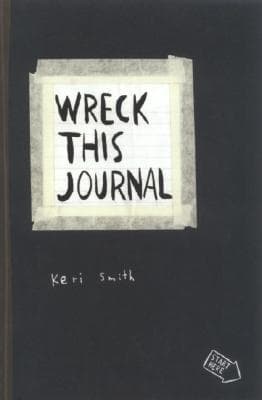
Wreck This Journal cover
Archivist's Choice

Wreck This Journal

Keri Smith (2007)

Genre

Reference / Creativity

Reading Time

12 Minutes

Key Themes

See below

Track Your Reading

Sign in to track this book

Unleash your inner chaos by intentionally destroying this illustrated guide, transforming blank pages into a playground of creative mess and mess-making creativity.

Core Idea

Wreck This Journal challenges the conventional notion of a journal as a pristine, precious object and instead encourages users to actively destroy, deface, and transform its pages through a series of playful and often messy prompts. The central argument is that true creativity and the overcoming of perfectionism can be unlocked by embracing imperfection, letting go of inhibitions, and engaging in tactile, unconventional forms of artistic expression. By providing a safe space for 'destruction,' the book aims to foster a more experimental, fearless, and personal creative process.
Difficulty
Easy

Core idea

The central argument and framework that powers the entire book.

Wreck This Journal challenges the conventional notion of a journal as a pristine, precious object and instead encourages users to actively destroy, deface, and transform its pages through a series of playful and often messy prompts. The central argument is that true creativity and the overcoming of perfectionism can be unlocked by embracing imperfection, letting go of inhibitions, and engaging in tactile, unconventional forms of artistic expression. By providing a safe space for 'destruction,' the book aims to foster a more experimental, fearless, and personal creative process.

At a glance

Difficulty

Easy

Key Takeaways

1

Embrace Destructive Creation

The path to genuine creativity often starts with letting go of perfection and inviting 'destruction'.

Quote

To create is to destroy.

Wreck This Journal redefines 'creation' by challenging the fear of the blank page and the idea that art must be perfect. It suggests that creative freedom comes from letting go of the need for perfection. By telling users to 'wreck' its pages—tear them out, spill coffee, doodle—Smith helps people overcome mental blocks that stop artistic output. This isn't just about destroying things; it's a way to get past the inner critic and find a more natural, free creative flow. The book argues that by breaking the usual idea of a 'perfect' jou...

Supporting evidence

The very nature of the book's prompts, such as 'Tear out this page. Crumple it up. Throw it away,' directly encourages acts typically seen as destructive to foster a new kind of creative engagement.

Apply this

When facing a creative block, instead of striving for perfection, deliberately introduce an element of 'imperfection' or 'destruction' to break the mental paralysis. Start with a messy sketch, an intentionally flawed draft, or a free-form brainstorm session without judgment.
2

Process Over Product

The real value lies in the act of doing, not in the final, polished outcome.

Quote

This journal is about the process, not the finished product.

This is one of the book's best ideas, especially now when everyone wants perfect, shareable results. Wreck This Journal focuses on the experience of using the prompts, not just how the finished page looks. Each instruction, like 'Draw lines with a pen or pencil. Lick your finger and smudge the lines' or 'Staple these pages together,' highlights the hands-on, sensory, and often messy process. The book teaches that the joy and growth in creativity come from exploring, experimenting, and being willing to make mistakes, rather than from c...

Supporting evidence

Prompts like 'Color outside the lines' or 'Rub dirt here' prioritize sensory engagement and unconventional methods over traditional artistic techniques, making the process itself the primary objective.

Apply this

Approach creative projects with a mindset of experimentation. Focus on the learning and enjoyment derived from the process itself, rather than fixating on what the final output 'should' look like. Document the journey, not just the destination.

3

Redefining 'Art' and 'Journaling'

Expand your understanding of what constitutes creative expression and personal reflection.

Quote

This is not a traditional journal. This is a space for you to experiment.

Wreck This Journal expands what 'art' and 'journaling' mean. It questions the idea that art must be beautiful, technically good, or limited to traditional forms. Likewise, it frees journaling from being only about writing thoughts, turning it into a multi-sensory experience that includes physical actions, sensory input, and playful interaction. By asking users to poke holes, paint with food, or collect found objects inside, Smith shows that everyday actions and unusual materials are valid forms of creative expression and self-explorat...

Supporting evidence

Instructions like 'Glue a random page from a magazine here' or 'Take this journal with you into the shower' push the boundaries of what a journal can be and how one can interact with it.

Apply this

Look for unconventional ways to express yourself or reflect. Instead of just writing, try collaging, sculpting with everyday objects, or creating soundscapes to capture your thoughts and feelings. See mundane tasks as opportunities for creative play.

4

The Power of Playfulness

Re-engage your inner child to unlock spontaneous and joyful creativity.

Quote

Play. Experiment. Make a mess.

The book's best quality is its focus on play. Many adults lose the spontaneous, free playfulness of childhood, which is a natural source of creativity. Wreck This Journal gives permission for 'childish' acts like scribbling, tearing, and getting messy. This playful approach reduces the pressure to make something 'good' and instead creates an environment where experimenting is encouraged. It reminds users that creativity isn't always a serious task; it can be a source of joy and lighthearted exploration. This return to play helps break...

Supporting evidence

Prompts such as 'Scribble wildly using only one color' or 'Draw a really ugly drawing' directly appeal to a childlike, uninhibited approach to art-making.

Apply this

Incorporate elements of play into your daily routine or creative projects. Set aside time for unstructured, purposeless activity. Engage in 'what if' scenarios without judgment. Allow yourself to be silly and messy without needing a productive outcome.

5

Confronting Fear of the Blank Page

Directly address and overcome the paralysis induced by creative emptiness.

Quote

This journal is designed to help you get over your fear of the blank page.

The 'fear of the blank page' is a common struggle for creators. Wreck This Journal offers a very effective solution. Instead of intimidating users with an empty page, it immediately gives permission to 'ruin' it. The first prompts are often simple and physical, like 'Poke holes in this page' or 'Color this entire page.' This easy start helps bypass the mental block of needing to create something important or perfect. By making the first mark an act of 'wrecking,' the journal turns the intimidating void into an invitation for free inte...

Supporting evidence

The very first instruction in many editions is often something direct and actionable, like 'Write your name across the entire page' or 'Crack the spine,' immediately breaking the pristine state.

Apply this

When faced with a blank canvas or document, start with a simple, non-committal action. Make a random mark, write a nonsense sentence, or draw a basic shape. The goal is to simply break the blankness, not to create something meaningful immediately.

6

Mindfulness Through Engagement

Physical interaction with the journal fosters present-moment awareness.

Quote

Pay attention to every mark, every tear, every stain.

Though not directly called a mindfulness tool, Wreck This Journal promotes active, sensory mindfulness. The prompts require physical engagement—smelling pages, feeling textures, listening to tearing sounds. This focus on sensory input and present action pulls the user away from inner thoughts and into the immediate experience of creation. It's a hands-on meditation, where 'wrecking' becomes a form of focused attention. This is especially useful in a distracting world, offering a concrete way to ground oneself and fully engage with a t...

Supporting evidence

Prompts like 'Trace your hand,' 'Collect your crumbs here,' or 'Write a list of things you want to remember, then rip it out' require direct physical interaction and sensory awareness.

Apply this

Engage all your senses in creative tasks. Before starting, take a moment to feel your materials, notice their smells, and listen to the sounds they make. This sensory grounding can enhance focus and deepen your connection to the work.

7

Permission to Make Mistakes

Mistakes are not failures, but essential components of the creative journey.

Quote

Make a mess. Messes are good.

Society often teaches us to avoid mistakes, especially in creative projects. Wreck This Journal deliberately changes this. Its prompts are designed to create 'mistakes'—smudges, tears, spills—and redefine them as key parts of the creative process. This acceptance of imperfection is freeing. It shows that true creativity isn't about being flawless but about flexibility, adaptation, and discovery. By embracing 'mistakes,' users learn that there's no single 'right' way to create, and often, the most interesting results come from going of...

Supporting evidence

Instructions like 'Spill coffee here,' 'Drip something onto this page,' or 'Smudge this page with dirt' directly lead to outcomes traditionally considered 'mistakes' or 'damage.'

Apply this

When you make a 'mistake' in a creative project, pause before discarding or correcting it. See if you can integrate it, transform it, or learn from it. Embrace the unexpected turns as opportunities for new directions.

8

Interactive Storytelling

The journal becomes a unique narrative of its user's life and environment.

Quote

This journal is a record of your life. Every mark tells a story.

Beyond individual prompts, the overall effect of 'wrecking' creates a unique, personal story. Each stain, tear, and collected item tells where the journal has been, what the user was doing, and even their feelings. It turns the journal from a static object into a dynamic artifact, a physical record of experiences. The book encourages users to see their environment as a source of creative input—collecting leaves, smudging dirt, or even taking the journal into a shower. This view broadens 'storytelling' to include physical interactions ...

Supporting evidence

Prompts like 'Take this journal with you into the shower,' 'Document a boring day,' or 'Collect your crumbs here' integrate the user's daily life and environment directly into the journal's pages.

Apply this

View your everyday environment and experiences as potential creative fuel. Collect small mementos, document mundane details, or create art inspired by your surroundings. Let your creative work be a reflection of your unique journey.

9

Deconstructing Preciousness

Challenge the sacredness of creative tools and outputs to foster freedom.

Quote

Don't be precious. This is just a book.

The book directly challenges the idea that art supplies, sketchbooks, and creative works are precious. Many aspiring artists hesitate to use expensive materials or 'ruin' a beautiful sketchbook. Wreck This Journal, by its design, forces the user to let go of this attachment. It's an intentional act of making things less sacred, proving that creative freedom comes not from preserving perfect objects, but from actively using them, even if that use leads to 'damage.' This allows for more experimenting and reduces the internal pressure to...

Supporting evidence

The initial act of buying a 'journal' with the explicit instruction to 'wreck' it directly confronts the preciousness typically associated with new art supplies and books.

Apply this

When starting a new creative project, use less expensive or 'practice' materials first. Give yourself permission to make multiple drafts or experiments without the pressure of perfection. Remind yourself that the tools are there to serve your creativity, not to be preserved.

10

Community and Sharing (Implicit)

The unique outcomes encourage sharing and connection through individual expression.

Quote

Your journal will be unlike anyone else's.

While the book doesn't explicitly require sharing, its unique and often surprising results naturally lead to it. The individuality of each 'wrecked' journal—no two can ever be alike—invites comparison and discussion. This implicit encouragement to share one's creative journey builds a sense of community among users, especially online. Seeing how others interpreted and 'wrecked' their journals can be inspiring, reinforcing the idea that there's no single 'right' way to be creative and celebrating diverse human expression. This aspect, ...

Supporting evidence

The widespread online phenomenon of users sharing images and videos of their 'wrecked' journals on platforms like YouTube, Instagram, and Pinterest demonstrates this implicit community-building.

Apply this

After engaging in creative work, consider sharing your process or results with a trusted community. Observing how others interpret similar prompts can broaden your perspective and inspire new approaches. Embrace the unique individuality of your creative voice.

Critical analysis

Notable Quotes

Quiz

Test Your Knowledge

Ready to see how well you understood this book? Take our interactive quiz with 10 questions.

10
Questions
~5
Minutes
?
Best Score

Key Questions (FAQ)

Wreck This Journal is an interactive book by Keri Smith that encourages readers to "destroy" its pages through a series of creative prompts. It's designed to help overcome the fear of a blank page and embrace the creative process.

About the author