BookBrief
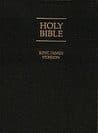
Holy Bible: King James Version cover
Archivist's Choice

Holy Bible: King James Version

Anonymous (2011)

Genre

Reference / History / Spirituality / Philosophy

Reading Time

12 Minutes

Key Themes

See below

Track Your Reading

Sign in to track this book

This foundational text, spanning millennia and continents, combines divine revelation, human history, and lasting wisdom, shaping the spiritual and ethical outlook of Western civilization.

Core Idea

The Holy Bible, King James Version, presents a comprehensive narrative of God's interaction with humanity from creation to the early church. It establishes foundational theological concepts such as the nature of God, sin, redemption through Jesus Christ, and the promise of eternal life. Beyond its spiritual tenets, it offers a rich tapestry of historical accounts, prophecies, moral laws, wisdom literature, and apocalyptic visions, serving as a guide for faith, ethics, and understanding the human condition within a divine framework. Its central argument posits that God is sovereign, righteous, and loving, actively involved in human history, and that salvation is achieved through faith and obedience to His will, as revealed through the scriptures and supremely in the person of Jesus Christ. It asserts itself as the authoritative word of God, intended to instruct, rebuke, correct, and train in righteousness.
Difficulty
Medium

Core idea

The central argument and framework that powers the entire book.

The Holy Bible, King James Version, presents a comprehensive narrative of God's interaction with humanity from creation to the early church. It establishes foundational theological concepts such as the nature of God, sin, redemption through Jesus Christ, and the promise of eternal life. Beyond its spiritual tenets, it offers a rich tapestry of historical accounts, prophecies, moral laws, wisdom literature, and apocalyptic visions, serving as a guide for faith, ethics, and understanding the human condition within a divine framework.

Its central argument posits that God is sovereign, righteous, and loving, actively involved in human history, and that salvation is achieved through faith and obedience to His will, as revealed through the scriptures and supremely in the person of Jesus Christ. It asserts itself as the authoritative word of God, intended to instruct, rebuke, correct, and train in righteousness.

At a glance

Difficulty

Medium

Key Takeaways

1

The Primacy of Divine Creation

The universe and all life originate from a singular, omnipotent creator.

Quote

In the beginning God created the heaven and the earth.

The book starts with a basic idea: the universe was made by an all-powerful God, not by chance. Genesis describes this creation in six days, ending with humans made in God's image. This is more than history; it shows that humanity is accountable to its creator. The complex design, from stars to diverse life, is presented as proof of divine planning. This concept shapes the theological and philosophical basis of the whole text. This initial idea is key to understanding the moral rules and purpose of human life in the biblical view.

Supporting evidence

The entire first chapter of Genesis details the sequential acts of creation, culminating in the creation of man and woman.

Apply this

Reflecting on the created order can foster a sense of gratitude and humility, recognizing a higher power's design in the natural world. It encourages stewardship of the environment as a divine mandate.


2

The Fall and Its Consequences

Disobedience to divine law introduces sin, suffering, and mortality into the human experience.

Quote

Wherefore, as by one man sin entered into the world, and death by sin; and so death passed upon all men, for that all have sinned.

The story of Adam and Eve's disobedience in Eden is a major turning point in the Bible, introducing 'original sin.' Their choice to disobey God about the Tree of Knowledge leads to their expulsion from paradise, pain in childbirth, hard labor, and death. This 'fall' is presented not as a single event but as a core explanation for the human condition, including our natural tendency to do wrong and the presence of suffering. This idea can be difficult for those who question inherited guilt, but it is essential for understanding the Bibl...

Supporting evidence

Genesis 3 details the temptation, disobedience, and immediate consequences for Adam and Eve, including expulsion from Eden.

Apply this

Understanding the concept of the 'fall' can provide a framework for examining human nature, recognizing both our capacity for good and our inclination towards self-serving actions, prompting a need for moral reflection and accountability.

3

Covenant and Law

God establishes binding agreements and moral codes to guide and govern humanity.

Quote

Thou shalt have no other gods before me.

A repeated theme is God's agreements with humanity, especially with Noah, Abraham, and Moses. These are not just promises but binding contracts that define relationships and duties. The Mosaic Law, including the Ten Commandments, is a key example, giving ancient Israel a full moral and religious framework. These laws cover worship, social justice, and personal conduct, showing God's active role in human life and his desire for a just society. While specific ritual laws are often seen as culturally specific, the main moral ideas of jus...

Supporting evidence

The giving of the Ten Commandments to Moses on Mount Sinai (Exodus 20) and the subsequent detailed laws in Exodus, Leviticus, Numbers, and Deuteronomy.

Apply this

Studying biblical covenants and laws can offer insights into the historical development of ethical thought and provide a basis for personal moral reflection on justice, loyalty, and community responsibility.

4

Prophecy and Fulfillment

Divine communication foretells future events, often concerning a promised Messiah.

Quote

For unto us a child is born, unto us a son is given: and the government shall be upon his shoulder: and his name shall be called Wonderful, Counsellor, The mighty God, The everlasting Father, The Prince of Peace.

Prophecy is a significant element throughout the Old Testament, where God reveals future events through chosen people. These prophecies often serve several purposes: warning against sin, offering hope during hard times, and most importantly, foretelling the coming of a Messiah. The detailed predictions about Jesus Christ's birth, life, suffering, death, and resurrection, made centuries in advance, are presented as strong evidence of divine authorship and purpose. The fulfillment of these prophecies in the New Testament is a core argum...

Supporting evidence

Numerous Old Testament prophecies, such as Isaiah 53 detailing the suffering servant, are presented as fulfilled by Jesus in the New Testament accounts (e.g., Matthew 27, Luke 24).

Apply this

Examining the concept of prophecy can encourage a perspective of historical continuity and purpose, inviting reflection on how past events and predictions shape present beliefs and future expectations.

5

The Person and Work of Jesus Christ

Jesus is presented as God incarnate, whose life, death, and resurrection offer redemption.

Quote

For God so loved the world, that he gave his only begotten Son, that whosoever believeth in him should not perish, but have everlasting life.

The New Testament focuses entirely on Jesus of Nazareth. He is presented not just as a prophet or teacher, but as the Son of God, God in human form, born of a virgin. His teachings, miracles, crucifixion, and resurrection are central to the Bible's message of salvation. His death is shown as a sacrifice for humanity's sins, bridging the gap created by the Fall. His resurrection is the ultimate victory over death, offering hope for eternal life to those who believe. This is the book's strongest idea, providing a radical solution to sin...

Supporting evidence

The four Gospels (Matthew, Mark, Luke, John) provide detailed accounts of Jesus' life, teachings, miracles, death, and resurrection. Paul's epistles (e.g., Romans, Corinthians) further expound on the theological implications of His work.

Apply this

Understanding the biblical portrayal of Jesus can inspire a re-evaluation of personal values, encouraging compassion, forgiveness, and a commitment to serving others, drawing from His example.

6

Salvation by Grace Through Faith

Humanity's redemption is a gift from God, received through belief, not by works.

Quote

For by grace are ye saved through faith; and that not of yourselves: it is the gift of God: Not of works, lest any man should boast.

After the Old Testament's focus on law and ritual, the New Testament introduces a major change: salvation is presented as God's gracious gift, available through faith in Jesus Christ, rather than through human effort or following religious laws. This concept, promoted by figures like the Apostle Paul, fundamentally redefines humanity's relationship with God. It acknowledges human inability to perfectly obey divine law and offers a path to righteousness through divine help. This principle highlights humility and dependence on God, remo...

Supporting evidence

Paul's letters, particularly Romans and Galatians, extensively argue for justification by faith apart from works of the law, using Abraham as a key example.

Apply this

Embracing the concept of grace can cultivate a mindset of forgiveness and generosity, both towards oneself and others, fostering humility and reducing the pressure of perfectionism.

7

The Role of the Holy Spirit

God's active presence empowers believers for spiritual life and mission.

Quote

But ye shall receive power, after that the Holy Ghost is come upon you: and ye shall be witnesses unto me both in Jerusalem, and in all Judaea, and in Samaria, and unto the uttermost part of the earth.

The Holy Spirit is presented as the third person of the Trinity, actively working in the world and in believers. Introduced after Jesus' ascension, the Spirit's arrival at Pentecost marks the start of the Christian church. The Holy Spirit is shown as a guide, comforter, teacher, and empowerer, helping believers understand scripture, live righteously, and carry out their mission. The Spirit gives spiritual gifts for the community's benefit and convicts individuals of sin. This concept shows an ongoing, personal relationship with God, m...

Supporting evidence

The Book of Acts records the outpouring of the Holy Spirit at Pentecost (Acts 2) and His subsequent work in empowering apostles and early Christians. Paul discusses the gifts of the Spirit in 1 Corinthians 12.

Apply this

Recognizing the Holy Spirit's role can encourage a deeper sense of spiritual awareness and an openness to inner guidance, fostering personal growth and empowering individuals for acts of service and compassion.

8

Ethical Imperatives: Love and Justice

Central to divine expectation are commands to love God and neighbor, and to pursue justice.

Quote

Thou shalt love the Lord thy God with all thy heart, and with all thy soul, and with all thy mind. This is the first and great commandment. And the second is like unto it, Thou shalt love thy neighbour as thyself.

Beyond specific rituals and laws, the Bible consistently emphasizes basic ethical principles: love for God and love for other people. Jesus summarizes the entire Law and Prophets into these two 'great commandments.' This love is not just emotional but active, shown in compassion, forgiveness, and a commitment to justice, especially for the vulnerable. The prophets often condemn social injustice, exploitation, and oppression, calling for righteousness in society. This strong ethical framework goes beyond cultural boundaries, offering a...

Supporting evidence

Old Testament prophets like Amos and Micah frequently denounce social injustice. Jesus' parables (e.g., the Good Samaritan) and teachings (e.g., Sermon on the Mount) consistently emphasize love, mercy, and justice.

Apply this

Applying these principles involves actively seeking opportunities to serve others, advocating for justice, practicing forgiveness, and fostering loving relationships within communities and beyond.

9

The Nature of Suffering and Hope

Suffering is acknowledged as part of the human experience, yet hope for ultimate restoration prevails.

Quote

And God shall wipe away all tears from their eyes; and there shall be no more death, neither sorrow, nor crying, neither shall there be any more pain: for the former things are passed away.

The Bible addresses the reality of suffering, grief, and injustice. Books like Job directly confront the 'problem of evil,' exploring why good people suffer. However, alongside this acknowledgment, there is a consistent thread of hope. This hope is often tied to God's ultimate plan for redemption, the promise of a future where suffering will end, and justice will be fully realized. This vision of a new heaven and new earth provides comfort and meaning amid current difficulties. It offers a long-term perspective, suggesting that presen...

Supporting evidence

The Book of Job explores the suffering of a righteous man. Psalms frequently express lament and hope. Revelation 21-22 describes the ultimate restoration and elimination of suffering.

Apply this

Cultivating a perspective of hope in challenging times, finding meaning in adversity, and maintaining a long-term vision of restoration and peace can help individuals navigate personal and global suffering.

10

The Call to Discipleship and Mission

Believers are commissioned to spread the message and live out their faith in the world.

Quote

Go ye therefore, and teach all nations, baptizing them in the name of the Father, and of the Son, and of the Holy Ghost: Teaching them to observe all things whatsoever I have commanded you.

The biblical story ends not in passive belief but in an active call to follow and spread the message. Jesus' 'Great Commission' tells his followers to share his teachings globally, baptizing and making new followers. This command turns individual faith into a communal, outward-focused effort. Discipleship involves a lifelong process of learning, obedience, and change, aiming to embody Christ's character and teachings. The early church, as shown in Acts and the epistles, exemplified this missionary zeal, facing persecution but persiste...

Supporting evidence

The Great Commission in Matthew 28:18-20. The Book of Acts details the missionary journeys of Peter and Paul and the rapid expansion of the early church.

Apply this

Engaging in acts of service, sharing personal beliefs respectfully, and actively participating in community building can fulfill the call to discipleship and contribute positively to society.

Critical analysis

Notable Quotes

Quiz

Test Your Knowledge

Ready to see how well you understood this book? Take our interactive quiz with 10 questions.

10
Questions
~5
Minutes
?
Best Score

Key Questions (FAQ)

The King James Version (KJV) is an English translation of the Christian Bible completed in 1611. It was commissioned by King James VI and I and is known for its poetic language and historical significance in English literature and religious studies.

About the author

Anonymous

Anonymous may refer to:Anonymity, the state of an individual's identity, or personally identifiable information, being publicly unknown Anonymous work, a work of art or literature that has an unnamed or unknown creator or author Anonymity, a property of a voting rule, saying that it does not discriminate apriori between voters