BookBrief
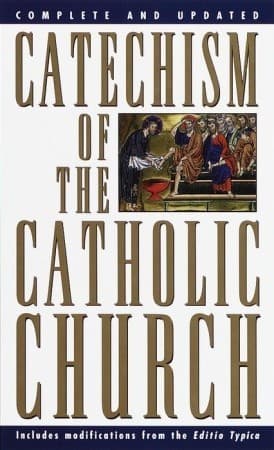
Catechism of the Catholic Church cover
Archivist's Choice

Catechism of the Catholic Church

Pope John Paul II (1994)

Genre

Reference / Spirituality / Philosophy

Reading Time

1000+ min

Key Themes

See below

Track Your Reading

Sign in to track this book

This catechism is a complete spiritual guide, condensing four centuries of Catholic belief, practice, and moral teaching into one authoritative book for all.

Core Idea

The Catechism of the Catholic Church offers a full, orderly, and official explanation of Catholic doctrine. It draws from Scripture, Church Fathers, the Magisterium, and liturgy. Its purpose is to be a reliable guide for teaching Catholic faith, morals, worship, and prayer. This helps people better understand and live their Christian life within the Catholic Church. The book explains basic beliefs about God, creation, Christ, and the Holy Spirit. It describes the seven sacraments as ways to receive grace. It outlines the moral demands of Christian life, based on love and the Ten Commandments. It also explores prayer and humanity's final purpose, all within the Church's living Tradition.
Reading time
1000+ min
Difficulty
Hard
✓ Read this if...
You are Catholic and wish to understand the official teachings of your faith, or if you are interested in a comprehensive overview of Catholic doctrine from an authoritative source.
✗ Skip this if...
You are looking for a historical critique of Catholicism, an introductory text to Christianity in general, or a light spiritual reflection. This is a dense theological reference work.

Core idea

The central argument and framework that powers the entire book.

The Catechism of the Catholic Church offers a full, orderly, and official explanation of Catholic doctrine. It draws from Scripture, Church Fathers, the Magisterium, and liturgy. Its purpose is to be a reliable guide for teaching Catholic faith, morals, worship, and prayer. This helps people better understand and live their Christian life within the Catholic Church.

The book explains basic beliefs about God, creation, Christ, and the Holy Spirit. It describes the seven sacraments as ways to receive grace. It outlines the moral demands of Christian life, based on love and the Ten Commandments. It also explores prayer and humanity's final purpose, all within the Church's living Tradition.

At a glance

Reading time

1000+ min

Difficulty

Hard

Read this if...

You are Catholic and wish to understand the official teachings of your faith, or if you are interested in a comprehensive overview of Catholic doctrine from an authoritative source.

Skip this if...

You are looking for a historical critique of Catholicism, an introductory text to Christianity in general, or a light spiritual reflection. This is a dense theological reference work.

Key Takeaways

1

The Four Pillars of Faith

Catholic doctrine is structured around Creed, Sacraments, Commandments, and Prayer.

Quote

The Catechism of the Catholic Church, following the tradition of explaining what the Church believes (the Creed), what she celebrates (the Sacraments), what she lives (the Commandments), and what she prays (the Lord's Prayer), offers challenges for believers and answers for all those interested in learning about the mystery of the Catholic faith.

The Catechism arranges Catholic teaching into four main parts, providing a full way to understand the faith. This structure, which has roots in old teaching methods, ensures all key aspects of belief and practice are covered. The Creed explains core beliefs about God, creation, and salvation. The Sacraments are shown as ways to receive divine grace, visible signs of invisible realities that make believers holy. The Commandments outline the moral life Christians should lead, guiding actions and relationships. Finally, the section on Pr...

Supporting evidence

The Catechism's own organizational structure (Part One: The Profession of Faith, Part Two: The Celebration of the Christian Mystery, Part Three: Life in Christ, Part Four: Christian Prayer).

Apply this

When studying Catholic theology or seeking to understand a specific doctrine, first identify which of the four pillars it primarily falls under. This provides immediate context and helps connect it to other related teachings, fostering a holistic understanding rather than isolated facts.
creedsacramentscommandmentsprayer
2

The Trinity: Central Mystery

The belief in God as Father, Son, and Holy Spirit is the foundational truth of Catholicism.

Quote

The mystery of the Most Holy Trinity is the central mystery of Christian faith and life. It is the source of all other mysteries of faith, the light that enlightens them.

The Catechism states that the Holy Trinity is the central belief of the Catholic faith. It is not just one belief among others, but the ultimate reveal of God's inner life and the source of all other theological truths. Understanding God as three distinct persons—Father, Son (Jesus Christ), and Holy Spirit—yet one God, is presented as a mystery God revealed, not fully understandable by human reason alone. This Trinitarian view shapes Catholic worship, prayer, sacraments, and moral teachings. It stresses that relationship, love, and co...

Supporting evidence

The extensive treatment of the Trinity in Part One, Section Two, Chapter One, 'I Believe in God the Father Almighty, Creator of Heaven and Earth,' and subsequent sections detailing Christ and the Holy Spirit.

Apply this

When praying or reflecting, consciously acknowledge the three persons of the Trinity. For example, begin prayers 'In the name of the Father, and of the Son, and of the Holy Spirit' with genuine intention, recognizing the distinct yet unified presence of God in your life and in the world.

trinitygod-the-fatherjesus-christholy-spirit
3

Sacraments: Visible Grace

Sacraments are efficacious signs of grace, instituted by Christ, by which divine life is dispensed to us.

Quote

The sacraments are efficacious signs of grace, instituted by Christ and entrusted to the Church, by which divine life is dispensed to us.

The Catechism explains the key role of the seven sacraments as real encounters with God's grace. These are not just symbols but 'efficacious signs,' meaning they actually give the grace they represent. From Baptism, which starts Christian life, to the Eucharist, the 'source and summit' of Christian worship, each sacrament is shown as a specific time when Christ acts to make believers holy, heal them, and empower them. This focus on the sacraments shows the Catholic belief in the Incarnational principle—that God works through the mater...

Supporting evidence

The detailed explanations of each of the seven sacraments (Baptism, Confirmation, Eucharist, Penance, Anointing of the Sick, Holy Orders, Matrimony) in Part Two, Section Two.

Apply this

Regularly participate in the sacraments, especially the Eucharist and Reconciliation. Approach them not as routine obligations but as genuine opportunities to receive God's grace and actively deepen your relationship with Christ and the Church.

sacramentsgraceeucharistbaptismreconciliation
4

Moral Life: A Response to Love

Christian morality is not about rules, but a free response to God's loving call to holiness.

Quote

The moral life of Christians is the response to the Lord's loving initiative. It is the fruit of the Holy Spirit's action.

The Catechism presents Christian morality not as a heavy list of rules, but as a joyful and free response to God's love and a way to true human flourishing. It stresses that living a moral life is made possible by the Holy Spirit and based on Christ's teachings, especially the Beatitudes and the two commands of love (love of God and neighbor). While the Ten Commandments provide a basic framework, the Catechism goes beyond just legalism. It focuses on virtues, forming one's conscience, and seeking holiness. It defines sin as an offense...

Supporting evidence

Part Three, 'Life in Christ,' which begins with human dignity, freedom, and conscience, before delving into the Ten Commandments and the Beatitudes.

Apply this

When faced with a moral decision, instead of only asking 'Is this a sin?', also ask 'Does this action reflect God's love and contribute to my growth in holiness and the good of my neighbor?' Prioritize cultivating virtues like charity, justice, and prudence in daily life.

moralityten-commandmentsbeatitudesvirtueconscience
5

Prayer: Essential Communion

Prayer is the living relationship of the children of God with their Father, Son, and Holy Spirit.

Quote

Prayer is the living relationship of the children of God with their Father, with their Son Jesus Christ, and with the Holy Spirit.

The Catechism gives much attention to prayer. It presents prayer not as an optional religious activity, but as an essential, living connection with God. It explores different types of prayer—blessing and adoration, petition, intercession, thanksgiving, and praise—and stresses that prayer is a gift of grace from God, yet also a firm response from humans. The section discusses challenges in prayer, such as distraction and dryness, offering guidance and encouragement. The Lord's Prayer (Our Father) is given special importance as the perf...

Supporting evidence

Part Four, 'Christian Prayer,' which covers the revelation of prayer, the tradition of prayer, and the life of prayer, culminating in a detailed explanation of the Lord's Prayer.

Apply this

Establish a consistent, daily prayer routine, even if short. Experiment with different forms of prayer (meditation, vocal prayer, contemplative prayer) to find what fosters the deepest communion with God, and consciously offer prayers of thanksgiving.

prayerlord's-prayermeditationcontemplationspiritual-life
6

The Church: Visible and Spiritual

The Church is both a visible society and a spiritual community, the Body of Christ.

Quote

The Church is both visible and spiritual, a hierarchical society and the Mystical Body of Christ. She is one, holy, catholic, and apostolic.

The Catechism gives a detailed understanding of the Church, balancing its divine and human parts. It confirms the Church as a visible, structured institution with clear organization and authority. At the same time, it emphasizes its mystical side as the Body of Christ, moved by the Holy Spirit. The Church's four marks—one, holy, catholic, and apostolic—are explained as key traits from its divine origin and mission. This dual nature means the Church is a sign and tool for communion with God and unity among all people. It rejects the id...

Supporting evidence

Part One, Section Two, Chapter Three, Article 9: 'I Believe in the Holy Catholic Church,' which details the Church's nature, mission, and marks.

Apply this

Actively engage with your local parish community beyond Sunday Mass. Understand the role of the hierarchy (bishops, priests) in guiding the Church, and pray for the unity and holiness of the entire Body of Christ.

churchbody-of-christhierarchyunitycommunion
7

Eschatology: Hope for the End

Catholic teaching offers a clear vision of the Last Things: death, judgment, heaven, hell, and purgatory.

Quote

The Church knows that she is a pilgrim now, on her journey to God and that the mystery of salvation will be fulfilled in glory at the end of time.

The Catechism fully addresses the 'Last Things' (eschatology), offering a clear and hopeful view of human destiny. It clarifies the Church's understanding of death as the end of earthly life but not of existence, leading to a specific judgment. Heaven is described as perfect communion with God, the ultimate goal and fulfillment of human longing. Hell, though a terrifying reality, is presented as self-exclusion from God's love, chosen by those who continue in unrepentant serious sin. Purgatory is explained as a state of purification fo...

Supporting evidence

Part One, Section Two, Chapter Three, Article 12: 'I Believe in Life Everlasting,' which covers death, judgment, heaven, hell, and purgatory.

Apply this

Regularly reflect on your mortality and ultimate destiny. Use this reflection not to fear, but to prioritize spiritual growth, seek reconciliation for sins, and live a life aligned with God's will, fostering a hopeful anticipation of heaven.

eschatologyheavenhellpurgatoryjudgmenteternal-life
8

Mary: Mother of God and the Church

Mary's unique role as Mother of God and spiritual Mother of the Church is central to Catholic devotion.

Quote

What the Catholic faith believes about Mary is based on what it believes about Christ, and what it teaches about Mary in turn illumines its faith in Christ.

The Catechism explains the deep and special honor given to the Blessed Virgin Mary in Catholicism. It bases her importance entirely on her relationship with Christ: as the Mother of God (Theotokos), she bore the Incarnate Word. Her Immaculate Conception and perpetual virginity are presented as divine graces preparing her for this role. Far from taking away from Christ, her 'yes' to God's will is shown as a model of faith and obedience for all believers, making her the spiritual Mother of the Church. The Catechism clarifies that devoti...

Supporting evidence

Part One, Section Two, Chapter Two, Article 3: 'I Believe in Jesus Christ, the Only Son of God,' particularly the section on 'Mary – Mother of Christ, Mother of the Church.'

Apply this

Integrate Marian devotion into your prayer life, perhaps by praying the Rosary or a simple 'Hail Mary.' Reflect on Mary's 'fiat' (let it be done) as a model for accepting God's will in your own life, seeking her intercession for strength and guidance.

marymother-of-godimmaculate-conceptionperpetual-virginityrosary
9

Tradition and Scripture: One Deposit

Sacred Tradition and Sacred Scripture form one sacred deposit of the Word of God.

Quote

Sacred Tradition and Sacred Scripture, then, are bound closely together and communicate one with the other. For both of them, flowing from the same divine wellspring, in a certain way merge into a unity and tend toward the same end.

The Catechism clearly states that Catholic doctrine comes not from Scripture alone (sola scriptura) but from both Sacred Scripture and Sacred Tradition. These are understood as two distinct yet closely linked ways of passing on divine revelation. It emphasizes that both come from the same divine source—God's self-revelation—and are truly interpreted by the Magisterium (the Church's teaching authority). This unity ensures a complete and consistent understanding of faith, preventing subjective interpretations that can come from Scriptur...

Supporting evidence

Part One, Section One, Chapter Two, Article 2: 'The Transmission of Divine Revelation,' which explicitly discusses the relationship between Tradition, Scripture, and the Magisterium.

Apply this

When studying a particular Catholic teaching, don't just seek its scriptural basis, but also investigate how it has been understood and developed within the Church's Tradition (e.g., through Church Fathers, Ecumenical Councils, Papal encyclicals).

sacred-scripturesacred-traditionmagisteriumdivine-revelationdeposit-of-faith
10

Human Dignity: Created in God's Image

Every human person possesses inherent dignity as they are created in the image and likeness of God.

Quote

The dignity of the human person is rooted in his creation in the image and likeness of God.

The Catechism sets a basic ethical rule by stating the inherent dignity of every human person. This dignity comes directly from being created in God's image and likeness. This dignity is universal, unchanging, and does not depend on external factors like race, gender, ability, or social status. It is the basis for all human rights and duties, advocating for the sanctity of life from conception to natural death, and demanding respect for each person. This deep theological truth supports the Church's social teachings, calling for justic...

Supporting evidence

Part Three, Section One, Chapter One: 'Man's Vocation Life in the Spirit,' which begins with the dignity of the human person, freedom, and morality.

Apply this

Consciously recognize and affirm the inherent dignity in every person you encounter, regardless of their background or current circumstances. Let this understanding inform your actions, promoting respect, justice, and compassion in your interactions and advocacy.

human-dignityimago-deisanctity-of-lifejusticecommon-good

Critical analysis

Notable Quotes

God, infinitely perfect and blessed in himself, in a plan of sheer goodness freely created man to make him share in his own blessed life.

The very first paragraph, establishing the reason for human existence.

The desire for God is written in the human heart, because man is created by God and for God; and God never ceases to draw man to himself.

Explaining the innate human longing for the divine.

Faith is the assurance of things hoped for, the conviction of things not seen.

Defining the nature of faith, quoting Hebrews 11:1.

Our holy Mother, the Church, holds and teaches that God, the first principle and last end of all things, can be known with certainty from the created world by the natural light of human reason.

Discussing natural revelation and the knowability of God through reason.

Ignorance of Scripture is ignorance of Christ.

Emphasizing the importance of Sacred Scripture, quoting St. Jerome.

The sacraments are efficacious signs of grace, instituted by Christ and entrusted to the Church, by which divine life is dispensed to us.

Defining the nature and purpose of the sacraments.

Man is bound to follow faithfully what he knows to be just and right.

Discussing the role of conscience in moral decision-making.

The Eucharist is 'the source and summit of the Christian life.'

Highlighting the central importance of the Eucharist, quoting Lumen Gentium.

Prayer is the living relationship of the children of God with their Father, infinitely good, with his Son Jesus Christ, and with the Holy Spirit.

Defining prayer as a relationship within the Trinity.

The human person, created in the image of God, is a being at once corporeal and spiritual.

Describing the dual nature of humanity.

Charity is the theological virtue by which we love God above all things for his own sake, and our neighbor as ourselves for the love of God.

Defining charity as the greatest theological virtue.

God created the world to show forth and communicate his glory.

Explaining the ultimate purpose of creation.

The Church, in order to be able to offer the unfailing light of the Gospel, must 'stand firm in times of testing'.

Discussing the Church's mission and resilience.

To be a Christian is to make a choice for Christ, to be united to him, to follow him.

Summarizing the essence of Christian discipleship.

Quiz

Test Your Knowledge

Ready to see how well you understood this book? Take our interactive quiz with 10 questions.

10
Questions
~5
Minutes
?
Best Score

Key Questions (FAQ)

The Catechism of the Catholic Church is a comprehensive summary of the Catholic faith, detailing what Catholics worldwide believe in common. It serves as an authoritative instruction guide, drawing upon the Bible, Mass, Sacraments, Church tradition, and the lives of saints.

About the author