BookBrief
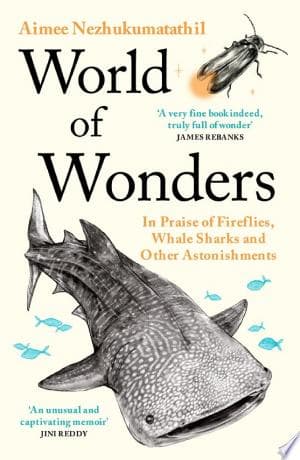
World of Wonders cover
Archivist's Choice

World of Wonders

Aimee Nezhukumatathil (2020)

Genre

General

Reading Time

90 min

Key Themes

See below

Track Your Reading

Sign in to track this book

Aimee Nezhukumatathil shows us lessons and kinship in the world's creatures, helping us find wonder and resilience in our lives.

Core Idea

Aimee Nezhukumatathil's "World of Wonders" says that engaging with the natural world—especially its often-overlooked creatures—helps us understand ourselves, build resilience, and find joy. Each essay focuses on a plant, animal, or natural feature, and Nezhukumatathil connects these organisms' adaptations and life cycles to her own experiences as a woman of color, an immigrant, a mother, and an artist. The book suggests that by observing nature's strategies, beauty, and even strangeness, we can find kinship, develop emotional understanding, and cultivate wonder. This wonder acts as both comfort and a quiet act of resistance against a world that often tries to diminish or define 'otherness.' It supports the idea that the natural world mirrors and guides us, helping us navigate displacement, celebrate identity, and accept life's fragility and ferocity. The main idea is that wonder is not passive appreciation but an active practice of attention. This practice reveals how all living things connect and helps people reclaim their own stories and find strength in their unique identities. Nezhukumatathil uses nature's marvels—like the dancing peacock and the resilient coral—as examples and guides. She asks readers to look past surface appearances and find lessons about belonging, adaptation, and the lasting power of joy and imagination.
Reading time
90 min
Difficulty
Easy
✓ Read this if...
You appreciate lyrical prose, personal essays, nature writing, and reflections on identity, cultural heritage, and finding beauty in the overlooked. Perfect for those who enjoy poetic language and a contemplative reading experience.
✗ Skip this if...
You prefer plot-driven narratives, dense scientific explanations of nature, or a purely objective, academic tone. This book is more about emotional connection and personal reflection than hard science or a linear story.

Core idea

The central argument and framework that powers the entire book.

Aimee Nezhukumatathil's "World of Wonders" says that engaging with the natural world—especially its often-overlooked creatures—helps us understand ourselves, build resilience, and find joy. Each essay focuses on a plant, animal, or natural feature, and Nezhukumatathil connects these organisms' adaptations and life cycles to her own experiences as a woman of color, an immigrant, a mother, and an artist. The book suggests that by observing nature's strategies, beauty, and even strangeness, we can find kinship, develop emotional understanding, and cultivate wonder. This wonder acts as both comfort and a quiet act of resistance against a world that often tries to diminish or define 'otherness.' It supports the idea that the natural world mirrors and guides us, helping us navigate displacement, celebrate identity, and accept life's fragility and ferocity.

The main idea is that wonder is not passive appreciation but an active practice of attention. This practice reveals how all living things connect and helps people reclaim their own stories and find strength in their unique identities. Nezhukumatathil uses nature's marvels—like the dancing peacock and the resilient coral—as examples and guides. She asks readers to look past surface appearances and find lessons about belonging, adaptation, and the lasting power of joy and imagination.

At a glance

Reading time

90 min

Difficulty

Easy

Read this if...

You appreciate lyrical prose, personal essays, nature writing, and reflections on identity, cultural heritage, and finding beauty in the overlooked. Perfect for those who enjoy poetic language and a contemplative reading experience.

Skip this if...

You prefer plot-driven narratives, dense scientific explanations of nature, or a purely objective, academic tone. This book is more about emotional connection and personal reflection than hard science or a linear story.

Key Takeaways

1

Finding Kinship in the 'Other'

Embrace the unique and sometimes strange as a mirror to our own experiences.

Quote

Even in the strange and the unlovely, Nezhukumatathil finds beauty and kinship. For it is this way with wonder: it requires that we are curious enough to look past the distractions in order to fully appreciate the world’s gifts.

Nezhukumatathil connects her experiences as a Filipina-Indian American woman in different cultures to the often-overlooked creatures of the natural world. This point shows how powerful it is to find connections and understanding in beings that might seem strange. It asks readers to look past quick judgments and find deeper similarities, building empathy for nature and for diverse human experiences. By showing shared struggles and joys between species and cultures, the book supports a more inclusive worldview where differences create w...

Supporting evidence

Her connection to the peacock, a bird often seen as ostentatious, but which for her symbolizes the complex beauty and 'home you will run away from and run back to all your life.' Similarly, the axolotl's perpetual smile offers a lesson in resilience amidst unkindness, reflecting her own experiences with cultural displacement.

Apply this

Actively seek out and engage with people or concepts that initially seem 'different' from your own. Instead of focusing on distinctions, look for underlying commonalities, shared vulnerabilities, or unexpected strengths. Practice observing nature, or even everyday objects, with a fresh perspective, asking: 'What can this teach me about myself or the world?'


empathycultural-identityinterconnectednessdiversity
2

The Resilience of the 'Othered'

Nature's unique creatures often embody powerful lessons in survival and adaptation.

Quote

The narwhal demonstrates how to survive in hostile environments.

Nezhukumatathil often points out that creatures considered strange or vulnerable have great resilience and unique ways to survive. This point looks at how to thrive even in difficult situations, like the author's own journey through new, sometimes unwelcoming, places. It's a strong message that 'otherness' can be a source of strength. The book encourages readers to appreciate nature's cleverness and to see similar strengths in themselves and in marginalized groups, reframing hardship as a chance for unique growth and adaptation.

Supporting evidence

The narwhal, with its single, elongated tusk, thrives in the Arctic's harsh, icy waters. The author connects this to her own experience of feeling like a 'unicorn' in certain settings, learning to navigate and survive in unfamiliar cultural landscapes.

Apply this

Reflect on a time you felt like an 'outsider' or faced a hostile environment. What unique 'tusk' or adaptation did you develop to navigate it? Recognize and celebrate the unique strengths that arise from non-conformity or challenging experiences. Seek inspiration from those who thrive in unexpected ways.

resilienceadaptationsurvivalmarginalization
3

Wonder as an Act of Attention

Cultivating curiosity is essential for uncovering the world's hidden gifts.

Quote

For it is this way with wonder: it requires that we are curious enough to look past the distractions in order to fully appreciate the world’s gifts.

This point emphasizes that wonder is not passive but an active pursuit, requiring careful observation and a willingness to look beyond the obvious. In a world full of distractions, Nezhukumatathil suggests slowing down and truly seeing nature's details. This careful observation not only reveals beauty in unexpected places but also builds a deeper connection to the environment and a richer understanding of life's complexities. It asks us to regain a childlike curiosity and apply it to the wonders around us every day, which often go unn...

Supporting evidence

Her detailed descriptions of the eye-popping colors of the peacock's feathers, the delicate movements of the touch-me-not plant, or the specific habitat of the firefly. She doesn't just name them; she describes their essence, forcing the reader to 'look past the distractions.'

Apply this

Dedicate five minutes each day to observing one natural object (a leaf, a cloud, an insect) without judgment or agenda. Try to notice details you've never seen before. Practice 'deep looking' during walks, consciously pushing past immediate impressions to find hidden patterns or movements.

mindfulnessobservationcuriosityawe
4

Nature as a Guide for Emotional Intelligence

Animals and plants offer blueprints for navigating human emotions and social interactions.

Quote

The axolotl teaches us to smile, even in the face of unkindness; the touch-me-not plant shows us how to shake off unwanted advances.

Nezhukumatathil uses the behaviors of various species as comparisons for human emotions and ways of coping. This point shows how nature can teach us about emotional intelligence. From the axolotl's resilience to the touch-me-not's defense, the book provides clear examples for handling feelings like hurt, rejection, and joy. It encourages readers to look to the natural world not just for beauty, but for practical ideas on how to live and thrive in complex human relationships, connecting ecological observation with personal growth.

Supporting evidence

The axolotl's 'smile' despite its vulnerable state, a lesson in maintaining inner peace. The touch-me-not plant's rapid closing when touched, symbolizing setting boundaries and protecting oneself from unwanted intrusions.

Apply this

When facing an emotional challenge, consider if there's an animal or plant behavior that metaphorically mirrors a healthy response. For example, if feeling overwhelmed, think of a hermit crab retreating into its shell for protection. Use these natural 'templates' to guide your own emotional processing.

emotional-intelligencecoping-mechanismsself-protectionboundaries
5

The Legacy of Place and Displacement

Our identity is shaped by the landscapes we inhabit and the ones we leave behind.

Quote

As a child, Nezhukumatathil called many places home... But no matter where she was transplanted—no matter how awkward the fit or forbidding the landscape—she was able to turn to our world’s fierce and funny creatures for guidance.

Nezhukumatathil's childhood, moving from Kansas to Arizona to New York and Ohio, is a main part of the book. This point looks at how moving and the idea of 'home' affect who we become. Her constant moves meant adapting to new places and finding comfort and connection in local plants and animals. It speaks to the common experience of wanting to belong while remembering past places. The book suggests that our personal histories are deeply tied to the natural histories of the places we've lived, and that even when displaced, we can find ...

Supporting evidence

Her reflections on the specific birds or plants she encountered in each state, and how they became markers of her experience there. For instance, the saguaro cactus in Arizona became a symbol of resilience and rootedness in a new, vast landscape.

Apply this

Create a 'natural history' of your own life, noting significant places you've lived and the specific plants or animals that defined those locations for you. Reflect on how these natural elements influenced your sense of self, belonging, or adaptation during those times.

identitybelongingmigrationsense-of-place
6

The Power of the Unseen and Underrated

Beauty and significance often reside in the creatures we typically overlook.

Quote

Even in the strange and the unlovely, Nezhukumatathil finds beauty and kinship.

This point highlights Nezhukumatathil's ability to make seemingly ordinary or 'unlovely' creatures feel important and wonderful. She questions common ideas of beauty, asking readers to find value in what is overlooked, small, and often misunderstood. This idea extends beyond animals to broader concepts, suggesting that we miss much of life's richness when we only focus on what is grand or conventionally attractive. It asks us to broaden our appreciation and recognize the beauty and roles played by all parts of the natural world, no ma...

Supporting evidence

Her detailed essays on creatures like the firefly, the cassowary, or the dragon's breath flower. These are not typically charismatic megafauna, but she imbues them with fascinating qualities and deep meaning, revealing their hidden wonders.

Apply this

Choose an insect, a common weed, or a small bird you usually ignore. Spend time researching it, observing it, and writing down its unique characteristics and behaviors. Challenge yourself to find beauty or purpose in something you previously dismissed.

appreciationhidden-beautyobservationrevaluation
7

Joy as an Act of Resistance

Finding and cultivating moments of delight in nature can be a powerful antidote to hardship.

Quote

World of Wonders is a book of sustenance and joy.

Amidst challenges like cultural assimilation, displacement, and personal difficulties, Nezhukumatathil consistently finds joy in the natural world. This point says that actively seeking and valuing these moments of wonder is not just escaping, but a key act of self-preservation and resistance against negativity. It suggests that joy, especially from a close connection with nature, nourishes the spirit, helping one navigate life's difficulties with more resilience and hope. The book itself, with its lyrical writing and illustrations, s...

Supporting evidence

Her sheer delight in the vibrant colors of the peacock, the playful antics of the narwhal, or the simple pleasure of observing fireflies. These moments are described with an infectious enthusiasm that contrasts with the underlying challenges of her life story.

Apply this

Consciously seek out and document one 'wonder' each day – a beautiful cloud formation, a bird's song, a unique plant. Keep a 'wonder journal' to cultivate a habit of noticing and appreciating these small joys, especially during difficult times.

joyresiliencewell-beinggratitude
8

The Fragility and Ferocity of Life

Nature teaches us about both vulnerability and fierce determination to thrive.

Quote

She was able to turn to our world’s fierce and funny creatures for guidance.

Nezhukumatathil shows the harsh parts of the natural world, displaying both the delicate vulnerability of some species and their surprising fierceness in survival. This point explores the idea that life often contains both extreme fragility and a strong will to persist. It reflects on the balance of life and death, predator and prey, and how these forces shape each creature's unique adaptations. By observing this duality, the book offers a more complete understanding of existence, recognizing that strength can appear in many forms, fr...

Supporting evidence

The vivid descriptions of the cassowary's powerful kick and protective instincts, juxtaposed with the delicate beauty of its plumage. Or the touch-me-not plant's gentle appearance masking its decisive, defensive action.

Apply this

Consider situations in your own life where you've experienced both vulnerability and fierce determination. How did these seemingly opposing forces coexist or even inform each other? Reflect on how you protect your own 'fragile' parts while still expressing your 'fierce' will to thrive.

vulnerabilitystrengthsurvivalduality
9

Cultural Storytelling Through Natural Metaphors

Traditional narratives and personal history are enriched by connections to the natural world.

Quote

What the peacock can do... is remind you of a home you will run away from and run back to all your life.

Nezhukumatathil weaves her personal history and cultural identity into her observations of nature. This point emphasizes how the book uses specific creatures and phenomena to highlight parts of her Filipina-Indian heritage, family stories, and experiences with cultural difference. By connecting the natural world to human stories, she creates a rich picture where biology becomes biography, and scientific facts become poetic insights into the human condition. This approach suggests that understanding our place in the world is deeply lin...

Supporting evidence

Her family's stories and the cultural significance of certain animals (like the peacock) are integrated with scientific facts about the creatures. Her mother's medical work on the grounds of a mental institution is linked to the surrounding natural environment, adding layers of meaning to her upbringing.

Apply this

Identify a significant family story or cultural tradition. Can you find a natural metaphor or a specific plant/animal that resonates with its themes or origins? Use this connection to deepen your understanding and appreciation of your own heritage.

cultural-identitystorytellingheritagemetaphor
10

Reclaiming a Sense of Play and Imagination

Engaging with nature can rekindle childlike wonder and creative thinking.

Quote

World of Wonders is a book of sustenance and joy.

Beyond scientific observation, Nezhukumatathil's essays show a playful imagination and delight. This point highlights how the book encourages readers to approach nature with childlike awe and curiosity, fostering creativity and a lighthearted view. She describes creatures not just with scientific accuracy but with poetic style, inviting readers to see nature's 'funny' and charming sides. This return to play and imagination is presented as essential for experiencing true wonder and finding joy, offering a refreshing contrast to overly ...

Supporting evidence

Her whimsical descriptions and vivid imagery throughout the book, such as imagining the axolotl's smile or the 'sparkle of a thousand fireflies' in her hands. The entire tone encourages playful engagement rather than dry scientific study.

Apply this

Spend time in nature with the explicit goal of simply playing or imagining. What if a certain tree could talk? What kind of personality would a specific bird have? Allow your mind to wander and create stories based on your observations, without judgment.

imaginationplayfulnesswondercreativity

Critical analysis

Notable Quotes

The world is full of wonders, but they are not always where we expect to find them.

Opening reflection on nature's surprises

A flamingo's pink comes from the shrimp it eats—a lesson in how we are what we consume.

Describing flamingo biology and metaphor

The axolotl teaches us about regeneration, about growing back what we have lost.

Essay on the axolotl's regenerative abilities

In the silence of a snowstorm, the world becomes a library of quiet.

Reflection on winter and stillness

Fireflies are tiny lanterns, reminding us that even in darkness, there is light to be found.

Essay on fireflies and hope

The corpse flower blooms once every decade, a lesson in patience and rare beauty.

Description of the rare Amorphophallus titanum

We are all migrants on this earth, like the monarch butterfly traveling thousands of miles.

Comparing human migration to butterfly migration

The dancing peacock spider shows us that joy can be found in the smallest of creatures.

Essay on the peacock spider's mating dance

A thunderstorm is the earth's way of reminding us of its power and its poetry.

Reflection on storms and nature's force

The narwhal's tusk is not a weapon, but a sensor—a reminder to question our assumptions.

Correcting myths about the narwhal

In the garden, every weed has a story, every bloom a secret.

Meditation on gardening and attention

The mimic octopus teaches us about adaptation, about becoming what we need to be.

Essay on the octopus's camouflage abilities

A rainbow is a promise written in light, a bridge between storm and sun.

Description of rainbows as symbols

Quiz

Test Your Knowledge

Ready to see how well you understood this book? Take our interactive quiz with 10 questions.

10
Questions
~5
Minutes
?
Best Score

Key Questions (FAQ)

'World of Wonders' is a collection of essays by poet Aimee Nezhukumatathil that explores how creatures and elements of the natural world—like peacocks, axolotls, and narwhals—can teach, support, and inspire humans. It blends memoir with nature writing, reflecting on the author's multicultural upbringing and finding beauty in unexpected places.

About the author

Aimee Nezhukumatathil

Aimee Nezhukumatathil is an American poet and essayist. Nezhukumatathil draws upon her Filipina and Malayali Indian background to give her perspective on love, loss, and land.