BookBrief
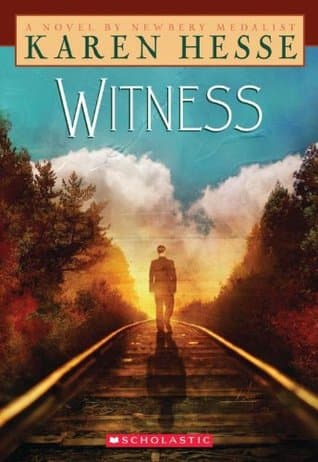
Witness cover
Archivist's Choice

Witness

Karen Hesse (2000)

Genre

Politics / Biography / Memoir / History / Philosophy

Reading Time

150 min

Key Themes

See below

Track Your Reading

Sign in to track this book

In 1924 Vermont, the Ku Klux Klan shatters a quiet town, forcing a Black girl, a Jewish girl, and their neighbors to face hatred and find strength in unexpected friendships.

Core Idea

Karen Hesse's "Witness" shows how hatred, driven by fear and hard times, can break down a community and change people's morals. Through different voices in a small Vermont town in 1924, the book tracks the rise of the Ku Klux Klan, showing how ordinary people are drawn to or fight against an ideology that targets others. It suggests that understanding history, seeing things from many sides, and building real human connections are key to recognizing and fighting prejudice before it turns violent. The book's main idea is that everyone has a moral choice when facing unfairness, and that true acceptance can protect against hate. It points out the double standards of those who preach division and the weakness of those targeted, asking readers to learn from the past to stop it from happening again.
Reading time
150 min
Difficulty
Medium
✓ Read this if...
You want to understand the gradual, insidious spread of hatred within a community and the various ways individuals react to it. This book is for those interested in historical fiction that illuminates social psychology, the power of individual choice, and the importance of empathy.
✗ Skip this if...
You prefer straightforward historical accounts without a poetic, multi-perspective narrative style, or if you are looking for a light read without confronting themes of racism, prejudice, and moral compromise.

Core idea

The central argument and framework that powers the entire book.

Karen Hesse's "Witness" shows how hatred, driven by fear and hard times, can break down a community and change people's morals. Through different voices in a small Vermont town in 1924, the book tracks the rise of the Ku Klux Klan, showing how ordinary people are drawn to or fight against an ideology that targets others. It suggests that understanding history, seeing things from many sides, and building real human connections are key to recognizing and fighting prejudice before it turns violent.

The book's main idea is that everyone has a moral choice when facing unfairness, and that true acceptance can protect against hate. It points out the double standards of those who preach division and the weakness of those targeted, asking readers to learn from the past to stop it from happening again.

At a glance

Reading time

150 min

Difficulty

Medium

Read this if...

You want to understand the gradual, insidious spread of hatred within a community and the various ways individuals react to it. This book is for those interested in historical fiction that illuminates social psychology, the power of individual choice, and the importance of empathy.

Skip this if...

You prefer straightforward historical accounts without a poetic, multi-perspective narrative style, or if you are looking for a light read without confronting themes of racism, prejudice, and moral compromise.

Key Takeaways

1

The Insidious Spread of Hatred

Prejudice can infiltrate even the most seemingly idyllic communities.

Quote

The Klan's shadow stretched even to the quiet hills of Vermont, proving no place is immune to its venom.

Karen Hesse's 'Witness' shows that racial and religious prejudice, like the Ku Klux Klan, was not only in the American South but could also hurt a quiet Vermont town in 1924. The story shows that hate is not always clear or violent at first; it often starts with whispers, leaving people out, and making others feel different. The characters' surprise that the Klan could grow in their town warns that ignoring growing intolerance lets it get worse, leading to terrible results. The novel shows that a community's 'goodness' does not protec...

Supporting evidence

The entire setting of the book – a small, pastoral Vermont town – is evidence of this. The initial disbelief and slow realization among some characters that the Klan's influence is real and growing in their own backyard.

Apply this

Actively challenge microaggressions and exclusionary language in your own community, regardless of how 'safe' or 'tolerant' it seems. Support local initiatives that promote diversity and understanding, and speak out against any form of organized hate, no matter how small or distant it may seem.


community-prejudiceinsidious-hatredsmall-town-bigotry
2

The Power of Multiple Perspectives

Truth is a mosaic, best understood through diverse voices.

Quote

Each voice, a thread in the tapestry of our town, weaving a story only truly seen when all are heard.

'Witness' uses a narrative with many voices, showing events through 11 different characters, each speaking in poetry. This structure is not just a style choice; it is central to the book's message. It shows how personal experiences shape understanding, especially during a crisis. What one character sees as small, another feels as a serious threat. This method makes the reader put together different views, showing the town's complex social makeup and the various ways people deal with, explain, or fight prejudice. It teaches empathy and...

Supporting evidence

The book's entire narrative structure, with 11 distinct characters expressing their viewpoints in poetic form, such as Leanora Sutter (a black girl), Esther Hirsch (a Jewish girl), Sara (a farm woman), and Merlin Van Tornhout (a young man struggling with choices).

Apply this

When trying to understand a complex issue or conflict, actively seek out and listen to a wide range of perspectives, especially from those directly affected. Resist the urge to form opinions based on a single narrative or source, and practice empathy by trying to see situations from different points of view.

polyvocal-narrativeempathy-buildingsubjective-truth
3

Friendship as a Bulwark Against Hate

Unlikely bonds can defy and diminish the power of prejudice.

Quote

In a world trying to tear us apart, our hands found each other, a silent promise against the storm.

At the heart of 'Witness' is the friendship between 12-year-old Leanora Sutter, who is Black, and 6-year-old Esther Hirsch, who is Jewish. In a town torn apart by the Klan, their bond shows how human connection can overcome divisions. This friendship is not just a small part of the story; it is a key counterpoint to the hate, showing how personal relationships can build understanding and strength. Their simple, yet deep, connection offers hope, proving that love and acceptance can exist and even grow during persecution. It reminds us ...

Supporting evidence

The central friendship between Leanora Sutter (black) and Esther Hirsch (Jewish), who are both targeted by the Klan and find solace and strength in each other's company.

Apply this

Actively seek out friendships and connections with people from different backgrounds than your own. Be a friend and ally to those who are marginalized or targeted, even when it's difficult or unpopular. Understand that personal connections can be a potent force against division.

interracial-friendshipresilience-against-hatesolidarity-in-adversity
4

Hypocrisy in the Pulpit

Religious fervor can mask and enable profound moral failings.

Quote

He preached of God's love, yet his heart was a stone, casting shadows of hate upon those unlike him.

The fire-and-brimstone preacher in 'Witness' is a stark picture of religious hypocrisy. He twists scripture to justify hate and exclusion, especially against Jewish and Black residents. His sermons, at first seen as righteous by some, slowly show him to be a fanatic whose actions go against his stated faith. This character warns about the dangers of strict beliefs and using religious power to fuel bigotry. It shows how those who claim moral superiority can be the most corrupt, using their position to divide and stir up trouble, rather...

Supporting evidence

The character of the fire-and-brimstone preacher, whose sermons are described as revealing him as a zealot and whose actions brand him as a hypocrite in the story.

Apply this

Critically evaluate religious or ideological leaders, not just by their words, but by their actions and the impact of their teachings on others. Be wary of anyone who uses faith to justify hatred, exclusion, or violence, and prioritize compassion and human dignity above rigid doctrine.

religious-hypocrisydogmatic-bigotrypreacher-fanaticism
5

The Burden of Moral Choice

Neutrality in the face of injustice is a choice with consequences.

Quote

To stand by and watch, is to choose a side, a silent nod to the darkness.

Merlin Van Tornhout, an 18-year-old, represents the struggle to know right from wrong when facing strong social pressure. His story shows the moral challenge for individuals caught between growing fanaticism and their own conscience. Merlin's attempts to 'fit in' with adults and the Klan's influence make him face hard choices, showing that doing nothing or just watching injustice has serious results. His struggle highlights that morality is not always clear, especially when a community is swayed by powerful, hateful ideas. His path il...

Supporting evidence

The character of 18-year-old Merlin Van Tornhout, who struggles to fit in with the adult world and determine the difference between right and wrong as the Klan's influence grows.

Apply this

Reflect on your own moral compass and consider what you would do if faced with similar pressures. Actively choose to stand up against injustice, even when it's uncomfortable or unpopular. Understand that your choices, or lack thereof, contribute to the moral fabric of your community.

moral-dilemmabystander-effectpersonal-responsibility
6

The Vulnerability of the 'Other'

Targeted groups face unique and compounded dangers during times of prejudice.

Quote

To be different in their eyes was to wear a target, to live with a fear others could not know.

Leanora Sutter (Black) and Esther Hirsch (Jewish) show the unique vulnerability of 'others' when a community gives in to prejudice. They are not just affected by the Klan; they are targeted because of their race and religion. The book shows the constant fear, the small and clear acts of unfairness, and the deep loneliness that comes with being marked as an enemy by a powerful group in one's own town. Their experiences highlight how hate harms marginalized communities most, making them bear the brunt of violence and exclusion. It is a ...

Supporting evidence

The specific targeting of 12-year-old Leanora Sutter (black) and 6-year-old Esther Hirsch (Jewish) by the newly formed Klan.

Apply this

Be an active ally to marginalized groups in your community. Educate yourself on the specific challenges and dangers they face. Speak up when you witness discrimination or prejudice, and work to create inclusive spaces where all feel safe and valued.

marginalized-communitiestargeted-persecutionracial-religious-discrimination
7

History's Echoes in the Present

Past events offer crucial lessons for understanding contemporary societal challenges.

Quote

The past is not dead; it is not even past. It breathes in the choices we make today.

Karen Hesse places 'Witness' in real historical events, such as the Leopold and Loeb murder trial, giving the story a strong sense of its time and linking it to the realities of 1924. This historical detail reminds readers that the themes—racial and religious hate, the rise of extreme groups, and the fight for moral clarity—are not just ideas but were real experiences. By including these details, Hesse stresses that history is not just dates but a living story of human experience, offering important lessons for understanding and deali...

Supporting evidence

The inclusion of real historical events like the murder trial of Leopold and Loeb, which grounds the story in the specific period of 1924.

Apply this

Engage with history, especially local and social history, to understand the roots of current societal issues. Draw parallels between past struggles against prejudice and contemporary challenges, using historical knowledge to inform your actions and advocacy.

historical-relevancelessons-from-historysocietal-memory
8

The Slow Burn to Violence

Hatred rarely erupts; it builds through a crescendo of small aggressions.

Quote

The whispers turn to shouts, the stares to stones, until the very air crackles with the promise of harm.

Hesse skillfully builds tension, leading slowly but surely to violence. This pacing is key, as it mirrors how extremist movements happen in real life. Hate rarely appears as sudden, large-scale violence. Instead, it usually grows through smaller aggressive acts: whispers, exclusion, damage to property, threats, and fear. The book shows how a community can slowly accept these smaller acts, making the eventual burst of physical violence seem almost unavoidable. This slow build serves as a strong warning, showing how important it is to a...

Supporting evidence

The description of the story building 'the tension with a slow crescendo of inevitability that ends in violence,' as noted in the review.

Apply this

Recognize and challenge early signs of prejudice, discrimination, and aggression in your environment. Do not dismiss 'small' acts of hate as harmless; understand that they contribute to an environment where greater violence can occur. Support community efforts to de-escalate tensions and promote peaceful resolution.

escalation-of-violenceprejudice-progressionsocial-tension
9

Acceptance as a Revolutionary Act

Choosing to accept and protect others defies the divisive forces of hatred.

Quote

To open your door, your heart, when others slam theirs shut – that is the truest courage.

Amidst the Klan's growing hate, characters like Sara, the middle-aged farm woman who takes Esther in, show the powerful impact of acceptance. Despite warnings from neighbors and fear in the community, Sara chooses compassion over fitting in, offering protection and understanding to a child targeted by prejudice. Her actions are not passive; they are active, clear choices that go against the dividing forces at play. This shows that acceptance is not just tolerance but an active stand of valuing and protecting others, especially when th...

Supporting evidence

Sara, the middle-aged farm woman, taking Esther under her wing 'despite the warnings of her neighbors,' and trying to help Esther understand the Klan's hatred.

Apply this

Actively practice radical acceptance in your daily life, especially towards those who are different or marginalized. Be willing to go against social pressure to stand up for and protect others. Prioritize empathy and compassion in your interactions, and model inclusive behavior for others.

radical-acceptancecompassionate-resistanceinclusive-action

Critical analysis

Notable Quotes

It seems to me that the Lord is on the side of those who are willing to take a stand, no matter how small or how great the stand.

Leonora's reflection on courage in the face of prejudice.

Some folks say it's un-Christian to hate. I say it's un-Christian to sit by and let folks be hurt.

Merle's blunt perspective on inaction versus intervention.

The wind carries a lot of things. Lies, mostly. And fear.

Iris's observation about the spread of rumors and fear in the town.

Sometimes you have to break a few eggs to make an omelet. And sometimes, you just break eggs.

Harvey's cynical view on the consequences of radical actions.

A man's worth ain't in the color of his skin, but in the content of his heart.

Percelle's simple yet profound statement on human value.

Fear is a powerful weapon. It can make good people do bad things.

Johnny Reeves reflecting on the mob mentality in the town.

There's a difference between what's legal and what's right.

Leanora's internal struggle with the town's ordinances.

Words can be like stones, thrown to hurt and wound.

Nell's poetic description of the impact of hateful speech.

Even in the darkest night, a single candle can make a difference.

Sara Chickering's hopeful perspective amidst despair.

It's not enough to just not be part of the problem. You got to be part of the solution.

Esther Hirsh's active stance against injustice.

Silence can be a kind of speaking, too. A loud one.

Leonora observing the unspoken tensions and complicity in the town.

The past ain't ever really past. It just waits for its turn to come 'round again.

Harvey's somber reflection on recurring historical patterns.

Sometimes, the hardest thing to do is nothing at all, when everything inside you screams to act.

Johnny Reeves contemplating the difficulty of restraint during conflict.

A town is only as good as the people in it.

Iris's straightforward assessment of community character.

Quiz

Test Your Knowledge

Ready to see how well you understood this book? Take our interactive quiz with 10 questions.

10
Questions
~5
Minutes
?
Best Score

Key Questions (FAQ)

'Witness' by Karen Hesse is a poetic novel set in a small Vermont town in 1924, exploring the devastating impact of the Ku Klux Klan on the community. It tells a story of friendship, fanaticism, and racial prejudice through the eyes of 11 different characters.

About the author