BookBrief
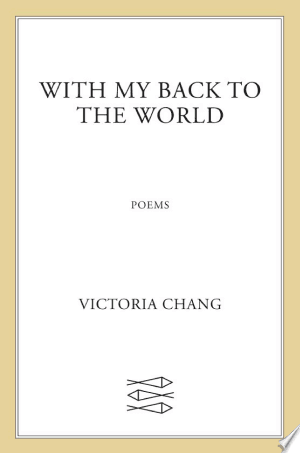
With My Back to the World cover
Archivist's Choice

With My Back to the World

Victoria Chang (2024)

Genre

General

Reading Time

12 Minutes

Key Themes

See below

Track Your Reading

Sign in to track this book

Victoria Chang uses Agnes Martin's minimalist art to explore depression, grief, and the self in a collection that redefines how we see and are seen.

Core Idea

Victoria Chang's "With My Back to the World" explores the lives and artistic journeys of Agnes Martin, Hilma af Klint, and other overlooked women abstract artists, using their biographies and creative processes as a lens to examine themes of solitude, spirituality, and the challenges of being a female artist in a male-dominated world. Chang delves into how these artists found their unique voices and forged paths outside conventional art historical narratives, often facing resistance or misunderstanding for their innovative, introspective, and sometimes mystical approaches to abstraction. The book argues for a re-evaluation of these figures, positioning their work not as peripheral but as foundational to understanding the full breadth of modern art.
Difficulty
Medium

Core idea

The central argument and framework that powers the entire book.

Victoria Chang's "With My Back to the World" explores the lives and artistic journeys of Agnes Martin, Hilma af Klint, and other overlooked women abstract artists, using their biographies and creative processes as a lens to examine themes of solitude, spirituality, and the challenges of being a female artist in a male-dominated world. Chang delves into how these artists found their unique voices and forged paths outside conventional art historical narratives, often facing resistance or misunderstanding for their innovative, introspective, and sometimes mystical approaches to abstraction. The book argues for a re-evaluation of these figures, positioning their work not as peripheral but as foundational to understanding the full breadth of modern art.

At a glance

Difficulty

Medium

Key Takeaways

1

Art as a Mirror for Internal Landscapes

Agnes Martin's minimalist grids become a canvas for the poet's complex emotional states.

Quote

Yesterday I slung my depression on my back and went to the museum. I only asked four attendants where the Agnes painting was and the fifth one knew. I walked into the room and saw it right away. From afar, it was a large white square.

Chang's collection shows how engaging with art can be a way to explore oneself. She uses Martin's minimalist paintings—grids, subtle lines, seemingly blank spaces—as a frame for her own experiences with depression, grief, and the search for meaning. What first looks like a 'large white square' changes as Chang looks closer, much like how a simple emotion can hold great depth. This approach reveals a strong link between the viewer, the art, and personal stories, suggesting that truly engaging with art is a form of self-discovery.

Supporting evidence

The opening lines of the book, describing the journey to find Martin's painting and the immediate, yet superficial, perception of it.

Apply this

When encountering art, move beyond initial impressions to consider how the work reflects or refracts your own emotional and intellectual landscape. Use art as a prompt for introspection rather than just an object of aesthetic appreciation.


2

The Grid as a Container for Chaos

Agnes Martin's iconic grids provide a paradoxical structure for the poet to articulate the formlessness of grief and mental illness.

Quote

The grid contains the chaos, or maybe the chaos *is* the grid, just seen from a different angle.

Chang connects deeply with Agnes Martin's grids. She sees them not as strict boundaries but as open structures that both contain and express disorder. This is a key idea in the book: that structure does not have to oppose chaos but can embody it or provide a necessary way to express it. For Chang, the grid represents the mind dealing with depression and grief—a desire for order amidst overwhelming feelings, or perhaps the understanding that even chaos has its own pattern. The repetitive, yet varied, nature of Martin's lines mirrors th...

Supporting evidence

Repeated engagement with the concept of the grid throughout the collection, relating it to the experience of depression and the attempt to find order in despair.

Apply this

Recognize that seeking structure or routine, even in small ways, can be a way to manage overwhelming emotional states. Consider how seemingly rigid frameworks can actually create space for processing complex feelings.

3

Feminism and the Female Artist's Gaze

Chang explores the unique challenges and perspectives of women artists, particularly in their relationship to their own bodies and mental states.

Quote

A woman artist often paints her insides, while a man paints his outsides, or the world's outsides.

This collection offers a feminist view, looking at how women artists like Agnes Martin and Chang herself handle creativity, body image, and mental health within a male-dominated art world. Chang thinks many women artists look inward, using their art to process personal experiences, emotions, and the societal pressures affecting their bodies and minds. This differs from a perceived male tendency to show external realities or grand stories. The book questions how women artists have been overlooked or misunderstood, especially when their...

Supporting evidence

Poems that explicitly discuss the female body, motherhood, and the internal lives of women artists, contrasting them with broader artistic traditions.

Apply this

Actively seek out and engage with art created by women, paying attention to how their unique perspectives might challenge or expand your understanding of art and the human experience. Recognize the value in art that stems from deeply personal experiences.

4

The Performance of Sanity

The collection reveals the exhausting labor involved in presenting a 'normal' front while grappling with severe depression.

Quote

I carry my depression like a backpack, but I try to keep it hidden, tucked under my coat, so no one can see its weight.

Chang shows the great emotional and mental effort needed to live daily life with depression. The 'backpack' image is strong, showing depression as a constant, heavy burden that must be hidden, especially in public. This 'performance of sanity' means not just hiding symptoms but actively using energy to seem 'normal,' to make small talk, and to navigate social situations without showing inner pain. The book reveals how isolating mental illness can be, where fear of judgment often leads to more hiding, continuing a cycle of loneliness a...

Supporting evidence

The initial description of 'slinging depression on her back' and the subsequent interactions in the museum, where the internal state is contrasted with external behavior.

Apply this

Cultivate empathy for others, recognizing that outward appearances may belie significant internal struggles. Foster environments where people feel safe to share their mental health challenges without fear of judgment, reducing the need for constant performance.

5

Grief as a Creative Catalyst

Personal loss, particularly the death of a parent, becomes a driving force for artistic creation and introspection.

Quote

The dead enter your poems like ghosts, and the living are sometimes just as spectral.

After her praised collection 'Obit,' Chang continues to explore the impact of grief. She shows how loss, while devastating, can also inspire art. The poems contain the presence of the deceased, not as an unhealthy focus, but as a lasting influence that shapes the poet's view of the world and her art. This suggests that creativity can be a way to process, remember, and even change grief, allowing the dead to 'enter your poems' and remain a vital part of the living story. This idea highlights how engaging with sorrow can be healing and ...

Supporting evidence

The recurring motifs of loss and memory that connect this collection to her previous work, 'Obit,' and the explicit references to deceased loved ones.

Apply this

Consider how creative outlets – writing, painting, music – can serve as a healthy and productive way to process personal loss and difficult emotions, transforming pain into something meaningful.

6

The Limitations of Language and the Power of Silence

Chang grapples with language's inability to fully capture complex emotions, echoing Martin's pursuit of the ineffable.

Quote

Sometimes the truest thing is what isn't said, what's left as a blank space, like Agnes's canvas.

This section looks at the pull between expression and silence. Chang, as a poet, knows the limits of language, especially when trying to describe deep depression, grief, or spiritual experiences. She finds common ground with Agnes Martin's art, which often points to something beyond direct representation, inviting thought rather than clear explanation. The 'blank spaces' in Martin's work, or the subtle changes in her grids, connect with the poet's struggle to find words that truly convey inner states. This view suggests that sometimes...

Supporting evidence

Poems that directly address the inadequacy of words, or that employ repetition and slight variation to evoke a sense of the ineffable, similar to Martin's visual language.

Apply this

Practice active listening that includes paying attention to what is *not* said, to pauses and non-verbal cues. In your own communication, recognize when silence or understatement can be more powerful than verbose explanation.

7

Art as a Sanctuary and a Site of Confrontation

The museum and the art within it serve as both a refuge from the world and a catalyst for difficult self-reckoning.

Quote

I came to the museum to hide, but the paintings found me anyway, and made me look.

The museum is a complex place in Chang's work. At first, it is a place to escape, a refuge from the overwhelming demands of the 'world' outside, especially when dealing with depression. However, the art itself, particularly Martin's, does not allow for passive viewing. Instead, it actively engages the poet, forcing her to face her own inner struggles. Looking at the art becomes an act of self-examination, where the art acts as a mirror reflecting difficult truths. This highlights art's ability to offer both comfort and challenging sel...

Supporting evidence

The journey to the museum and the subsequent, often uncomfortable, self-reflection that occurs while viewing Martin's work.

Apply this

Approach art, or any form of creative engagement, with an openness to both comfort and challenge. Allow art to push you beyond your comfort zone and prompt deeper self-inquiry.

8

The Body as a Site of Artistic Memory and Pain

The physical body, with its ailments and vulnerabilities, is inextricably linked to both artistic creation and the experience of depression.

Quote

My body remembers the sickness, even when my mind tries to forget. It holds the grid of pain.

Chang focuses on the body as a key part of her exploration, moving beyond just mental or emotional states. She links physical feelings and ailments to the overall experience of depression and grief, suggesting that the body itself holds memory and expresses pain in its own way. This is insightful because it grounds abstract emotional experiences in real, physical realities, much like Martin's grids ground abstract ideas in visible lines. The body is not just a container for the mind but an active participant in suffering and, by exten...

Supporting evidence

Poems that explicitly reference physical symptoms, illnesses, or the body's response to stress and emotional turmoil.

Apply this

Pay attention to the signals your body sends, recognizing that physical symptoms can often be manifestations of underlying emotional or psychological stress. Integrate somatic practices into your self-care routine.

9

Finding Beauty in Imperfection and Repetition

Chang embraces the subtle variations and 'flaws' in Martin's grids as a metaphor for finding meaning and beauty in life's imperfect cycles.

Quote

The beauty isn't in the perfect straightness of the line, but in the hand that wavered, the slight tremor that makes it human.

This collection, like Martin's work, questions common ideas of beauty and perfection. Chang points out that the appeal of Martin's grids comes not from their perfect precision, but from their handmade quality—the small flaws, the slight wavers in the lines that show human touch. This leads to a larger idea: that life's beauty often lies in its imperfections, its repetitions with slight differences, and its inherent messiness. This offers a comforting alternative to the pressure for flawless execution, suggesting that embracing vulnera...

Supporting evidence

Detailed descriptions of Martin's hand-drawn lines and grids, emphasizing their subtle variations and the 'human element' within their apparent uniformity.

Apply this

Shift your perspective to find beauty and meaning in the imperfect, the repetitive, and the subtly varied aspects of daily life and personal experience. Practice self-compassion for your own 'imperfections.'

10

The Enduring Quest for Connection

Despite profound isolation, the poems ultimately reveal a persistent human need for understanding and connection, even through art.

Quote

To look at a painting is to try to meet someone else's mind, to bridge the distance, even across time and death.

While the collection deeply explores isolation, depression, and personal grief, it is also about a lasting human desire for connection. Chang's engagement with Agnes Martin's art is, at its core, an attempt to connect two minds, across generations and even beyond death. Interpreting the art becomes a form of dialogue, a search for shared understanding and empathy. This suggests that even in deep solitude, the human spirit longs for connection, finding it in unexpected places—in art, in the shared act of looking, and in the universal l...

Supporting evidence

The poet's sustained dialogue with Agnes Martin's work and life, and the implicit invitation for the reader to join in this interpretive and empathetic act.

Apply this

Actively seek out opportunities for connection, whether through engaging with art, literature, or direct human interaction, recognizing that bridging distances is a fundamental human need. Use art as a tool for empathy.

Critical analysis

Notable Quotes

Quiz

Test Your Knowledge

Ready to see how well you understood this book? Take our interactive quiz with 10 questions.

10
Questions
~5
Minutes
?
Best Score

Key Questions (FAQ)

The collection is deeply inspired by the work and writings of the abstract artist Agnes Martin. Chang uses Martin's art as a springboard to explore various themes within her poetry.

About the author