BookBrief
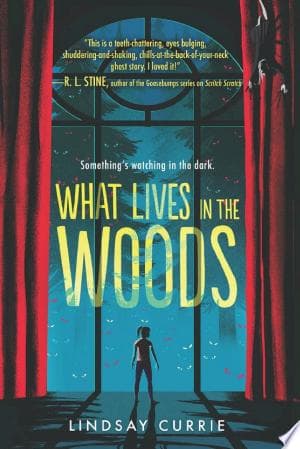
What Lives in the Woods cover
Archivist's Choice

What Lives in the Woods

Lindsay Currie (2021)

Genre

General

Reading Time

240 min

Key Themes

See below

Track Your Reading

Sign in to track this book

When Ginny's summer takes a turn for the eerie in a sprawling, century-old Michigan mansion, she uncovers a chilling local legend not just haunting the dense woods, but specifically hunting her.

Core Idea

"What Lives in the Woods" explores fear and the evil that can live in ordinary places. It argues that true terror often comes not from obvious monsters, but from the unseen, the history of a place, and the secrets people keep. The story shows how facing these deep fears, often with help from unexpected friends, is important for ending cycles of dread and finding hidden truths that have long troubled people and places.
Reading time
240 min
Difficulty
Easy
✓ Read this if...
You enjoy middle-grade horror that blends supernatural scares with themes of friendship, family secrets, and the power of confronting the unknown.
✗ Skip this if...
You prefer horror with explicit gore, complex adult themes, or if you dislike stories centered around children unraveling mysteries.

Core idea

The central argument and framework that powers the entire book.

"What Lives in the Woods" explores fear and the evil that can live in ordinary places. It argues that true terror often comes not from obvious monsters, but from the unseen, the history of a place, and the secrets people keep. The story shows how facing these deep fears, often with help from unexpected friends, is important for ending cycles of dread and finding hidden truths that have long troubled people and places.

At a glance

Reading time

240 min

Difficulty

Easy

Read this if...

You enjoy middle-grade horror that blends supernatural scares with themes of friendship, family secrets, and the power of confronting the unknown.

Skip this if...

You prefer horror with explicit gore, complex adult themes, or if you dislike stories centered around children unraveling mysteries.

Key Takeaways

1

The Weight of the Woods

Ancient forests hold secrets, and sometimes, they want them back.

Quote

Locals claim the surrounding woods are inhabited by mutated creatures with glowing eyes. And some say campers routinely disappear in the woods, never to be seen again.

The novel uses the setting of Woodmoor Manor, a large, century-old mansion in dense Michigan woods, to create an oppressive atmosphere. The woods are not just a background; they are an active, evil force. This shows how old, wild nature can hold forgotten histories and powers older than human memory. The sheer size and isolation of the forest increase the feeling of vulnerability, suggesting that some places keep an intrinsic, almost conscious, power that humans can only temporarily disturb. This takeaway highlights the book's main id...

Supporting evidence

The constant local rumors about mutated creatures and disappearing campers, combined with Ginny's growing unease about the sounds and shadows emanating from the forest, establish the woods as a central antagonist.

Apply this

When exploring new environments, especially those with long histories or wild natural surroundings, pay attention to local legends and the 'feel' of the place. Some places carry an inherent sense of unease that can be a subtle warning.


haunted-placesfolkloresupernatural-horror
2

Mansion's Malevolence

Old houses aren't just walls; they're archives of past lives and lingering presences.

Quote

When the creaky floors and shadowy corners of the mansion seem to take on a life of their own, Ginny uncovers the wildest mystery of all.

Woodmoor Manor is not just an old house; it is a character in itself, actively part of the terror. Its 'creaky floors and shadowy corners' are described as having a consciousness within the building. This fits the gothic style where the physical setting reflects and increases psychological distress. The mansion's age and decay add to its creepiness, hinting at untold stories and forgotten residents. It shows that neglected places can become centers for supernatural activity, acting as a vessel for the past to appear in the present, tr...

Supporting evidence

The description of the mansion's physical decay, combined with Ginny's perception of its 'taking on a life of its own,' clearly establishes its role as more than just shelter.

Apply this

When dealing with old or abandoned structures, consider the history they hold. Approach them with respect and caution, as unseen forces might still be tethered to them. Acknowledge that environments can have a 'memory' of events.

gothic-horrorparanormal-investigationarchitectural-hauntings
3

Beyond the Obvious Monster

Sometimes the real threat isn't the creature in the dark, but the story we haven't been told.

Quote

As terrifying as it sounds, Ginny can't shake the feeling that there's something darker . . . another story she hasn't been told.

The book cleverly changes expectations by introducing local stories about 'mutated creatures' only to reveal a deeper, more personal horror. Ginny's feeling that 'there's something darker' points to the common idea in mystery and horror where the first, obvious threat distracts from the true, underlying danger. This shows that fear can be controlled, and what seems to be the most obvious monster might just be a sign of a more complex, often human-caused, evil. The real terror is in finding the hidden truths and the specific, personal ...

Supporting evidence

Ginny's internal monologue about a 'darker' story, which she later uncovers, contrasting with the initial legends about generic forest creatures.

Apply this

In any mysterious situation, question the obvious explanation. Look for deeper connections, hidden motives, and untold histories. The surface-level 'monster' may be a red herring.

red-herringpsychological-thrillermystery-solving
4

Bravery in the Face of the Unknown

True courage isn't the absence of fear, but the decision to act despite it.

Quote

A story with a strong female protagonist that explores bravery, friendship, and family.

Ginny Anderson shows what a strong female character is by facing terrifying, unexplained events with great resilience. Her bravery is not shown as a lack of fear, but as a deliberate choice to investigate and protect, even when her instincts tell her to run. This shows that courage is a process of overcoming one's natural desire for self-preservation to find truth or help others. The story empowers young readers by showing that even in overwhelming situations, a determined person can make a big difference, using their intelligence and...

Supporting evidence

Ginny's active investigation into the mansion's secrets and the entity in the woods, despite being clearly terrified, showcases her bravery.

Apply this

When faced with daunting challenges, acknowledge your fear but don't let it paralyze you. Break down the problem into smaller steps and take action, even if it's just a small one. Remember that courage is a learned behavior.

character-developmentresilienceheroic-journey
5

The Power of Friendship

Facing the supernatural is easier when you're not alone.

Quote

All Ginny Anderson wants from her summer is to sleep in, attend a mystery writing workshop, and spend time with her best friend.

Despite the terrifying experience Ginny faces alone, her friendships, especially with her best friend, are a key part. In horror, being alone often increases fear, but having a trusted friend provides emotional support, a place to share ideas, and sometimes, direct help. This highlights that even in the most personal battles, human connection is very valuable. It teaches young readers the importance of having reliable friends and the strength that comes from shared experiences, even scary ones. Friendship provides not just comfort, bu...

Supporting evidence

The book explicitly mentions Ginny's desire to spend time with her best friend, implying this relationship will play a role in her summer experiences, likely offering support during the supernatural events.

Apply this

Cultivate strong, supportive friendships. When encountering difficult or frightening situations, don't hesitate to lean on your friends for emotional support, different perspectives, or practical help.

social-supportteen-fictionteamwork
6

Family Secrets and Hidden Truths

The past of our families can haunt us in unexpected ways.

Quote

They aren't staying in a hotel like most families would. No, they're staying in a mansion. A twenty-six room, century-old building surrounded by dense forest. Woodmoor Manor.

The idea of Ginny's father, a restoration expert, bringing the family to Woodmoor Manor for a month-long project immediately suggests a deeper, possibly family-related connection to the house or its history. In many ghost stories, the main character's family is unknowingly linked to the haunting. This takeaway emphasizes how unresolved issues, hidden histories, or even direct family ties can draw people into supernatural conflicts. It highlights the idea that our family's past is often not fully known to us, and those buried secrets c...

Supporting evidence

The fact that Ginny's father, a restoration expert, specifically chooses this particular, isolated, and clearly troubled mansion for a family trip suggests a deeper narrative purpose for their presence there.

Apply this

Explore your family history and ask questions about past events or places that hold significance. Understanding your roots can reveal unexpected connections to present circumstances.

ancestral-secretsgenerational-traumafamily-history
7

The Power of Storytelling (and Writing)

Understanding and confronting fear can be achieved through narrative creation.

Quote

All Ginny Anderson wants from her summer is to sleep in, attend a mystery writing workshop...

Ginny's wish to attend a mystery writing workshop is not just a character detail; it foreshadows her journey. Her skills as an aspiring mystery writer likely help her put together clues, spot false leads, and create a clear story from the chaotic supernatural events around her. This takeaway suggests that storytelling, both as a reader and a writer, provides tools for understanding and dealing with the unknown. It implies that by analyzing stories and creating our own, we gain control over frightening situations, turning passive victi...

Supporting evidence

Ginny's intention to attend a mystery writing workshop positions her as someone who inherently understands narrative structure and problem-solving through investigation.

Apply this

When faced with confusing or frightening events, try to frame them as a story or a mystery. Break down the elements, identify characters, motives, and plot points to gain a clearer understanding and find solutions.

narrative-therapycreative-writingcritical-thinking
8

The Unseen Predator

Some entities don't just haunt; they hunt, with a specific target in mind.

Quote

It's after her.

The chilling discovery that 'It's after her' changes the story from a general haunting to a targeted pursuit. This difference is important in horror, as it raises the stakes and makes the terror personal. A general haunting might be escaped, but a specific entity with a personal goal against Ginny means there is a reason for its focus, likely tied to the mansion's or her family's past. This creates a feeling of inescapable dread, as the entity is not just a lingering spirit but an active predator. It forces Ginny to understand why s...

Supporting evidence

The concluding sentence of the summary, 'It's after her,' directly states the targeted nature of the haunting.

Apply this

If you ever feel targeted by an unseen force, consider if there's a specific, personal reason for the attention. Understanding the 'why' can be key to understanding the 'what' and finding a way to protect yourself.

stalking-horrorpersonal-hauntingsupernatural-threat
9

Beyond the Superficial Spook

Effective ghost stories delve deeper than jump scares, exploring underlying anxieties.

Quote

This is a teeth-chattering, eyes bulging, shuddering-and-shaking, chills-at-the-back-of-your-neck ghost story. I loved it!

R.L. Stine's endorsement highlights the book's ability to deliver scary moments, but the summary's content suggests a deeper story at play. A truly effective ghost story does not just rely on 'teeth-chattering' moments; it connects to common anxieties about the unknown, being alone, family secrets, and losing control. 'What Lives in the Woods' appears to do this by mixing the supernatural with Ginny's personal journey, creating a richer, more impactful horror experience. This takeaway emphasizes that while surface-level scares are fun...

Supporting evidence

The combination of Stine's praise for its 'chills' alongside the detailed plot points about Ginny's personal mystery and the mansion's history, suggests a layered horror experience.

Apply this

When consuming horror, look beyond the immediate scares to identify the underlying themes and anxieties the story explores. Understanding these deeper layers can enhance your appreciation and understanding of the genre.

psychological-horrorgenre-analysisfear-mechanisms

Critical analysis

Notable Quotes

The woods were always there, a dark, silent watcher at the edge of town, full of secrets.

Describing the protagonist's initial perception of the woods.

Some things are better left undisturbed, especially when they've been sleeping for a very long time.

A warning from an older character about ancient forces.

Fear has a way of making you see things that aren't there, and sometimes, things that are.

The protagonist grappling with whether strange occurrences are real or imagined.

The rustling wasn't just wind; it was a whisper, a promise, a threat.

Experiencing an unsettling sound in the woods.

You can't outrun your past, especially when your past lives right next door.

Reflecting on family history and its connection to the current events.

It wasn't just a house; it was a memory keeper, holding onto every laugh, every cry, every scream.

Describing the old house and its oppressive atmosphere.

The line between folklore and fact blurs when you're standing in the middle of a nightmare.

Realizing that local legends might be true.

Sometimes the bravest thing you can do is admit you're scared.

A moment of vulnerability and strength for one of the characters.

The woods don't just watch; they listen. And sometimes, they answer.

A chilling realization about the sentient nature of the woods.

Even in the darkest places, there's a flicker of light, if you know where to look.

A hopeful sentiment amidst the danger and mystery.

The silence in the woods wasn't peaceful; it was heavy, expectant, like it was holding its breath.

An atmospheric description of the unsettling quiet.

Some stories aren't meant to be told, but they always find a way to be heard.

Discussing the enduring nature of secrets and supernatural events.

The most dangerous monsters aren't always the ones with fangs and claws.

A reflection on the different forms of evil, including human malevolence.

Quiz

Test Your Knowledge

Ready to see how well you understood this book? Take our interactive quiz with 10 questions.

10
Questions
~5
Minutes
?
Best Score

Key Questions (FAQ)

'What Lives in the Woods' is perfect for middle school students, specifically those in 5th to 9th grade, making it ideal for readers aged 9-14.

About the author