BookBrief
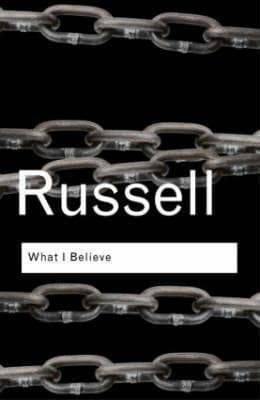
What I Believe cover
Archivist's Choice

What I Believe

Bertrand Russell (1925)

Genre

Politics / History / Spirituality / Science / Philosophy

Reading Time

60 min

Key Themes

See below

Track Your Reading

Sign in to track this book

Bertrand Russell's essay presents his atheistic worldview, a stance so controversial it cost him a teaching position, yet it remains a clear look into his thought.

Core Idea

Bertrand Russell's secular humanism argues that meaning comes from human experience and effort, not from a divine power. He says that because the universe does not care about human fate, we must rethink our moral and existential ideas, freeing ourselves from traditional religion. Happiness and a good life come from gaining knowledge, accepting natural human desires guided by reason, and practicing love and compassion, all within this life.
Reading time
60 min
Difficulty
Medium
✓ Read this if...
You are interested in a foundational text of secular humanism, want to understand Bertrand Russell's personal philosophy on life, morality, and religion, or seek a concise argument for finding meaning in an indifferent universe.
✗ Skip this if...
You are looking for a detailed philosophical treatise, prefer spiritual or religious perspectives on life's meaning, or dislike direct challenges to traditional religious dogma.

Core idea

The central argument and framework that powers the entire book.

Bertrand Russell's secular humanism argues that meaning comes from human experience and effort, not from a divine power. He says that because the universe does not care about human fate, we must rethink our moral and existential ideas, freeing ourselves from traditional religion. Happiness and a good life come from gaining knowledge, accepting natural human desires guided by reason, and practicing love and compassion, all within this life.

At a glance

Reading time

60 min

Difficulty

Medium

Read this if...

You are interested in a foundational text of secular humanism, want to understand Bertrand Russell's personal philosophy on life, morality, and religion, or seek a concise argument for finding meaning in an indifferent universe.

Skip this if...

You are looking for a detailed philosophical treatise, prefer spiritual or religious perspectives on life's meaning, or dislike direct challenges to traditional religious dogma.

Key Takeaways

1

Cosmic Indifference, Human Meaning

The universe cares not for our values, yet we must create them.

Quote

The universe is what it is, not what we might wish it to be.

Russell says the universe has no purpose or design. It is a cold, indifferent space run by scientific laws, not divine will. This scientific view, far from being a reason for sadness, frees humanity from dogma and allows us to make meaning through our own values and actions. He argues that accepting the universe's indifference is necessary for true intellectual honesty and moral independence. Our hopes and fears are human ideas, projected onto a reality that does not change. This view encourages us to define our own good and evil inst...

Supporting evidence

Russell's entire essay is built upon a scientific and empirical understanding of the universe, rejecting supernatural explanations for natural phenomena and the origin of life and consciousness.

Apply this

Embrace a worldview where personal and societal values are self-constructed rather than divinely ordained. Focus on creating a just and compassionate society based on human reason and empathy, rather than waiting for cosmic intervention or adhering to ancient prohibitions. Cultivate intellectual courage to face uncomfortable truths about existence.

atheismcosmic-indifferencehumanismexistentialism
2

The Pillars of a Good Life

Impulse, reason, and an unshakeable will to happiness define human flourishing.

Quote

The good life is one inspired by love and guided by knowledge.

Russell describes a good life that balances natural desires with reason. He points out two main human drives: love, which includes affection, creativity, and the wish for connection, and knowledge, which is the search for understanding and truth. The 'good life' is not strict or only intellectual; it is rich with these elements. It means accepting our natural abilities for joy and connection, while also using critical thought to understand the world, solve problems, and avoid harmful superstitions. This balance prevents both uncontrol...

Supporting evidence

Russell explicitly states that 'what I mean by a good life is a happy life' and elaborates on the importance of both 'love' (in its broadest sense, including benevolence and creative impulse) and 'knowledge' (rational understanding and scientific inquiry) as its twin foundations.

Apply this

Actively cultivate relationships and engage in creative pursuits that bring joy and connection (love). Simultaneously, commit to lifelong learning, critical thinking, and a fact-based understanding of the world (knowledge). Seek to integrate these two forces in daily decisions and long-term goals.

ethicshappinessreasonempathy
3

Religion as a Hindrance

Superstition and fear, not virtue, are the true legacies of organized religion.

Quote

Fear is the main source of superstition, and one of the main sources of cruelty. To conquer fear is the beginning of wisdom.

Russell criticizes organized religion directly, seeing it as a barrier to human progress, reason, and true morality. He argues that religious ideas, especially those promising eternal reward or punishment, come from fear—fear of the unknown, death, and life itself. This fear, in turn, creates superstition, intolerance, and cruelty, as shown by historical persecutions and strict rules. He believes that morality from divine command is flawed because it values obedience over real compassion and understanding. True goodness, for Russell, ...

Supporting evidence

Russell cites the historical record of religious persecution and the suppression of scientific inquiry as direct consequences of religious dogma and fear-mongering. His later work, 'Why I Am Not a Christian,' expands on these arguments.

Apply this

Approach ethical dilemmas and societal issues through a lens of human reason and empathy, rather than deferring to religious texts or authority. Actively challenge dogmatic thinking and superstition wherever it appears, advocating for evidence-based reasoning and critical inquiry in all aspects of life.

anti-clericalismsuperstitiondogmasecularism
4

The Power of Human Impulse

Natural drives, when guided by reason, are forces for good, not evil.

Quote

I think that the good life is the happy life. I do not mean that if you are good you will be happy; I mean that if you are happy you will be good.

Russell challenges the religious idea that human desires are sinful or need to be suppressed. Instead, he sees natural drives—like the desire for love, creative expression, and intellectual curiosity—as basic parts of a fulfilling life. When these desires are expressed healthily and guided by reason, they become strong forces for individual happiness and societal good. Repressing them, often under the guise of religious morality, causes unhappiness, frustration, and a lesser existence. The goal is not to remove them but to manage and ...

Supporting evidence

Russell discusses the impulses of 'love' and 'knowledge' as primary drivers of human happiness and fulfillment, contrasting this with ascetic or repressive moral systems.

Apply this

Identify and nurture your core human impulses for connection, creativity, and understanding. Rather than suppressing 'undesirable' feelings, explore their origins and seek healthy, constructive outlets, always applying reason to ensure they align with broader ethical principles and do not harm others. Prioritize joy and fulfillment as indicators of a well-lived life.

hedonismpsychologyself-actualizationrationalism
5

Knowledge as the Liberator

Scientific understanding dispels fear and paves the way for a rational society.

Quote

The pursuit of knowledge, especially scientific knowledge, is one of the chief means by which men can escape from the tyranny of fear and superstition.

For Russell, knowledge, especially scientific knowledge, is not just academic but a tool for human freedom. It frees people from ignorance, superstition, and baseless fears that religious and political powers have used throughout history. By understanding the natural world through observation and reason, humanity can break down myths, question dogma, and find solutions to real problems. This dedication to knowledge forms the foundation of a progressive society, allowing for informed choices, promoting intellectual honesty, and leading...

Supporting evidence

Russell consistently champions the scientific method and empirical evidence throughout the essay, implicitly contrasting it with faith-based explanations for the universe and human experience.

Apply this

Commit to a lifelong pursuit of knowledge, particularly in scientific and critical thinking disciplines. Question assumptions, seek evidence, and be willing to revise your beliefs in light of new information. Support education and scientific research as fundamental pillars of a free and prosperous society.

epistemologyscientific-methodempiricismcritical-thinking
6

No Afterlife, Just This Life

The rejection of immortality places ultimate value on present existence.

Quote

I cannot believe in the immortality of the soul, nor, therefore, in a personal God.

Russell clearly rejects the idea of personal immortality or an afterlife. This rejection is not about nihilism but a strong confirmation of the value and urgency of the present life. If this life is all we have, then it is most important to live it fully, ethically, and with purpose. The focus shifts from getting rewards in a future life to making the most of our limited time, helping others, and finding joy and meaning now. This view frees people from the worries and moral compromises often linked to seeking eternal salvation, encour...

Supporting evidence

Russell explicitly states his disbelief in the immortality of the soul as a core tenet of his philosophy, which naturally entails a focus on earthly life.

Apply this

Shift focus from future spiritual rewards to maximizing your positive impact and personal fulfillment in the present. Engage deeply with the world, cultivate meaningful relationships, and pursue passions with the understanding that this is your only guaranteed existence. Practice gratitude for the finite gift of life.

mortalitysecular-humanismcarpe-diemmeaning-of-life
7

Morality Without God

Ethics are a human construct, born from empathy and societal needs.

Quote

The good life is one inspired by love and guided by knowledge.

Russell firmly states that morality does not need divine commands or supernatural rules. Instead, ethical principles come from human nature, specifically from our ability to empathize and our rational understanding of what helps individual and group well-being. Actions are 'good' if they promote happiness, lessen suffering, and help society flourish, and 'bad' if they do the opposite. This human-centered morality is more flexible, adaptable, and ultimately more humane than strict, divinely-imposed rules, which often cause intolerance ...

Supporting evidence

Russell's entire essay implicitly and explicitly argues for a morality based on human experience and reason, rather than divine decree, particularly in his discussion of what constitutes the 'good life.'

Apply this

Develop your moral compass based on rational consideration of consequences and genuine empathy for others, rather than relying on external religious authority. Engage in critical ethical reasoning, always asking how actions impact human welfare and happiness. Advocate for policies and behaviors that promote universal well-being.

secular-ethicsutilitarianismhumanitarianismmoral-philosophy
8

The Quest for Happiness

Happiness is attainable through harmonious impulse and rational action.

Quote

The secret of happiness is to face the fact that the world is horrible, horrible, horrible.

For Russell, happiness is not a quick pleasure but a lasting state achieved through a balanced and rational approach to life. It comes from combining our natural desires (like love, creativity, and curiosity) with the guidance of reason. Importantly, this happiness does not rely on illusion or wishful thinking; it requires an honest acceptance of the universe's indifference and our own death. By letting go of superstitious fears and embracing a scientific worldview, people can develop a strong inner life and engage positively with the...

Supporting evidence

Russell defines the 'good life' as the 'happy life,' and dedicates much of the essay to explaining the components necessary for achieving this, including the proper channeling of impulse and the guidance of knowledge.

Apply this

Consciously work to balance your emotional and intellectual life, ensuring your passions are informed by reason and your reason is enlivened by genuine human feeling. Seek joy in intellectual discovery and meaningful connections. Cultivate a resilient mindset that accepts reality without succumbing to despair, finding purpose within your own life.

eudaimoniawell-beingrational-happinesspositive-philosophy
9

Freedom from Taboo

Unshackling from ancient prohibitions allows for genuine moral progress.

Quote

The moral codes of religions are often based on ancient superstitions and taboos, rather than on a rational assessment of human welfare.

Russell supports freedom from the irrational rules and bans that often mark religious and traditional moral systems. He argues that many such rules, especially concerning sex and pleasure, are not based on rational thoughts of harm or benefit, but on old fears, ignorance, or a desire for control. These rules suppress natural human expression, cause unnecessary suffering, and hinder true moral development. By rejecting these baseless restrictions, society can move toward a more humane and rational ethical system, one that values indivi...

Supporting evidence

Russell's critique of religious morality and his emphasis on human impulse and knowledge implicitly challenge the validity of many traditional moral taboos.

Apply this

Critically examine societal norms and personal beliefs, questioning whether they are based on reason, empathy, and evidence, or merely on inherited traditions and unfounded prohibitions. Advocate for individual freedom and autonomy in areas where no demonstrable harm is caused to others. Challenge moral hypocrisy and irrational judgment.

sexual-freedomsocial-liberalismautonomyenlightenment
10

The Imperative of Love

Benevolence and affection are the highest human virtues.

Quote

The good life is one inspired by love and guided by knowledge.

Despite his image as a cold rationalist, Russell values 'love' greatly as a basic part of the good life. This 'love' is not just romantic; it includes a wide range of kind feelings: affection, compassion, creative drive, and a general wish for others' well-being. He argues that this ability to connect and empathize is essential for both individual happiness and building a humane society. Without it, knowledge can become sterile and power destructive. Love provides the emotional energy and moral direction that stops reason from becomin...

Supporting evidence

Russell explicitly states 'love' as one of the two foundational pillars of the good life, alongside 'knowledge,' throughout the essay.

Apply this

Actively cultivate empathy and compassion in your interactions. Seek to understand and alleviate the suffering of others. Engage in creative and collaborative endeavors that foster connection and mutual benefit. Prioritize kindness and generosity in your personal and public life, recognizing their fundamental role in human flourishing.

altruismcompassionsocial-cohesionbenevolence

Critical analysis

Notable Quotes

I cannot therefore accept the Christian doctrine that a man cannot be happy if he is wicked. That doctrine is a consoling one for the virtuous, but it is not true.

Discussing the relationship between virtue and happiness.

The good life is one inspired by love and guided by knowledge.

Defining the components of a fulfilling human existence.

Every man, of course, is limited by his mortality, and if he is to be happy he must learn to live with this limitation.

Reflecting on human limitations and the pursuit of happiness.

I do not pretend to be able to prove that there is no God. I equally cannot prove that there are no Greek gods.

Addressing the existence of God and the limits of proof.

The greatest happiness of the greatest number is a maxim which has been much criticized, but it is one which, if properly understood, contains a large measure of truth.

Discussing utilitarianism and its applicability.

It is not by believing in a future life that we can best prepare for it, but by living as we ought to live in this life.

Contemplating the preparation for an afterlife versus present living.

The universe may have a purpose, but if so, it is hidden from us.

Pondering the ultimate purpose of existence.

To be happy, a man must be able to forget himself, and to live in an impersonal way.

Suggesting a path to personal happiness through detachment.

Man is a part of nature, not a power external to it.

Defining humanity's place within the natural world.

The world needs a philosophy, or a religion, which will not seek to make men feel that they are worms, but will give them courage.

Advocating for a positive and empowering worldview.

Happiness is not a gift of the gods, but a conquest.

Emphasizing agency and effort in achieving happiness.

It is not only what we do, but also what we think, that determines what we are.

Highlighting the importance of inner thought in shaping identity.

Science can tell us how to achieve certain ends, but it cannot tell us what ends to choose.

Distinguishing the roles of science and ethics.

The fundamental cause of trouble in the world today is that the stupid are cocksure while the intelligent are full of doubt.

Observing a societal imbalance in confidence and intelligence.

Quiz

Test Your Knowledge

Ready to see how well you understood this book? Take our interactive quiz with 10 questions.

10
Questions
~5
Minutes
?
Best Score

Key Questions (FAQ)

'What I Believe' outlines Bertrand Russell's personal philosophy, emphasizing a scientific and rational worldview devoid of supernatural beliefs. He discusses his views on ethics, happiness, and the universe, advocating for reason and empirical evidence over religious dogma.

About the author

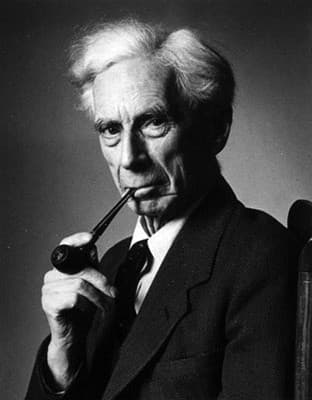
Bertrand Russell

Bertrand Russell was a Nobel Prize-winning philosopher, logician, and social critic. A prolific writer, his works spanned logic, epistemology, metaphysics, ethics, and political philosophy. Notable books include 'The Problems of Philosophy,' 'A History of Western Philosophy,' and 'The Conquest of Happiness.' His contributions significantly influenced analytic philosophy and mathematics.