BookBrief
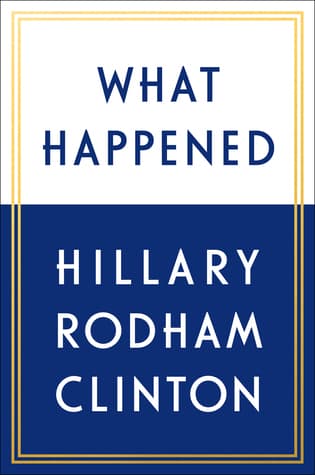
What Happened cover
Archivist's Choice

What Happened

Hillary Rodham Clinton (2017)

Genre

Politics / Biography / Memoir / History

Reading Time

10-12 hours

Key Themes

See below

Track Your Reading

Sign in to track this book

Hillary Rodham Clinton removes her public persona to offer a raw, personal account of her 2016 presidential campaign, her defeat, and her thoughts on sexism, Russian interference, and a new political era.

Core Idea

Hillary Rodham Clinton provides a detailed, personal analysis of her 2016 presidential campaign and election loss. She argues that several factors led to an outcome she believes was both devastating and preventable. These factors include Russian interference, gender bias against her candidacy, FBI Director James Comey's late actions, a 'post-truth' political environment, and her own campaign's mistakes. The book examines the unique pressures and criticisms she faced as a woman candidate, the campaign's strategic decisions, and the societal changes that helped Donald Trump win. It also reflects on her personal experience of a major public defeat.
Reading time
10-12 hours
Difficulty
Medium
✓ Read this if...
You want a comprehensive, insider account of the 2016 US presidential election from Hillary Clinton's perspective, focusing on the specific challenges she faced as a female candidate and the external forces she believes undermined her campaign. Ideal for those interested in contemporary American political history, gender in politics, and the impact of disinformation.
✗ Skip this if...
You are looking for a neutral or detached analysis of the 2016 election, or if you are not interested in a memoir focused on the perspective of a specific political figure. Readers seeking an objective, third-party historical account or a less partisan view may find this too one-sided.

Core idea

The central argument and framework that powers the entire book.

Hillary Rodham Clinton provides a detailed, personal analysis of her 2016 presidential campaign and election loss. She argues that several factors led to an outcome she believes was both devastating and preventable. These factors include Russian interference, gender bias against her candidacy, FBI Director James Comey's late actions, a 'post-truth' political environment, and her own campaign's mistakes. The book examines the unique pressures and criticisms she faced as a woman candidate, the campaign's strategic decisions, and the societal changes that helped Donald Trump win. It also reflects on her personal experience of a major public defeat.

At a glance

Reading time

10-12 hours

Difficulty

Medium

Read this if...

You want a comprehensive, insider account of the 2016 US presidential election from Hillary Clinton's perspective, focusing on the specific challenges she faced as a female candidate and the external forces she believes undermined her campaign. Ideal for those interested in contemporary American political history, gender in politics, and the impact of disinformation.

Skip this if...

You are looking for a neutral or detached analysis of the 2016 election, or if you are not interested in a memoir focused on the perspective of a specific political figure. Readers seeking an objective, third-party historical account or a less partisan view may find this too one-sided.

Key Takeaways

1

The Weight of Being 'Careful'

Hillary Clinton's lifelong struggle with public perception hindered authentic connection.

Quote

In the past, for reasons I try to explain, I’ve often felt I had to be careful in public, like I was up on a wire without a net. Now I’m letting my guard down.

Clinton discusses the great pressure she felt throughout her career, especially during the 2016 campaign, to keep a carefully controlled public image. This 'carefulness' was a way to protect herself, learned from decades of intense scrutiny and political attacks. While meant to help her, it often created a perception of being fake or distant. She argues that this self-imposed limit kept her from fully connecting with voters emotionally. Her opponent, Donald Trump, freely broke all traditional political rules. Her memoir tries to drop ...

Supporting evidence

Clinton's introduction explicitly states her past need for caution, which she contrasts with her post-election desire to 'let her guard down.' Her subsequent analysis throughout the book of her messaging and public appearances often circles back to this theme of perceived inauthenticity.

Apply this

For public figures, authenticity, even with its risks, can foster deeper trust and connection than a meticulously crafted, overly cautious persona. Leaders should weigh the perceived safety of caution against the potential for genuine human connection.

authenticity-in-politicspublic-perceptionpolitical-memoir
2

The Double Standard of Gender in Power

Women in politics face unique, often contradictory, expectations and criticisms.

Quote

I was running against a candidate who had a history of misogyny, but I was also running against the accumulated weight of expectations and biases about women in leadership.

Clinton carefully details the widespread sexism that shaped her campaign and how the public saw her. She describes the difficult situation for women leaders: seeming 'emotional' is a weakness, while seeming 'tough' means being 'unlikable.' Her voice, age, appearance, and ambition were all used against her in ways male candidates rarely experience. She points out the constant need to deal with accusations of being shrill or too ambitious, while also being told she wasn't 'strong' enough. This double standard was not just about her oppo...

Supporting evidence

Clinton cites numerous instances of media criticism regarding her 'likability,' her 'shouting,' her pantsuits, and her ambition, contrasting them with the treatment of male candidates. She discusses the 'nasty woman' epithet and her opponent's comments about her appearance.

Apply this

Individuals and institutions must actively identify and challenge unconscious biases against women in leadership roles. Voters should critically examine the source and nature of criticisms leveled against female candidates.

gender-politicssexism-in-campaignsfemale-leadership
3

The Russian Interference: A Clear and Present Danger

Foreign meddling fundamentally warped the democratic process, benefiting Trump.

Quote

The 2016 election was an unprecedented assault on our democracy by a foreign adversary. By analyzing the evidence and connecting the dots, Hillary shows just how dangerous the forces are that shaped the outcome.

Clinton focuses much attention on the documented Russian interference. She argues it was a purposeful, complex, and ultimately successful effort to weaken American democracy and specifically to help Donald Trump. She describes the organized release of stolen emails (through WikiLeaks), the widespread use of social media misinformation campaigns, and the targeting of specific voter groups. She stresses that this was not just a 'hack' but an active information war designed to create conflict, increase existing divisions, and make her ca...

Supporting evidence

Clinton references intelligence community reports (e.g., the January 2017 ICA report), the timing of WikiLeaks releases, and the proliferation of fake news stories on platforms like Facebook, all linked to Russian actors.

Apply this

Governments and citizens must prioritize cybersecurity and media literacy to combat foreign disinformation. Social media platforms bear a responsibility to actively police and remove state-sponsored propaganda.

election-interferencecyberwarfaredisinformation
4

The 'Basket of Deplorables' Controversy

A gaffe that confirmed negative stereotypes and fueled the opposition's narrative.

Quote

I regret deeply that I gave my opponents a gift. And I regret even more the anger and hurt that my words caused.

Clinton openly talks about her 'basket of deplorable' comment, admitting it was a major tactical mistake. While she intended to distinguish between different groups of Trump supporters, the quote was immediately used by the Trump campaign and conservative media. It fit perfectly into the idea that she was elitist and looked down on working-class Americans, alienating potential voters and motivating her opponents. She reflects on how even a partly true statement, poorly said and used as a weapon, can hurt a campaign's message and stren...

Supporting evidence

Clinton recounts the exact speech where the comment was made, the immediate media backlash, and its subsequent use in Trump's campaign advertisements and rallies.

Apply this

Political candidates must exercise extreme caution in language, understanding that even nuanced statements can be decontextualized and used against them. Campaigns need robust rapid response strategies for gaffes.

political-gaffescampaign-messagingmedia-narratives
5

Coping with Devastating Loss

The personal journey of resilience after a public and shocking defeat.

Quote

I write in the immediate aftermath of an election that was, for me, a shocking and devastating loss. This is my story of what happened.

Beyond political analysis, Clinton offers a very personal account of dealing with her unexpected loss. She describes the initial shock, the sadness, and the struggle to find meaning and move forward. She details how she coped, including 'Chardonnay and chuckling' with friends, long walks in the woods, decluttering, and finding comfort in reading and spending time with loved ones. This section shows her as a person, moving past her political role to reveal the deep emotional impact of such a public defeat. It highlights the universal h...

Supporting evidence

Clinton shares anecdotes about her post-election walks in Chappaqua, her reading list (including mystery novels), her conversations with Bill and Chelsea, and her decision to attend Trump's inauguration.

Apply this

In times of personal or professional crisis, developing healthy coping mechanisms and leaning on a strong support system are crucial for mental and emotional recovery. Allowing oneself to grieve is a necessary step.

grief-and-lossresiliencepersonal-memoir
6

The Comey Letter's Impact

FBI Director Comey's actions significantly damaged Clinton's campaign in its final days.

Quote

Just when we thought we had weathered the storm, James Comey dropped another bomb.

Clinton strongly argues that FBI Director James Comey's letter to Congress, sent just 11 days before the election, about a new inquiry into her email server, severely damaged her campaign. She describes the immediate and measurable drop in her poll numbers and the renewed media frenzy it caused, stopping her momentum and allowing Trump to catch up. While Comey later clarified there was no new evidence, the harm was already done. Clinton sees this as an unprecedented action by a federal agency in a presidential election. She believes i...

Supporting evidence

Clinton cites polling data from the final weeks of the campaign, showing a direct correlation between the Comey letter's release and a decline in her support. She details the internal campaign's panic and attempts to counter the narrative.

Apply this

Government officials, particularly those in law enforcement, must be acutely aware of the potential for their actions to influence political outcomes, especially close to elections. Transparency and timing are critical considerations.

fbi-interventionelection-controversypolitical-timing
7

The Allure of the 'Strongman' Figure

Trump capitalized on anxieties and offered a simplistic, authoritarian appeal.

Quote

He offered a simple, if dangerous, solution: I alone can fix it.

Clinton analyzes Donald Trump's appeal, especially his ability to connect with deep anger, resentment, and a desire for a 'strongman' leader who promised to disrupt the current system. She believes his success came not just from his populist words but from a broader societal longing for a decisive figure who would 'fix' complex problems with simple, often aggressive, answers. This was very different from her own approach, which focused on detailed policy and teamwork. She suggests that Trump's unapologetic rule-breaking and disregard ...

Supporting evidence

Clinton references Trump's 'I alone can fix it' line from the Republican National Convention and his consistent rhetoric against political elites and 'establishment' figures.

Apply this

Citizens must be vigilant against simplistic solutions and charismatic leaders who promise to solve complex problems unilaterally. A healthy democracy requires critical thinking and engagement with nuanced policy.

populismauthoritarianismpolitical-psychology
8

The Post-Truth Landscape

The erosion of shared facts made it impossible to counter false narratives.

Quote

We were battling in a post-truth landscape, where facts were optional and feelings were paramount.

A repeated theme is Clinton's frustration with the 'post-truth' environment of the 2016 election. She describes how useless it was to present facts against a wave of misinformation, conspiracy theories, and emotionally charged statements. The constant need to disprove outrageous claims, from her health to her alleged involvement in various scandals, used up valuable campaign resources and attention. She argues that this breakdown in a shared understanding of reality, fueled by partisan media and social media echo chambers, made it alm...

Supporting evidence

Clinton recounts the persistent 'Pizzagate' conspiracy theory, the repeated questioning of her health despite medical reports, and the widespread dissemination of fake news articles about her.

Apply this

Individuals must cultivate strong media literacy skills and seek out diverse, credible news sources. Educational institutions and tech companies have a responsibility to combat the spread of misinformation.

post-truth-politicsfake-newsmedia-literacy
9

The Enduring Strength of American Democracy (and its Fragility)

Despite challenges, the democratic system endures, but requires constant vigilance.

Quote

The election of 2016 was unprecedented and historic. What Happened is the story of that campaign and its aftermath—both a deeply intimate account and a cautionary tale for the nation.

Ultimately, Clinton's memoir serves as a warning about the weaknesses of American democracy. While she recounts the devastating impact of foreign interference and internal divisions, she also expresses a basic belief in the strength of the nation's institutions and its people. However, this belief is balanced by a clear warning: democracy does not last on its own. It requires active involvement, a commitment to truth, and a readiness to defend its core principles against both outside enemies and internal threats. Her thoughts highligh...

Supporting evidence

Clinton's concluding thoughts emphasize the need for continued engagement, the importance of voting, and the defense of institutions, despite her personal disappointment.

Apply this

Citizens must remain engaged in the political process, hold leaders accountable, and actively work to strengthen democratic institutions. Recognizing and addressing threats to democracy is a shared responsibility.

democratic-resiliencecivic-engagementpolitical-vigilance

Critical analysis

Notable Quotes

Many of us, myself included, are struggling to understand what happened. What an election that many of us expected to win ended up losing. And what that means for our country.

Opening the book, reflecting on the 2016 election loss.

I’m not writing this to relitigate the past or to point fingers. I’m writing it as a citizen, a patriot, and a woman who believes in our country and its future.

Explaining her purpose in writing the memoir.

The forces that shaped the 2016 election were complex and deeply rooted, and they didn’t begin or end with me.

Discussing the multifaceted causes of her defeat.

Every time I thought I’d finally gotten to the bottom of the email story, there was a new twist, a new headline, a new accusation.

Describing the relentless scrutiny and impact of the email controversy.

There was a pervasive feeling that I was either too ambitious or not ambitious enough, too cold or too emotional, too experienced or not relatable.

Reflecting on the 'damned if you do, damned if you don't' perception of her as a female candidate.

I could not, and cannot, imagine a more important job than being President of the United States. And I was ready for it.

Expressing her conviction in her qualifications and desire for the presidency.

The sexism and misogyny in the campaign were undeniable, and they were often disguised as something else.

Addressing the role of sexism in the 2016 election.

I felt like I was in a funhouse mirror, where every flaw was magnified and every strength distorted.

Describing her experience of being under intense public and media scrutiny.

Part of what made the 2016 election so painful was the feeling that we were on the brink of something truly historic, and then it slipped away.

Lamenting the missed opportunity of becoming the first female president.

It’s hard to run against someone who is willing to say anything, do anything, and who has no regard for the truth.

Referring to the nature of campaigning against Donald Trump.

I believe that we are stronger together, and that our diversity is a source of strength, not a weakness.

Reiterating a core message from her campaign and political philosophy.

I’m still a woman, still a mother, still a wife, still a friend, still a citizen. And I’m not going anywhere.

Concluding her memoir with a statement of resilience and continued engagement.

The more you learn about how our elections work, the more you appreciate the incredible effort that goes into them.

Reflecting on the electoral process and its complexities.

I tried to convey a sense of optimism about America’s future, even as I acknowledged the very real problems we faced.

Describing her approach to public speaking and campaign messaging.

Quiz

Test Your Knowledge

Ready to see how well you understood this book? Take our interactive quiz with 10 questions.

10
Questions
~5
Minutes
?
Best Score

Key Questions (FAQ)

The book serves as Hillary Rodham Clinton's personal memoir detailing her experiences and reflections during the 2016 presidential election campaign, including her thoughts, feelings, and the challenges she faced as the first woman nominated for president by a major party.

About the author