BookBrief
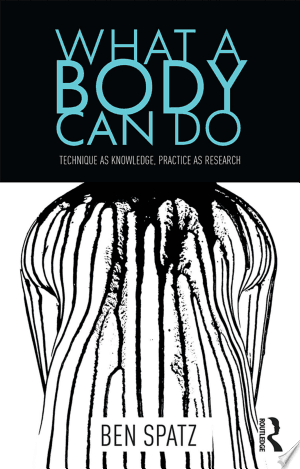
What a Body Can Do cover
Archivist's Choice

What a Body Can Do

Ben Spatz (2015)

Genre

General

Reading Time

480 min

Key Themes

See below

Track Your Reading

Sign in to track this book

Ben Spatz explains embodied technique, showing it as a rigorous form of knowledge and research important for universities, performing arts, and daily life.

Core Idea

Ben Spatz's "What a Body Can Do" argues that technique is a basic form of embodied knowledge. It offers a unique way of inquiry, different from theoretical knowledge. The book suggests that bodies, through repeated action, develop specific skills and understandings. These are not just mental states but are enacted within practice. This embodied knowledge is valuable, working as an ongoing research process that challenges old mind-body ideas and broadens our understanding of how we think, learn, and what we can do. The book claims that training in any technique—from martial arts to artistic performance to everyday skills—is a key way to create and share this embodied knowledge. It argues for seeing technique as a valid form of research, urging schools and society to include and value embodied practices for their unique contributions to knowledge and understanding the human condition, beyond just intellectual ideas.
Reading time
480 min
Difficulty
Hard
✓ Read this if...
You are a scholar or practitioner interested in performance studies, embodied cognition, critical pedagogy, sociology of knowledge, or anyone seeking a deep philosophical and practical exploration of what bodies know and how they know it. Ideal for those who want to bridge theory and practice in understanding human action.
✗ Skip this if...
You are looking for a light, introductory read on physical fitness or a purely practical guide to specific techniques without engaging with dense philosophical and theoretical arguments about the nature of knowledge and embodiment.

Core idea

The central argument and framework that powers the entire book.

Ben Spatz's "What a Body Can Do" argues that technique is a basic form of embodied knowledge. It offers a unique way of inquiry, different from theoretical knowledge. The book suggests that bodies, through repeated action, develop specific skills and understandings. These are not just mental states but are enacted within practice. This embodied knowledge is valuable, working as an ongoing research process that challenges old mind-body ideas and broadens our understanding of how we think, learn, and what we can do.

The book claims that training in any technique—from martial arts to artistic performance to everyday skills—is a key way to create and share this embodied knowledge. It argues for seeing technique as a valid form of research, urging schools and society to include and value embodied practices for their unique contributions to knowledge and understanding the human condition, beyond just intellectual ideas.

At a glance

Reading time

480 min

Difficulty

Hard

Read this if...

You are a scholar or practitioner interested in performance studies, embodied cognition, critical pedagogy, sociology of knowledge, or anyone seeking a deep philosophical and practical exploration of what bodies know and how they know it. Ideal for those who want to bridge theory and practice in understanding human action.

Skip this if...

You are looking for a light, introductory read on physical fitness or a purely practical guide to specific techniques without engaging with dense philosophical and theoretical arguments about the nature of knowledge and embodiment.

Key Takeaways

1

Technique as Embodied Knowledge

Beyond mere skill, technique is a sophisticated form of knowing and understanding the world through the body.

Quote

Technique is a major area of historical and ongoing research in physical culture, performing arts, and everyday life.

Spatz changes how we see technique, making it more than a physical skill to a form of embodied knowledge. This is not just about doing something well; it is a deep understanding that lives in the body, shaped by practice. It is a type of intelligence shown through movement, posture, and interaction, often without conscious thought. This view challenges academic systems that favor written or abstract knowledge, arguing for the intellectual work in physical mastery. It suggests bodies 'know' in ways words cannot fully explain, and this ...

Supporting evidence

Spatz's synthesis of phenomenology and enactive cognition, which emphasizes how cognition arises from the interaction between an organism and its environment, highlights the active, knowing role of the body.

Apply this

When learning a new physical skill, focus not just on the external form but on the internal sensations and adjustments your body makes. Reflect on what your body 'learns' beyond explicit instructions, allowing for the development of intuitive, embodied expertise.


embodied-cognitionnon-propositional-knowledge
2

Training as Research

Rigorous physical training is not just preparation for performance, but a form of inquiry that generates new knowledge.

Quote

Viewing technique as both training and research has much to offer current debates over the role of practice in the university, including the debates around 'practice as research.'

Spatz states that disciplined training, especially in arts or martial arts, is a form of research. This redefines the 'practice as research' idea, moving past just documenting artistic steps to arguing that rigorous physical training is an investigative process. Through repeated action and refinement, practitioners explore the body's limits, finding new movements and understanding how things relate physically. This is not just about learning a skill but about pushing human ability through direct bodily experience, creating insights th...

Supporting evidence

The author draws on dance studies and physical culture, where practitioners constantly experiment with movement, form, and expression, implicitly conducting research into the body's capabilities.

Apply this

Approach your physical practice (e.g., yoga, a sport, a craft) with a researcher's mindset. Document your process, observe subtle changes in your body and technique, and reflect on what new insights or understandings emerge from your dedicated practice.

practice-as-researchkinesthetic-intelligence
3

Technique's Epistemic Value

Technique offers unique ways of knowing the world that are inaccessible through purely intellectual or verbal means.

Quote

Technique is a major area of historical and ongoing research in physical culture, performing arts, and everyday life.

Spatz argues that technique offers a unique path to knowledge that other types of inquiry cannot fully match. This knowledge is often unspoken, intuitive, and deeply linked to sensory and motor experience. Consider a master carpenter who 'feels' the wood's grain, or a musician who understands an instrument's nuances from years of touch and sound. These are not just skills; they are deep understandings of materials, forces, and interactions gained through direct bodily engagement. This view challenges how manual or performance expertis...

Supporting evidence

The text implicitly refers to the 'knowledge' held by master artisans, performers, or athletes who can execute complex tasks with an intuitive understanding that defies simple verbal explanation.

Apply this

When encountering a new object or environment, engage with it physically. Touch it, manipulate it, move within it. Pay attention to the non-verbal information your body gathers, recognizing its validity as a form of understanding.

tacit-knowledgeepistemology-of-practice
4

Beyond Mind-Body Dualism

Spatz dismantles the artificial separation between mind and body, presenting the body as an intelligent, knowing entity.

Quote

Drawing on critical perspectives from the sociology of knowledge, phenomenology, dance studies, enactive cognition, and other areas, Spatz argues that technique is a major area of historical and ongoing research.

A main part of Spatz's work is its rejection of the idea that mind and body are separate. He argues they are closely linked, with the body itself being a source of intelligence and knowledge. This means thinking is not just in the brain but spread throughout the organism, showing up in our movements, feelings, and interactions. By using ideas from phenomenology and enactive cognition, Spatz offers a more complete view of human experience, where the body is not just a container for the mind but actively shapes our understanding and eng...

Supporting evidence

The book's reliance on enactive cognition, which posits that cognition arises from the dynamic interaction between an organism and its environment, directly challenges the idea of a disembodied mind.

Apply this

Practice mindfulness and interoception to become more aware of your body's signals and sensations. Recognize that your gut feelings, physical responses, and muscle memory are forms of intelligence, not just reactions.

mind-body-unityphenomenology
5

Technique in Everyday Life

Sophisticated embodied techniques are not limited to experts but are fundamental to navigating daily existence.

Quote

Technique is a major area of historical and ongoing research in physical culture, performing arts, and everyday life.

Spatz expands 'technique' beyond specialized areas like dance or sports, stating its wide presence and importance in everyday life. From walking and tying shoes to driving a car or using a phone, our daily actions rely on complex, often unconscious, embodied techniques. These are not minor skills but refined motor programs developed through years of interacting with our environment. Recognizing this raises the importance of ordinary bodily actions, showing them as sophisticated forms of practical intelligence. This view helps us appre...

Supporting evidence

The author explicitly states that technique is present in 'everyday life,' implying commonplace actions that require embodied coordination and skill.

Apply this

Observe the subtle techniques you employ in your daily routines: how you balance while carrying groceries, navigate a crowded street, or type on a keyboard. Appreciate the complexity and efficiency of these often-unconscious embodied skills.

practical-intelligencehabitual-action
6

The University and Embodied Practice

Academic institutions must reconsider their valuation of practice, recognizing its intellectual rigor and knowledge-generating capacity.

Quote

Viewing technique as both training and research has much to offer current debates over the role of practice in the university, including the debates around 'practice as research.'

Spatz's work directly addresses the debate in universities about the role of practice-based research. He critiques the academic preference for theoretical, written knowledge, arguing that this overlooks the intellectual contributions of embodied practices. By defining technique as knowledge and training as research, he offers a strong framework for including performing arts, physical culture, and other practice-led fields more fully in academia. This calls for rethinking how 'research' is defined, advocating for methods that can captu...

Supporting evidence

The book directly addresses 'current debates over the role of practice in the university,' indicating its relevance to academic discourse and policy.

Apply this

If you are involved in a practice-based discipline within academia, advocate for methodologies that honor the embodied nature of your work. Seek ways to articulate the unique knowledge generated through your practice, even if it challenges traditional academic norms.

practice-led-researchacademic-legitimacy
7

Sociology of Embodied Knowledge

Techniques are socially and culturally constructed, reflecting collective histories and power dynamics.

Quote

Drawing on critical perspectives from the sociology of knowledge... Spatz argues that technique is a major area of historical and ongoing research.

Spatz bases his theory in a critical look at how knowledge is made, recognizing that embodied techniques are not neutral. They are tied to social and cultural settings, shaped by history, power, and community practices. How we move, interact, and perform tasks is influenced by our upbringing, culture, and the groups we belong to. This means techniques can carry social meanings, reinforce power structures, or even be a way to resist. Understanding this social side is key for a full theory of embodied knowledge, preventing a view of the...

Supporting evidence

The explicit mention of 'critical perspectives from the sociology of knowledge' indicates this foundational aspect of his theory.

Apply this

When observing different physical techniques (e.g., different cultural dances, martial arts styles, or even social greetings), consider how they reflect historical, social, and cultural values and power dynamics, rather than just individual preferences.

cultural-techniquessocial-construction-of-body
8

Technique as Ongoing Research

Embodied techniques are not static, but constantly evolving through iterative practice and adaptation.

Quote

Technique is a major area of historical and ongoing research in physical culture, performing arts, and everyday life.

Spatz stresses that technique is not a fixed goal but 'ongoing research.' This means that even after achieving mastery, practitioners keep refining and adapting. The body, through continuous practice, constantly experiments, finding new efficiencies or solutions to movement problems. This dynamic view challenges the idea of technique as just repetition, instead showing it as a living, evolving process of inquiry. It highlights the creativity and adaptability of embodied intelligence, where each movement can be a small experiment, lead...

Supporting evidence

The phrase 'ongoing research' directly supports this point, implying a continuous process of discovery rather than a static state.

Apply this

In your own physical pursuits, resist the urge to see 'mastery' as an end. Instead, view it as a platform for continuous exploration and refinement. Seek out new variations, challenges, and perspectives to keep your embodied learning dynamic and evolving.

iterative-practiceadaptive-learning
9

Enactive Cognition and Embodiment

Our cognitive processes are not separate from our bodies, but emerge from our active engagement with the world.

Quote

Drawing on critical perspectives from... enactive cognition... Spatz argues that technique is a major area of historical and ongoing research.

A main part of Spatz's theory is enactive cognition, which says that thinking does not happen 'in' the brain, but 'comes from' the interaction between a person and their environment. This means our perception and knowledge are actively created through our bodily engagement with the world. We do not just passively receive information; we actively 'enact' our reality through our movements, senses, and actions. This view provides a strong scientific basis for seeing technique as knowledge, as it directly connects physical action to think...

Supporting evidence

Spatz explicitly lists 'enactive cognition' as a critical perspective he draws upon, indicating its central role in his argument.

Apply this

When trying to understand a complex system or concept, don't just read about it. Try to interact with it physically, build a model, or simulate its actions. Recognize that your physical engagement will deepen your cognitive understanding.

situated-cognitionecological-psychology
10

Technique as World-Making

Through embodied techniques, we actively shape and make sense of our world, rather than just passively perceiving it.

Quote

What a Body Can Do, Ben Spatz develops, for the first time, a rigorous theory of embodied technique as knowledge.

Spatz's theory suggests that embodied techniques are not just about doing things in an existing world, but are key to how we understand and create that world. Our bodies, through skilled actions, actively 'make the world.' A dancer does not just move in space; they create a new spatial reality through their choreography. A craftsman does not just work with materials; they bring new forms into being. This view moves past passively receiving reality, highlighting the active, creative role of the embodied person. It emphasizes how our ph...

Supporting evidence

The overall argument that technique is a form of knowledge and research, combined with the influence of phenomenology and enactive cognition, supports the idea that our bodies actively construct our experience of the world.

Apply this

Consider how your actions and skills literally shape your environment and your understanding of it. Whether you're arranging furniture, cooking a meal, or creating art, recognize that you are actively creating and interpreting your world through your body's engagement.

enactment-theorybody-as-agent

Critical analysis

Notable Quotes

The body is not a thing but a capacity, a dynamic potentiality for action and interaction.

Introducing the core thesis of the book regarding the nature of the body.

Technique is not just what we do, but how we learn to do it, and how that learning shapes what we become.

Discussing the transformative power of technique beyond mere execution.

To study embodied technique is to study power relations inscribed in and through the body.

Highlighting the socio-political dimensions inherent in the study of bodily techniques.

Every body is a living archive, holding histories of movement, habit, and interaction.

Emphasizing the historical and cumulative nature of bodily experience.

The distinction between 'mind' and 'body' often obscures the complex, integrated reality of human experience.

Critiquing Cartesian dualism and advocating for a more holistic understanding.

Performance is not merely an outcome but a process of becoming, a continuous negotiation with the present moment.

Defining performance as an ongoing, dynamic process rather than a static product.

We learn not just with our brains, but with our muscles, our bones, our very breath.

Illustrating the deep embodied nature of learning.

Skill is not an abstract possession, but an ongoing achievement, always in relation to a specific context.

Challenging the idea of skill as a fixed attribute, framing it as relational and contextual.

To truly understand a movement, one must not only observe it but also attempt to embody it.

Advocating for an empathetic and embodied approach to understanding movement.

The practice of technique is a form of inquiry, a way of asking questions with and through the body.

Describing technique as an active, investigative process.

Our bodies are always already in conversation with their environment, shaping and being shaped in turn.

Emphasizing the constant interplay between the body and its surroundings.

Freedom is not the absence of constraint, but the capacity to act effectively within given constraints.

Offering a nuanced definition of freedom in an embodied context.

The work of embodiment is never finished; it is a continuous, unfolding process.

Reinforcing the dynamic and ongoing nature of embodied existence.

To neglect the body is to neglect a fundamental dimension of human knowledge and being.

Arguing for the essential role of the body in epistemology and ontology.

What a body can do is always more than we initially imagine, if we only pay close enough attention.

Encouraging a deeper exploration and appreciation of bodily capabilities.

Quiz

Test Your Knowledge

Ready to see how well you understood this book? Take our interactive quiz with 10 questions.

10
Questions
~5
Minutes
?
Best Score

Key Questions (FAQ)

In 'What a Body Can Do,' Ben Spatz defines embodied technique as a form of knowledge that integrates both training and research. It's not just about physical skill, but a rigorous way of knowing that develops through the body in various practices.

About the author

Ben Spatz is a writer and performance maker whose work explores the intersection of embodiment, politics, and history. His notable book, 'What a Body Can Do: Tools for Critical Embodiment,' offers practical and theoretical approaches to understanding the body's role in social and political life. Spatz is recognized for his interdisciplinary research and his commitment to accessible, practice-based scholarship.