BookBrief
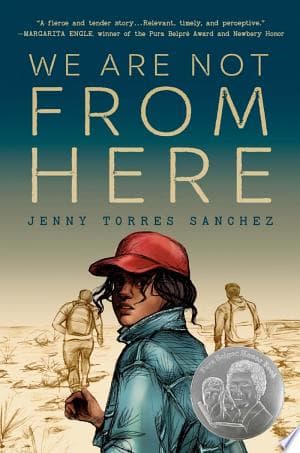
We Are Not from Here cover
Archivist's Choice

We Are Not from Here

Jenny Torres Sanchez (2020)

Genre

General

Reading Time

240 min

Key Themes

See below

Track Your Reading

Sign in to track this book

Three Guatemalan teens risk their lives on the perilous journey of La Bestia, seeking refuge across the U.S.-Mexico border while outrunning the dangers of their past and the unknown future.

Core Idea

Jenny Torres Sanchez's "We Are Not from Here" shows the difficult journey of Central American teenagers fleeing their homelands to seek asylum in the United States. The novel focuses on the idea that choices are limited, often to death at home or a dangerous, uncertain trek through Mexico aboard "La Bestia." It details the physical dangers, emotional cost, and moral compromises faced by those migrating. The book also discusses the way borders affect people and the mix of good and bad encountered along the way. Ultimately, the book emphasizes human strength, the power of chosen family, and the weight of grief and hope that defines the search for a new beginning.
Reading time
240 min
Difficulty
Medium
✓ Read this if...
You want a raw, empathetic, and unflinching look at the realities of Central American migration, particularly the experiences of unaccompanied minors, and are prepared for a deeply emotional and challenging read.
✗ Skip this if...
You prefer narratives with clear-cut happy endings or are not ready for a story that confronts intense violence, grief, and systemic injustices head-on.

Core idea

The central argument and framework that powers the entire book.

Jenny Torres Sanchez's "We Are Not from Here" shows the difficult journey of Central American teenagers fleeing their homelands to seek asylum in the United States. The novel focuses on the idea that choices are limited, often to death at home or a dangerous, uncertain trek through Mexico aboard "La Bestia." It details the physical dangers, emotional cost, and moral compromises faced by those migrating. The book also discusses the way borders affect people and the mix of good and bad encountered along the way. Ultimately, the book emphasizes human strength, the power of chosen family, and the weight of grief and hope that defines the search for a new beginning.

At a glance

Reading time

240 min

Difficulty

Medium

Read this if...

You want a raw, empathetic, and unflinching look at the realities of Central American migration, particularly the experiences of unaccompanied minors, and are prepared for a deeply emotional and challenging read.

Skip this if...

You prefer narratives with clear-cut happy endings or are not ready for a story that confronts intense violence, grief, and systemic injustices head-on.

Key Takeaways

1

The Illusion of Choice: Fleeing for Survival

For many, migration is not a choice but a desperate act of self-preservation.

Quote

They had no choice but to run: from their country, from their families, from their beloved home.

The book shows that for many people, especially young people in dangerous areas, the decision to leave home is not about wanting a better life, but about surviving. Pulga, Chico, and Pequeña are not looking for a better life in the usual way; they are escaping immediate, life-threatening violence from gangs and corruption. Their journey on 'La Bestia' is dangerous, but the dangers they leave behind are even more certain and deadly. This story challenges the simple idea that migration is a voluntary choice for economic gain, revealing ...

Supporting evidence

The trio's initial flight is directly precipitated by a brutal gang assault and the murder of Pulga's cousin, highlighting the direct threat to their lives if they remain in Guatemala.

Apply this

Cultivate empathy by recognizing that narratives of migration often mask profound trauma and a lack of viable alternatives. Support policies that address root causes of displacement and offer humanitarian pathways for asylum seekers.


forced-migrationasylum-seekersroot-causes-of-migration
2

La Bestia: A Gauntlet of Peril and Humanity

The journey itself is a character, a brutal test of endurance and a crucible for human connection.

Quote

Crossing from Guatemala through Mexico, they follow the route of La Bestia, the perilous train system that might deliver them to a better life--if they are lucky enough to survive the journey.

'La Bestia,' or 'The Beast,' is not just a way to travel. It is a central part of the story, representing both danger and a small bit of hope. Sanchez details the physical and emotional cost of riding the train: the constant risk of falling, the tiredness, the hunger, the exposure to weather, and the danger of bandits and corrupt officials. Yet, within this harshness, there are moments of human connection and help, as migrants share what little they have, offer comfort, and protect each other. The journey is a small example of the lar...

Supporting evidence

The book vividly describes the physical challenges of clinging to the top of the train, the encounters with other migrants who offer food or advice, and the constant fear of being robbed or apprehended by authorities along the route.

Apply this

Advocate for safer, legal pathways for migration to reduce reliance on dangerous methods like La Bestia. Support organizations providing aid and protection to migrants along these perilous routes.

la-bestiamigrant-journeyhuman-smuggling
3

The Weight of Grief and Hope

Survival is intertwined with profound loss, but hope, however fragile, persists as a driving force.

Quote

Pulga has his dreams. Chico has his grief. Pequeña has her pride.

The characters carry great burdens of grief, fear, and trauma, as heavy as their physical bags. Chico's quiet grief for his lost family member deeply affects his journey, while Pulga deals with the responsibility of leading and protecting his friends. Pequeña, though tough at first, slowly lets herself hope. Sanchez shows how these internal states influence their choices and their ability to keep going. The novel suggests that even in the darkest times, the human capacity for hope—for a safer future, for reunion, for dignity—is a powe...

Supporting evidence

Chico's withdrawal and occasional outbursts are directly linked to the trauma of witnessing his brother's death. Pulga's recurring dreams of a better life in the U.S. fuel his determination despite setbacks.

Apply this

Recognize the psychological toll on migrants and support mental health services for displaced populations. Foster environments where hope can be nurtured through community and support.

trauma-and-migrationresiliencepsychological-impact-of-displacement
4

The Bonds of Chosen Family

In the absence of traditional support, deep, protective bonds form between those sharing the journey.

Quote

And these three teens have one another.

One of the most moving parts of the novel is the developing relationship between Pulga, Chico, and Pequeña. Brought together by circumstance, their bond changes from simple acquaintance to a strong, protective, and necessary chosen family. They rely on each other for physical safety, emotional support, and the will to keep going. This relationship shows how, in extreme hardship, human connection is not just comforting but vital for survival. Their loyalty to one another often outweighs individual desires, showing the strength found in...

Supporting evidence

Pulga consistently puts the safety of Chico and Pequeña before his own, making difficult decisions to protect them. Pequeña's initial aloofness gradually gives way to genuine care and concern for her companions.

Apply this

Support community-building initiatives among displaced populations. Recognize and value the informal support networks that migrants create, as they are crucial for well-being.

chosen-familysocial-support-networkscollective-resilience
5

The Dehumanizing Impact of Borders

Borders are not just lines on a map but systems that strip individuals of their humanity.

Quote

We are not from here.

The title, 'We Are Not from Here,' sums up the constant feeling of being different and rejected that migrants experience. Throughout their journey, Pulga, Chico, and Pequeña are reminded that they do not belong, whether by the harsh environment, the suspicious looks of strangers, or the brutal actions of authorities and people who take advantage of them. This constant way of making them feel less than human, caused by fear of outsiders, turns them into 'illegals' instead of people with stories, families, and dreams. The novel criticiz...

Supporting evidence

The encounters with local villagers who are either indifferent or openly hostile, the corruption of police officers who extort money, and the constant need to hide and avoid detection all reinforce their 'othered' status.

Apply this

Challenge dehumanizing language surrounding migration. Advocate for policies that uphold human dignity and provide fair, humane processing for asylum seekers, rather than criminalizing them.

xenophobiaborder-politicsdehumanization
6

The Complexities of Good and Evil

Survival often blurs moral lines, revealing the nuanced spectrum of human behavior.

Quote

The darkness that seems to follow wherever they go.

Sanchez avoids simple depictions of good and evil. While there are certainly cruel characters, there are also people who, despite their own difficulties, offer unexpected kindness, like the woman who gives them food or the truck driver who risks helping them. On the other hand, even those who seem trustworthy at first can turn out to be exploitative. The novel shows how desperation can lead people to both amazing acts of selflessness and terrible acts of betrayal. This moral complexity reflects the hard realities of the migrant experi...

Supporting evidence

The group encounters both a kind woman who offers shelter and food, and later, a seemingly helpful individual who ultimately betrays them for money, illustrating the unpredictable nature of human interactions on their journey.

Apply this

Avoid stereotyping migrants or those who interact with them. Recognize that individuals in desperate situations often make choices that defy easy moral categorization.

moral-dilemmashuman-naturesurvival-ethics
7

Lost Childhoods and Premature Adulthood

The journey forces young migrants to shed their innocence and assume adult responsibilities.

Quote

They were just kids, but they had seen too much, done too much.

Pulga, Chico, and Pequeña are teenagers, but their experiences on the road strip them of any normal childhood. They must make life-or-death decisions, deal with violence, hunger, and exploitation, and take on roles far beyond their age. Pulga, as the oldest, carries the burden of leadership; Pequeña becomes tough to protect herself; and Chico's grief forces him to face death. The novel clearly shows the tragic loss of innocence that is a sad reality for many young migrants, whose growing-up years are defined by struggle instead of dev...

Supporting evidence

The constant need to scavenge for food, the strategic planning required to ride La Bestia safely, and the necessity of defending themselves against threats all illustrate their premature entry into adult responsibilities.

Apply this

Advocate for child-specific protections and services for young migrants. Support educational and rehabilitative programs that help young people reclaim aspects of their childhood lost due to displacement.

child-migrantsloss-of-innocenceyouth-displacement
8

The Enduring Power of Storytelling

Sharing these narratives is crucial for understanding and fostering empathy.

Quote

A striking portrait of lives torn apart, the plight of migrants at the U.S. southern border is brought to light through poignant, vivid storytelling.

Jenny Torres Sanchez's novel is a powerful example of why storytelling is needed to make complex issues understandable. By showing readers the difficult, personal experiences of Pulga, Chico, and Pequeña, the book turns abstract news about 'the border crisis' into a deeply personal and memorable journey. It shows that literature can connect people, allowing readers to understand others' experiences and build empathy for those often overlooked or seen as bad. This way of telling a story helps create a better understanding of migration ...

Supporting evidence

The widespread critical acclaim for the book (Pura Belpré Honor, multiple 'Best Book' lists) highlights its impact in bringing this story to a broader audience and sparking conversations.

Apply this

Seek out and engage with diverse narratives, especially those from marginalized communities. Support authors and artists who illuminate untold stories, using their work to inform and inspire action.

narrative-empathyhumanizing-storiessocial-justice-literature

Critical analysis

Notable Quotes

We are not from here. We are not from anywhere.

Pulga's internal thought about the children's displacement and lack of belonging.

Hope is a dangerous thing. It can kill you slower than a bullet.

Pulga reflects on the deceptive nature of hope during their journey.

The world was a place of hunger and thirst, and they were always hungry and thirsty.

A general observation about the children's constant state of deprivation.

Every step was a prayer, every breath a plea.

Pulga's internal monologue describing the arduous and desperate nature of their journey.

They were ghosts, moving through a world that didn’t want to see them.

The children's feeling of invisibility and being unwanted as they travel.

Sometimes, the only way to survive is to forget who you were.

Chino's thought about the necessity of shedding their past identities for survival.

The border was not a line, but a wall built of fear and desperation.

A metaphorical description of the US-Mexico border from the children's perspective.

You carry your home inside you, wherever you go.

A comforting thought, possibly from a memory or an older character, about the essence of home.

The silence was a language they all understood, a language of fear and loss.

The unspoken communication between the children, filled with shared trauma.

They were just children, but the world demanded they be more.

A reflection on the premature loss of innocence forced upon the young protagonists.

To forget was a luxury they couldn't afford.

Pulga's realization that remembering their past, however painful, was crucial for their journey.

Every sunrise was a miracle, every sunset a warning.

The constant cycle of hope and dread experienced by the children each day.

They had left everything behind, but they carried their stories with them.

A poignant observation about the enduring power of personal narratives amidst displacement.

The kindness of strangers was a rare and precious thing, like water in the desert.

A moment of reflection on unexpected help received during their journey.

Even in the darkest places, a small flicker of light can sometimes be found.

An internal thought or a moment of hope despite overwhelming despair.

Quiz

Test Your Knowledge

Ready to see how well you understood this book? Take our interactive quiz with 10 questions.

10
Questions
~5
Minutes
?
Best Score

Key Questions (FAQ)

'We Are Not from Here' by Jenny Torres Sanchez is a poignant novel that follows three Guatemalan teenagers, Pulga, Chico, and Pequeña, as they are forced to flee their dangerous hometown. They embark on a perilous journey through Mexico on 'La Bestia' (the train system) to seek a better life and safety in the United States.

About the author