BookBrief
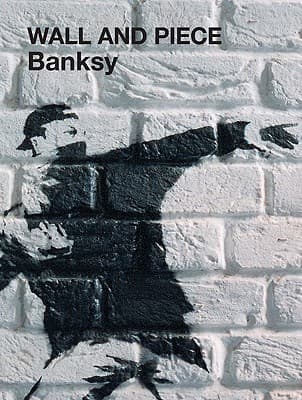
Wall and Piece cover
Archivist's Choice

Wall and Piece

Banksy (2005)

Genre

Politics / Reference / Creativity

Reading Time

180 min

Key Themes

See below

Track Your Reading

Sign in to track this book

Banksy's 'Wall and Piece' is a visual manifesto of the anonymous artist's most iconic street art, turning public spaces into sharp, satirical comments on politics and society.

Core Idea

Banksy's 'Wall and Piece' argues that art, especially street art, is a tool for social and political disruption, not just decoration. It suggests that by working outside traditional galleries and commercial systems, often anonymously, art can reclaim public spaces, challenge power, and make people think critically about issues from consumerism to war. The book shows how satire, subversion, and the temporary nature of some works can break down societal rules and redefine the line between vandalism and art. This approach ultimately encourages empathy and change through unexpected visual acts.
Reading time
180 min
Difficulty
Easy
✓ Read this if...
You are fascinated by the intersection of art, politics, and social commentary, or want to understand the philosophy behind street art as a form of protest and disruption.
✗ Skip this if...
You prefer traditional art history or criticism focused solely on aesthetics, or are uninterested in subversive, anti-establishment artistic expressions.

Core idea

The central argument and framework that powers the entire book.

Banksy's 'Wall and Piece' argues that art, especially street art, is a tool for social and political disruption, not just decoration. It suggests that by working outside traditional galleries and commercial systems, often anonymously, art can reclaim public spaces, challenge power, and make people think critically about issues from consumerism to war. The book shows how satire, subversion, and the temporary nature of some works can break down societal rules and redefine the line between vandalism and art. This approach ultimately encourages empathy and change through unexpected visual acts.

At a glance

Reading time

180 min

Difficulty

Easy

Read this if...

You are fascinated by the intersection of art, politics, and social commentary, or want to understand the philosophy behind street art as a form of protest and disruption.

Skip this if...

You prefer traditional art history or criticism focused solely on aesthetics, or are uninterested in subversive, anti-establishment artistic expressions.

Key Takeaways

1

Art as Disruption, Not Decoration

Banksy redefines art's purpose as a tool for social commentary and direct action.

Quote

Art should comfort the disturbed and disturb the comfortable.

Banksy changes the traditional role of art, moving it from galleries to public spaces where it can directly challenge societal norms and political wrongs. His work aims to make people think, debate, and often feel outraged, not just to provide aesthetic pleasure. By putting his art on walls, bridges, and even the West Bank barrier, he forces immediate and unavoidable engagement, bypassing art world gatekeepers. This approach makes art democratic, accessible to everyone, and turns passive viewing into active participation in a wider cu...

Supporting evidence

Banksy's 'Girl with Balloon' (or 'Balloon Girl') appearing on a Shoreditch wall, becoming an instant icon and later self-destructing at auction, demonstrating the transient, disruptive nature of his work and its commentary on the art market.

Apply this

Consider how your own creative or professional output can challenge existing paradigms rather than reinforce them. Seek opportunities to place your 'message' directly into the public sphere, making it unavoidable and sparking conversation.


guerrilla-artsocial-commentarypublic-art
2

The Power of Anonymity

Banksy's concealed identity amplifies his message and protects his artistic freedom.

Quote

I don't know why people are so keen to put the details of their private life in public; they forget that invisibility is a superpower.

Banksy's lasting anonymity is not just a personal habit but a strategic move that boosts his art's impact. By remaining nameless, he shifts attention entirely from the artist to the artwork and its message. This lets his pieces speak with a collective voice, representing broader societal complaints instead of seeking individual fame. Anonymity also gives him unmatched freedom to work outside legal and commercial limits, allowing him to carry out bold, often illegal, interventions without fear of direct punishment. It makes him a mythi...

Supporting evidence

His ability to 'smuggle' his own works into major museums (like the Metropolitan Museum of Art or the British Museum) and hang them undetected for hours or days, directly challenging institutional gatekeepers without revealing his identity.

Apply this

Evaluate how removing your personal brand from a project might allow the message or cause to resonate more universally. Consider the strategic advantages of operating discreetly to achieve impactful outcomes without personal ego.

art-activismidentity-politicssubversion
3

Satire as a Weapon

Humor and irony are deployed to expose hypocrisy and provoke critical thought.

Quote

The greatest crimes in the world are not committed by people breaking the rules but by people following the rules. It's people who follow orders that drop bombs and massacre villages.

Banksy skillfully uses satire and dark humor as his main tools against political corruption, consumerism, and societal indifference. His work often shows familiar images in surprising contexts, creating an immediate mental clash that makes viewers rethink their assumptions. Whether showing riot police with smiley faces or a girl hugging a bomb, the contrast is both absurd and deeply unsettling. This approach allows him to address sensitive and controversial topics—war, poverty, surveillance—in a way that is accessible, memorable, and ...

Supporting evidence

The series of works depicting Queen Elizabeth II as a chimpanzee, or the images of two policemen kissing, which use humor to critique authority and societal norms.

Apply this

In your own communication, explore how humor, irony, or unexpected juxtapositions can make difficult truths more palatable and memorable, encouraging deeper engagement with your message.

political-satireironyculture-jamming
4

Reclaiming Public Space

Street art transforms urban environments into canvases for public discourse.

Quote

The people who truly deface our neighborhoods are the companies that have their products splattered over every available surface. They expect you to feel grateful for the privilege of having their crap shoved in your face. They say it's just advertising – you call it advertising, I call it an invasion of space, a visual assault.

Banksy's art reclaims public space from corporate advertising and state control. He sees walls, bridges, and urban structures not as neutral backgrounds, but as contested areas where different stories compete for attention. By placing his provocative images in these visible, public spots, he disrupts the constant flow of commercial messages and injects an alternative, often critical, voice directly into the city. This act of 'graffiti' becomes a form of democratic expression, giving a platform to ideas usually ignored or censored. It ...

Supporting evidence

His 'Better Out Than In' residency in New York City, where he produced a new piece daily throughout October, turning the entire city into his gallery and engaging the public in a treasure hunt.

Apply this

Identify overlooked or undervalued 'public' spaces (digital or physical) where you can introduce alternative narratives or challenge dominant messaging. Think about how to disrupt the expected flow of information to capture attention.

urban-interventionanti-consumerismvisual-assault
5

Challenging the Art Market

Banksy critiques the commodification of art, even as his own work becomes highly valued.

Quote

The art world is the biggest joke. It’s a place where the rich and powerful can buy respectability by spending huge amounts of money on things that no one else wants.

Banksy has a difficult, often hostile, relationship with the traditional art market. While his pieces sell for high prices and are sought by collectors, he consistently undermines the systems that profit from his work. His stunts, like the self-shredding 'Girl with Balloon' at Sotheby's, are direct criticisms of art investment's speculative nature and the absurdity of valuing art based on scarcity and origin rather than its true worth or message. This creates a paradox: he is an anti-establishment icon whose work is also embraced by t...

Supporting evidence

The infamous 'Love is in the Bin' (formerly 'Girl with Balloon') stunt, where the artwork self-destructed moments after being sold for over £1 million at Sotheby's, only to increase its value.

Apply this

Reflect on how your work or ideas might be co-opted or commodified. Can you design in mechanisms to critique or subvert that process, even as you engage with it? Maintain integrity despite external pressures.

art-market-critiquecommodificationanti-capitalism
6

The Impermanence of Art

Banksy embraces transience, emphasizing the message over the object.

Quote

A wall is a very big weapon. It's one of the nastiest things you can hit someone with.

Unlike traditional art made for preservation, much of Banksy's street art is temporary. Exposed to weather, city clean-up crews, and other artists, many of his pieces will decay or be removed. This impermanence is not a flaw but a deliberate part of his artistic philosophy. It reinforces the idea that the message and the act of creation are more important than the physical object. The transient nature of his work emphasizes its urgency and its direct connection to the present. It also acts as a strong metaphor for the fleeting nature ...

Supporting evidence

Numerous instances where his early street art pieces have been painted over, removed, or deteriorated, yet their photographic records and the public's memory persist.

Apply this

Consider the value of temporary or 'flash' interventions in your own field. How can you create impact through experiences or messages that are immediate and impactful, even if not permanent?

ephemeral-arturban-decayguerrilla-tactics
7

Challenging Perceptions of Vandalism

Banksy blurs the line between crime and art, forcing a re-evaluation of public space aesthetics.

Quote

Graffiti is one of the few tools you have if you have almost nothing. And even if you don't come up with a picture to cure world poverty, you can make someone smile while they're having a piss.

Banksy's work directly challenges the idea of graffiti as mere vandalism. By creating visually striking, often political, and skilled images in public spaces, he elevates the medium beyond simple defacement. He forces viewers to question who defines 'art' and 'crime' and whose aesthetic values control public discussion. What one person calls vandalism, another sees as a powerful statement or a beautiful intervention. This blurring of lines shows the arbitrary nature of such distinctions and criticizes the privilege in traditional art ...

Supporting evidence

His early work in Bristol, often executed under the cover of darkness, which transformed neglected urban areas into cultural landmarks, demonstrating how 'vandalism' can create public value.

Apply this

Question the established rules and labels in your domain. Are there 'unconventional' or 'disruptive' methods that, while outside the norm, could lead to more impactful and meaningful outcomes?

art-crimesubversive-artrebellion
8

The Global Reach of Local Action

Banksy's localized interventions resonate with universal themes and global audiences.

Quote

You don't have to go to university to be an artist. You just have to be an artist.

Banksy's art, while often created in specific local places—a wall in Bristol, the West Bank barrier, the streets of New York—addresses universal themes that cross geographical lines. His criticisms of war, consumerism, surveillance, and social inequality connect with audiences worldwide, making him a global figure despite his local approach. This shows the power of real, context-specific interventions to tap into shared human experiences and worries. His work proves that deep impact does not need large, centralized campaigns; instead,...

Supporting evidence

His murals on the West Bank barrier, which directly address the Israeli-Palestinian conflict but speak to broader themes of division, oppression, and hope, garnering international attention.

Apply this

Focus on creating deeply resonant and authentic work in your specific context. Trust that if the message is true and powerful, it will find its way to a broader audience, amplified by modern communication channels.

global-localuniversal-themesdigital-amplification
9

Art as a Catalyst for Empathy

Banksy's work humanizes complex issues and fosters emotional connection.

Quote

There are no laws in the jungle, only opinions.

Beyond political criticism, Banksy's art often promotes empathy, especially for marginalized or suffering groups. By showing children, refugees, or animals in vulnerable yet defiant positions, he humanizes complex geopolitical issues like war, displacement, and poverty. His iconic images, such as the 'Migrant Child' in Calais or 'Mobile Lovers' in Bristol, remove the abstract language around these crises and present them in a raw, emotionally resonant way. This direct appeal to human feeling bypasses intellectual defenses, prompting v...

Supporting evidence

His 'Dismaland' exhibition, a dystopian theme park, which used dark humor and unsettling installations to critique consumerism and global crises, evoking a sense of unease and empathy for the world's problems.

Apply this

When communicating complex issues, seek ways to humanize the data or the abstract concepts. Use powerful, relatable imagery and storytelling to foster emotional connection and empathy in your audience.

empathy-arthumanitarian-themesemotional-connection
10

The Medium is the Message (and the Message is the Medium)

The act of creating street art is as significant as the artwork itself.

Quote

People say graffiti is ugly, irresponsible and childish... but that's only if it's done properly.

For Banksy, the act of creating street art—illegally, anonymously, in public—is a part of the message. The medium is not just a way to deliver content; it is content. The secret nature, the risk, the chosen location, and the interaction with the urban environment all add to the artwork's meaning. It is performance art in itself, a bold intervention that challenges norms before any paint is seen. This approach highlights that true artistic expression can come from unexpected places and through unconventional means, often defying auth...

Supporting evidence

The frequent documentation of his process, showing him (or his team) in action, often masked, emphasizing the covert and challenging nature of the creation itself, which then becomes part of the artwork's narrative.

Apply this

Consider how the 'how' of your work impacts the 'what.' Are there ways to imbue your process with meaning, making the method of delivery as impactful as the message itself?

performance-artprocess-artdisruptive-innovation

Critical analysis

Notable Quotes

Art should comfort the disturbed and disturb the comfortable.

A foundational statement on the purpose of art, often attributed to Banksy through this book.

Graffiti is one of the few tools you have if you have almost nothing. And even if you don't come up with a picture to cure world poverty you can make a lot of people smile in a particular place and time.

Explaining the accessibility and immediate impact of graffiti for those without power.

The bad artists imitate, the great artists steal.

A provocative take on artistic inspiration and originality, playing on a famous quote.

People say graffiti is ugly, irresponsible and childish... but that's only if it's done properly.

A humorous and ironic defense of graffiti, embracing its transgressive nature.

There's no way round it, you've got to get up at 5am and go and paint on a wall.

A pragmatic and somewhat romanticized instruction on the dedication required for street art.

The greatest crimes in the world are not committed by people breaking the rules but by people following the rules. It's people who follow orders that drop bombs and massacre villages.

A strong critique of obedience and authority, highlighting the dangers of conformity.

Speak softly, but carry a big can of paint.

A twist on a famous political saying, advocating for action over words in the context of street art.

A wall is a very big weapon. It's one of the best things to hit someone with.

Metaphorically describing the impact and reach of art placed on public walls.

Imagine a city where graffiti wasn't illegal, a city where everybody could draw whatever they liked. Where every street was awash with a million colours and little phrases. Where standing at a bus stop was never boring.

A utopian vision of a city transformed by unrestricted public art and expression.

The people who truly deface our neighborhoods are the companies that scrawl giant slogans across buildings and buses trying to make us feel inadequate unless we buy their stuff.

Critiquing corporate advertising as a form of visual pollution and manipulation, contrasting it with graffiti.

If you want to say something and have people listen then you have to wear a mask. If you want to be honest then you have to live a lie.

Reflecting on the paradox of anonymity and honesty in public discourse, particularly for an artist like Banksy.

All artists are willing to suffer for their work. But why are so few prepared to learn to draw?

A humorous jab at the commitment and skill level of some artists, contrasting effort with fundamental ability.

I mean, how many times have you been out for a meal with friends, or come home from a trip to the supermarket and thought 'I wish someone would just paint a rat on that wall?'

A playful and self-aware comment on the often unasked-for nature of his art, particularly his iconic rats.

Nobody ever listened to me until they didn't know who I was.

A poignant observation on the power of anonymity in drawing attention to the message rather than the messenger.

Quiz

Test Your Knowledge

Ready to see how well you understood this book? Take our interactive quiz with 10 questions.

10
Questions
~5
Minutes
?
Best Score

Key Questions (FAQ)

'Wall and Piece' showcases a comprehensive collection of Banksy's street art, installations, and political statements. It explores themes of anti-consumerism, anti-war, and socio-political commentary through his iconic stencils and guerilla art tactics.

About the author

Banksy is a pseudonymous England-based street artist, political activist, and film director whose notable works include the documentary "Exit Through the Gift Shop." His first book, "Wall and Piece," offers a collection of his art and commentary, providing insight into his satirical and often provocative artistic style.