“Nothing happens, nobody comes, nobody goes, it's awful!”
— Estragon's lament about their static existence.

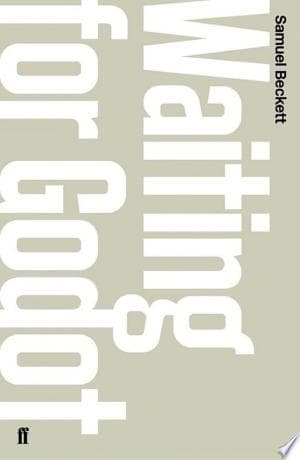
Samuel Beckett (2006)
Genre
Philosophy
Reading Time
90 min
Key Themes
See below
Sign in to track this book
Two tramps wait endlessly by a barren tree for Godot, filling the void with absurd, poetic banter while grappling with the meaninglessness of existence.
“Nothing happens, nobody comes, nobody goes, it's awful!”
— Estragon's lament about their static existence.
“Let us do something, while we have the chance! It is not everyday that we are needed.”
— Vladimir urging action, contrasting with their usual passivity.
“Astride of a grave and a difficult birth. Down in the hole, lingeringly, the grave-digger puts on the forceps. We have time to grow old. The air is full of our cries.”
— Pozzo reflecting on the brevity and pain of life.
“Was I sleeping, while the others suffered? Am I sleeping now? Tomorrow, when I wake, or think I do, what shall I say of this day?”
— Vladimir's internal monologue questioning his awareness and memory.
“To every man his little cross. Till he dies. And is forgotten.”
— Estragon's cynical view of individual burdens.
“The tears of the world are a constant quantity. For each one who begins to weep, somewhere else another stops. The same is true of the laugh.”
— Pozzo's philosophical observation on the balance of human emotion.
“Don't you remember anything?”
— Vladimir frequently asking Estragon about past events, highlighting memory loss.
“We are waiting for Godot.”
— The simple, recurring explanation for their presence and inaction.
“Habit is a great deadener.”
— Estragon's comment on the dulling effect of routine.
“What are we doing here, that is the question. And we are blessed in this, that we have an answer. We are waiting for Godot.”
— Vladimir's reflection on their perceived purpose, despite its ambiguity.
“Let's go. We can't. Why not? We're waiting for Godot. Ah!”
— A typical exchange between Vladimir and Estragon, showing their cyclical entrapment.
“The essential doesn't change.”
— Pozzo's assertion about the unchanging nature of things, despite superficial alterations.
“We'll hang ourselves tomorrow. Unless Godot comes.”
— Estragon's suggestion, tied to their hope for Godot's arrival.
“You are human beings after all... (He puts on his hat.) ...as far as one can see.”
— Pozzo's ironic observation, highlighting the ambiguity of identity and existence.
“The best thing would be to kill me, before I start to suffer.”
— Lucky's brief, chillingly lucid thought during his suffering.
Ready to see how well you understood this book? Take our interactive quiz with 10 questions.
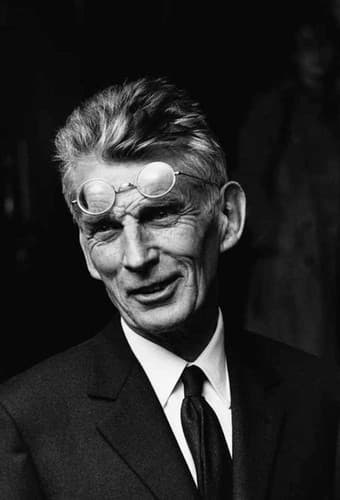
Samuel Barclay Beckett was an Irish novelist, dramatist, short story writer, theatre director, poet, and literary translator. His literary and theatrical work features bleak, impersonal and tragicomic experiences of life, often coupled with black comedy and nonsense. His work became increasingly minimalist as his career progressed, involving more aesthetic and linguistic experimentation, with techniques of repetition and self-reference. He is considered one of the last modernist writers, and one of the key figures in what Martin Esslin called the Theatre of the Absurd.

Jeff Olson
4.4
Thomas Sowell
4.4
Walter Brueggemann
4.3
Rhonda Byrne
4.3

Robin Wall Kimmerer
4.3
George S. Clason
4.3
Elliot Aronson
4.3

Joseph Campbell
4.3