“Here begins the New Life, which is so called because a new life began for me.”
— The very opening line, signaling a profound personal transformation.

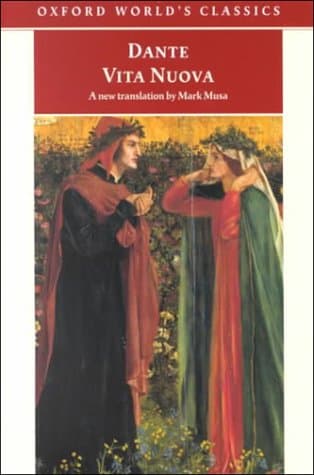
Dante Alighieri (1829)
Genre
Philosophy / Romance
Reading Time
120 min
Key Themes
See below
Sign in to track this book
Dante's "Vita Nuova" is a journey through youthful love, where his encounter with Beatrice sparks a philosophical look at love's power and poetic creation.
Dante Alighieri begins by recalling his first meeting with Beatrice Portinari when they were both nine years old. This encounter gives him a 'new life,' as the 'Lord of Love' (Amore) immediately takes over his soul. He describes how Beatrice's presence changes him, starting a period of intense admiration and secret devotion. For years, Dante holds this memory, developing a deep, unspoken love for her. His early poems come from this devotion, as he begins to record the emotions and spiritual stirrings inspired by her existence, even before any direct interaction.
After some years, Dante, now a young man, sees Beatrice at a church, and she greets him. This gesture fills him with such joy and spiritual bliss that he feels he has reached the peak of happiness. He sees her greeting as a divine blessing that sustains him. However, to hide his true feelings for Beatrice and protect her reputation, Dante pretends to be interested in other women, using them as 'screen-ladies.' This strategy backfires when Beatrice, misunderstanding his actions, stops greeting him, plunging Dante into deep despair, as he feels deprived of his spiritual support.
Upset by Beatrice's withdrawn greeting, Dante finds comfort among compassionate ladies who ask why he continues to pursue a love that brings him suffering. Through this talk, Dante realizes that his purpose should not be to receive Beatrice's greeting, but rather to praise her without expecting anything back. This change in perspective marks a turning point, moving his love from a desire for personal gain to a more selfless, spiritual devotion focused solely on celebrating her virtues. He begins to write poems purely in her praise, independent of her direct interaction.
In a powerful dream, Dante sees the Lord of Love holding Beatrice, feeding her Dante's own burning heart. Love then goes to heaven with Beatrice. This vision is symbolic and unsettling, hinting at future sorrow and Beatrice's eventual loss. The dream leaves Dante deeply disturbed, as he intuitively grasps its somber meaning. He tries to interpret the dream through a sonnet, sharing it with other poets, but the full, tragic meaning remains unclear to him at this stage, though a sense of impending doom is clear.
A period of mourning follows the death of Beatrice's father. Dante observes Beatrice among the other grieving women and is deeply moved by her sorrow and dignity. He sees her grief, which only increases his admiration and compassion for her. This shared experience of sorrow, though indirect, allows for a momentary, unspoken connection between them, as Dante feels his own heart resonate with her pain. He finds himself weeping alongside her, strengthening the spiritual bond he feels, even without direct interaction or a renewed greeting.
Beatrice falls ill, and during this time, Dante experiences a premonition of her death. He sees visions of weeping women, the sun darkening, and birds falling from the sky, all ending in a vision of Beatrice's body being carried to her tomb. This vivid and distressing experience leaves him in a state of deep anxiety and grief, further cementing his intuitive understanding of her coming death. The premonition deeply impacts him, preparing him, in a way, for the inevitable sorrow that will soon befall him.
Beatrice Portinari dies, plunging Dante into inconsolable grief. He describes the world as darkening around him, his life losing all meaning and joy. Her death marks the central turning point of the 'Vita Nuova,' shifting the story from the celebration of earthly love to the contemplation of spiritual transcendence and the lasting power of her memory. His sorrow is so deep that it affects his physical well-being, and he withdraws from society, consumed by his loss. His poetry becomes an elegy, a sign of his overwhelming sorrow and her absence.
In his deep mourning, Dante is observed by a 'pitying lady' who watches him from a window. Her compassionate gaze offers him some comfort, and for a time, he considers finding solace in her presence. This moment represents a temptation to move on, to find a new object for his affections. However, Dante ultimately realizes that his heart remains devoted to Beatrice's memory. He cannot betray the deep love he holds for her, even in death, and resolves to remain steadfast in his spiritual devotion, rejecting any earthly comfort that would lessen her unique place in his soul.
Dante experiences a powerful vision of Beatrice in heaven. She appears to him in celestial glory, radiating divine beauty and grace, far surpassing any earthly form. This vision gives him immense spiritual comfort and reaffirms his belief in her elevated status. It clarifies that his love for her is not merely physical but a path to the divine. This experience inspires him to write a work that will truly honor her, a work worthy of her heavenly perfection, signaling his intent to undertake a greater literary project.
The 'Vita Nuova' concludes with Dante's firm decision to write no more about Beatrice until he can compose something truly worthy of her, something that has 'never been written of any lady.' This promise hints at his great work, the 'Divine Comedy,' where Beatrice will play a central, guiding role as a divine messenger and symbol of theological truth. He dedicates himself to study and preparation, aiming to achieve the literary and spiritual maturity needed to fulfill this grand ambition, thereby cementing her eternal legacy and his own as a poet.
The Protagonist
Dante transforms from a youthful lover seeking personal gratification to a spiritually enlightened poet dedicated to praising divine beauty and truth through Beatrice's memory.
The Object of Affection/Divine Symbol
Beatrice evolves from an earthly beloved to a heavenly guide and symbol of divine wisdom, even after her physical death.
The Allegorical Figure
Amore consistently guides Dante, from the initial infatuation to the spiritual understanding of love, acting as a constant internal presence.
The Supporting/Symbolic
She serves as a temporary distraction for Dante, prompting him to reaffirm his ultimate devotion to Beatrice.
The Mentioned/Plot Device
They are static figures, serving only to further the plot by causing a misunderstanding with Beatrice.
The Mentioned
His death is a static event, providing context for Dante's observations of Beatrice.
The 'Vita Nuova' shows Dante's change from conventional courtly love, initially focused on Beatrice's presence and the joy of her greeting, to a deep, spiritual devotion. Beatrice's withdrawal of her greeting and later her death force Dante to re-evaluate his love. He moves beyond personal gain, realizing his true purpose is to praise her virtues without expectation, changing his affection into a path to divine understanding. This journey ends with the realization that Beatrice's love is a link to God, transcending earthly desire and loss, as seen in his decision to write something truly worthy of her heavenly glory.
“My lady carries Love within her eyes; because of this, whatever she looks at becomes a gentle thing; where she passes, every man turns to gaze at her; and him she greets, his heart begins to tremble, so that, casting down his face, he sighs for all his sins.”
Poetry in 'Vita Nuova' is not just art but a tool for Dante's self-discovery and spiritual growth. Each sonnet and canzoni tries to express his complex emotions, interpret his visions, and understand the divine purpose of his love for Beatrice. The prose narrative gives context and commentary, showing how writing helps him process grief, change his perspective (e.g., from seeking a greeting to offering praise), and ultimately decide to undertake a greater work. The book itself shows how art can turn personal experience into universal spiritual truth, with poetry guiding his 'new life.'
“I resolved to take as the subject matter of my speech only that which could not be spoken of her by any other woman.”
Beatrice's death is the central event of the 'Vita Nuova,' acting as a trigger for Dante's spiritual awakening. Far from ending his love, her passing elevates it, changing Beatrice from an earthly beloved into a heavenly intercessor. Her death highlights the temporary nature of mortal life while also revealing the eternal quality of true love and divine grace. Dante's visions of her in glory confirm her transcendence, guiding him to understand that his love for her is a path to God. This theme shows that true love, even in loss, can lead to deep spiritual insight and a connection to the divine.
“For the Lord of Justice had called that most gentle lady to be glorified under the banner of that blessed Queen Mary, whose name was Beatrice.”
Dante frames his entire relationship with Beatrice, from their first meeting, as divinely inspired. Her presence is a blessing, and the Lord of Love (Amore) acts as a supernatural guide, shaping his experiences and understanding. His visions, especially the one of Love carrying Beatrice to heaven, serve as prophetic insights into her eventual death and spiritual elevation. The conclusion, where Dante resolves to write a greater work about her, acts as a self-fulfilling prophecy, referring to the 'Divine Comedy.' This theme suggests that his personal love story is part of a larger, divinely planned course, leading him to deep spiritual and artistic creation.
“And from that time forward, Love ruled my soul, which was so quickly wedded to him, and he began to take great lordship over me and power through the virtue that my lady bore.”
Abstract concepts are personified to convey deeper meaning.
Allegory is central to 'Vita Nuova,' most notably with the personification of 'Amore' (Love). Amore appears as a distinct character, guiding Dante, speaking to him, and even performing actions like feeding Beatrice Dante's heart. This device allows Dante to explore the complex, often contradictory nature of love as an external, powerful force acting upon him, rather than merely an internal emotion. Beatrice herself becomes an allegorical figure, evolving from an earthly beloved into a symbol of divine grace and wisdom, a conduit to understanding God.
Dante experiences symbolic dreams that foreshadow events and reveal spiritual truths.
Dante frequently experiences vivid dream visions that serve as premonitions and convey deeper spiritual insights. The most significant is the dream where Love carries Beatrice to heaven, foreshadowing her death and spiritual elevation. Another vision depicts her illness and death with symbolic imagery. These dreams are not merely fantastical elements but are treated as legitimate forms of divine communication, guiding Dante's understanding of his love, his sorrow, and Beatrice's ultimate destiny, bridging the earthly and the divine.
Dante intersperses his poems with narrative prose that explains their context and his emotional state.
The unique structure of 'Vita Nuova' involves a prose narrative that introduces, interprets, and contextualizes the interspersed poems (sonnets and canzoni). This device allows Dante to provide a running commentary on his emotional and spiritual journey, explaining the circumstances under which each poem was written and his evolving understanding of his love for Beatrice. The prose links the individual poetic expressions into a coherent, overarching narrative, transforming a collection of poems into a philosophical autobiography and a structured exploration of love's progression.
Beatrice's greeting acts as a powerful symbol of grace, spiritual sustenance, and divine favor.
Beatrice's 'salutation' (greeting) functions as a powerful symbolic device. Initially, it is a source of immense joy and spiritual sustenance for Dante, representing her acknowledgment and grace. Its withdrawal, due to his use of 'screen-ladies,' plunges him into despair, signifying the loss of divine favor and earthly comfort. The salutation's importance shifts from a desired interaction to a symbol of Beatrice's inherent virtue, which Dante learns to praise independently of receiving her direct greeting. It embodies the transition from a self-centered love to a selfless, spiritual devotion.
“Here begins the New Life, which is so called because a new life began for me.”
— The very opening line, signaling a profound personal transformation.
“Behold a god mightier than I, who coming, shall rule over me.”
— Dante's first vision of Love as a powerful, divine figure after seeing Beatrice.
“Love and the gentle heart are but one thing, as the sage in his verse affirms to me.”
— A philosophical assertion about the inherent connection between love and nobility of spirit.
“My lady carries Love in her eyes; whereby whatever she looks on becomes gentle.”
— Describing Beatrice's transformative power, making all things gracious through her gaze.
“Woe is me, for I am a pilgrim, and from my home I am far away.”
— A lament expressing feelings of displacement and longing, often interpreted in a spiritual sense.
“From her eyes there issues forth a spirit of love, which strikes the eyes of him who gazes at her, and penetrates so that it finds the heart.”
— Explaining the powerful, almost physical effect of Beatrice's gaze on others.
“And when she is near any one, so much gentleness comes to his heart, that he dares not raise his eyes, nor answer her greeting.”
— Illustrating the overwhelming reverence and awe Beatrice inspires in others.
“My memory, when I think of that day, makes my soul so tremble, that it drives it from its body.”
— Dante reflecting on the profound emotional impact of a past memory involving Beatrice.
“Whatsoever goes forth from her is full of sweetness, and full of Love.”
— A general statement about Beatrice's inherent goodness and the love she emanates.
“I say that when she appeared, a spirit of love, which was so glorious, came to me from her eyes.”
— Describing the initial, powerful effect of Beatrice's presence on him.
“And it seems to me that from her countenance there issues forth a spirit of love, full of gentleness, which says to the soul: 'Sigh!'”
— Personifying the effect of Beatrice's beauty, prompting a gentle, loving sigh.
“Then my heart, which was full of love, began to tremble.”
— Describing a physical reaction to a strong emotional experience related to love.
“And I resolved to write no more of this blessed one until I could write of her more worthily.”
— Dante's decision to cease writing about Beatrice until he can do her full justice, hinting at the 'Divine Comedy'.
“Wherefore, if it shall please Him by whom all things live, that my life continue for a few years, I hope to write of her what has never been written of any woman.”
— The concluding lines, expressing his grand ambition to dedicate a greater work to Beatrice.
Ready to see how well you understood this book? Take our interactive quiz with 10 questions.
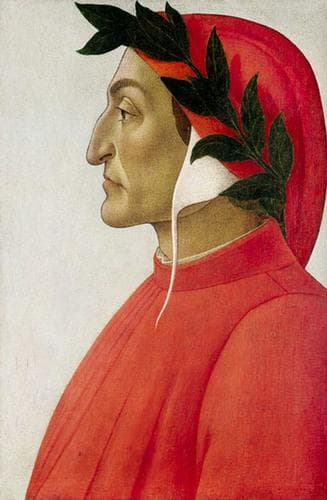
Dante Alighieri, most likely baptized Durante di Alighiero degli Alighieri and often referred to as Dante, was an Italian poet, writer and philosopher. His Divine Comedy, originally called Comedìa and later christened Divina by Giovanni Boccaccio, is widely considered one of the most important poems of the Middle Ages and the greatest literary work in the Italian language.

Jeff Olson
4.4
Thomas Sowell
4.4
Walter Brueggemann
4.3

Rhonda Byrne
4.3

Robin Wall Kimmerer
4.3

George S. Clason
4.3

Elliot Aronson
4.3

Joseph Campbell
4.3